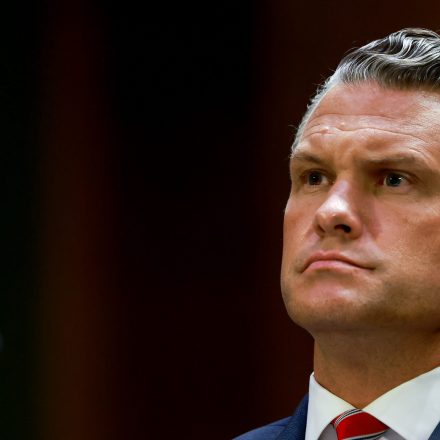
Across Israel, voting is now under way. Here are some of the latest images being sent to us over the newswires:
Tens of thousands of Israelis living abroad have flown in for the elections, according to Aid Coalition, a US-based nonprofit focused on strengthening Israel’s democracy. Israeli law generally requires citizens to vote in person in the country, with narrow exceptions for diplomats and certain official emissaries abroad.
Twenty-two states and Washington DC let voters register on election day. Why aren’t politicians doing more to reach young people?
With election day just a week away, candidates are ignoring millions of young Americans who could still cast a decisive ballot but have not yet registered to vote.
By contrast, my mailbox has been full of political flyers: the various campaigns gleaned my name from the voter file, recognized that I am a regular voter who hadn’t cast a ballot yet, and assessed through their targeted analysis that it’s worth spending on printing and postage to get their message to me.
Last year, the state’s board of elections removed several polling sites from local colleges – and students have taken it upon themselves to organize voting
On 15 October, the first day of early voting in North Carolina, mostly Black students from North Carolina Agricultural & Technical State University (NC A&T), Bennett College and University of North Carolina at Greensboro (UNCG) marched from their college campuses to their nearest polling sites for the first day of early voting.
Previously, students were able to vote on their respective campuses; however, late last year, with Republicans at the helm, the North Carolina board of elections removed several polling sites from local colleges: UNCG, NC A&T, Western Carolina University (WCU) and Elon University. As a result, students have taken it upon themselves to organize voting. The marches – two, so far – took about two hours round trip, but to the students, protecting their right to vote, they say, is worth it.
Both private and public schools in tech regions are limiting the use of tech in classrooms. But will low-income districts be able to follow suit?
German Gil spends most of his waking hours looking at screens. Since moving to the San Francisco Bay Area in 2015, the software engineer has bounced between start-ups and giants including Netflix, Facebook and GitHub.
But when it came to the education of his daughter, Victoria, he wanted her to have a different experience, one in which his “kid could be a kid”.
Boiler upgrade scheme, which provides grants of up to £9,000 for sustainable alternatives, expected to be slashed in budget
When Bill Tuck first started installing air source heat pumps six years ago, other heating engineers were skeptical the green technology would take off. “Now, the conversation is completely different,” he said.
“I’m getting approached by them saying: ‘Mrs Jones, my customer for 15 years, she’s enquiring about a heat pump. What can you tell me?’ The whole narrative has changed.”
Greenhouse gas concentrations in the atmosphere rose to record highs in 2025, locking in climate impacts that will persist for centuries, the U.N. says.
Three tankers carrying Russian diesel are en route to the United States, with a fourth expected to depart Wednesday, Moscow has said, part of a deal that triggered a fierce Ukrainian and European backlash.
US president Donald Trump this month struck an agreement with Russia’s president Vladimir Putin to ease sanctions in exchange for Moscow releasing diesel onto global markets.
Removing tariffs on more than 100 products, including gherkins and baked beans, was one of five measures announced this morning before tomorrow’s budget
Back to “everyday fixes” (see 9.07am), and groups representing men have welcomed the news that self-employed men will be able to qualify for parental pay.
The Labour MP Amanda Martin, who co-chairs the Labour Men and Boys group, said:
I’ve long believed that self-employed dads deserve the same chance as everyone else to be there for their families when a new baby arrives, so I’m delighted that this is becoming a reality. It’s about time self-employed fathers got the support they deserve.
Self-employed tradies build our homes, fix our heating and keep our lights on, so ensuring they can access paternity leave is a proper mark of respect for the people who keep our country going. This will make a real difference to tens of thousands of dads each year, giving them the chance to welcome their children into the world and be present fathers without facing financial ruin. I’m especially pleased that self-employed dads in my home city of Portsmouth will benefit.
Paternity leave is a cost of living lifeline for new families. This decision gives self-employed dads breathing space and a chance to show up for their loved ones when they’re needed the most.
We’re pleased to see the chancellor recognise cost of living pressures on families and carers in his package of pre-announced measures. The lack of statutory paternity pay for self-employed fathers was a massive gap in parental leave …
We hope the chancellor will go further in his cost of living budget and increase statutory maternity pay as well. State support for new mum’s still sits at less than half of minimum wage beyond the first six weeks. Our cost benefit analysis of extending this to 12 weeks and raising pay to the national living wage found it was a net positive to the exchequer and would make the world of difference to families in the first nine months of their children’s lives.
Not because we want war – we have no quarrel with the Russian people, and we have no desire for war with Russia; Nato is a defensive alliance – but when Putin gives assurances that he has no intentions to provoke a war with Nato, we are reminded of what he said about Ukraine only days before the invasion.
The more ready we are to face against Russia, to defend every inch of Nato territory, the less likely we are to find ourselves in that scenario.
Poland is one of our greatest and certainly our most reliable friend in Europe, and we value and treasure this friendship very much.
Alexander Stubb and Jonas Gahr Støre say they have briefed Volodymyr Zelenskyy after discussion with Russia’s president about next month’s Abu Dhabi peace talks
Meanwhile, Wes Streeting, the defence secretary, has warned that Russia’s Vladimir Putin is “testing us and testing Nato’s resolve” as he condemned hybrid threats and “state-sponsored terrorism” from Russia.
Streeting repeated his recent warnings that “we have to be ready for a scenario in which the United Kingdom and the Nato alliance finds itself at war with Russia”. He went on:
Not because we want war – we have no quarrel with the Russian people, and we have no desire for war with Russia; Nato is a defensive alliance – but when Putin gives assurances that he has no intentions to provoke a war with Nato, we are reminded of what he said about Ukraine only days before the invasion.
The more ready we are to face against Russia, to defend every inch of Nato territory, the less likely we are to find ourselves in that scenario.
Poland is one of our greatest and certainly our most reliable friend in Europe, and we value and treasure this friendship very much.
Israeli voters are choosing their next government, with Prime Minister Benjamin Netanyahu insisting only he can finish the job started eight months ago in Iran.
President has taken an axe to National Oceanic and Atmospheric Administration, stalling climate research on and response to extreme weather events
Sweeping cuts to the premier US climate agency under Donald Trump have severely hampered the country’s capacity to forecast, research and respond to extreme weather events, former government officials and scientists have warned, as the US faces a cascade of hazards fueled by a potentially historic El Niño this winter.
From the start of his second term, the president has taken aim at the National Oceanic and Atmospheric Administration (Noaa), slashing staff levels, canceling contracts and grants, and shutting down databases and research laboratories. The agency that has long been considered a global crown jewel in climate science and forecasting, has lost roughly 20% of its staff since January 2025.
In New Mexico, where a shortage is acute, Casa de Salud trains college and high-school health apprentices who understand the communities they serve
“I’ll be getting a little bit closer to you to put the cuff on,” Gisselle Martinez said, demonstrating how to take a manual blood pressure in a trauma-informed manner. “It might be a little tight. Let me know if you feel any discomfort and I can take it off.”
She’s not a doctor or a nurse – at least, not yet – but a 21-year-old college student. Between classes, Martinez works as a bilingual health apprentice at Casa de Salud, a primary care clinic in Albuquerque, New Mexico. On top of taking vitals, Martinezis certified in harm reduction – she can run a needle exchange and give out fentanyl test strips. And she understands how a patient’s trauma and past neglect can show up in an exam room.
It is essential not just to fund the public goods the nation needs, it is indispensable to restore a sense of fairness
Money doesn’t buy happiness, we’re told. Even some economists agree. The Nobel Prize-winning economists, Daniel Kahneman and Angus Deaton, once proposed that rising income increased people’s emotional wellbeing only up to a ceiling of about $115,000 in today’s money.
They probably hadn’t met many billionaires. The ultra-rich may not pursue happiness in the joyful sense of the word. But they will try every trick in the book to hang on to their stash and woe befall the tax authority that tries to lay a finger on their treasure.
Denmark's Ministry of Digitization reportedly abandoned a pilot to replace Microsoft Office with the open-source Collabora suite less than six months after it began. Tom's Hardware reports: According to Danish publication Computerworld, the pilot project was launched in 2025 and involved 38 employees, all of whom would start using the British open-source Collabora office suite instead of Word, PowerPoint, and Excel. The experiment was initiated by the then Digitization Minister Caroline Stage, who wanted to reduce the country's dependence on American technology. Denmark isn't alone in moving away from U.S. software, with France and the Netherlands both taking steps to replace Microsoft Windows. However, it seemed that the experiment fizzled out less than six months after it started. It had reportedly ended by the time the Danish government called for an early election in February 2026, with some employees complaining about issues with style, paragraph formatting, blank pages, and challenges with tracking changes.
But even though it's been months since the experiment reportedly ended, Prof. Mikkel Flyberbom of the Copenhagen Business School complains that the project hasn't been properly evaluated. "It's a good idea to test alternatives in a pilot project," the professor said in an email. "However, I wish that the ministry would take the opportunity to learn from the pilot project and share those experiences with other parts of the public sector."
The musician and outspoken critic of the president is suing for $10m in reputational damages – six years after a settlement in which Trump agreed not to use the song again
Neil Young is suing Donald Trump’s political action committee Trump 47 Committee Inc for $10m (£7.47m) over alleged copyright infringement of his song Rockin’ in the Free World after the US president used it as walk-up music in recent midterm election rallies.
It is the second time that Young has filed against one of Trump’s organisations over his unlicenced use of the song. He first did so in 2020, against the corporation Donald J Trump for President Inc. Trump settled, promising, according to Young’s suit, that his organisation “would never again use Rockin’ in the Free World without a license and permission from Young”.
Two men arrested in connection with the alleged Iran-linked terror plot targeting RAF Fairford in England have been charged with national security offenses.
Pair charged under National Security Act as part of investigation into suspected terror incident near airbase
Two British nationals have been charged over an alleged plot to assist Iran’s intelligence service as part of the investigation into the suspected terror incident near RAF Fairford.
Counter Terrorism Policing (CTP) said Mohmed Abdulkarim, 24, of London, would appear at Westminster magistrates court on Tuesday charged with assisting a foreign intelligence service under the National Security Act 2023.
A top executive at HSBC has tried to quash speculation that the bank could move its headquarters out of the UK over tax increases expected to be announced in Wednesday’s budget.
HSBC’s chief financial officer, Pam Kaur, said there was “no pressure”, particularly from shareholders in its cornerstone Hong Kong market, to shift out of London despite lobbyists warning higher tax bills could drive big banks’ business abroad.
President Carter lies in state. (Photo by Andrew Harnik/Getty Images)
What I’m Discussing Today
Kareem’s Quote of the Day: When you judge a leader’s strength, do you look for the loudest boast or the willingness to lend a hand?
A Brief History of Political Promises: Trump’s election-contingent generosity wants our money to buy our obedience.
Quick Takes: Sherrod Brown fights for workers while Donald Trump obsesses over backsides. Plus, a bonus clip from Seinfeld.
Bulworth, directed by Warren Beatty: This biting political satire earns plenty of laughs, thanks to great performances from its director and a young Halle Berry.
Dave Alvin, “Ashgrove”: With David Hidalgo of Los Lobos, Alvin honors musical elders while remembering that a life in music comes with losses—and rent.
Kareem’s Quote of the Day
“A strong nation, like a strong person, can afford to be gentle, firm, thoughtful, and restrained. It can afford to extend a helping hand to others. It’s a weak nation, like a weak person, that must behave with bluster and boasting and rashness and other signs of insecurity.”
― Jimmy Carter
(Bettmann/Getty Images)
When Jimmy Carter spoke those words on October 14, 1976, he was on the verge of completing one of the greatest come-from-nowhere ascendancies in the history of American politics. He was a peanut farmer and single-term Georgia governor (the state constitution forbade holding the office for consecutive terms), and he had almost no national profile before throwing his hat into the ring for the Democratic presidential nomination. That ended up working to his advantage. The country was still recovering from Vietnam and Watergate, which left many voters disillusioned with Washington politics. Running as an outsider, Carter built up momentum through the primary season and ended up decisively winning the nomination. The general election was closer, but President Gerald Ford couldn’t shake off the stigma of having pardoned President Nixon for his role in the Watergate scandal, and Carter became president.
His presidency, however, was doomed by events that seem, in retrospect, to have been beyond his control, namely an Iranian revolution that led to fuel shortages, inflation, and finally a hostage crisis that made America feel weaker than at any time in recent history. No question, he made some mistakes. In the summer of 1979, as energy prices soared, he gave a televised feel-bad speech describing “a crisis of confidence that strikes at the very heart and soul and spirit of our national will.” He asked Americans “to take no unnecessary trips, to use carpools or public transportation whenever you can, to park your car one extra day per week, to obey the speed limit, and to set your thermostats to save fuel. Every act of energy conservation like this is more than just common sense—I tell you it is an act of patriotism.” The speech became known as the “malaise” speech, although Carter never used that word, and he was widely criticized for projecting weakness and blaming the American people.
Things only got worse from there. The deposed Shah of Iran was terminally ill and in desperate need of medical care. His long-time allies in the American government, in particular former Secretary of State Henry Kissinger, and Carter’s own National Security Adviser Zbigniew Brzezinski, shamed Carter into admitting the Shah for treatment, despite the potential consequences. Carter even asked Brzezinski, “What are you going to advise me to do if they [Iranian militants] overrun our embassy and take our people hostage?” That’s exactly what happened, and the 444-day hostage crisis that followed, along with a failed rescue attempt that cost eight American lives, ended Carter’s chances of reelection.
Yet, Jimmy Carter’s legacy was far from finished. He became the only modern American president to overcome the flaws of his presidency and earn almost universal admiration through his post-presidential work. In the more than four decades after he left the White House, he worked tirelessly, advocating for international health, monitoring more than 100 elections in over 40 countries, leading nuclear freeze talks in North Korea and peace missions to other troubled countries, building houses by hand with Habitat for Humanity, and teaching Sunday school at his local church well past the age of 90. He was an icon of modest frugality and profound moral integrity. He won the Nobel Peace Prize in 2002 for “decades of untiring effort to find peaceful solutions to international conflicts, to advance democracy and human rights, and to promote economic and social development.” (Someone should point out those qualifications to anyone currently interested in winning the prize.) In short, he used all the capital he had earned as president for the good of others, rather than for personal glory or enrichment.
I like the quote above because it describes both personal and national aspirations, and a code of honor that seems in short supply today. Carter was clearly a “strong person,” and proved it throughout his 44 years after the presidency by being “gentle, firm, thoughtful, and restrained,” always offering “a helping hand to others.” The possibility he warned against, of “a weak nation, like a weak person, that must behave with bluster and boasting and rashness and other signs of insecurity,” perfectly predicted the Washington of today, and the current occupant of the White House. Come 2028, I’ll be looking for a candidate with aspirations like Carter’s to take over the presidency. May the best woman or man win.
Whether you favour spooky fairtales, satanic card games or infernal hijinks at the chip shop there are all manner of fresh top scarers at large this witching season
Tis almost All Hallows’ Eve and naturally, the thoughts of all good video game players are turning to horror. 2026 has already been a bloody good year for the genre with Resident Evil Requiem and Silent Hill: Townfall leading the rabble. But this autumn sees a festering surge of indie horror releases, featuring everything from cursed card games to Nazi-hunting penguins. Here are eight terrifying titles we think you should sample while jack-o-lanterns burn and spirits walk the moonlit streets.
CurrentBody’s LED masks have long been my favourite. They’re comfortable, simple to use and effective. My previous favourite, the now-discontinued CurrentBody Multi Light Therapy LED mask, offered five treatments that used different light wavelengths to address multiple skin concerns. The company’s latest mask, the new Series 3, has the most detailed customisable treatments I’ve ever seen.
This isn’t the first LED mask I’ve tried that allows its user to select different treatments for different areas of the face. The Lustre Renew Pro Facewear allows you to choose from two treatments across four different zones, with 16 possible combinations. The Series 3 takes this much further, allowing you to choose between six light wavelengths across 125 light points on the mask. If you stick to one wavelength per light point, that’s 6125 combinations available. That number is longer than I can reasonably comprehend, so allow me to call its level of customisation endless.
Benjamin Netanyahu is in the fight of his political life. Voters in Israel are heading to the polls on Tuesday to decide an election that could determine whether Netanyahu will remain the country's prime minister (and affect the outcome of the corruption charges against him). But the Israeli election also arrives at a time when voters around the world seem to be rejecting authoritarianism. A student-run movement stunned the world on Sunday when its candidates routed Serbia's long-serving leader, Aleksandar Vučić. That same day, Brazilians beat back a campaign by Flávio Bolsonaro – the son of Jair Bolsonaro, the disgraced former president – in a historic upset. Carter Sherman speaks to Julian Borger, the Guardian’s senior international correspondent, about how these four elections could reshape the political world order in just 10 days, and why the upcoming US midterm elections are the biggest test for global democracy.
No private individual should have the power to determine US foreign policy, as Musk has attempted to do in Ukraine
He’s Exhibit A on why billionaire wealth should be taxed, why we must get big money out of politics, why billionaires shouldn’t be allowed to buy up major media, and why our government shouldn’t give them huge military contracts.
Republican attacks on the candidate for governor are contradictory and hinge on a warped understanding of sexual abuse
I’ve heard people say that the Ramaswamy team must have been scared.
Last week, the campaign of Vivek Ramaswamy, the tech billionaire and onetime Republican presidential candidate who is currently the Republican nominee to be the governor of Ohio, ran an ad featuring the long-estranged mother of his Democratic opponent, the physician and former public health official Amy Acton.
Social media companies including Meta have pulled back on efforts to protect voters from election-meddling lies
Social media feeds are awash with an unprecedented flood of AI-driven disinformation ahead of November’s US midterm elections, according to experts, who warn many posts are likely “slipping through the cracks”.
As tens of millions of Americans prepare to cast their vote, social media companies have scaled back their efforts to protect voters from lies meant to manipulate elections.
Get Involved Treinta Y Tres Delaware Rueda hosts its “Dance & Dine”event at Belvedere Fire Hall (1000 Liberty Road, Wilmington, DE 19804) on Sunday, Nov. 1, 5-9 p.m., with a dance class for beginners 5-6 p.m. The event is free, but please bring an appetizer, main dish, dessert, drink or side to share.
When some people say they “can’t dance,” they refer to their lack of grace or embarrassing moves. When I say that I can’t dance, I am saying that I do not dance.
I generally refuse to out of an inflated sense of self-consciousness that’s prevented me from losing myself to the music at live concerts and even in the privacy of my own home.
Despite knowing this about myself, I showed up to Kicks Academy of Dance in Glen Mills, Pa., on a recent Sunday morning to participate in a Cuban dance class with Treinta Y Tres Delaware Rueda, an organization based in Claymont.
I came in with an open mind and my dancing shoes on (though mine paled in comparison to the shiny, red ballroom shoes of a classmate).
When Treinta Y Tres founder and instructor Mike Payne asked me whether I had ever taken a dance class, I explained that I didn’t have much dancing experience — at all.
“Throw you in the trenches. Grab the grenades,” he said with a laugh.
Then, boot camp began.
Mike Payne founded Treinta Y Tres Delaware Rueda in 2019. | PHOTO BY BRYAN GONZALO OLVERA, GATO MALO MEDIA LLC
Casino is a partnered dance that developed in ballrooms in Havana in the 1950s.
In Rueda de Casino — Treinta Y Tres’ speciality — couples dance in a circle, hence the “rueda” in the name. A caller shouts out moves in Spanish that dancers must execute while constantly changing partners.
Luckily for me, we started with a much more linear son cubano dance — the style that served as the foundation for casino.
Mike divided the class into “leaders” and “followers.” I was, to my dismay, a leader.
In pairs, we began with back-and-forth footwork as Mike counted out the beat. My eyes were glued to my feet as I mimicked Mike’s movements. But after a few repetitions, I’d memorized where to step.
Things became more complex as Mike added moves like the entrada, which requires the leader to create a gate with their arm for their follower to pass through in a twirl.
We switched partners every few minutes. Some of my more experienced partners guided me as they repositioned my arms and told me to lead with my chest rather than staring at my feet.
Though I apologized to all my partners, each met me with encouragement and reminders to enjoy myself — which, to my surprise, I did. Though I didn’t nail every step of the dance by the end of the hour, I’d made an exciting amount of progress.
‘Heartbeat of the community’
Treinta Y Tres Delaware Rueda dances are often high-energy. | PHOTO BY BRYAN GONZALO OLVERA, GATO MALO MEDIA LLC
Afterward was the Rueda de Casino class, during which couples gathered in a ring and executed moves at Mike’s command.
“I love the beauty of it. If you ever see it from an aerial perspective, the shapes that are formed almost look like a kaleidoscope, like flowers opening and closing,” longtime Treinta Y Tres participant Drew Chambers said. “It’s supposed to resemble the heartbeat of the community.”
It’s clear from watching that Rueda de Casino can be much more chaotic than son cubano.
“Rueda is a call-and-respond dance, meaning that on a certain count of a song, you call the next move,” explained Susan Payne, Treinta Y Tres co-director and Mike’s wife. “You can make it really boring … or you can make it very dynamic from these hundreds of different calls you’re mixing in this soup of fun and changes of directions and trying to trick people.”
In fact, making mistakes and scrambling to fix them is often the most fun part of a class, Mike said. Not all Rueda de Casino instructors have that mindset.
“I came from another Rueda group about a year ago,” participant Ayesha Stable said. “They were often very punitive when I got it wrong. I didn’t feel that way when I got here.”
Treinta Y Tres is so welcoming of beginners that Ayesha felt comfortable inviting her head-over-heels fiance, Arturo Stable, a few months ago.
Arturo is originally from Cuba and has always been a wallflower.
“Dancing is such a big part of Cuban culture. When I hear the music, my heart starts pumping. I want to do it, but I just never had the opportunity to learn and to practice, especially with someone as awesome as my fiancée,” Arturo said.
Arturo instantly connected with the Spanish-language music and, after a few months, can dance to the flow of the music rather than rigidly repeating patterns “like a robot.”
“It feels like I can connect with my culture in ways that I never could before,” he said.
Flash mobs and potlucks
Rueda de Casino is danced in pairs of leaders and followers. | PHOTO BY BRYAN GONZALO OLVERA, GATO MALO MEDIA LLC
Participants dance at a Treinta Y Tres Delaware Rueda event. | PHOTO BY BRYAN GONZALO OLVERA, GATO MALO MEDIA LLC
Creating cross-cultural connection is one reason Mike and Susan founded Treinta Y Tres Delaware Rueda in 2019.
It all began when Mike and Susan saw a group dancing Rueda de Casino at a Philadelphia club called The Eighth Floor. They were entranced.
They approached one of the dancers, Darlin Garcia, who is the founder of Art in Motion Latin Dancers. Garcia explained that he didn’t teach Rueda de Casino but could start a class if the Paynes gathered a group. So, the Paynes called up some friends and learned from Garcia for the next six months.
The group dwindled as the members became busy with kids and careers. But several years later, in 2019, the Paynes began hosting Rueda de Casino dances with friends in basements, living rooms and backyards.
That led to more adventures, including organizing a Rueda de Casino flash mob in Concord Mall and going on a week-long trip to Cuba in January 2020 to learn from dance instructors.
Just as the group gained momentum, the COVID pandemic hit. The one upside was that it gave Mike the opportunity to learn from Cuban dance instructors from across the world who had moved their lessons online.
“For two years straight, it was just studying, studying and studying and learning about Cuban culture, the whole development of the dance and how to dance it properly,” Mike said.
Contagious synchronicity
Treinta Y Tres Delaware Rueda classes and workshops are often packed with participants. | PHOTO BY BRYAN GONZALO OLVERA, GATO MALO MEDIA LLC
After the pandemic, Treinta Y Tres hit the ground running.
The Paynes’ get-togethers evolved into a free “Dance & Dine” event held a few times a year, which includes a Rueda de Casino beginners’ class, a dance and a potluck.
“People from all different ethnic groups come here. So, when we have our “Dance & Dines,” people bring food from all over the world,” Susan said. “You’re getting influences from everywhere. People are really proud of their culture, so they want to share it with you.”
The event is an excellent way to combat xenophobia and social isolation, she added.
“(Dancing) really makes you open to having a conversation with someone or getting to know people on a deeper level, taking away those barriers that normally would exist when you’re out walking around or at the store,” she said.
Mike and Susan also started hosting drop-in Sunday classes for all levels, which start at a mere $5 per person.
Mike Payne, right, dances with a Treinta Y Tres Delaware Rueda student. | PHOTO BY BRYAN GONZALO OLVERA, GATO MALO MEDIA LLC
“We’ve always wanted to make sure it was accessible to people, so that (money) wasn’t a barrier for anybody who wanted to come in,” Susan said.
Treinta Y Tres also hosts international trips to learn from instructors from across the world. (The group currently doesn’t have plans to return to Cuba, given the ongoing humanitarian crisis.) The group also features international instructors during its annual RuedX event in January.
Treinta Y Tres’ growth from a gathering of friends to an organization with an international reach wouldn’t have been possible without grant funding. Most recently, the organization received a $50,000 “Walking Together” grant from the U.S. Regional Arts Organizations in June.
Treinta Y Tres has used the funds on its regular operations and events but also wants to use the funding to hire instructors and train additional callers (those who call out commands during Rueda de Casino).
“We can’t be everywhere. We want people to be doing (Rueda de Casino) when we’re not around,” Susan said. “Say, some people live in Middletown or down further, and they drive up here for classes, or they get trained. … They’re going to spread it in their area. Eventually, it’ll spread throughout the whole state.”
The Paynes believe growing Rueda de Casino in Delaware is important not only because it expands cultural offerings for the Cuban community, but also because the dance form brings people together, regardless of culture.
“Everyone is dancing. We’re in sync. We’re in unison. And there’s something about the synchronicity that’s contagious,” Mike said. “It really does fill you and make you want to do more and connect with people.”
Why Should Delaware Care? School has been canceled this week for Lulu M. Ross Elementary School students after their Milford school caught fire Sunday, causing extensive damage to classrooms and the general building.
An early morning fire at a Milford elementary school on Sunday severely damaged several classrooms and the library, among other sections of the school.
It also has disrupted the lives of many in the local community, leaving parents searching for childcare, a food bank mobilizing to provide lunches, and district officials wondering what could be salvaged from the scene.
The Delaware State Fire Marshal’s office said in a statement that the cause of the blaze at Lulu M. Ross Elementary remains under investigation, but so far investigators have found no evidence of criminal activity.
Brad Schad, chief deputy state fire marshal, also told Spotlight Delaware that it is reasonable to assume students would not return to the school building this academic year.
“That decision will be made by the school district about whether they are going to repair the building or demolish it,” Schad said.
In a separate statement, Milford Superintendent Travis Moorman said district officials are assessing their facilities to find “extra space that can be provided across the district.”
He said the goal is to return students to a school next week but said there are logistical challenges the district must work through before making a final decision.
The fire also left the adjacent Mispillion Elementary School without internet or working phone systems, causing school there to be canceled on Monday. The two schools share a campus, and both lost fiber-optic connectivity following the fire, according to the district.
Firefighters were first notified of the blaze at 4:15 a.m. Sunday when a fire alarm was going off at Ross Elementary. When they arrived, they could see fire coming out of the roof of the school, according to the fire marshal. The crews then entered the building, “but deteriorating conditions forced them to evacuate the structure,” the fire marshal said.
By Sunday afternoon, officials announced that school would be canceled for students the upcoming week.
A spokesperson for the Milford School District also said it was unclear whether officials could salvage any “materials or contents of the building.” Officials also said a district crisis team would meet regularly throughout the week, discussing short- and long-term responses and how education will look for students and staff.
Firefighters breached the roof of Lulu Ross Elementary School on Sunday in an effort to control the blaze that appeared to gut much of the building. | PHOTO COURTESY OF GEORGETOWN FIRE CO.
The district spokesperson said several daycare centers, such as Kids Inc. at the Reformation Lutheran Church and the Boys and Girls Club, have opened their doors and offered space for kids whose parents work and need assistance with childcare for the week.
The district is also working with its own nutrition department and the Food Bank of Delaware to provide breakfast and lunch for its students. The district established hub spots for families to pick up meals while school is closed, Moorman said The meal bags will include lunch for each day and breakfast for the next morning.
In a statement posted on social media, Delaware Secretary of Education Cindy Marten said her department is working directly with district leaders to “help meet immediate needs, remove barriers, and support plans for students to continue learning.”
What will happen if the school can’t be rebuilt?
It is unclear how long it may take for the Milford community to see a new Lulu M. Ross Elementary School building.
If a district wants to build a new school, add an expansion, or complete a substantial renovation, its officials must seek state funding approvals from the Delaware Department of Education through a process known as a certificate of necessity, commonly referred to as a CN.
If the Department of Education approves a request, the state will fund a percentage of the project cost. The district would need to secure its local contribution through a referendum.
Nearly all CN requests have been rejected in recent years.
This past summer, the Milford School District requested $80 million to complete major renovations and expansions to its high school. It was the fourth time the school district has submitted the request.
Delaware Department of Education spokesperson Alison May said the department understands the “emergency nature” of the situation for the Milford School District.
She also said there are emergency protocols and provisions to expedite construction needs under the insurance process. May also pointed to an “emergency process” when the Capital School District’s William Henry Middle School was impacted by a tornado in 2020.
More than $9 million was needed to repair William Henry Middle, as reported by Bay to Bay News. At the time, Capital School District officials credited legislators, the Delaware Department of Education and the state insurance office with securing the funding for repairs.
An old building
The campus of Ross Elementary was mostly quiet on Monday afternoon. A few contractors wandered around the back of the school, while the nearby Mispillion Elementary also sat closed.
The air still smelled slightly smoky, depending on how the wind was blowing.
Contractor vehicles were parked outside Ross Elementary in Milford Monday, a day after a fire erupted in the school. | SPOTLIGHT DELAWARE PHOTO BY MADDY LAURIA
Jessica Smith, who lives along nearby Lovers Lane and attended Lulu Ross, said she worried about what will happen with the school’s roughly 700 students. She also noted she has family and friends who work at the school
She said her boyfriend told her about the fire on Sunday but she didn’t believe him at first. But when she left for church that morning, there were about a dozen fire trucks lining the whole street. Some have returned several times over the past 24 hours, she said.
Smith also mentioned that other fire alarms had gone off at the school recently prior the blaze, citing two specific times within the last week. One last weekend and another during the middle of the week.
Why Should Delaware Care? After a Wilmington City Councilman switched his political affiliation from Republican to Democrat, the City Council debated whether that disenfranchised non-Democratic voters in the city. They took the question to court, where a judge ruled that there was no prohibition against the move.
The Wilmington City Council isn’t done trying to oust Councilman James Spadola, the Republican-turned-Democrat who kept his seat last month after a Chancery Court judge sided with him in a dispute over his party switch.
This month, Council President Ernest “Trippi” Congo appealed the Chancery Court ruling on behalf of the full City Council. His attorney, Jane Brady, has until Nov. 30 to file an opening brief with the Delaware Supreme Court.
In the initial appeal filing, Brady said the council’s decision to continue the case followed internal discussions that demonstrated council members remained “firmly convinced” of that the city charter bars a minority-party member from switching to the majority party.
Rather than welcome him to the party, many of Spadola’s city council colleagues claimed he had exploited a loophole in the law that requires one member of the City Council to be elected from a minority party.
In May, Council President Ernest “Trippi” Congo sponsored a resolution to declare Spadola’s seat vacant, arguing he “made the choice to disenfranchise the approximately 15% of non-majority voters” in the city.
The council approved the resolution and in response Spadola filed a lawsuit to block it, arguing the council had no legal power to remove him.
Following the announcement of the appeal this month, Spadola expressed surprise by what he described as a “lack of transparency” surrounding the process. He argued that the “council essentially decided to appeal in a back room,” rather than voting or discussing the issue publicly.
He also claimed that some of his fellow council members were unaware that an appeal was planned.
“I don’t know if this is President Congo doing it unilaterally. Of course, it’s their right to appeal, but I don’t know who made the decision. And now, taxpayers are on the hook for additional money,” Spadola said.
The city has spent more than $207,000 on the case as of Oct. 23, according to City Council staff. Of that, a little over $130,000 went to Spadola’s attorneys and about $75,000 to Congo’s attorneys.
Asked if he believes the Supreme Court will uphold McCormick’s decision, Spadola said he has “confidence the rule of law will prevail.”
In the appeal, Brady also asked the Supreme Court to fast-track the case, arguing that Spadola continues to vote on legislative matters despite being disqualified from doing so.
The Supreme Court denied Brady’s request to expedite the court proceedings on Oct. 14.
The case is expected to stretch into the new year. The court gave Brady until Nov. 30 to file an opening brief. Spadola’s attorneys will then have 30 days to respond.
Congo did not respond to a request for comment on Monday.
Why Should Delaware Care? Battles over gun control legislation often play out in the courts. As the number of converted machine guns has risen rapidly in recent years, a lawsuit over Glock handguns that can be made into automatic weapons has the potential to impact the prevalence of both Glock firearms and illegal automatic weapons in Delaware.
Delaware Attorney General Kathy Jennings is suing gun manufacturer Glock for allowing the handguns it sells to easily be converted into automatic weapons, an unprecedented move for the state.
Jennings’ office filed the lawsuit against the international firearms manufacturer on Oct. 22, alleging the company has designed its handguns such that adding an inexpensive piece called a Glock switch — sold by third-party dealers — turns the weapon into an automatic machine gun.
“The result is a flood of Glocks equipped with Glock switches on American streets,” the complaint states. “These weapons are notoriously difficult to control, increasing the risk of catching bystanders in a bullet spray, and multiplying the devastation caused by gunfire.”
Semi-automatic firearms, which are sold by Glock and other firearms manufacturers and are legal in most places, fire one bullet per pull of the trigger by the gun handler. Automatic handguns, however, which are much more heavily regulated in the United States, are able to fire continuously with one pull of the trigger.
The suit is being brought by the Department of Justice’s (DOJ) Office of Impact Litigation, which is part of the department’s Fraud Division, in the Court of Chancery.
It calls for the court to stop Glock from selling handguns to civilians — not military and law enforcement professionals who also use Glock weapons — based on multiple public nuisance charges.
The 82-page complaint describes a number of ways that Glock has allowed consumers to turn handguns into automatic machine guns, including failing to redesign the handguns so they cannot be turned into illegal guns and allowing third-party sellers to put the Glock logo on the attachment pieces.
The Glock switch, according to the complaint, is a small metal or plastic device the size of a lego piece that can be purchased for under $20 and can be placed on the back of a Glock handgun to make it fire as an automatic machine gun.
The DOJ and gun violence prevention advocates are lauding the lawsuit as another step toward better gun safety in Delaware, while Second Amendment advocates say it is a misplaced attempt to punish manufacturers for the behavior of criminals.
Representatives from Glock did not respond to Spotlight Delaware’s request for comment on the lawsuit.
Traci Manza Murphy, executive director of the Delaware Coalition Against Gun Violence, said the lawsuit follows up on a Delaware law passed in 2022, often referred to as KeKe’s law, which holds firearm manufacturers and dealers accountable for what the law describes as “knowingly or recklessly” endangering the safety of Delawareans.
Most notably, KeKe’s law resulted in an ongoing Superior Court lawsuit against the Christiana Mall location of Cabela’s gun shop for what the DOJ described as the store taking a “hands-off” approach to individuals who shoplifted 500,000 rounds of ammo.
“We’ve long recognized that gun manufacturers have a role to play in preventing gun violence,” Manza Murphy said. “And when a company knows that its product can be easily converted into an illegal machine gun, we should expect to address that.”
However, Jeff Hague, president of the Delaware State Sportsmens’ Association, the state’s NRA-affiliate, said his group views the lawsuit as merely “another means of trying to keep people from owning firearms.”
The federal and state governments already prohibit individuals from making a handgun into an automatic rifle, so the litigation is an unnecessary attack on law-abiding citizens’ right to bear arms, Hague said.
The Delaware DOJ is the sole plaintiff on the Glock lawsuit, but similar legal challenges have been filed in New Jersey, Minnesota and Maryland, a spokesperson for the DOJ told Spotlight Delaware.
Chancery Court Judge Nathan Cook has been assigned to the case. A preliminary hearing had not been scheduled as of Monday afternoon.
Maggie Reynolds is a Report for America corps member and Spotlight Delaware reporter who covers rural communities in Delaware. Your donation to match our Report for America grant helps keep her writing stories like this one; please consider making a tax-deductible gift of any amount today by visiting https://spotlightdelaware.org/support/.
British officials have begun discussions with the EU about a long-term relationship that could include a return to free movement, the business secretary has said while promising the British people “are the boss” when it comes to what the UK will accept.
Jonathan Reynolds said the focus for British negotiations was the EU summit in November to seal an agreement to ease some trading restrictions and a youth mobility deal. But he said the prime minister, Andy Burnham, had made it clear he wanted to see a long-term and stable relationship with the bloc.
The founder of Tiktok parent ByteDance, Zhang Yiming, reclaimed the top spot on a list of China's richest people, driven by his company's push into AI.
Two sportspeople have been executed in the past month and at least six more face the same fate, says activist group
Fears are growing for more Iranian athletes facing execution after mountain climber Ali-Sina Mostafavi became the latest in a string to be killed by the regime.
Mostafavi – who documented his ascents of some of the world’s highest peaks, including Mount Everest – was executed on 14 October having been arrested in April after the anti-government protests a few months earlier. His death followed the killing of Siavash Jamshidi Kheirabadi, a taekwondo athlete, at the start of October, and the mixed martial arts fighter Gholamreza Khani Shakarab, who was hanged in May.
Rubio’s decision not to meet Narendra Modi last week was seen by some as a snub – but by focusing on business leaders and oil, the secretary of state made American priorities clear. Plus: the artist bringing a female perspective to men’s clothing
When the US secretary of state, Marco Rubio, visited India for the second time this year, headlines concentrated on who he met and where he went.
The fact that Rubio bypassed New Delhi and did not meet the prime minister, Narendra Modi, during his trip last week, and instead traveled to the financial capital, Mumbai, where he met India’s foreign minister, Subrahmanyam Jaishankar (pictured top with Rubio), and business leaders, did not go unnoticed. Nor did his decision to travel to Jamnagar, the small Gujarati town that is home to Reliance Industries’ colossal oil refinery complex.
Head of Australia’s national broadcaster says depiction of globally beloved character ramming politicians with a car breaches intellectual property
Australia’s national broadcaster will send a cease and desist letter to the rightwing populist party One Nation for using Bluey in a “shocking and disrespectful” cartoon which sees the beloved character repeatedly ramming politicians with an SUV.
The ABC’s managing director, Hugh Marks, told Senate estimates on Tuesday he became aware of One Nation’s potential breach of intellectual property last week and sought legal advice. “We will be taking further action, I can assure you,” he said.
The number of UK businesses in financial distress has hit its highest level in more than two decades, as pressure grows on the chancellor to provide more support to the private sector in Wednesday’s budget.
There were 738,144 businesses in “significant” financial distress in the third quarter of this year, up 1.6% compared with the same period last year, according to BTG. That is the highest level since the administrator’s closely watched “red flag” report began in 2004.
Casey Sparks inadvertently ended up in Lyerly, Georgia, where he noticed burning home and helped to save family
An Alabama driver’s unintended, GPS-directed detour in Georgia positioned him to help save a couple and a dozen children in their care from a fire that enveloped their home while they slept recently, according to the family and their rescuer.
As he recounted in an interview with television station WRCB that quickly went viral among internet circles dedicated to uplifting news stories, James Burke had fallen asleep in his recliner while his wife, 12 adopted children and one grandchild slept in their beds on the night of 17 October in the community of Lyerly, Georgia.
Photo illustration by Jovelle Tamayo/ProPublica. Source images: Nick Oxford for ProPublica, courtesy of Mike Faulkner, and obtained in an open records request from the Oklahoma Corporation Commission.
In June 2023, staff at an Oklahoma regulatory agency were fed up. The state isn’t known for cracking down on oil and gas companies for polluting the environment, but for over a year, the staff had been building a case to punish Citation Oil & Gas, one of the nation’s largest privately owned oil companies.
About 30 miles north of the Texas border, toxic wastewater was gushing from the ground outside the small city of Ardmore. In the mile-wide oil field known as the Bayou, an oily sheen glistened on creeks and long streaks of salt scarred the land. The so-called purges, bubbling up among stands of oak and walnut trees, also threatened drinking water sources, drawing attention from the Environmental Protection Agency, according to a federal report.
State investigators pinned the blame on Citation’s injection wells, which pump wastewater from oil production back underground at high pressures and volumes in order to produce more oil. But this injection came with risks.
Days earlier, the agency had asked Citation to cut injection pressures in half. The company refused, prompting staff at the oil division of the Oklahoma Corporation Commission, the state’s oil and gas regulator, to recommend an official punishment through the agency’s court system.
“This will be an important case to get some of these purges stopped and particularly concerning Citation’s operations,” Danny Ray, an agency manager at the time, emailed his colleagues.
He restated the urgency three days later in an email to oil division leaders and Citation officials: “We consider this an emergency situation that needs to be addressed promptly.”
A salt scar in a southern Oklahoma oil field known as the Bayou in 2022Obtained in an open records request from the Oklahoma Corporation CommissionAn old well releases a stream of wastewater in the Bayou in 2022.Obtained in an open records request from the Oklahoma Corporation Commission
To stop the flow of wastewater, the agency temporarily shut down the Bayou’s 22 injection wells — all but three of which were owned by Citation — kicking off a yearlong fight over the terms under which injection could restart.
Under state rules, companies must not pollute, and oil and gas regulators at the Corporation Commission can revoke injection permits and issue fines to those that violate regulations.
But agency leadership ultimately did not follow staff guidance to punish Citation through the commission’s administrative law court. Instead, in April 2024, state officials, including the oil division’s then-Director Robyn Strickland, would allow Citation to restart injection at higher-than-recommended pressures.
In fact the commission has no record of ever fining or completing an enforcement case against Citation, the company named more than any other in the agency’s database of pollution reports and other rule violations, listed more than 1,000 times over the past decade. That’s hundreds more incidents than any other operator, including comparably sized companies. In recent years, purges linked to Citation include some of Oklahoma’s longest, most damaging oil field pollution events.
Current and former employees at the Oklahoma Corporation Commission describe top agency officials as wary of going after habitual violators like Citation. Citation has become Oklahoma’s second-largest well owner after taking over collections of aging, low-producing wells from oil giants that have largely left the state for more lucrative oil fields in Texas and elsewhere; the company acquired its Bayou wells in 2010. Regulators treat Citation gently, current and former agency employees say, because the company holds onto aging wells that are worth little — wells that could easily become a financial liability for the state if Citation were to sell or walk away from them.
A spokesperson for the Oklahoma Corporation Commission declined to answer questions about the regulatory agency’s handling of Citation’s record, noting the possibility of future enforcement actions or litigation involving the company.
“The OCC Oil and Gas Conservation Division must remain mindful of its regulatory and adjudicatory responsibilities and avoid making public statements that could potentially affect future proceedings or legal considerations,” spokesperson Jack Damrill said in an email.
Strickland has since left the agency for a job as chief projects officer for the Interstate Oil and Gas Compact Commission, a quasi-governmental organization that often advocates for industry interests. She did not respond to requests for comment.
A Citation executive declined to comment in response to written questions.
Regulators in other jurisdictions have at times come down hard on Citation, which owns wells in 11 other states. In 2017, the company settled with the U.S. Department of Justice for $2.25 million over allegations of underpaid royalties from drilling on federal land in Wyoming, though the settlement did not rule that the company was liable in the case. And in 2025, Utah reached a $700,000 settlement with the company after a crude oil and wastewater spill. Texas and Colorado have also fined Citation in recent years for violations.
“Citation has been the thorn in my side for a long time,” said a current manager at the Oklahoma agency who spoke on the condition of anonymity to protect their job. “They just operate however they want. They’ve had major pollution issues, and you can’t really touch them.”
A Citation Oil & Gas oil well in the Bayou. The company is named more often than any other in Oklahoma’s database of oil field pollution incidents and other rule violations.Nick Oxford for ProPublica
Preparing a Case for Punishment
In November 2023, five months into the wells’ shutdown, Citation was getting antsy. Its officials had repeatedly demanded permission to restart their wells and had even challenged the state through the commission’s court to prove the connection between the Bayou purges and its operations. Regulators and company officials packed into a small conference room in the Oklahoma Corporation Commission’s Oklahoma City headquarters to discuss how that might happen. More than a dozen others joined via video.
On the state’s side, a team of consultants took the lead, displaying a report with evidence that tied Citation’s injection to the wastewater that gushed to the surface in the Bayou. The state had hired the environmental engineering firm Halff earlier that year on a $550,000 contract to investigate the fast-growing number of oil field wastewater eruptions around Oklahoma. The consultants and agency staff presented a unified front in identifying the problem: Citation’s nearly two dozen Bayou injection wells were operating at unsafely high pressures, according to a video recording of the meeting obtained by The Frontier and ProPublica. Over the years, the injected wastewater had shattered underground rock layers, allowing the toxic fluid to spread uncontrollably.
“You definitely have overpressurization,” Carolyn May, Halff’s director of environmental remediation, told Citation officials as she presented her team’s calculations, which were based on well records, field data collected by agency staff and a standard set by the federal government. “It’s allowing that rock to fracture.”
The consultants were meant to serve as independent experts to mediate any disagreements within the agency over what to do about the wastewater eruptions, according to current and former commission officials.
In the meeting, May and agency staffers ticked off a number of problems with Citation’s wells that regulators had overlooked for years. Not only had they allowed the company to inject wastewater at excessive pressures, regulators had also given out more than a dozen exemptions to testing and well-construction standards that endangered groundwater. Several wells had checkered compliance records; agency documents noted that one had been in “perpetual violation” of its permit for “nine years running,” injecting tens of millions of gallons of wastewater beyond the legal limit.
Citation’s active wells weren’t the only issue, they said. Nearby were dozens of abandoned, unplugged wells that offered the pressurized wastewater open pathways to reach shallow freshwater sources and the surface. May singled out a handful of those wells that especially troubled her team, and oil division deputy director Mike McGinnis suggested that Citation permanently plug them.
May noted that imaging below the surface by agency staff showed a distinct plume of highly polluted wastewater rising from deep underground, where injection took place. This posed a threat to the freshwater sources beneath the Bayou, she said — water that some residents rely on for drinking and cooking. “That’s our primary concern here.”
The consultants were not alone in this fear. Earlier in 2023, the Environmental Protection Agency had warned of “potential endangerment to underground sources of drinking water” in the Bayou from oil field injection. Groundwater tests taken near the purge sites showed evidence of oil field wastewater pollution, including high levels of salt, bromide and the carcinogen benzene, which exceeded the EPA drinking water standard by five times.
For its part, Citation came to the meeting armed with a very different argument: the pollution was caused by a combination of historic oil drilling and recent rainfall — not by the company.
It was a claim the company had repeatedly made, especially in the months since the agency had shut down its wells. To bolster its case, the company’s consultants had produced a series of detailed reports citing the area’s history of oil production, along with Citation’s own water testing data. Oil drilling began in the Bayou in the 1920s, a time of lawless extraction, and for decades, companies would simply dump their wastewater into large, unlined pits, allowing the fluid to seep into the ground. Old pollution that saturated the land was being flushed to the surface by rainfall, the reports argued. Each one concluded that there was no link between Citation’s injection and the Bayou pollution.
At the meeting with regulators, company representatives reiterated these arguments. Jeff Lewis, a Citation engineering manager, assured the agency that the company’s data indicated that its wells were not behind the Bayou purges and that it could safely inject at pressures higher than Halff had recommended. He proposed that the company restart injection on its deeper wells because they were separated by layers of rock from the abandoned wells that Halff identified as likely pathways for the wastewater to surface.
Agency staff did not buy this. In prior internal meetings and emails, staff and consultants had criticized Citation’s water sampling practices as biased in favor of the company’s conclusion that rainfall was causing old pollution to resurface. There was no question that old pollution covered the Bayou, but in recent purges, wastewater had pushed to the surface in significant volumes, covering creek beds in layers of snow-white salt. Old pollution would not be this forceful, according to internal documents written by agency staff.
“A purge is created by pressure and is not due to old pits,” Ray, the agency manager, wrote in a memo distributed months earlier within the oil division that urged agency leaders not to allow Citation to restart injection.
May, the agency’s consultant, echoed these rebuttals during the meeting and said the state’s evidence pointed to an injection problem. She concluded her presentation with a warning: Citation must change its injection practices in the Bayou.
“If y’all want to start injecting again,” she told company representatives, “I think we’re going to have to look at those pressures and the volumes very carefully.”
The meeting ended without a resolution.
An injection well in the BayouNick Oxford for ProPublica
“They Wore Us Out”
Over the next four months, Citation and state regulators would continue to debate the terms of restarting the Bayou. Neither side budged. By the time they gathered for another face-off in March 2024, oil division leaders appeared weary of fighting.
May and the Halff geologists from the consulting firm began by again insisting that Citation substantially reduce pressures in order to be allowed to restart a handful of wells. But even as they presented their case, Citation representatives including Lewis, the engineer, and Bob Redweik, a company vice president, repeatedly spoke over them. After more than two hours of disagreement, Redweik and Citation’s attorney ended the meeting abruptly. “We’re not going anywhere,” Redweik said.
Several top oil division officials attended, including Strickland, McGinnis and commission attorney Tyler Trout. They remained largely silent throughout.
The next week, Trout tried to end the impasse by passing along a memo from Citation.
“In an effort to reach an agreement and move this situation forward,” Trout wrote to top oil division officials and May, “would we consider meeting Citation in the middle as far as recommended injection pressures are concerned?”
May stood firm. “From Halff’s standpoint, our recommendations aren’t going to change,” she responded, adding that it would ultimately be up to agency leaders.
In early April, the agency went with a compromise, approving a plan to bring seven of Citation’s 19 Bayou injection wells back online. The company would be able to inject at pressures higher than Halff had recommended, though less than Citation had requested.
Current and former employees say that the decision to restart injection came from the top of the oil division, including Strickland and McGinnis, among others — bypassing staff who objected to the plan. Like Strickland, McGinnis did not respond to requests for comment.
“They wore us out,” said an agency manager who spoke on the condition of anonymity to protect their job.
Before injection restarted, three oil division officials chosen by Strickland conducted a walkthrough of the Bayou with Halff and Citation, according to an email from Strickland. The rest of the division was left in the dark. That same day, a pollution abatement manager noted in an email to the commission’s general counsel that agency critics of the plan had not been invited.
Around the time agency leaders allowed Citation to restart injection in the Bayou, staff were drafting an extensive contempt case against the company for rule violations in other parts of the state, according to public records obtained by The Frontier and ProPublica. Field staff and consultants were still turning up considerable problems related to Citation’s injection, including excessive pressures at the sites of destructive eruptions of wastewater. The staff complaint called for the agency to issue fines and to terminate well permits. But oil division leaders never signed the paperwork for the case.
There was ongoing trouble in the Bayou as well. Weeks after Citation restarted injection, field staff discovered a “severely contaminated” private water well nearby that had been polluted by oil field waste. Testing showed high levels of salt as well as the “highest levels of bromide that we have ever sampled,” according to internal emails, referring to another chemical constituent of oil and gas waste that poses a public health risk. (The landowners declined to comment because of an ongoing lawsuit against Citation, but according to court records, they do not drink from the well. The company, which has fought the family’s claims, says in a court filing that it has spent hundreds of thousands of dollars addressing the pollution on their land as part of a plan approved by the commission.)
By the end of 2024, oil division leaders had allowed six more Citation wells back online, bringing the total to 13. And the next spring, the agency closed the Bayou investigation, along with several others related to Citation, without taking further action.
Collection of New Complaints
In the year and a half since the Bayou case closed, several of the oil division staff who had pushed agency leaders to punish Citation have left the agency, as have a handful of senior leaders. Staffers told The Frontier and ProPublica they grew frustrated with the agency’s unwillingness to crack down on repeat corporate offenders that agency staff had spent months — at times, years — investigating.
Tracy Case, an attorney for the oil and gas division, admitted as much at a national conference for oil regulators in Oklahoma City in May. “I’ve been there 11 years doing this and we’ve never pursued what we call our ‘bad actors,’” she said, according to a recording of a meeting obtained by the news outlets. She explained that the oil division is extremely short-staffed while dealing with hundreds of potential enforcement cases at any one time. An agency spokesperson declined to comment on behalf of Case.
Less than a third of the roughly 750 enforcement cases filed by the oil division in the agency’s administrative law courts since 2023 have resulted in punishment so far, according to a review by The Frontier and ProPublica. The average fine given out by the agency was about $1,700. The most common punishment was a $500 fine, combined with using company insurance money to plug unused wells.
Neither the Oklahoma Corporation Commission nor Halff responded to questions about whether the consulting firm still has a role at the state agency.
At the Bayou, nearly all of Citation’s wastewater injection wells are back on, many operating at pressures beyond Halff’s recommendations. And industry data indicates that Citation has ramped up oil production to pre-shutdown levels even as evidence of new purges continues to emerge. In September, fresh layers of salt — residue of the wastewater — covered the dirt near yellowish puddles of standing water. Nearby, streaks of oil shone on the ground. The preceding weeks had been hot and dry, with hardly any rain.
In early October, an agency field staffer requested that Citation install a specialized well in the Bayou to pump out polluted groundwater, according to a report in the agency’s incident database.
A slew of new pollution complaints against Citation have continued to appear in that state database, including more than 60 spills and leaks at well sites over the past year. Among the complaints were three purges that blew out in southern Oklahoma over the last three months. All those investigations remain active, according to state records.
Another ongoing complaint against Citation originated about 10 miles east of the Bayou, where a rancher named Mike Faulkner noticed an unusual amount of salt water gurgling to the surface and flowing down a creek on his land in April. Nearby, dozens of Citation wells pump wastewater underground.
Rancher Mike Faulkner measures the water quality on his property in June.Nick Bowlin/The Frontier
In response, Citation once again blamed the pollution on old drilling practices, according to an email from one of the company’s engineers to the Oklahoma Corporation Commission.
Nevertheless, the agency told the company to temporarily shut down some of its nearby injection wells, and, according to Faulkner, the purge on his land dried up for the first time in years.
“That tells me that they know the why and the how of that saltwater purging,” he said in July.
The agency also instructed Citation to install monitoring wells to test for pollution and to build a pit with a rock dam on Faulkner’s land to catch the polluted water, along with a fence to keep the cattle out.
Faulkner’s land was scarred by salt water and contaminated by oil after a Citation well blew out in June.Courtesy of Mike Faulkner
But in the months since, the agency has given Citation multiple extensions on the deadline to build the dam and the fencing. In September, Faulkner learned that the agency granted Citation yet another extension — until December, seven months after his initial pollution report.
As of October, he said, the wells where the state had asked Citation to pause operations are injecting — at reduced pressure.
Faulkner said he is fed up with Citation’s yearslong pattern of degrading his pastures. But he blames state officials for their unwillingness to rein in the company.
“They’re like a spoiled kid,” he said. “They’ve just gotten away with it for a long time.”
Senate Majority Leader John Thune has tried to balance passing the president's agenda and preserving the independence of the Senate. The midterms are his biggest test yet.
DENVER, COLORADO — Former Mesa County Clerk Tina Peters is preparing to ask the U.S. Supreme Court to overturn her criminal convictions stemming from a 2021 breach of Colorado election equipment, continuing a legal fight that has drawn national attention from President Donald Trump and his allies.
Peters’ attorney, Peter Ticktin, said her legal team is working toward a December deadline to petition the Supreme Court. The move follows the Colorado Supreme Court’s Sept. 21 decision declining to hear her appeal, leaving intact seven convictions related to unauthorized access to Mesa County voting systems.
A jury convicted Peters in 2024 after prosecutors said she used another person’s security credentials to allow an unauthorized individual access to election equipment during a software update. Peters maintained she was attempting to preserve election records while investigating unsupported claims of voting-machine manipulation following the 2020 election.
The Colorado Court of Appeals upheld her convictions earlier this year but overturned her nearly nine-year prison sentence, finding that the sentencing judge improperly considered some of Peters’ protected political speech. Democratic Gov. Jared Polis subsequently commuted her sentence, and Peters was released June 1 after serving roughly 600 days.
Trump has repeatedly defended Peters and previously attempted to pardon her, although presidential pardon authority does not extend to state criminal convictions. Peters continues to dispute the legitimacy of her prosecution.
I've had my GT for just over a year and I still love it. I've recently gotten busy and only ride for 1-2 miles a day a few times a week but up until a few months ago I would often go on 5-10 mile rides at a time almost daily.
Aside from bumpers, rail guards, and a fender all from FM direct site.....my board is stock.
I really am interested in maybe some new foot pads or even the FSTs for some jumps from float life as well maybe different grip tape styles like the hexagon with patterns in between.
What upgrades would the more experienced community recommend to me?
Italian army removes and defuses 250 explosives encased in ice for more than 100 years after hikers’ sightings
A significant cache of unexploded bombs from the first world war emerged this summer from rapidly retreating glaciers in the Dolomites, the Italian army has said.
The devices, which included Italian artillery shells and French mortar bombs, were removed and defused by the army’s Julia Alpine brigade, according to a statement.
Investigation finds dozens of ministers and civil servants moved into AI roles as government developed datacentre expansion plans
The UK’s policy on datacentres and AI was developed without any meetings with environmental groups, an investigation has found.
The nonprofit organisation Spotlight on Corruption said a “considerable revolving door” shaped the government’s development of “AI growth zones”, a central plank of the former prime minister Keir Starmer’s AI and economic policy, with 38 ministers, senior civil servants and special advisers hired to positions in AI companies between July 2024 and September 2026.
Susanne Rust of the Los Angeles Times reports (paywalled) that industry executives knew for decades that microplastics were infiltrating the human body. Slashdot reader joshuark shares an excerpt from the report: Scientists today say we're just beginning to understand the harm that the tiny bits of plastic we drink, eat and breathe are doing to the human body. Internal memos among company scientists and executives obtained by The Times reveal that for at least half a century, the plastics industry has been aware of and concerned about the potential for microplastic contamination in the human body. But recently discovered chemical company documents dating back several decades show that industry scientists have long been aware of -- and concerned about -- the way microplastic particles migrate beyond the gut in animals and humans, depositing in important organs. And the potential for that knowledge to affect the plastic food packaging industry.
Their concern goes back to 1974 and a scientific meeting at a New York City hotel, where a German gastroenterologist presented a scientific paper that showed for the first time that ingested particles like microplastics could infiltrate the rest of the body. His presentation was largely overlooked by the government scientists in attendance but became a point of worried discussion among company scientists. Tracey Woodruff, professor of epidemiology and population health at Stanford University, who reviewed the documents, said they indicate scientists and executives at major chemical companies have known and remained silent even as microplastics accumulated in tissues. She likened it to other industries that knew about pollutants -- greenhouse gases, asbestos and tobacco -- but did not take action to make them safer.
A spokesperson with the chemical industry's largest trade group took issue with that characterization. "Scientific debate over what the evidence shows is not silence. It is how sound science and effective policy advance," said Craig Davis, senior director of plastics chemistry at the American Chemistry Council. "Our industry is committed to advancing microplastics science by supporting independent research and policies that would do so."
Binbag-wielding volunteers clear encampment used by thugs to intimidate opponents of deposed government
Student List cleaned up at Serbia’s parliamentary elections. So it was only fitting that the morning after a night of raucous celebrations, the movement’s supporters were gathering, bin bags in hand, at Pioneers Park, opposite the national assembly building in Belgrade.
For the previous 18 months, this small patch of greenery – with its established trees and playground – had been a no-go zone. A pro-government camp known as Ćaciland had taken over the space with convicted criminals living there in white tents, happy to attack journalists, or anyone else who came too close. Police stood by but did nothing to prevent the violence.
The AI company’s first public financial disclosures reveal explosive growth, huge costs and risks ranging from cyber-attacks to the limits of safeguards
Anthropic has filed to go public on the US stock market, revealing for the first time the AI research lab’s financials and all the risks – more than 90 pages of them – that might negatively impact its business.
The company’s investor prospectus, released Monday, veers from hyperbolic predictions about AI’s “incredible potential” to existential risks of the technology to the reality of its current business: explosive but incredibly expensive growth. The filing to US financial regulators, known as an S-1, provides the public’s first look at an audited version of Anthropic’s finances.
Lack of profits and the threat posed by western countries are raising concern about the sustainability of Beijing’s AI boom
Trillions of dollars have been wiped from China’s stock markets in recent months amid increasing anxiety about the future of artificial intelligence, as Beijing races against the United States for dominance in the sector.
The STAR 50 Index, which tracks technology and innovation companies on the Shanghai stock exchange, has plunged 40% since June. Other indexes of major companies dropped by about 20% over the same time period.
Prescott throws three touchdowns in Dallas victory
Javonte Williams rushes for career-high 155 yards
Eagles fall to 2-5 amid Jalen Hurts injury absence
Dak Prescott threw for 212 yards and three touchdowns, two to CeeDee Lamb, and the Dallas Cowboys beat Philadelphia 38-21 on Monday night to hand the Eagles their fifth straight loss.
Javonte Williams ran for a career-high 155 yards and a touchdown, and the Cowboys (3-4) remained in contention for the NFC East title. The New York Giants lead the division at 4-2-1.
"The Court earlier stated, 'I am not the Lorax. I do not speak for the trees,'" U.S. District Judge Ana Reyes wrote. "The Court still does not speak for the trees. It speaks only for the rule of law."
An anonymous reader quotes a report from the Associated Press: The U.S. designated helium as a critical material on Friday because it's indispensable for making semiconductors that are essential to energy generation, and the global supply is at risk of disruption, according to the Energy Department. The designation by the Energy Department means that more federal financing will be available for helium producers and that the government will monitor it more closely. Helium is primarily produced as a byproduct of natural gas processing. The United States is the world's largest producer of natural gas and of helium. Qatar and Russia are the other top helium producers.
[...] Helium makes balloons rise, but that's not why the DOE is interested in it. Helium plays an important role in wind, solar and nuclear energy production, space exploration, medical imaging and research. Assistant Secretary of Energy Audrey Robertson said helium's unique properties make it irreplaceable, such as the fact that it's non-combustible and has the lowest boiling point of any gas. The nation needs an ample supply for semiconductors, quantum and super computing, and superconducting magnets, added Robertson, who oversees the Office of Critical Minerals and Energy Innovation.
[...] Despite environmental concerns with recovering helium from natural gas, there are also opportunities, said Greeshma Gadikota, director of the Lenfast Center for Sustainable Energy at Columbia University. "If we burn the natural gas, there are a lot of CO2 emissions associated with that," Gadikota said. "But if you just extract the helium and use it, the uses of it don't contribute necessarily to greenhouse gas emissions. "So from a climate standpoint, if we are going to continue down the line of extracting natural gas and recovering helium," she added, "I would prefer to see natural gas being used in a form where we directly produce hydrogen and we produce solid carbon." Hydrogen is a clean burning fuel, and solid carbon can provide permanent carbon sequestration and can be used widely in industrial applications, including rubber and pigments.
Brewers lead series 3-0 after resounding win in Tampa
Jackson Chourio and Brice Turang sparked Milwaukee’s eight-run fifth inning, and the Brewers routed the Tampa Bay Rays 10-1 on Monday night to move within one victory of their first World Series title.
“The guys play hard,” Milwaukee manager Pat Murphy said after the game. “They don’t give in. They make every pitch count, and that’s what it takes to win. That’s the same thing that Tampa did all year. That team is very, very capable. This is a best-of-seven series. It looks like we’re in the driver’s seat, but it’s baseball. Anything can happen.”
The NFL, Apple Music and Roc Nation announced Monday night that Jay-Z will be the featured performer for the halftime festivities on Feb. 14 at SoFi Stadium in Inglewood, California.
US military says the restrictions on the electric vehicles at Kadena airbase also apply to delivery drivers and taxis
One of America’s biggest overseas military bases has banned vehicles made by the Chinese electric vehicle maker BYD over security concerns, the US military in Japan said on Tuesday.
The ban, which went into effect this week at Kadena airbase on the southern Japanese island of Okinawa, has fueled speculation that similar measures could be taken at other US military facilities as part of Washington’s crackdown on Chinese technology it suspects of being used to collect sensitive information.
Kiah Stokes kept swatting shots on the interior, while Veronica Burton disrupted the Dream with her own quick hands to alter shots.
And that crazed, violet-clad “Ballhalla” home crowd roared at every chance – watching the Golden State Valkyries move one win away from a championship in their second season with a 64-55 victory against Atlanta in Game 5 of the WNBA finals on Monday night.
Rapper who has helped produce the Super Bowl show for years is stepping up to perform himself, at SoFi Stadium in California
After years of producing the Super Bowl half-time show, Jay-Z has announced that the 2027 headline act will be none other than himself.
After days of speculation, the NFL, Apple Music and Jay-Z’s company Roc Nation announced on Monday night that the rapper will be the featured performer for the half-time festivities at the Super Bowl LXI on 14 February at SoFi Stadium in Inglewood, California.
WASHINGTON, D.C. — The Justice Department is attempting for the third time in little more than a year to prosecute former FBI Director James Comey, this time over an alleged disclosure of national defense information dating to 2016.
Court documents unsealed Monday accuse Comey of transmitting and conspiring to transmit sensitive information to a New York Times reporter. Prosecutors filed a criminal information rather than obtaining a grand jury indictment as the 10-year statute of limitations approached. The Justice Department says the procedure can preserve the government’s ability to prosecute while it continues seeking an indictment.
Comey’s attorneys argue the maneuver is legally invalid because the applicable law requires an indictment within 10 years. They have asked a federal judge to dismiss the case. The alleged disclosure was investigated twice previously, including by prosecutor John Durham, and both investigations ended without charges.
Comey maintains his innocence and described the latest case as an abuse of the Justice Department. President Donald Trump, who fired Comey in 2017 and has repeatedly attacked him publicly, called the former FBI director a “dirty cop” while saying he knew little about the new prosecution.
An earlier case accusing Comey of lying to Congress was dismissed after a judge determined the prosecutor who brought it was unlawfully appointed. A separate prosecution alleging Comey threatened Trump through a social-media post remains pending.
In a post to social media on Monday, Ukrainian president Volodymyr Zelenskyy said that Ukraine was facing dwindling stocks of Patriot interceptor missiles after Pete Hegseth, Trump’s defense secretary, had delayed authorizing new supplies.
“We have been waiting for nearly a month for Mr. Hegseth to sign off on missiles for Patriots and NASAMS,” Zelenskyy wrote. “I instructed our team to raise this with the American side once again. Conversations with other countries are also ongoing.”
Move is latest attempt to challenge states with competitive midterm races that could determine control of Congress
The Trump administration on Monday asked Washington state to set aside any ballots received from more than 400 people it alleges are registered to vote without US citizenship, less than two weeks after making a similar demand in California.
The announcement is the latest sign of the administration’s attempts to sow doubts about the election or its outcome in states with races that will help determine control of the US Senate and House.
One of the league's directors said the parents were being disruptive, but 3-year-old Nevada's mother said, "They're literally kicking him out of this place because he's good at soccer."
WASHINGTON, D.C. — President Donald Trump announced Monday that he will offer a $1 million reward to anyone whose information about voter fraud leads to an arrest and conviction, extending the offer to both past elections and the upcoming 2026 midterms.
Trump unveiled the proposal on Truth Social, saying anyone reporting fraud would receive the payment after those responsible are convicted. The White House has not explained where the money would come from, who would administer the reward program or whether congressional authorization would be required.
The announcement comes one week before the Nov. 3 midterm elections and amid a broader administration focus on election-related offenses. Trump has repeatedly argued that fraud poses a significant threat to U.S. elections and continues to claim widespread fraud affected the 2020 presidential contest.
Documented cases of illegal voting and registration fraud do occur, but research and election investigations have not found evidence of widespread voter fraud capable of changing national election outcomes. NBC News noted that the conservative Heritage Foundation has documented more than 1,600 voter-fraud cases over roughly four decades, representing a small fraction of the billions of ballots cast during that period.
The reward also follows increased federal scrutiny of voter rolls and election procedures. The administration has pursued investigations involving potential noncitizen voting and challenged state election practices in court.
Trump has not said when the reward program would formally begin or provided a process for submitting claims.
My Heyo! Does anyone know about parasitic drain on a OW XR? I have one cell that drop on my new battery. Not sure if I need a new BMS. Thoughts? Ty folks!
What’s the oldest Windows GUI application you can still run on Windows 11 today, without any modifications? For now, the best answer Boris Popik can come up with is an innocuous application from build 347 of Windows NT 3.1, an early prerelease: CDPLAYER.EXE. You can’t go any older than that, because earlier prerelease builds had not yet finalised its PE format and calling convention. Neat find.
Popik also mentions a few other contenders, but I won’t spoil those here.
Secretary of State Marco Rubio says Venezuela's interim government told the U.S. "weeks and weeks" earlier that opposition leader Maria Corina Machado could return to the country without interference.
Another month has crumbled to dust under the oppressive boots of time, so it’s time for another month of Redox improvements. This past month, Redox’ build system gained support for Clang, SDL2 saw performance improvements, and WebKitGTK3’s HTML layout rendering was fixed. Users of Intel Tiger Lake processors can now enjoy external display hot-plugging, and overall system performance has been improved in a variety of ways. And as always, there’s the long lists of kernel, relibc, and driver improvements and fixes as well.
Redox keeps making big strides every month, and it’s definitely one of the few alternative operating systems that actually feels like it might, one day, be an actual contender for general purpose use.
The DOJ took steps to charge James Comey with leaking information earlier this month, in its third attempt to bring criminal charges against the former FBI director and Trump foe.
Tasks from determining asylum seekers’ ages to border surveillance now involve AI, says Open Rights Group
AI has been embedded across the Home Office in near-total secrecy, reinforcing the so-called hostile environment for immigration, according to research.
Tasks from the detection of potential sham marriages to determining the age of asylum seekers and checking through the contents of phones of new arrivals now involve use of the technology, according to a report by Open Rights Group (ORG).
Having lost the first round of Brazil’s presidential election to far right rival Flávio Bolsonaro, incumbent Luiz Inácio Lula da Silva spectacularly triumphed in the second. What comes next for Brazil? The Guardian’s Tom Phillips will be answering your questions from 15:00 GMT today.
Ask a question: log in or sign up here to comment, or email conversations@theguardian.com
After losing the first round of Brazil’s presidential election to far right rival Flávio Bolsonaro, incumbent Luiz Inácio Lula da Silva, better known simply as Lula, pulled off the most stunning political fightback in modern Brazilian history by winning the second, in so doing securing a fourth presidential term. It will see him become the country’s longest-serving leader.
The result – 51.79% to Lula, 48.21% to Bolsonaro – was delivered after a supreme court judge had extended polling time by two hours, and after Lula’s camp accused their opponents of sabotaging public transport in an attempt to keep their voters from the polls. It was the first time in Brazilian electoral history that a first-round verdict had been overturned.
Thew day ends in a Y, so Microsoft is launching a new way to build Windows applications. Get excited, Windows application developers!
If you caught our session at Microsoft Build 2026 or you’ve been watching the repo, you’ve seen this one taking shape in public for a while now, and a lot has changed since Build. Here’s the longer tour: Microsoft.UI.Reactor, an experimental C# framework that brings the MVU (Model-View-Update) pattern to WinUI desktop apps. No XAML files, no code-behind, no ViewModels.
Two things before the fun part. Reactor is experimental: no support policy, no API guarantees, published this early on purpose because we’d rather hear we got the design wrong now than once people have shipped on it. And it is not a replacement for XAML or MVVM, which we’ll come back to.
At multiple points in the linked blog post, Microsoft underlines that no, Reactor is not going to replace XAML. I’m sure Windows developers who learned Win32, Silverlight, WinRT XAML, WPF, UWP, WinUI 2 and 3, and all the others, over the past two decades will feel deeply comforted by Microsoft’s insistence that Reactor will not replace XAML.
Microsoft repeats: this won’t replace XAML. They swear.
We’ve been following along with Carmen Kaiser’s Apple Network Server exploits, and by now things are really starting to come together for owners of this machine. When we last left off, the ROM to allow Mac OS to run on the machine which normally runs IBM’s AIX, but there were still a number of bugs, limitations, and issues to be worked out. A lot of progress on that front has been made.
The good news is, many of the issues with the preproduction ROM in Mac OS can be fixed or worked around in software. So I’ve fixed or worked around many of them in software: the MACE Ethernet is fixed, the on-board video is now supported, and the ANS can restart properly back into Mac OS. Plus, because it’s the preproduction ROM, you can still boot AIX, thus preserving the entire historical reason for Shiner’s existence. Here’s the first cut of that software and how it was developed.
There’s still two issues Kaiser wishes to address – the internal SCSI bays don’t work, and the ROM doesn’t properly register parity RAM – but the progress here is amazing.
A federal appeals court on Monday dismissed the DOJ's effort to force California election officials to set aside thousands of ballots that the Trump administration claims may have been cast by alleged noncitizens.
Tech firm announces two-part fundraising after Elon Musk warns hundreds of AI startups face collapse
Mark Zuckerberg’s Meta has announced plans for $95bn (£71bn) of fundraising to cover its AI expenditure, even as Elon Musk warned that funding for smaller players in the sector was drying up.
The owner of Facebook, Instagram and WhatsApp is a leading investor in AI and is ploughing multibillion-dollar sums into datacentres, the central nervous systems of the technology.
Suit that cites 2025 Guardian investigation alleges ‘pattern of inaccurate pricing’ that ‘affects millions of purchases’
The Federal Trade Commission and 20 states have sued Dollar General, the nation’s largest dollar-store chain, for persistently overcharging customers at its more than 20,000 stores across the United States.
The lawsuit, filed in federal court in Nashville, cites a Guardian investigation published last December.
WASHINGTON, D.C. — Rep. Thomas Massie (R-Ky.) says he plans to renew his impeachment effort against Defense Secretary Pete Hegseth when Congress returns after the November midterm elections, if Hegseth is still in office.
Massie said Monday that the impeachment resolution will be a “week one” issue when lawmakers return for the lame-duck session beginning the week of Nov. 9. The Kentucky Republican plans to invoke a privileged resolution, a procedure that could force House leaders to address the matter within two legislative days.
The resolution contains eight articles accusing Hegseth of “high crimes and misdemeanors.” Among the allegations are violations of the 1973 War Powers Resolution involving military operations against Iran, as well as alleged unlawful actions connected to Venezuela, Yemen, the Caribbean and eastern Pacific. Massie has also accused Hegseth of failing to sufficiently protect civilians during wartime and retaliating against Sen. Mark Kelly over protected speech.
Massie originally introduced the articles in September. Speaker Mike Johnson later canceled scheduled House votes before lawmakers left Washington, pushing consideration until after the election. Johnson denied the schedule change was intended to avoid the impeachment vote and called Massie’s effort a “publicity stunt.”
Massie, who lost his Republican primary this year to a Trump-backed challenger, will leave Congress when his term ends. He said he believes the lame-duck session could provide enough Democratic support and Republican defections for the resolution to advance.
Far-right senator banned from leaving country as supreme court judge’s ruling makes reference to money-laundering case
The far-right senator Flávio Bolsonaro was banned from leaving Brazil and ordered to surrender his passports just hours after his dramatic loss in the presidential election to the leftist president Luiz Inácio Lula da Silva.
The ruling was issued by supreme court justice Alexandre de Moraes, the same justice who oversaw the trial of the senator’s father, the former president Jair Bolsonaro, for attempting a coup.
The critical PHP2Shell vulnerabilities (CVE-2026-109618 and CVE-2026-109619) have now been successfully exploited in the wild, just days after patches were released and initial exploitation attempts failed. BleepingComputer reports: The malicious activity was caught by Adel Karimi, detection and response lead at Perplexity, whose honeypots recorded evidence of confirmed remote code execution against an Apache mod_php installation running PHP 8.4.26. "This is now confirmed RCE with usable memory disclosure, not just a crash followed by a suspicious process. The response delivered an 800 KiB decoded cookie dump, and a function address derived from that dump using the public exploit's offsets appears in the subsequent execution payload," Karimi shared.
"The evidence demonstrates this chain on the intentionally favorable single-worker mod_php profile; it is not a measurement of exploit reliability on other worker counts, PHP builds, or applications," he added. Karimi's findings were also confirmed by Expel threat researcher Marcus Hutchins, who has been tracking a stream of alleged successful PHP2Shell exploitation reports.
"This is by far the highest quality confirmation of in-the-wild php2shell exploitation I've seen so far. Deep technical breakdown of a successful exploitation attempt against an Apache mod_php installation running PHP 8.4.26," Hutchins said.
The explosion of discontent that led to major protests and violence in France and across Europe is a “warning signal” that Australia could follow the same path without an “honest conversation” about the budget, economists say.
Hundreds of thousands marched in cities across France on Saturday to protest against school underfunding, as complaints of insufficient teacher numbers and dilapidated infrastructure mingled with broader discontent about cost-of-living pressures.
California counties were told by DoJ to set aside and verify ballots administration claims belong to noncitizen voters
A US appeals court on Monday ruled against Donald Trump’s justice department in a major voting dispute ahead of the midterm elections, denying a request to block California from counting mail ballots from people on a list of more than 20,000 registered voters the federal government alleges are likely noncitizens.
The decision by the San Francisco-based ninth US circuit court of appeals marked the latest setback in Trump’s efforts to assert a greater federal role in overseeing elections in the run-up to the 3 November midterms in which his fellow Republicans are fighting to retain control of Congress.
In New Hampshire’s open-seat U.S. Senate race, Democratic Rep. Chris Pappas has been accusing his Republican opponent, former Sen. John E. Sununu, of getting rich off pharmaceutical industry money.
In an Oct. 13 debate, Pappas said, “Now, Sen. Sununu voted with Big Pharma when he was in office. He voted to keep prescription drug prices high, and then, after he was defeated, he went and cashed in, working for these same corporate special interests, earning up to $35 million dollars.”
Financial disclosure forms show that Sununu has a net worth of between $7.9 million and $36.3 million, far higher than it was when he left the Senate in January 2009. About $5 million of that came from a major medical technology company, documents show. But even if one counts medical tech as “Big Pharma,” Pappas’ statement that Sununu made “up to $35 million” from the industry is based on a cherry-picked figure.
Sununu’s campaign did not respond to inquiries for this article.
How did Pappas arrive at $35 million?
Sununu released two financial disclosure statements as part of his Senate candidacy, one in 2025 and one in 2026.
The forms show a total net worth up to $35 million, but Pappas’ description of what the figure means omits context.
The form asks for information on income received for work, stocks and bonds, and ownership of real estate, minus outstanding loans. Candidates are asked to provide estimates of their holdings within broad ranges.
In its analysis of the forms, PolitiFact partner WMUR-TV reported that the sum of Sununu’s assets fell somewhere in the range of $7.9 million to $36.3 million. So Pappas cherry-picked the highest number in the range, which is more than four times the lowest number.
In 2009, before departing the Senate, Sununu declared assets between $297,000 and $855,000. Pappas arrived at the $35 million figure by subtracting the 2009 high-end figure ($855,000) from the 2026 high-end figure ($36.3 million).
This growth since 2009 shows that Sununu has fared well financially since leaving the Senate; he’s served as a corporate board member, in a job at a prominent law firm (he is not a lawyer) and as a consultant in lucrative fields.
It’s not unusual for lawmakers to benefit from their congressional experience after leaving office. As a former senator, Sununu would have had value to a law firm with a lot of clients interested in understanding how Congress and the executive branch works.
He also served as a longtime board member of Boston Scientific, a medical device company, and had consulting relationships with financial firms such as TAP Advisors since 2016.
What did Sununu earn from pharmaceutical companies?
From 2009 to 2024, Sununu served on the board of Boston Scientific, a major producer of medical devices. Regulatory filings show that he earned about $1.8 million in fees over those 15 years, plus almost $3 million in stock grants. Together, that equals nearly $4.8 million.
Some may consider a medical technology company to be distinct from the pharmaceutical sector. However one counts the $4.8 million gain, it underlines the risks of relying on the high end of the range in financial disclosure forms to say that Sununu earned $35 million.
The Senate disclosure form lists Sununu’s Boston Scientific stock holdings as falling within the range of $5 million to $25 million. Sununu may have purchased additional Boston Scientific stock on his own, boosting his holdings from the $3 million disclosed on the regulatory forms to the minimum $5 million cited in the Senate disclosure range.
But Pappas’ $35 million figure relies on the high end of the Senate disclosure form’s range — $25 million — not the $5 million on the lower end. Boston Scientific is the largest single asset disclosed on that form; the $25 million estimate is the cornerstone of Pappas’ $35 million figure. But the figures disclosed in the regulatory filings suggest that Sununu’s Boston Scientific stock holdings could be closer to the lower end of that scale.
Separately, the disclosure forms show that Sununu held between $110,012 and $425,000 in stocks and bonds of pharmaceutical companies, including positions in Pfizer, Merck, AbbVie, Johnson & Johnson, Astrazeneca and Bristol Myers Squibb.
How does Sununu’s work at the law firm factor in?
In 2010, the law firm Akin Gump Strauss Hauer & Feld LLP announced it had hired Sununu as an adjunct senior policy adviser. He does not appear to have been a registered lobbyist either; we didn’t find any lobbying disclosure filings for him, which would be required if he were formally lobbying members of Congress or their staff. It’s not uncommon for law firms to hire nonlawyers and nonlobbyists to consult with clients or to provide advice. Sununu spent about a decade with the firm.
The liberal online outlet Meidas Touch reported that from 2010 to 2019, Akin Gump received lobbying fees worth $10.3 million from “big pharma clients,” including Pfizer, Gilead Sciences, Bayer and the trade group PhRMA.” Without context, that might sound like a lot, but the firm has many other clients outside of pharmaceuticals.
The firm’s other recent lobbying clients have included the older Americans advocacy group AARP, the consulting firm Accenture, software publisher Adobe, AES Wind Generation, the Agua Caliente Band of Cahuilla Indians, Alabama Shipyard, the grocer Albertson’s, aluminum producer Alcoa, the Alliance of Automobile Manufacturers, the Alliance to Protect Nantucket Sound, Amazon, and American Airlines. That’s just a sampling of the firm’s clients whose names begin with the letter “a.”
Our ruling
Pappas said Sununu “cashed in” with “Big Pharma,” earning “up to $35 million.”
Sununu’s experience as a senator opened doors for him in lucrative positions at law firms, corporate boards and consulting firms, and records show he made at least $5 million from Boston Scientific after leaving Congress.
But Pappas draws on the high end of the range on Sununu’s financial disclosure form to assert he made up to $35 million. Pappas ignores that the low end of the range was $7.9 million. Although $5 million is not close to the $35 million Pappas cited, it accounts for a substantial portion of Sununu’s post-Senate wealth. The statement contains an element of truth but ignores critical facts that would give a different impression. We rate it Mostly False.
Last Ditch bar announced it would ‘soft close’ after it went viral following a story on its attempt to relax Covid rules
A Massachusetts lesbian bar that went viral for loosening its Covid mask policy last month announced plans to “soft close” on Monday as it seeks new ownership.
The Last Ditch bar, in the small city of Greenfield, said in an Instagram post that it was searching for co-owners, new owners or a full sale, and that it would “soft close effective immediately”, with “only booked events” continuing while it closes this winter. It had opened just last year as a bar for “dykes, transsexuals, gender freaks, workers, and their friends”.
Controversial mechanism that hit unpaid carers with huge penalties to be scrapped following Guardian investigation
The controversial rule that led to unpaid carers being punished with penalties amounting to thousands of pounds is to be abolished, the Guardian can reveal.
The chancellor, John Healey, is to announce a new digital taper system for carer’s allowance in Wednesday’s budget, effectively ending what is regarded as one of the UK benefit system’s most feared and unfair administrative practices.
President’s comments come ahead of November midterm elections and follow his claims of widespread voter fraud
Donald Trump has announced a $1m reward for reports of voter fraud in past elections and the upcoming midterm elections, with payment contingent on the arrest and conviction of those responsible.
In a Truth Social post on Monday, the president wrote: “Anybody reporting Voter Fraud in the past Elections, or the upcoming 2026 Midterm Election, will be paid $1,000,000 upon the arrest and conviction of those that created the Fraud! Thank you for your attention to this matter.”
Comey, an outspoken critic of Donald Trump, accused of leaking information related to US national defense
The justice department charged former FBI director James Comey on Monday with two counts of leaking information related to national defense, the third time the Trump administration has filed criminal charges against one of Donald Trump’s most despised foes.
The charges, filed in federal court in Washington DC, provide few details about what Comey is alleged to have leaked. The government alleges that the former FBI director leaked the information in 2016 and conspired with an unnamed person to give the information to a national news outlet.
Residents of coastal towns told to avoid beaches during high tides and keep further away from the ocean than usual
Coastal communities across California were preparing for days of flooding amid potentially “record-breaking tides” this week, as water levels began rising on Monday.
The National Weather Service warned that significant coastal flooding was expected in San Diego and Orange counties through Thursday that could close roads and inundate homes, businesses and critical infrastructure. A wide swath of the coast from San Luis Obispo county to Los Angeles county could see “minor to moderate” coastal flooding with tides as high as 8ft. Further north in the Bay Area, officials advised there could be as much as 2.1ft of inundation, primarily in low-lying coastal areas.
(The Center Square) — A three-judge panel of the U.S. Court of Appeals for the 9th Circuit appears skeptical of the U.S. Department of Justice’s attempt to force California election officials to segregate ballots cast by 20,000 voters suspected of…
Jordanian air force says it carried out strikes against ‘terrorist groups’ tied to killing of nine during funeral
Jordan has carried out airstrikes against armed groups in Syria in retaliation for Friday’s attack on a Greek Orthodox church in the southern Jordanian governorate of Karak that killed nine people, the Jordanian air force has said in a statement.
It said the operation “resulted in the killing and wounding of many members of these terrorist groups and the destruction of a number of their vehicles”. It did not specify who the groups were or the precise location of the strikes.
Skydance, as it begins integrating Paramount and Warner Bros. Discovery, is offering voluntary buyouts to some employees and imposing a five-day-a-week office requirement. Layoffs are also expected as the company targets more than $6 billion in annualized cost savings within three years. Variety reports: The new program was outlined by chairman and CEO David Ellison and co-CEO Ynon Kreiz in a memo to staffers Monday. "As we bring our teams together, we recognize that not everyone will see their future here, and we respect that. To give eligible employees the option to move on in a way that works for them, we are introducing a Voluntary Buyout (VBO) Program," the execs wrote. "Those who qualify will receive an individual communication with their personalized details and terms, and a window to decide whether to accept this one-time offer."
They added, "Please know we don't take any of this lightly. We are clear about what we're building: a company that tells the stories people around the world love, embraces new ways to connect with audiences, and leads the next era of media and entertainment. We have the talent, the creative firepower and the ambition to do it, and we will get there together."
[...] In the Oct. 26 memo, Ellison and Kreiz also said the new Skydance is moving to a mandatory five-days-per-week in-office policy across the company. "We believe in-person collaboration is vital to our culture and to the success of our business. Especially in a creative company like ours, the best ideas come from people in the same room, sharing perspectives, challenging one another and solving problems," the execs said. "We truly believe this is in the best interest of our company and our people. We've seen the benefits firsthand at Paramount, and we want every part of Skydance to share in them."
Group was on visit to meet Palestinian children, farmers and civil leaders facing escalating violence from Israeli forces
An international delegation including British politicians has been barred from entering the West Bank on a trip to meet Palestinian children, farmers and society leaders facing escalating violence from Israeli forces during olive harvest season.
The delegation of 23 people, including four elected representatives, was drawn from countries including France, Spain, Luxembourg, Switzerland, Greece, Holland, Ireland and the US. It included the Labour MP Clive Lewis, the Scottish National party MP Lara Bird, the Scottish Greens MSP Kate Nevens and the former Labour MP Sam Tarry.
Republican and Democrat come together for a rare joint endorsement of candidate in unexpected competitive race
Two South Carolina former governors, David Beasley and Jim Hodges, a Republican and Democrat respectively, have come together for a rare joint endorsement for Democrat Annie Andrews’s Senate bid.
Andrews, a pediatrician, is looking to flip the seat, currently held by Darline Graham, the Trump-endorsed sister of the late senator Lindsey Graham, in what has become an unexpectedly competitive race for the usually reliably red state.
During a campaign stop with former President Bill Clinton, Florida Democratic gubernatorial candidate David Jolly said the state needs to stop whitewashing American history.
Speaking at Koinonia Worship Center on Oct. 20, a historically Black, non-denominational church in Hollywood, Florida, Jolly said his Republican opponent, U.S. Rep. Byron Donalds, once spoke positively about the Jim Crow era — a period from the late 1800s to the mid-1960s when Black people in the South were subject to state-sponsored discrimination.
“If the test is our goodness, we are failing right now. We are failing right now…When we’re a state that actually suggested years ago that we might want to teach our kids the ‘good parts’ of slavery,” Jolly said. “Or, when my opponent suggests there were good parts of Jim Crow.”
Jolly’s statement, that Donalds’ suggested there were good parts of Jim Crow, is missing context. Donalds didn’t praise the era’s discriminatory policies; his 2024 remarks centered on Black people’s conservative leanings and Black families staying together.
At an event in Philadelphia that year, Donalds, seeking Black voters’ support for President Donald Trump’s reelection, said he was starting to see the “reinvigoration of Black family,” which he described as younger people forming families and “helping to breathe the revival of a Black middle class in America,” The Philadelphia Inquirer reported.
That’s when he turned to the past.
“During Jim Crow, the Black family was together,” Donalds said at the event. “During Jim Crow, more Black people were not just conservative — Black people have always been conservative-minded — but more Black people voted conservatively.”
Donalds pointed to President Lyndon Johnson’s efforts to fight poverty after Jim Crow, which some conservatives say incentivized family separations.
Jim Crow laws were enacted over several decades following the end of post-Civil War Reconstruction and formally ended when the Civil Rights Act and the Voting Rights Act passed.
After backlash for his comments, Donalds said on MSNBC in 2024 that he wasn’t being “nostalgic” about Jim Crow, but was focusing on how “the marriage rates of Black Americans were significantly higher than any other time since then in American history” and have “plummeted” since.
Donalds’ campaign did not respond to our questions about his 2024 comments. Jolly’s campaign pointed us to more recent remarks in which Donalds reaffirmed his point.
In the Florida episode of her documentary series about voter dynamics, former Obama White House Communications Director Jennifer Palmieri asked Donalds about what he said in 2024.
“I said exactly what I meant … I was talking about marriage rates for Black families,” Donalds said. “The data is clear. Marriage rates were higher in the Black community during that period of time. When Lyndon Johnson’s Great Society came in, that’s when we saw marriage rates in the Black family plummet.”
Donalds said President Joe Biden’s presidential campaign twisted his meaning in 2024. “They decided to make it political, saying I was somehow supportive of Jim Crow — that’s crazy,” he told Palmieri.
Donalds’ comment was primarily about Black families staying together during Jim Crow
When PolitiFact reported on Donalds’ comments in 2024, we cited research showing that from 1940 to 1980, both white and Black women divorced from their partners more than they previously did, but it happened sooner and more steeply for Black women. The percentage of Black women ages 40 to 44 who said they have ever been married fell from 94% in 1930 to 63% in 2012.
Some conservative commentators argue that government policies, including safety net programs that help women parent alone, are responsible for family separations. But researchers say it’s difficult to point to a single cause. Other factors, including Black men losing manufacturing jobs in the ‘70s and ‘80s and more Black women getting jobs, have also been influential.
Whether Black people voted more conservatively during the Jim Crow era is difficult to prove, experts have told PolitiFact, because Black people couldn’t vote in the South and “conservatism,” as a defined ideological movement, largely emerged in the 1950s.
Our ruling
Jolly said Donalds “suggested there were good parts of Jim Crow.”
In 2024, Donalds spoke favorably about some aspects of Black families during that era, saying “during Jim Crow, the Black family was together” and that Black Americans voted more conservatively then. He wasn’t praising the racist policies of the era, as Jolly’s statement implies.
Jolly’s statement is partially accurate but leaves out important details or takes things out of context. We rate it Half True.
Lower Costs Now is a Democratic super PAC that was established in early September, according to a filing submitted to the Federal Election Commission. It is affiliated with FF PAC, formerly known as Future Forward USA PAC, a hybrid committee that was the main outside PAC supporting Joe Biden’s and Kamala Harris’ presidential campaigns in 2024.
One of the few things on Lower Costs Now’s minimal website is a message that reads: “Americans can’t keep up with the soaring cost of everyday life. Nobody should be priced out of a decent living.”
FEC records show the group has received more than $50 million as of Oct. 14, with nearly all of its donations coming via transfers from two other political committees — SMP, which contributed $30 million, and FF PAC, which gave $20 million. SMP, more commonly known as Senate Majority PAC, is a well-funded super PAC that aims to help Democrats win Senate races.
Lower Costs Now has reported spending nearly $33 million since September on independent expenditures, which are communications expressly for or against candidates. As a super PAC, it is allowed to raise and spend unlimited amounts of money trying to influence federal elections. Its independent expenditures cannot be coordinated with candidates or political parties.
As of Oct. 26, Lower Costs Now has aired more than 340 unique TV and online ads either for or against Senate candidates, according to the database of AdImpact, a service that tracks political advertising. The AdImpact data show the group has spent more money in Iowa, more than $13 million, than in any other Senate race. It has also spent millions of dollars on the Kansas, Ohio, Texas, Georgia, Michigan and Alaska Senate races, which are all close election contests, according to the Cook Political Report’s Senate ratings.
Notably, the super PAC’s ads have not exclusively focused on affordability and cost-of-living issues, as its name may suggest. As an example, AdImpact says the group has spent more than $2.8 million airing an ad that claims Republican Sen. Jon Husted of Ohio “voted to cover up the Epstein files,” a misleading charge that we wrote about in June.
Editor’s note: FactCheck.org does not accept advertising. We rely on grants and individual donations from people like you. Please consider a donation. Credit card donations may be made through our “Donate” page. If you prefer to give by check, send to: FactCheck.org, Annenberg Public Policy Center, P.O. Box 58100, Philadelphia, PA 19102.
Safety and Affordability PAC Inc. is a super PAC that was established in early September. It is another Republican political action committee affiliated with President Donald Trump.
Its Federal Election Commission filings show that the super PAC has the same treasurer, Charles Gantt, as No Going Back PAC Inc., another Trump-aligned super PAC that was created in September. And both No Going Back PAC and Safety and Affordability PAC have received almost all of their funding from MAGA Inc., a super PAC originally formed during the 2022 midterm elections to support Trump-approved candidates.
As of Oct. 14, Safety and Affordability PAC, which can raise unlimited funds from individuals and other donors, reported receiving nearly $25.1 million for the 2026 midterms, with $25 million of that coming from MAGA Inc. By that same date, according to its pre-general election FEC filing, it had spent $16.2 million on ads and other communications that are formally called independent expenditures. Those expenditures can be for or against candidates for federal office.
But its ad spending appears to have increased, as AdImpact’s political advertising database shows that Safety and Affordability PAC spent or reserved close to $57 million in ads, as of Oct. 26. The group is focusing on House races across the country, as Republicans need to hold onto at least 218 seats to retain majority control.
Several of the races on which the group has reportedly spent the most money – such as in Arizona’s 1st Congressional District and Michigan’s 7th Congressional District – are for seats currently held by Republicans. But those races have been rated by the Cook Political Report as toss-ups or contests leaning toward Democrats.
Editor’s note: FactCheck.org does not accept advertising. We rely on grants and individual donations from people like you. Please consider a donation. Credit card donations may be made through our “Donate” page. If you prefer to give by check, send to: FactCheck.org, Annenberg Public Policy Center, P.O. Box 58100, Philadelphia, PA 19102.
(The Center Square) – Eight days out from election day, Vice President J.D. Vance attempted to soothe voters’ cost of living concerns, which multiple polls show are currently top of mind for Americans.
Mozilla launched a new ad campaign for Firefox that leverages early internet nostalgia in a bid to win back users who switched browsers. "Today's internet tracks you, interrupts you, and asks for permissions it already took. But it wasn't always that way, and it's not how it's supposed to work," writes Mozilla CEO Anthony Enzor-DeMeo in a post on LinkedIn. "It's how a few companies decided it should work, because it pays."
"We're making a different bet at Firefox. Remember us? Well, we're still here, and we don't think the internet should be like this..." The ad features viral internet stars from yesteryear, including Tay Zonday of "Chocolate Rain" fame, Gary Brolsma of "Numa Numa", Noah Ritter, better known as the "Apparently Kid", and Laina Morris, the face of the "Overly Attached Girlfriend" meme, among others.
Photo is Courtesy of the Georgetown Fire Department on 10/25
More than 600 Milford students face an uncertain return after Sunday’s three-alarm fire, while investigators work to determine the cause and the district develops a longer-term education plan.
MILFORD — The fallout from a major fire at Lulu M. Ross Elementary School expanded Monday, with classes canceled for the entire week, neighboring Mispillion Elementary temporarily affected and election officials moving a polling place ahead of the Nov. 3 general election.
The developments come one day after a three-alarm fire heavily damaged portions of Lulu Ross, a Milford School District elementary school serving more than 600 students.
Students at Lulu Ross will have no in-person or remote instruction from Monday, Oct. 26, through Friday, Oct. 30, while district officials assess the building and determine how and where instruction can resume.
The Milford School District has not yet announced whether students will eventually return to portions of the building, be temporarily relocated to other facilities or use another arrangement.
The uncertainty represents one of the most significant immediate challenges facing the district following the fire.
Fire began in Kent wing
The Delaware State Fire Marshal’s Office said investigators determined the fire originated in the Kent wing of the school.
The cause remains under investigation, but officials said they have found no evidence at this point that criminal activity was involved.
Firefighters were dispatched shortly after 4 a.m. Sunday after an automatic fire alarm activated at the school on Lovers Lane.
When crews arrived, fire was coming through the roof.
Firefighters initially attempted to attack the fire from inside the building, but deteriorating conditions forced crews to evacuate and shift their response. The blaze eventually grew to three alarms, bringing firefighters and equipment from departments throughout the area.
It took crews about three hours to bring the fire under control.
No students or employees were inside the school when the fire started, and no injuries were reported.
The fire caused extensive damage to the Kent wing and spread into central portions of the school, including the front lobby, administrative offices and library. Classrooms in the Kent and New Castle hallways were also heavily damaged.
The State Fire Marshal’s Office has not released a damage estimate.
Fire crews returned to Lulu Ross Monday morning, according to Carlisle Fire Company response records, as investigators and emergency personnel continued work at the property.
Neighboring school also affected
The fire also disrupted operations at nearby Mispillion Elementary School, which shares the campus area and infrastructure with Lulu Ross.
Mispillion was closed Monday because the fire damaged fiber-optic infrastructure serving the schools, leaving the building without working internet and telephone service.
District officials said operating without those communication systems presented a safety concern.
State agencies and repair crews were working to restore the service.
The district initially announced the Mispillion closure for Monday only. Other Milford School District schools were operating on their normal schedules.
Polling place moved
The effects of the fire will also reach beyond the school district.
The Delaware Department of Elections announced Monday that voters in Sussex County Election District 36-01 who normally vote at Lulu Ross will instead vote at Mispillion Elementary School for the Nov. 3 general election.
Mispillion Elementary is located at 311 Lovers Lane in Milford, adjacent to the Lulu Ross campus.
The Department of Elections said notification letters were mailed to voters affected by the change.
Polls will be open from 7 a.m. to 8 p.m. on Election Day.
Early voting is already underway and continues through Sunday, Nov. 1.
Focus turns to students
Beyond the physical damage, district leaders now face the challenge of determining how to continue educating hundreds of elementary students if Lulu Ross cannot reopen quickly.
The school enrolled 614 students during the 2025-26 school year, according to Delaware Department of Education enrollment figures.
The district’s crisis response team has been working on both short-term and longer-term plans for students and employees.
District officials are also coordinating with state agencies to provide resources for families and staff members affected by the fire and its aftermath.
Community organizations and school systems around Delaware have begun offering assistance.
For parents, however, the immediate question remains what happens after Friday.
District officials have not yet announced plans for the week beginning Nov. 2 or provided a timetable for determining how much of Lulu Ross can eventually be returned to service.
Officials are asking members of the public to stay away from the Lulu Ross property while investigators, emergency crews and district personnel continue their work.
The fire investigation remains active, and additional announcements are expected as the district evaluates the condition of the school and develops a plan for returning Lulu Ross students to instruction.
TO GO BOX: Lulu M. Ross Elementary School fire
What happened: A three-alarm fire heavily damaged Lulu Ross Elementary School early Sunday, Oct. 25.
School closure: Lulu Ross students will have no in-person or remote classes through Friday, Oct. 30.
Students affected: More than 600.
Cause: Under investigation by the Delaware State Fire Marshal’s Office. Investigators have reported no evidence of criminal activity at this time.
Mispillion Elementary: Closed Monday because fire damage interrupted internet and telephone service. Families should monitor Milford School District updates for additional schedule information.
Election change: Sussex County Election District 36-01 voters will vote Nov. 3 at Mispillion Elementary School, 311 Lovers Lane, Milford, instead of Lulu Ross.
Where to follow updates: Milford School District, Delaware Department of Elections and Delaware LIVE/Milford LIVE.
Activists say struggle must go on until their ‘maximum’ demands are met over teacher shortages and building repairs
French children should continue to barricade their schools and take part in street protests, a student union said on Monday after the government announced a package of education measures to try to stem the crisis.
“Today we’re at the negotiating table, we’re able to negotiate with the government,” Pierre Sourzat of Les Lycéens told France Info television. “We’re in a power struggle and we still need to call for continued mobilisation to meet a maximum of our demands.”
Public Advocate Jameson Tweedie says rising regional demand, higher grid costs, and uncertainty over new generation are pressuring Delaware consumers.
By Delaware LIVE Staff
DOVER, Del. — Delaware faces a growing challenge: finding enough affordable electricity to meet future demand while protecting residents and businesses from rising utility bills.
Delaware Energy Advocate, Jameson Tweddie, spoke with Jane Brady, from A Better Delaware this morning on her weekly podcast.
New power plants, including natural-gas facilities, could be part of the answer. But uncertainty surrounding proposed projects, increasing regional electricity costs and a pending Delmarva Power rate increase leave consumers facing continued financial pressure.
That was the central message from Delaware Public Advocate Jameson Tweedie, who joined Jane Brady on Monday’s A Better Discussion, a public policy podcast presented by A Better Delaware.
Tweedie said Delaware needs additional electricity generation, but the problem extends well beyond the state’s borders. The regional power system is struggling to keep new generation in line with growing demand, particularly from large data centers.
At the same time, the three major components of consumers’ electric bills — generation, transmission and distribution — have been increasing.
New generation could help meet demand
One of the more significant developments discussed was the potential expansion of electricity generation in Delaware.
Tweedie cited a PJM Interconnection study showing nearly 1.8 gigawatts of proposed generating capacity under review in Delaware, most of it natural gas.
PJM’s August 2026 information identified nine proposed projects, including three natural-gas facilities, four solar projects and two energy-storage projects.
However, the proposed projects are not guaranteed to be built.
An independent review of PJM’s interconnection queue reported that a proposed natural-gas project of approximately 1.5 gigawatts in Sussex County had been withdrawn. The withdrawal raises questions about how much of the generation identified in earlier PJM reports remains under active consideration.
A project entering PJM’s study process must undergo technical and financial review before it can move toward construction.
The uncertainty makes it difficult to predict how much additional electricity Delaware will produce in the coming years.
Delaware produces less electricity than it consumes
Although Delaware has substantial installed generating capacity, the state continues to rely heavily on electricity produced elsewhere.
According to the U.S. Energy Information Administration, Delaware had approximately 3,303 megawatts of net summer generating capacity in 2024.
The state generated approximately 4.8 million megawatt-hours of electricity that year, while retail customers purchased approximately 11.4 million megawatt-hours.
Those figures illustrate Delaware’s dependence on electricity supplied through the regional power system.
During Monday’s discussion, Brady questioned whether Delaware could better utilize existing generating facilities before encouraging the construction of additional plants.
Tweedie explained that installed capacity does not necessarily translate into actual electricity production.
Power plants operate according to demand, operating costs, transmission limitations and conditions within the regional electricity market. Some facilities generate power continuously, while others operate primarily during periods of high demand.
Delaware is part of PJM Interconnection, which coordinates electricity markets and transmission across 13 states and Washington, D.C.
That means Delaware policymakers can influence which generating facilities are developed in the state, but they cannot independently determine the price or availability of electricity throughout the regional market.
Electric bills have increased dramatically
The financial consequences are already evident in Delaware households.
An April 2026 report from the Delaware Division of the Public Advocate examined 20 years of Delmarva Power electric rates and documented substantial increases.
Among the findings:
Residential distribution rates have more than doubled since 2006.
Transmission rates increased 93.5% between 2020 and 2025.
Residential summer electricity supply rates increased 114.1% between 2021 and 2026.
For years, declining electricity supply costs helped offset increases in transmission and distribution charges.
That trend has reversed.
Tweedie explained that all three components are now rising, putting additional pressure on household budgets.
One particularly troubling development involves PJM’s capacity market, which pays electricity generators to ensure enough power will be available in future years.
Tweedie said capacity-market prices have increased approximately 1,000% over three years.
Although those charges account for only part of a typical electric bill, the increases reflect growing concern that electricity demand is rising faster than new generating capacity can be brought online.
Delmarva seeks another major rate increase
Delaware consumers also face a significant rate case involving Delmarva Power.
The utility initially requested a $67.8 million annual increase in base-rate revenue in December 2025. That amount included approximately $23.2 million already being collected through a separate infrastructure charge.
Delmarva subsequently updated its request to approximately $75.8 million.
The Delaware Public Service Commission allowed an interim increase of approximately $34.3 million to take effect in July while the full request remains under review.
Delmarva appealed the interim decision, arguing that the commission improperly accounted for an existing infrastructure charge and that the company must recover investments necessary to maintain reliable electric service.
Company officials have pointed to improvements in system reliability resulting from infrastructure spending.
Tweedie said his office is reviewing the proposed increase and will challenge expenses it determines are unjust or unreasonable.
The Public Advocate represents residential and small-business customers of regulated utilities before the Public Service Commission and in regional and federal proceedings.
Data centers could substantially increase demand
Another major concern is the rapid growth of large data centers, particularly facilities supporting artificial intelligence.
Tweedie said Delmarva previously examined several potential data-center projects that, if developed together, could have roughly doubled Delaware’s peak electricity demand.
These facilities can require enormous amounts of electricity, creating potential costs for new generation, transmission lines and other infrastructure.
In August, Gov. Matt Meyer signed legislation designed to prevent large electricity users from shifting those costs onto existing consumers.
House Bill 233 established a separate utility rate classification for major electricity users, including data centers, while House Bill 445 requires qualifying large energy facilities to produce or secure enough new generation to meet their power needs.
The legislation also contains provisions intended to prevent additional infrastructure costs from being passed along to residential and small-business customers.
Tweedie acknowledged that data centers can bring significant construction investment and employment opportunities, although permanent employment may be more limited.
His primary concern is ensuring that existing utility customers are not required to subsidize those developments.
Natural gas, nuclear and batteries offer different possibilities
The discussion also examined which energy technologies could help Delaware meet future electricity needs.
Natural gas remains an important part of the regional electricity system and has attracted substantial interest from developers proposing new generation.
However, Tweedie noted that a large natural-gas generating facility could take five to seven years or longer to develop.
Solar generation can generally be developed more quickly, although its output depends on available sunlight.
Nuclear power offers another possibility.
Tweedie served on Delaware’s Nuclear Energy Task Force, which recommended continued examination of nuclear generation.
He emphasized nuclear power’s ability to produce large quantities of dependable, carbon-free electricity around the clock.
But the substantial construction costs and lengthy development process remain obstacles.
Small modular reactors could eventually provide additional options, although Tweedie said their projected costs remain high and the technology has not yet achieved widespread commercial deployment.
Battery storage could offer benefits by capturing electricity when supplies are plentiful and releasing it during periods of peak demand.
Tweedie pointed to large-scale battery deployment in other states as evidence of the technology’s potential to reduce peak electricity costs and avoid some additional infrastructure investments.
The challenge: reliable power at a price consumers can afford
The discussion highlighted two related challenges for Delaware policymakers.
The first is ensuring that sufficient electricity will be available to serve existing customers and support economic growth.
The second is determining how that electricity and the infrastructure needed to deliver it will be paid for.
Generating more electricity within Delaware could improve the state’s available supply, but additional in-state capacity would not automatically lower electric bills because wholesale electricity prices are determined through regional markets.
Tweedie said his office is continuing to advocate for consumers before the Public Service Commission, PJM and federal regulators.
For Delaware households and small businesses, the larger question remains whether policymakers, regulators and energy providers can expand reliable electricity supplies without placing an even greater financial burden on customers.
TO GO: Delaware electricity costs and consumer assistance
Public Advocate: Jameson Tweedie, Delaware Division of the Public Advocate.
What the office does: Represents residential and small-business customers of regulated utilities, challenges unreasonable rate requests and helps resolve utility complaints.
Consumer assistance: Customers experiencing billing disputes, threatened disconnections or other utility problems can contact the office.
Website: publicadvocate.delaware.gov
Phone: 302-241-2555
Related research:Historical Review of Delmarva Power Electric Residential Rates, April 6, 2026, available through the Public Advocate’s website.
Podcast:A Better Discussion, hosted by Jane Brady, chair of A Better Delaware.
Brand, charged with rape and sexual assault, was ‘sleeping with people day and night’, former assistant alleges
Russell Brand had an “insane sexual appetite” and his bad behaviour was “normalised and dismissed” by those around him, his former personal assistant has told a court.
Helen Berger alleged she had seen Brand treat women badly and that she once had to stop his mother and girlfriend walking in on him having sex with someone in his dressing room.
The discount retailer routinely charges customers more at checkout than the prices it displays on shelves, price tags and ads, according to federal and state authorities.
Cleveland, OH — Ohio’s largest newspaper has reversed its recently adopted policy against endorsing candidates for major statewide offices, backing Democrat Amy Acton for governor after concluding that Republican Vivek Ramaswamy’s campaign had “crossed a line.”
The Plain Dealer and cleveland.com editorial board said Ramaswamy’s decision to air an advertisement featuring Acton’s estranged mother was a major factor in its decision.
Acton has said she was raped by her stepfather as a child and that her mother remained with him after he was charged. The Ramaswamy campaign’s ad features her mother calling Acton a liar and attacking her character.
“A candidate who uses childhood sexual abuse as a weapon against the person who endured it has crossed a line that Ohioans should defend, whatever their party,” the editorial board wrote.
The newspaper had previously decided to stop endorsing candidates for governor, U.S. Senate and president, focusing instead on less-covered down-ballot contests. It said the circumstances compelled it to reconsider.
The endorsement also cited Acton’s government experience and participation in an extensive newspaper questionnaire about Ohio issues, which Ramaswamy declined to complete.
Ramaswamy’s campaign dismissed the endorsement as predictable liberal support.
Democrats and Republicans, including GOP Gov. Mike DeWine, have criticized the original advertisement, with DeWine calling it “a new low” and urging Ramaswamy to remove it. His campaign then began airing a shortened version that removes some of the mother’s most controversial claims but still uses her to attack Acton’s credibility.
Instagram is testing a new longform, horizontal video format called "Features" as it pushes further into YouTube territory and expands its presence on TVs. The Verge reports: Instagram boss Adam Mosseri has been against doing longform video on the platform "for a long time," he says in a six-and-a-half-minute video (here's the widescreen version) with VP of product Tessa Lyons, saying that "one of my concerns has been, how do we make sure that we keep Instagram not just about entertainment, but about connecting with friends." If you watch a longform video, "it's a lot of Reels, photos, and carousels that you might not have sent to a friend," meaning less likes and shares. Now, though, the team is working on making shortform and longform video "symbiotic," according to Mosseri, like podcasts or comedy specials that can be both long videos and broken up into shorter ones.
The announcement of this widescreen video push also follows the launch of Instagram's TV app late last year. That app launched first as a Reels-focused experience and as a pilot for Amazon Fire TV devices in the US, but it's since expanded to Google TVs, Samsung TVs and Apple TV, and Instagram launched new features like the ability to watch Stories earlier this year.
It’s one thing to consider running for your local school board. It’s another to understand the responsibilities that come with the position.
School board members make decisions that shape students’ educational experiences, from establishing district priorities and approving budgets to adopting policies and holding district leadership accountable for results. Yet many people who consider running have limited opportunities to learn what the role involves before making that commitment.
“Most people thinking about running have a reason why they are running. But what they usually don’t have is a clear picture of the job,” said Y.F. Lou of the Christina School Board. “First State Educate’s training lets you look before you leap.”
As Delaware prepares for its 2027 school board elections, First State Educate (FSE) is helping prospective candidates and community members learn more about school board governance through its Knowledge Hub, an online learning platform offering free educational resources, practical tools, and opportunities for more structured learning.
Joining takes about 30 seconds, and membership is free.
Understanding the role before you run
School boards have an important responsibility: ensuring that public schools are organized, supported, and held accountable for providing students with a quality education.
But school board members do not manage the daily operations of their districts. Instead, they establish expectations, approve policies, allocate resources, monitor performance, and oversee the superintendent. Understanding where governance ends and management begins is one of the most important lessons for anyone considering school board service.
“Effective board service requires more than simply caring about students,” said Dr. Jeffrey T. Benson Jr., President of the Seaford School Board. “You have to understand governance, policy, finance, accountability, community engagement, and the difference between governing and managing day-to-day operations.”
These responsibilities require board members to consider competing priorities, understand financial and academic information, ask meaningful questions, and make decisions that serve the interests of students and the broader community.
For prospective candidates, learning about these responsibilities before running can help them determine whether the role aligns with their interests, skills, and expectations. For voters, understanding the role can help them evaluate candidates and recognize what effective board leadership looks like.
A free place to begin learning
FSE’s Knowledge Hub gives Delawareans a place to explore school board governance without having to commit to running for office or enrolling in a course.
Its free resource library includes downloadable guides, templates, and practical materials addressing topics such as public comment, district budgets, and school board governance. Members can also explore discussion groups and summaries of Delaware school board meetings to better understand the issues and decisions affecting local districts.
The resources are designed to be useful at different stages of involvement. Someone considering running can learn about the responsibilities of the position. A parent or community member can better understand how to engage with their local school board. A current school board member can return to the library when facing an unfamiliar issue or preparing for an important decision.
For those interested in more structured learning, FSE also offers self-paced courses for a fee. Topics include transparent governance and the Freedom of Information Act, strategic planning, resource allocation, effective governance, and Delaware’s new school funding formula.
Successful completion of designated courses or learning pathways can lead to verified digital credentials issued through Credly. These credentials provide a shareable record of completed learning that can be displayed on LinkedIn, professional profiles, and other digital platforms.
The goal is not simply to complete training, but to develop knowledge that can be applied to real decisions.
“I came into this role with limited K-12 experience and quickly realized how much I had to learn,” said Yanelle Powell of the Milford School Board. “I consider myself a professional learner, and the Knowledge Hub has given me the confidence to ask better questions, understand the issues before me, and become a more thoughtful and prepared board member.”
Learning doesn’t end after the election
Winning a school board election is the beginning of a new set of responsibilities. Newly elected members must quickly become familiar with district finances, academic performance, state requirements, board policies, and the procedures that govern public meetings and decision-making.
Even experienced members encounter new challenges as educational priorities, funding conditions, and community expectations change.
FSE works with school board members at different stages of their service, helping them develop the knowledge and skills needed to govern effectively. From 2023 through 2026, the organization trained or supported nearly one-third of Delaware’s school board members across the state’s 16 school districts.
Through its workshops, learning resources, and ongoing educational opportunities, FSE helps school board members connect governance principles to the decisions they face in their own districts.
That continuing support is important because effective governance is not simply about understanding the rules. It is about using information, asking the right questions, making informed decisions, and monitoring whether those decisions are producing better results for students.
Explore service before the 2027 elections
For Delawareans who are curious about serving, the coming months offer an opportunity to learn before deciding whether to run.
From October through December 2026, FSE is hosting a free, three-part webinar series for prospective candidates and community members interested in school board service.
Participants will learn about the responsibilities of school boards, the distinction between governance and daily management, and how board decisions affect students, families, and communities. They will also have an opportunity to ask questions and consider whether serving on a school board is right for them.
You do not need to have decided to run to participate. The series is open to anyone who wants to learn more about public school governance, including those who may wish to support a prospective candidate or become more informed about their local district.
“School boards make decisions that shape the future of our schools and the opportunities available to students. We need people who care about their communities, bring different perspectives, and are willing to learn what it takes to govern effectively,” said Julia Keleher, Executive Director of First State Educate. “You don’t need to have all the answers before deciding to run. That’s what First State Educate is here for: to help you understand the role, build your confidence, and develop the knowledge and skills to make a meaningful difference for students.”
School board service offers community members an opportunity to help shape the future of public education. Understanding the responsibilities, opportunities, and expectations of the role is an important first step toward deciding whether to serve. If you are interested in running for school board, complete a letter of interest to get more information.
Join the Knowledge Hub to explore free resources and begin learning at your own pace. Then, register for the October 27 webinar to ask questions, learn more about the role, and consider how you might contribute to Delaware’s public schools.
Militaries that take on a greater share of civilian responsibilities can redefine their place in society – and their relationship with citizens and the government.
Benjamin Netanyahu has resorted to increasingly alarmist rhetoric and reportedly put pressure on Israel’s military to take action against Iran as his far-right coalition narrowly trails in the polls ahead of Tuesday’s close-run elections.
The Israeli prime minister posted an AI-generated image of a nuclear mushroom cloud destroying Tel Aviv, telling Israeli voters to choose him or risk nuclear annihilation.
Company says small number of devices affected by display glitch after posts appear on Reddit and social media
Owners of the new foldable iPhone are reporting cracks in the device’s screen, as Apple confirmed an issue with a “small number” of units.
Reports of cracks have emerged on Reddit and social media platforms since the handset went on general sale globally on Friday. Experts said there had been too few examples to determine whether there was a more serious problem with Apple’s first foldable device, which retails from $1,999 (£1,499).
Badr Albusaidi calls for security pact involving Gulf states, Iraq and Iran with US no longer primary provider of security
The Middle East’s ability to solve its problems has been held back by America’s 50-year insistence that the Gulf states should view Iran as a security threat, Oman’s foreign minister said on Monday in a significant speech designed to break the deadlock over the region’s future.
Badr Albusaidi called for a non-aggression security pact involving all six Gulf states as well as Iran and Iraq. The US would in future no longer be the primary provider of security, he said.
Washington, DC — A nonprofit that helped independent presidential candidate Cornel West qualify for state ballots in 2024 received all of its reported funding that year from a conservative political network with ties to Elon Musk, according to tax records reviewed by Sludge.
People Over Party received a $7.7 million grant from Interstate Priorities, accounting for all of the organization’s reported 2024 revenue. Interstate Priorities, meanwhile, reported receiving $10.1 million from Building America’s Future, exactly matching its total revenue for the year.
Building America’s Future has previously received tens of millions of dollars from Musk, according to Wall Street Journal reporting, and has worked with political consultants connected to his broader Republican spending operation.
However, the records do not establish that Musk personally supplied the money ultimately used to support West’s ballot access. Building America’s Future received $74.5 million from a single anonymous donor in 2024, whose identity remains undisclosed.
People Over Party paid for petitioning efforts designed to place West on state ballots during an election in which Democrats warned that his left-wing candidacy could siphon votes from Kamala Harris and indirectly benefit Donald Trump.
The financial links add detail to longstanding questions about conservative groups assisting third-party candidates whose presence could potentially hurt Democrats.
West ultimately appeared on ballots in multiple states. Federal Election Commission records identify him as an independent presidential candidate and show his own campaign raised about $1.4 million during the 2024 cycle.
Doylestown, Pa. — Today, Governor Josh Shapiro signed Senate Bill 1014 into law, requiring all Pennsylvania public, charter, cyber charter, and private schools to adopt policies prohibiting students from using personal cell phones throughout the school day, including during lunch,…
Longtime Slashdot reader schwit1 shares a report from CBS News: Walter Koenig, the actor who played Pavel Chekov in the original "Star Trek" series and several movies, has died, his rep confirmed to CBS News. He was 90. Koenig died Sunday night at his home in the North Hollywood neighborhood of Los Angeles, talent rep Zachery McGinnis said in a statement. He died surrounded by his daughter and niece, McGinnis said.
In 'Star Trek,' Ensign Chekov was the sole member of the spaceship Enterprise bridge staff from what was the Communist bloc. His friendly, supportive presence showed how the rival nations (in the far-off future in which the show was set) were capable of working together. Speaking heavily Russian-accented English, Chekov embodied stereotypical Russian personality traits, including fierce pride, love of poetry and blind loyalty. "Through countless convention appearances and interactions with fans, he shared his kindness, wit, and appreciation with everyone fortunate enough to meet him. He understood what Star Trek meant to people and embraced the community that grew around it," McGinnis said. "Thank you, Walter, for the memories, the inspiration, and for boldly going where few have gone before."
Watch some of the Chekov's best moments on YouTube.
Triple lightning strike hits the World Trade Center and two other tall buildings in the Manhattan skyline of New York City. (Dan Martland / RMetS via SWNS)
Valkyries-Dream Game 6 to tip at 9.30am on west coast
Game moved to larger State Farm Arena in Atlanta
Hawks’ NBA game on same day could not be moved
Game 6 of the WNBA finals between the Atlanta Dream and the Golden State Valkyries will be played at State Farm Arena on Thursday at 12.30pm ET, the league has announced. That means Valkyries fans in California will be watching the game at 9.30am local time.
Dream guard Allisha Gray said it didn’t matter what time the game was played.
Tech company offers buyouts in an effort to reduce costs amid the rising use of AI, according to reports
Microsoft announced that it would offer buyouts to 60,000 employees in an effort to reduce costs amid the rising use of artificial intelligence, according to reports, the latest example of how AI is reshaping tech companies and the greater workforce.
This is the latest of several trimmings Microsoft has made to its workforce this year. The company announced in April that it was offering voluntary retirement to about 7% of its US workforce, which consisted of about 125,000 employees at the time. Its global workforce is made up of about 223,000 workers globally.
The actor appeared in the cult 1960s show as well as many of the films but also worked as a writer
Walter Koenig, the actor known for playing Pavel Chekov throughout the Star Trek franchise, has died, his representative confirmed to the Hollywood Reporter. He was 90.
Koenig died at his home in North Hollywood surrounded by his daughter and niece, according to a Facebook post by Zachery McGinnis, the founder of Galactic Productions, an appearance agency that counted the actor as one of its clients. His death was attributed to “old age”, with no other details provided.
This article was amended on 26 October, 2026 to correct details on Koenig’s cameo on Star Trek: Picard.
A major clean-up operation was under way on Monday after weekend storms caused havoc, with forecasters warning of more strong winds to come.
Two men were killed by falling trees after two named storms, Austen and Boelo, struck parts of the UK, and there was widespread travel disruption, flooding, power cuts and event cancellations.
Industrial action by senior doctors to begin on 25 November with only emergency cover provided, BMA says
England’s most senior hospital doctors will strike next month in a dispute over their pay and hours, prompting NHS bosses to warn that patients will suffer “pain, discomfort and inconvenience”.
Consultant doctors, who earn an average of £152,000 a year inclusive of overtime and merit awards, will stage a two-day walkout on 25 and 26 November, as hospitals gear up for the extra pressures winter brings.
Clarification comes after PM fuelled speculation about EU-UK relationship in series of interviews at weekend
Downing Street has been forced to clarify Andy Burnham’s stance on whether the UK would return to having freedom of movement with the EU after the prime minister said an “honest discussion” was needed on the issue.
Burnham fuelled speculation about a return to freedom of movement in an interview at the weekend, prompting questions about how close the UK could become to Brussels.
All but one of the victims sustained gunshot wounds as boy faces 11 charges of attempted second-degree murder
A 15-year-old boy was remanded into secure detention in Florida on Monday charged with 11 counts of attempted murder following a mass shooting at a college homecoming party on Saturday.
Six adults and six minors were injured, all but one with gunshot wounds, in the gunfire near the Florida Agricultural + Mechanical University campus in Tallahassee.
Highway thieves have stolen more than $100 million in data center equipment since June, employing increasingly sophisticated tactics such as forging driver IDs and spoofing GPS tracking systems. NBC News (paywalled) reports that thieves have "made away with more than $100 million in data center freight." Ars Technica reports: Here's how they said thieves get away with it: First, thieves hack freight brokers' accounts on shipment-listing websites and post fake shipments to lure real bids, then send a malicious link to any trucking companies that respond. Once victims click, thieves install software to take control of their accounts and start bidding on real shipments. Sometimes, a real delivery driver is hired to collect the cargo, unaware of the scam, and other times fake driver's licenses are used to get accomplices hired. Either way, the goods are eventually transferred to a driver working with the thieves to resell the gear, and, in one of the largest thefts, tracking coordinates were spoofed to prevent digital monitoring. Equipment commonly targeted includes "servers, fiber-optic cables, computer memory chips, copper wires, and bitcoin mining machines," NBC News reported.
Some trailers hit seem to be carrying only data center equipment, like two stolen freights found in Illinois. The Cook County Sheriff's Office estimated those contained $300,000 worth of copper wire spools and about $1 million in "custom-made data center modular power solutions equipment," NBC News reported. Other trucks impacted were carrying additional freight, like a Los Angeles County Sheriff's Department case where "data center cooling equipment" bound for Deepcool AI was recovered among nicotine pouches, televisions, shoes, printers, speakers, and skin care cosmetics. Experts worry that means Americans may be broadly harmed by the thefts, not just the AI industry.
While some stolen goods have been recovered, in two of the largest thefts that NBC News found, none of the equipment was found, and off-duty cops hired to escort the shipments were targeted in hit-and-runs. [...] Broadly, cargo thieves are infiltrating email accounts to find lucrative shipments, misdirecting shipments, disrupting GPS tracking, and using AI to create fake driver's licenses to get accomplices hired as delivery drivers. LASD's Sgt. David Pantoja told NBC News "that's how most of it is being done," which is a big shift from the past when highway thefts were largely opportunistic.
A viral WhatsApp channel and student-led protests played a key role in the veteran Brazilian leftist’s election victory
After the first round of the Brazilian presidential election three weeks ago, the leftist incumbent Luiz Inácio Lula da Silva reportedly told allies he could not understand how he finished second after a government he considered the best of his three terms.
A mood of dismay swept Brazil’s left, and because 9 million voters for the other candidates, all of them on the right, were expected to mostly transfer to senator Flávio Bolsonaro, analysts widely saw the far-right senator’s victory as certain.
Mr Justice Saini tells the eight men and six women at Winchester crown court the case is likely to be upsetting
Jurors being selected for the trial of four men accused of sexually assaulting the ex-wife of a former Conservative councillor, who has admitted repeatedly drugging and raping her, have been warned the case is likely to be upsetting.
Philip Young, 50, has pleaded guilty to multiple charges of abuse against his former wife, Joanne Young, who has waived her right to anonymity.
At funeral service Chris Adrian remembers son Cole as ‘capturing the heart’ of everyone, after tragedy killing two
The father of Cole Adrian, a six-year-old boy killed when a woman drove through a soccer game at a park in Wichita, Kansas, on 17 October, paid an emotional tribute to his son at his funeral service on Monday.
Chris Adrian, of McPherson, Kansas, spoke through tears while he remembered Cole as an energetic, fun-loving child who loved life and “captured the heart” of everyone he met.
Brazil’s Luiz Inácio Lula da Silva has won a historic fourth term as president, defeating the far-right candidate Flávio Bolsonaro in a dramatic comeback.
Lula is the first candidate to win a runoff election after losing in the first round, taking victory with 51.79% of the vote to his rival’s 48.21%. His win bucks a regional trend, after the son of the former president Jair Bolsonaro had spearheaded a radical populist movement.
But with Flávio Bolsonaro refusing to concede defeat, what’s next for Brazil? Michael Safi speaks to Latin America correspondent Tom Phillips – watch on YouTube
Move comes after claims that killer had history of using threatening behaviour and an obsession with weapons
Shabana Mahmood, the home secretary, has launched a review to examine whether opportunities were missed to prevent the murder of the student Henry Nowak.
It follows claims that there were several warning signs that the perpetrator, Vickrum Digwa, had a history of threatening behaviour and an obsession with weapons.
The prime minister previously said that he wanted a debate on how Britain can establish a closer relationship
Speaking at his rough sleeping summit in Downing Street this morning, Andy Burnham expanded on the claim he made on Good Morning Britain about tackling rough sleeping being cheaper than ignoring the problem. (See 11.13am.)
He said:
We’ve also got to be conscious when we speak to the rest of the country, the taxpayers of this country, that actually to leave people sleeping rough has financial consequences. It doesn’t work for anybody and it doesn’t work for the public purse, because if you leave people in a position where they are in and out of A&E, and in and out of a hospital bed, that doesn’t make sense for anybody.
There is a rock-solid business case to do something to end homelessness, to put people on a path to recovery, so that they can contribute once again. And that should be the thinking that we take to this conversation.
Burnham is throwing another £432m at a problem he failed to solve in Greater Manchester. Under Labour, rough sleeping has hit record highs – yet their answer is always more taxpayers’ money and more empty promises.
[John] Healey must use his budget this week to cut taxes for working people, get the ballooning benefits bill under control, and stop pushing up energy prices.
John Healey is expected to confirm on Wednesday that the full state pension will rise by £489 to £13,036 – equivalent to 3.9%.
However, the rise will push about one million people on low incomes who rely on the state pension above the £12,570 personal allowance threshold, meaning they would be dragged into paying income tax.
Non-hierarchical movement is seeking to ‘rebuild society’ in Balkan country after years of authoritarian rule
Serbia’s triumphant but untested Student List movement is preparing to start talks on forming a government capable of reversing 14 years of increasingly authoritarian nationalist rule, after a seismic weekend election win.
Supporters of the movement, which has no experience of government, took to the streets in the west Balkan country on Monday after the strongman former president, Aleksandar Vučić, was defeated in a historic landslide.
The local electoral court ordered the immediate restoration of 100% of the bus fleet and ordered the arrest of the municipal transport secretary, Pablo Souza, on suspicion of an electoral offence and disobeying court orders. The arrest warrant could not be carried out, however, because he is in Paris on what the city government described as an “official mission”, and is not expected to return to Brazil until Monday.
Late in the afternoon, Flávio Bolsonaro also filed requests for voting to be extended by two hours in cities in the states of São Paulo, Paraná and Santa Catarina, but because of heavy rain that he said had prevented voters from turning out.
New York, NY — A federal judge ruled Monday that the Trump administration unlawfully fired career federal prosecutor Maurene Comey, the daughter of former FBI Director James Comey, and ordered her retroactively reinstated so she can receive back pay and retirement benefits.
U.S. District Judge Jesse Furman found that Comey’s July 2025 dismissal violated federal civil service protections, due-process requirements and the constitutional separation of powers.
Comey had served as an assistant U.S. attorney in Manhattan for a decade, working on high-profile prosecutions including those of Ghislaine Maxwell and Sean “Diddy” Combs.
She argued that she was fired because of her relationship to her father, a longtime political adversary of President Donald Trump, or because officials perceived her as politically opposed to the administration. The judge did not need to resolve that allegation to find the termination unlawful.
The Justice Department argued that federal prosecutors exercise significant executive authority and therefore can be dismissed without the employment protections imposed by Congress.
Furman rejected that argument, writing that it conflicted with nearly two centuries of Supreme Court precedent limiting presidential removal power in some circumstances.
The ruling grants Comey retroactive reinstatement through December 2025, allowing her to recover lost compensation and preserve retirement benefits. She has since joined a private law firm and is not seeking to return to the Justice Department.
The DOJ did not immediately comment on the decision.
We’re using our in-house robot to open and close the iPhone Duo hundreds of thousands of times. Watch along and get your questions answered by CNET editors live.
Apple has unveiled a redesigned iPad Mini with a larger 8.5-inch OLED display, an A20 Pro chip, twice the peak brightness and slimmer bezels while maintaining roughly the same footprint. It starts at $699 ($200 more than its predecessor) and will be available November 6. The Verge reports: Despite having a slightly bigger display than the 8.3-inch screen on its predecessor, Apple says the device maintains the same small footprint thanks to bezels that are 24 percent slimmer. The iPad Mini is 5.4mm thick as well, making it thinner and lighter than the previous generation, according to Apple. It also comes with an IP67 rating for protection against water and dust.
Aside from an OLED display, the new iPad Mini features an upgraded A20 Pro chip. This enables support for some of Apple's new Siri AI features, including the ability to tweak the expressiveness and pace of the assistant's voice. Apple says the upgraded iPad Mini also comes with two times the peak brightness than the previous generation. iPad Mini's 12MP front-facing camera is now on the long edge of the device, making it easier for video calls in landscape orientation.
Maurene Comey was abruptly fired in July 2025 from her job as a federal prosecutor in the Southern District of New York. She sued the DOJ over her firing, claiming it was unlawful.
Officials say Jacob Morley, who is serving a life sentence for a 2022 murder, escaped from a facility in Tiptonville
Tennessee officials have mounted a manhunt after a convicted murderer’s escape from prison on Sunday evening.
The Tennessee department or correction (TDOC) on Monday announced that Jacob Morley, 28, escaped from the Northwest correctional complex in the community of Tiptonville. Local outlets reported that staff noticed Morley was unaccounted for at about 11.30pm on Sunday.
Back to Serbia, we are expecting to hear from two groups of election monitors in the coming hours: first, very shortly, from Serbia’s Center for Research, Transparency and Accountability (CRTA), and then a bit later from a group of international observers, including from the OSCE, the ODIHR, and the European parliament.
I will keep an eye on their findings and bring you the key lines.
Daughter of ex-FBI director James Comey, a Trump foe, was dismissed in 2025 despite her work being widely praised
Maurene Comey, the daughter of the former FBI director James Comey, was unlawfully fired from her job as a federal prosecutor in New York last year, a federal judge ruled on Monday.
Judge Jesse Furman said that Comey, who was an assistant US attorney for a decade, was illegally fired in July 2025 despite her work on some of the nation’s highest-profile cases and consistently receiving “the highest accolades from supervisors and peers alike”.
Market debut of firm behind Claude chatbot will be one of largest in US history, a test of AI boom’s financial viability
Anthropic has publicly filed for a stock market listing in what is slated to be one of the largest debuts in history. The company’s float on the US market will serve as a test of the financial viability of the multitrillion-dollar AI boom.
Analysts and investors have valued the San Francisco-based company, founded in 2021, at more than $1.5tn. The company, which will will list under the symbol ANT, confidentially filed with US financial regulators for an initial public offering in June.
Trump lashes out on Maher after the host interviewed former White House press secretary Karoline Leavitt
Donald Trump launched a 1,300-word social media rant against the late-night US TV host Bill Maher on Sunday evening, calling him a “TOTAL LOSER” in a fresh assault on the media.
“Let’s talk about this COMPLETE AND TOTAL LOSER, Bill Maher,” the US president wrote. “He’s got a Low Rated Show on equally Low Rated HBO, which was once, long ago, a Network of Quality and Excitement – But that’s all gone.”
Two Catholic bishops have expressed regret about agreeing to a White House meeting that produced a publicly distributed photo of them praying with President Trump.
An anonymous reader quotes a report from The Seattle Times: Microsoft is offering buyouts to about 60,000 employees, or roughly a quarter of its workforce, as the company tries to control its head count while avoiding layoffs. The Redmond-based tech giant announced Monday morning that eligible employees at the vice president level and below in the U.S., Canada, India and the United Kingdom would receive a "voluntary exit offer" of a standard severance package, based on their location.
In a memo to employees, Microsoft Chief People Officer Amy Coleman said the move was building off the voluntary retirement program earlier this year, which was available to more than 8,700 U.S.-based employees, roughly one-third of whom took the offer. Since May 2025, Microsoft has been trying to reduce its corporate workforce, first through waves of mass layoffs and now through more creative buyout programs. The company laid off about 15,000 employees last year over the course of several months, affecting about 3,200 Washington-based workers. The report notes that the layoffs have continued this year, though on a smaller scale and largely concentrated in the company's gaming division.
Washington, DC — House Judiciary Committee Democrats released a sweeping staff report Monday detailing allegations from 11 women about President Donald Trump’s relationship with Jeffrey Epstein and calling for an independent investigation into possible criminal conduct and the Justice Department’s handling of Epstein-related evidence.
The report includes a new account from former pageant contestant Beatrice Keul, who told committee investigators that Trump raped her during a 1993 pageant event at the Plaza Hotel. Keul previously described the encounter differently, and the report acknowledges that her latest account rests primarily on her interviews with committee staff.
Other allegations cited in the report involve women who say Trump assaulted or behaved inappropriately toward them while Epstein or Ghislaine Maxwell was present. The report also cites FBI records and documents Democrats say remain improperly redacted or withheld.
No court has established that Trump participated in Epstein’s sex-trafficking crimes, and law enforcement has not charged him in connection with Epstein. Trump and the White House deny the allegations and accuse Democrats of making politically motivated claims.
The report further alleges that Justice Department officials improperly limited investigations and withheld material from Congress. Those accusations have not been adjudicated.
House Judiciary Democrats are asking for an independent special counsel and additional disclosure of Epstein-related records.
Luiz Inácio Lula da Silva, the Brazilian president, has vowed that dictatorship and fascism will never return to Brazil after winning a historic fourth term in power by defeating his far-right opponent, Flávio Bolsonaro.
“This is God’s work – and it’s thanks to all of you,” Lula told tens of thousands of supporters who had gathered in central São Paulo in the early hours of Monday to celebrate his dramatic election comeback.
UK government borrowing costs are dropping this morning, a welcome sign ahead of Wednesday’s budget.
The yield (or interest rate) on 10 and 30-year UK gilts have both dropped by around three basis points (0.03 of a percentage point) this morning.
Issuing loans to public financial institutions creates a financial asset that offsets the increase in outstanding government debt. If the investments that the PuFins make generate sufficient returns for the PuFins to repay their government loans, then long term debt sustainability is little affected.
Limited transparency and the risk that the PuFins may suffer impairments on their investments will probably make bond market investors skeptical of the extra gilt issuance. Chancellor Healey should avoid a big increase in gilt issuance to fund such intra-public sector lending.
Nebius, CoreWeave and Iren were slammed in premarket trading on Monday after SpaceX and Tesla CEO Elon Musk said more than 200 neoclouds are “going to see guppy-level death and consolidation.”
That’s the guppy fish – prone to suddenly dying in household fisk tanks – not the GBPJPY FX cross...In a post on X Musk said “debt markets have almost entirely shut off access to money for any company that doesn’t have substantial revenue independent of AI data centers”.
Visa and Mastercard are being threatened with a potential £5bn lawsuit for allegedly stifling competition and charging UK businesses excessive fees.
The law firms Harcus Parker and Hausfeld have lodged an application at the Competition Appeal Tribunal in hopes of pursuing a group claim that would compensate companies who, they claim, have been overcharged on customer card payments since October 2020.
After the rejoicing, it will be vital to learn the lessons. The rightward shift is neither inevitable nor irreversible, but progressives cannot rest for a moment
The impossible happened. President Luiz Inácio Lula da Silva won a fourth term in Sunday’s runoff election in Brazil, overturning Flávio Bolsonaro’s first-round lead in a historic comeback. No candidate has ever lost the first round and won the second, until now. Grassroots mobilisation, alongside social welfare policies, helped turn the contest into a referendum on Brazilian democracy, rallying voters against a candidate seeking to restore the legacy of his father, Jair Bolsonaro, imprisoned for plotting a coup after his 2022 defeat. Lula’s victory suggests that defending democracy can still be a powerful electoral argument against the ascendant right.
Having already consolidated most of the leftwing vote, Lula had limited room to attract supporters of other candidates after his first-round defeat. His best chance lay in mobilising abstainers and reconnecting with working-class voters. The Workers’ party intensified its grassroots and digital campaigns, using social media influencers and messaging networks to reach supporters. Nearly 3 million more Brazilians voted in the runoff, and Lula gained ground across the country, particularly in major cities and his north-eastern strongholds. He also appealed to voters’ immediate economic concerns, drawing on a record of reducing poverty and inequality, and increasing benefits under Bolsa Família, the landmark welfare programme he launched in 2003. Lula framed the election as a choice between protecting social gains and democratic institutions, or returning to the Bolsonaro family’s attacks on both, warning that his opponent would compromise Brazil’s sovereignty by aligning himself with Donald Trump.
Jordana Timerman is a journalist based in Buenos Aires. She is the managing editor of The Ideas Letter and compiles the Latin America Daily Briefing
The Guardian’s Latin America correspondent Tom Phillips will be answering your questions about the election and the future of Brazil from 1500 GMT on Tuesday 27 October as part of our Conversations series. Email questions to conversations@theguardian.com.
Commanders suspected of sexual violence during the largest and fastest slaughter of civilians in more than 30 years have been subjected to travel ban and asset freeze
Senior Sudanese commanders implicated in a “campaign of rape” have been targeted by the UK on the first anniversary of a mass atrocity that saw tens of thousands of civilians killed over several days.
A year after the fall of El Fasher, the British government said it had sanctioned military leaders from both sides in the country’s ongoing conflict whom it suspected of sexual violence during the siege of the city.
Anthropic has filed to go public on the Nasdaq under the ticker ANT, setting the stage for a potentially record-setting IPO that could value the Claude developer at more than $2 trillion. Alongside the extraordinary cost of its AI expansion, Anthropic warned that it "may not generate sufficient revenue to achieve or sustain profitability in the future."
"While we have experienced significant revenue growth in recent periods, our business is highly capital intensive," the company said. "Our revenue growth may not be sustainable, and our rate of growth may decrease." NBC News reports: The filing did not include a potential share price, the number of shares to be offered or a valuation for the whole company, all of which will be determined after Anthropic holds a "road show" with investors, prospective investors and its bankers. [...] The company plans to spend at least $110 billion with Amazon for cloud services through April 2036 and another $120 billion with SpaceX through 2029. Anthropic also said it planned to spend $115 billion with Google and $45 billion with Microsoft, both through 2033, for computing infrastructure.
The filing said that the company recorded revenue growth of "1,368% year over year for the three months ended June 30, 2026." The cost of renting servers and chips grew by 300% over the same period. Anthropic's net loss for the first six months of 2026 was $80.7 billion. For the entirety of 2025, the company reported a $42 billion net loss.
Anthropic added that it expects its current cash and sales to be sufficient for the next 12 months but warned that future revenue growth depends on a number of important factors, including the cost of infrastructure. As a result, it said, "we may be required to seek additional financing sooner than we currently anticipate." The company said it has raised about $141 billion of capital through the end of June and is sitting on $112.4 billion of cash.
Two bishops express regret after the White House posts photos and video of a prayer with them in the Oval Office
Two Catholic bishops who bowed their heads with Donald Trump in the Oval Office now say they regret it, accusing the White House of turning a private prayer into a campaign photo opportunity before next week’s US elections.
Archbishop Jeffrey Grob of Milwaukee and Bishop William Joensen of Des Moines, who were among the 12 bishops who met administration officials last Thursday, issued separate statements of regret over the weekend.
After its inaugural season last year, the university’s women’s ice hockey team is ready for round two as the 2026-2027 season begins. The Division I team joined the school’s athletic program last year and went 2-31, playing multiple schools across the Atlantic Hockey America (AHA).
After a tough first season, the Blue Hens are ready to skate into the new year.
“So I would say that’s a big thing; it’s our competitive level,” Head Coach Allison Coomey said. “You will see that we never give up regardless of the score, but I think that’s a really special quality, especially with a young team. A really tight-knit group can go very far.”
As summer break ended and students and staff returned to campus, players started working hard and training for the season ahead.
“Building on last year is probably my biggest excitement,” Coomey said. “I think that people will be excited to watch. We had a ton of growth from the spring until now.”
A learning curve comes with the start of a new season; players graduate and new players are recruited, starting their time at a new school and on a new team.
“We have eight new players,” Coomey said. “We lost four, so there are definitely some new faces, and with so many new faces, some roles that people were used to last year may change this year. Using the growth we’ve had over the spring and now into this season, we can adapt.”
With one year of experience under their belt, the attention on the Blue Hens has grown. A long season that stretches into February and possibly beyond for playoffs takes hard work and teamwork.
“The roster size is probably the biggest challenge,” Coomey said. “Last year we had just enough players to play, so everyone dressed, everyone played. This year will be slightly different. I think, depending on injuries, it might work out the same, but in reality it’ll be different to a certain extent.
“So, to me, that’s probably the biggest challenge, and second is continuing to understand the process. While we will be more talented and we have another year of experience under our belt, other teams are doing the same thing, and so I think for us it’s just important for us to remember that we’re still building.”
The team will continue to build over the next few years, showcasing the players’ strengths and the resilience they show every game.
“I think the resilience piece is not getting too high or too low,” Coomey said. “We did a really good job of just kind of being steady in terms of there were games we, you know, we came back and won, or we came back and pushed to overtime, and so having that resilience to do that, I think, is really important, especially with a young group. It’s been great to see, and hopefully something we can take into this year again.”
Despite new additions to the team, they remain a close-knit group that always builds each other up.
“They all get along really well, which is special in terms of just having such a big class,” Coomey said. “They celebrate each other, you know. I think that’s really important, especially with a young team. Last year we didn’t score a ton of goals, but I would say, like, every goal it felt like we won a championship or scored the winning goal in overtime; like that’s just how much they support each other and celebrate each other.”
The Blue Hens opened their season with two games against College of the Holy Cross on Sept. 25 and 26. The girls tied 2-2 against Holy Cross on Friday, then lost 0-4 in Saturday’s game. They returned to Newark for two home openers at Fred Rust Ice Arena on Saturday, Oct. 3 and Sunday Oct. 4, against Lindenwood University. The Blue Hens then pulled out their first win of the season against Lindenwood, winning 4-1 in the first game and losing 1-3 in the second game on Sunday. The girls went on to lose both games against Rochester Institute of Technology on Oct. 9 and 10.
And so here we are again, at that point as the nights draw in and Manchester United prepare to sack a manager. Autumn: season of mists, mellow fruitfulness and a crisis at Old Trafford. Sunday’s 3-0 home defeat to Bournemouth, coming on the back of last week’s 4-1 reverse against Como, made clear what many had feared from the moment Michael Carrick was given the job on a permanent basis: that he isn’t up to it.
But then, who could be? When you’ve burned through a long list of managers in 13 years, it’s perhaps worth considering whether the manager is really the problem. Could some blame perhaps go to the director of football, Jason Wilcox, or the chief executive, Omar Berrada, the people making the appointments? Or perhaps to Sir Jim Ratcliffe, the cost-cutting tax exile and minority shareholder with responsibility for sporting operations? Or to the Glazer family, who plunged the club into debt with a leveraged buyout in 2005 and have since made calamitous decision after calamitous decision, reducing the most successful club in English league history to a mid-table laughing stock with a roof that leaks symbolically?
This is an extract from Soccer Desk, a newsletter from the Guardian US. Subscribe for free here.
Gernot Döllner criticised for in-person announcement of major investment in US days before midterm elections
The head of the luxury carmaker Audi is under fire in Germany for appearing at a rally with Donald Trump just days before the US midterm elections, to announce billions of dollars of investment in battleground state Georgia.
Gernot Döllner joined Trump on stage after the US president gave a speech criticised by the head of an elected body of employees at Audi’s parent company, Volkswagen, as being full of “racism, sexism, transphobia [and] contempt for democracy”.
Chocolate costs much more than it did a year ago, yet shoppers still fill their carts. National Chocolate Day falls on Oct. 28, in the ... Read moreThe post Even candy makers admit pricier chocolate hasn’t scared off shoppers appeared…
London sites to remain open as Prospect and PCS agree to ‘Acas-facilitated talks’ with museum management
A planned strike at the V&A over half-term has been suspended after an improved offer from its management.
Museum staff who were members of the Prospect and Public and Commercial Services (PCS) unions had voted to strike on Thursday and Friday in a dispute over pay and working conditions including inadequate toilet and hydration breaks. The strike would have closed the V&A’s main galleries in south Kensington, as well as V&A East, V&A Storehouse and Young V&A in east London.
Baton Rouge, LA — The Justice Department plans to send federal election monitors to Louisiana for the Nov. 3 midterms as part of a nationwide deployment that Attorney General Todd Blanche has said could involve roughly 1,000 monitors.
Louisiana officials said they were indirectly informed of the plan but had not received formal notice identifying which parishes would receive monitors. DOJ told the Louisiana Illuminator that personnel would be present in all 50 states.
The department said monitors are expected to observe for possible violations of federal election law and report concerns after Election Day. They are not authorized to interfere with voting.
Federal election monitoring itself is longstanding. The Justice Department’s Civil Rights Division has for decades sent attorneys and other personnel to polling places to assess compliance with laws including the Voting Rights Act and protections for voters with disabilities.
What distinguishes 2026 is the scale. DOJ said more than 75 monitors had already been deployed across five states during this year’s primary season, compared with nine states monitored during the 2022 midterms.
The expansion comes amid broader disputes between the Trump administration and state election officials over voter rolls, noncitizen voting and federal authority over elections.
President Trump continues to claim without evidence that the 2020 presidential election was rigged and has warned that Democrats could cheat in the midterms.
Louisiana has generally cooperated with federal voter-data requests, including supplying information to DOJ and using federal data to review voters’ citizenship status.
Leftwing incumbent becomes first candidate to reverse first-round defeat, but far-right son of former president rejects result. Plus, interviews with two legendary songwriters
Good morning. Luiz Inácio Lula da Silva has staged a dramatic election fightback, defeating his far-right opponent, Flávio Bolsonaro, to claim a historic fourth term as Brazil’s president. Bolsonaro has refused to concede defeat and asked for the results to be annulled.
Following in the footsteps of his father, the former president Jair Bolsonaro, who four years ago also refused to acknowledge his defeat to Lula – before attempting a coup and being convicted for it – Flávio Bolsonaro cited a supreme court justice’s decision to extend voting hours as the alleged reason for wanting to cancel the result.
What does this result mean for Brazil now? My colleagues Libby Brooks in London and Tom Phillips and São Paulo spoke overnight. Phillips said: “The Bolsonaro response is exactly as I feared, but I don’t think it will mean very much. All these world leaders are now recognising Lula’s win, and I don’t think Bolsonaro has a hope of overturning this result. [For Lula] this is the crescendo of an incredible, if sometimes controversial, 50-year political career. The first elected working-class leader of Brazil, who has helped millions of people escape poverty.”
You can find the full results of the election here, and our ongoing live coverage here.
What has Hebron’s mayor said? Yousef al-Jabari accused the Israeli state of “collective punishment”, saying: “They have dragged people from their houses, and they have prevented the media from getting into the district … Netanyahu and his gang are using Palestinian land to displace Palestinian people, closing the city, closing the mosque, in order to achieve their political goals.”
How has a 21-year-old photographer described being the target of an Israeli attack? Zeinab Faraj found herself buried under rubble beside a dying colleague while reporting in Lebanon. “My heart stopped” as she heard a drone descending towards them, she said. “I’ve never heard anything like it in my life … It was terrifying.” The Israeli military later justified their attack, saying they had identified saboteurs violating the ceasefire. Human rights groups called it a war crime.
The Justice Department has filed lawsuits against 30 states and the District of Columbia in an effort to force them to hand over their unredacted voter rolls containing voters' sensitive information.
Law would open two-year window for child sexual abuse victims to file lawsuits beyond statute of limitations
Child sexual assault survivors in Pennsylvania are on the verge of being denied the opportunity to sue their attackers after a bill to temporarily waive filing deadlines stalled again in the state’s legislature.
Democrats have accused the Republican senate majority of playing politics with the bipartisan move to amend the state constitution and open a two-year window for victims to file molestation claims from years ago.
A new preliminary survey finds that the rate of violent crime victimization in 2025 fell by about 25%, compared with 2024. The DOJ called it the largest decline since 1973.
Devin Jacob Ballard, 20, denies charges that he fatally strangled Anna Yagi, 39, in a hotel on the island of Okinawa
Prosecutors in Japan have filed formal charges against a US marine suspected of murdering and robbing a woman while stationed on the country’s island of Okinawa, according to Japanese media.
Devin Jacob Ballard, a 20-year-old lance corporal assigned to Marine Corps Air Station Futenma in Okinawa, is charged with fatally strangling Anna Yagi, 39, at a hotel in the city and stealing from her a backpack containing a wallet, the public broadcaster NHK reported.
In his private notebooks, Hawthorne didn’t have to worry about being called unconventional, depressive or mad. The result is a glimpse of his macabre mind at work.
A fighter jet intercepted a plane over Palm Beach, Florida, on Saturday afternoon, as President Trump cast an early ballot in Florida's midterm election.
Former New Zealand prime minister will focus on leadership, social cohesion and public health in new role
The former New Zealand prime minister Jacinda Ardern will lecture and mentor at the University of Sydney after moving to Australia earlier this year.
Ardern begins this month and her work will focus on empathetic leadership, social cohesion and civic trust. The University of Sydney said Ardern would be based in its school of public health, exploring ways to address global health challenges and focusing on equity, inclusion and wellbeing.
Democrats in the midterms are finally backing Medicare for All as a campaign issue amid a rising tide of voter support
Abdul El-Sayed, the Democratic US Senate candidate, starts this day on the campaign trail in Escanaba, Michigan, where nearby Wisconsin dairy country spills into dense forests and the sandy shores of Green Bay.
This is the upper peninsula – the “UP” – a rural slash of land north of Michigan’s mitt. Electorally, it’s crimson. Donald Trump won some districts near Escanaba by more than 41%. But at the county fairgrounds, past sheds labeled “Beef” and “Swine”, hundreds of locals on the political left have gathered in the hangar-size 4H Club meeting hall to hear El-Sayed speak.
Last month, a lawsuit was filed by a woman identified as Jane Doe, alleging that seven men drugged and raped her at a party held at a Cornell University fraternity house in 2024.
Across the nation, people have been outraged by the case and by Cornell’s response. Protests and walkouts have taken place at many college campuses, including the university.
On Oct. 8, more than 100 students at the university joined a campus walkout and rally. The demonstration on campus was one of many held in support of #StopSexualViolence: From the Frat House to the White House National Day of Action, organized by the Women’s March, the MeToo Movement, Feminist Magazine, and Feminist Generation.
At noon, students congregated on the lawn in front of Old College, proudly sporting green, the traditional color of social justice movements. They chanted, “What do we want? Justice. When do we want it? Now. Who do we believe? Survivors.”
There were signs with various messages, including “Don’t Hate the Victim, Hate the Crime,” “If your voice held NO power, they wouldn’t silence you” and “Real MEN Don’t Rape”
Jessica Brady, a senior political science and history major, organized the protest.
“Last year, several friends of mine were victims of sexual assault on campus, and I saw how it impacted them firsthand, and sat with them through a lot of that,” Brady said. “And while I’m not a victim myself, I’ve seen how many women on campus are affected, and so I’m doing this for them.”
Brady said the walkout was for solidarity among students, but it also aimed to pressure the university to do more.
“We demand the university to acknowledge the fact that there is a deeply ingrained rape culture on campus,” Brady said. “We demand that the university be more transparent about how they handle sexual assault misconduct. We demand the university expand its victim advocacy services. We demand the university respond immediately to reports of violence. We demand the university be consistent with its policy enforcement and prevention education.”
The atmosphere at Old College reflected a growing demand from students for stronger institutional accountability. Students, professors, Newark locals and the university’s vice president and president gathered to hear stories from survivors, both anonymous and present.
As these stories unfolded, tears, outrage and pride circulated through the crowd each time a woman stepped up to the front, megaphone in hand, to share her story.
Sarah Petrie, a senior criminal justice major, is a survivor of sexual assault and spoke about her story.
“I am here today to be the voice for every person who does not feel safe to speak out, has never told anyone what happened to them or is not in the position to use their voice,” Petrie said.
She not only spoke about the importance of awareness and proper protocols on the university campus, but also encouraged awareness of all forms of sexual violence.
“We are all Jane Doe until sexual violence in the institutions that rationalize, normalize and protect it are dismantled,” Petrie said.
This sentiment was widespread across the walkout. As Chris Malinowski, a local filmmaker, musician and student at the university in the early 90s, agreed with Petrie.
“I think sexual abuse is way worse than it was when I was younger,” Malinowski said. “I feel like guys in general have become violent and nasty and increasingly sexist to the point where I can barely talk to some of them.”
When asked if he was formerly in a fraternity, Malinowski passionately said, “Absolutely not, I would never be in a fraternity.”
The university’s Chi Phi associate chapter released a statement on Sept. 28, after the story broke, saying the chapter’s brothers formally condemn the actions of the former XI Cornell chapter.
“I think the worst part was seeing how much complacency there was,” Andrew Weissman, Chi Phi’s vice president and a junior chemical engineering student, said.
These recent events have sparked widespread discussion about fraternity culture. Many are questioning the values organizations teach brothers and the norms they cultivate.
“We are acknowledging that there are issues with Greek life, and we’re not trying to deny that,” Max Stanton, Chi Phi’s Treasurer and a sophomore kinesiology major, said. “We want to do what we can to kind of change the narrative as much as we can as a smaller fraternity on campus and do our part to make the University of Delaware campus and just the Newark community as a whole a safer place for all.
“I feel like there is a lack of education [for fraternities], and it’s surrounding yourself with a group of people that just accepts that,” Stanton said. “And if you’re surrounding yourself with these types of people, you’re gonna become that type of person.”
These developments have raised questions not only about fraternity conduct but also about how effective universities’ policies are.
According to the 2025 Annual Report by the Delaware Attorney General’s Office, there were 51 total incidents of campus sexual assault in Delaware. Only three penalties were enforced.
As of the 2025-26 academic year, the university has 24,412 students and according to the National Sexual Violence Resource Center, roughly one in five women and one in 16 men are sexually assaulted in college. For the university, that means roughly 3,000 women and roughly 600 men.
The university has only one full-time victim advocate on staff.
When asked to comment on the walkout and the university’s lack of staff, Rick Deadwyler, vice president of public affairs, said the following.
“We are proud of our students who came together today to support survivors of sexual violence. Their voices were powerful and were heard. Sexual violence has no place at UD. Ending it is a commitment our whole community must embrace.”
As online sports betting companies offer extravagant perks to customers who are losing large sums of money, there are also questions about how they treat their biggest winners.
Wilmington reporter Brianna Hill joins “Beyond the Headlines” to discuss the community’s response to a recent increase in violence in Wilmington, though an increase that is happening in the midst of an overall decrease of violent crime in Delaware’s biggest city.
She gives insight into her process reporting on this issue, how the death of Kadir Skinner connects to the community tension around police activity, and a new city office that aims to assist residents with safety-related concerns.
The podcast was hosted by Director of Community Engagement David Stradley.
This transcript has been edited for length and clarity.
Let’s begin by recognizing that in September there were three deaths in Wilmington caused by shootings. Two of those deaths were teens. There has already been another death in October. You quote John Cook, the city’s Director of Community Safety, as saying, “One shooting is way too many,” and I think that is something we can all agree on.
Our hearts go out to the recent victims of violence in the city. We’re going to be talking about your reporting process surrounding these shootings, and I don’t want to appear callous by talking about process and theory in the midst of these life and death issues.
Some outlets reported on that meeting the very next day. As Spotlight tends to do, you took your time. Why didn’t you just write an article the very next day?
The meeting happened as a result of the spike in shootings and violence in the city, and the city’s goal, in addition to some dialogue between residents and city officials, was to lay out their strategies for dealing with crime and public safety during this time.
The meeting kind of got derailed in a few ways, but I think that it was clear at the end of the meeting that there were still questions that needed to be answered about what the city was doing. It mostly sounded like the strategies that the city was already doing before the spike in violence were staying the same.
So I think after that, we kind of had the question of, okay, so is there something else that they’re doing or are they implementing any new strategies? And let’s kind of try to talk to them [city officials] after this meeting to figure out what exactly they are doing, because a lot of residents did have concerns.
I think it would have been maybe a little bit different if most of the residents didn’t have concerns or were relatively calm or happy with the way things were going in the city. But a lot of them did express issues.
We had the goal after the meeting to do, in a way, some service journalism to kind of tell people, “Okay, here’s what they’re doing, and here’s who you can reach out to.” Just to kind of get to the meat of actually what the city’s doing.
Because your sense when that meeting ended was that people came there with a lot of questions and weren’t really leaving with a lot of answers.
Yes. That was definitely my impression of the meeting, in particular with the new Office of Community Safety.
Again, there was a moment early in the meeting, the father of Kadir Skinner actually came in to voice his frustrations about his son’s case and the lack of transparency that he felt was happening between his family and police officers.
I’m sure most listeners are probably aware of Kadir Skinner, but can you just briefly remind people.
Kadir Skinner was a 19-year-old resident who was shot by WPD [and later died] back in June. Near 24th and Jessup. Since that shooting, there has been an internal investigation that’s ongoing by WPD as well as the Attorney General’s office.
So since then there have been many protests, and we are currently waiting for the result of that investigation to come out. He was running away from officers while he was shot, so that has become a big point of contention in the city.
So yes, his father attended the meeting. He was voicing his frustrations while public officials were talking, and John Cook, the new director of the Office of Community Safety, kind of took the initiative to talk to him and not only calm him down, but to show him, in public in front of everyone, that he was acknowledging his grief and apologize to him.
We kind of got to see a little bit of John Cook’s personality, but we didn’t really get to get to, “What is his office going to do?”
So I thought that was important to get out to readers because he scheduled the meeting. Even after that moment that he and Dullard had, the community members were still voicing frustrations about things that they had experienced in the city. The public didn’t get the answers to them.
Spotlight Delaware aspires to be a community responsive newsroom, so you were getting the sense that the community wasn’t getting the answers they needed. So you took the time, instead of just writing a 500-word article, this meeting happened, this emotional thing happened, to say, “Hey, let’s go out there, and find out what the community really is wanting to know.” You detailed what the WPD is doing, what this new office is supposed to do, and took the time to figure that out.
Yeah. That was the goal.
So you figured that stuff out, you put it in the article. You came to an editorial meeting and said, “I think this article’s done, everyone.” And, your editors said, “Maybe not quite.” What did they say was still missing?
They wanted the voices of residents.
Mind you, we had a few from the meeting because there were plenty of people who spoke., But, I think they wanted everyday folks that maybe weren’t at the meeting and getting their perspective. Also, the meeting happened about a month ago, so it was a good idea, they thought, to get some updated, some fresher responses from people about how they felt about public safety in the city.
Where did you go to try to get those voices?
The weather was not so great that day, and I was coming from another press conference, but I did end up going to downtown Wilmington, Market Street.
I wanted to get some diverse perspectives. I didn’t really want to go to one particular neighborhood. I’m assuming if I, you know, maybe go to somewhere like Hilltop, I would get a different response as going to Little Italy. It would just be different.
I wanted to get a diverse response. So I went to Market Street, spoke in total to maybe, like, 20-ish people, but 10 people on the record. I was able to get some good perspectives.
How did what you hear shift or influence the reporting?
There has been a slight decline in crime [in recent weeks], so getting the perspective from residents that people were still afraid and people were still concerned about public safety and violent crime in the city was important to still understand where people’s heads were at, and they haven’t changed much since the meeting.
That was an interesting perspective to get. All of them essentially said, “We believe that crime has worsened.”
I think that I was maybe pleasantly surprised by the optimism that people had with the new Office of Community Safety. Cook’s job is essentially to direct people to resources that already exist. So I think when some people hear that, there could be some skepticism there. I did see that in talking to people.
But I also saw some optimism in terms of people saying, “Well, why don’t we try it? We won’t know if it works unless we try it.” There was one young woman who said, like, “At least he wants to help.”
So I thought that was a nice perspective to have, just knowing that people were open to the idea and seeing what results it may bring.
One of those voices also talked about, “If this office is really out to help us, there should be signs on every store letting us know about it.”
That was definitely an important perspective to get. People want people to know that the resource is out there. This office is being created to direct people to resources, but if people don’t know about the office, then it’s not doing much of its goal.
I hope that that maybe resonates a little bit.
Overall, there has been a great reduction in violent crime in Wilmington, over the last six years or so. You noted that, in 2025, Wilmington recorded its lowest number of shooting incidents and victims in 20 years.
The clearance rate for murder was 100%. I was like, “Really? 100%? They solved every murder in the city in 2025?”
But, as you were finding on the street and from people in the community, the community’s not necessarily feeling that decrease. And in September and October, of course, there has been an uptick.
As you were talking to people or doing your reporting on this, where is your sense of where that disconnect is happening?
I think that a lot of it comes from the timing because we are in October now, but the uptick happened last month. There were 10 shootings in September. There were three deaths in September, and even late August we kind of saw shootings picking up.
In your reporting you noted that was a 75% increase from the year before of that time period.
Yeah. So, I think that people are still kind of coming down from that or, or maybe it hasn’t been that long since the uptick, I guess.
People’s perception of the city not being safe is still there, and I think that it shows that city officials are going to have to do a lot in order to change that perception because of the history with crime in Wilmington.
There have been upticks.There have been years of upticks and at one point the city was known as Murder Town USA. I think that people are not gonna kind of get over that perception as easily as others would like to, but I think that it is important to acknowledge the changes that have been made and the huge decrease in crime that has happened over the years because that plays into the strategies that we’re seeing now.
According to city officials, they say that upticks like this during this time of year are normal. If we’re just having a moment, then we kind of have to see that play out in the city and see what the statistics look like down the line into winter.
But if not, then there are still things that then need to be addressed.
And someone who has just lost a loved one doesn’t want to hear from the city official that this is normal.
Right.
Earlier you talked about the death of Kadir Skinner. I have to imagine that is in the atmosphere of these responses as well. There was so much tension early in the summer from Wilmington residents talking about their lack of trust with police. Now all this increased violence happens – what are the police doing to help with this?
Have you heard people connecting those two things? The tension over the Skinner shooting and the community’s response to this recent uptick in violence?
I haven’t heard any particular person reference it directly into what’s happening currently.
I think that it is important to note that during the meeting when Skinner’s father was speaking and voicing his frustrations, the crowd did at one point start saying, “Justice for Kadir.”
So it’s definitely still fresh on people’s minds, and I think it definitely plays into the tension that we’re kind of seeing now because there are residents who are saying that there is mistrust and that there is a lack of transparency between police officers and residents. So there’s a lot of work that needs to be done with that.
I think obviously there’s a difference in terms of what we’re talking about. Skinner was a police-involved shooting, while the other things that are happening could be related to gang violence or just individuals. But I think that there is also a connection in terms of the types of victims that we’re seeing.
They’re very young. One of the, most recent shootings that happened, there was a 15-year-old victim.
People are still concerned obviously with youth programming, and that’s one of the things we mentioned in the story because it came up so much. People are worried about teenagers and young kids and trying to figure out what else is there for them to do. We don’t want them to think that being in the streets is cool, and things like that.
So I think that Skinner’s death and how it happened plays into what we’re seeing now, and there is definitely some work to do when it comes to trust and some community building between residents and police officers, despite the kind of rundown of what we know that police officers or WPD in particular is doing with residents and staying in their neighborhoods and going to community meetings.
Obviously, there’s still more work that needs to be done.
You noted that if you had written this article right after this meeting back in September introducing the Community Safety Office, that it probably would’ve entirely focused on Durrell Dollard, Kadir Skinner’s father, appearing. Not entirely focused, but that it was the most noteworthy thing about the meeting.
As a reporter, what do you do when something like that happens? It wasn’t what you were there to report, but it is this thing that you can’t ignore. How do you balance all of that?
I think it could have been a story on its own. But honestly, there were so many different ways to go with this story, and the problem that I had with this story in reporting it was that there were so many layers.
This meeting is happening. There’s an uptick in violence. That’s why the meeting is happening. At the end of the meeting, we still don’t really know what city officials are doing about this current spike in violence. There’s a new office that hosted the meeting. What does that office actually do?
We didn’t really get those answers during the meeting. What do residents think?
So it was kind of like this story lasagna, and I was trying to figure out how to layer everything in.
And I definitely think that I’m glad that we were able to put Dollard’s experience in the story because I do think it was important to put in there.
And honestly, it did show a little bit of Cook’s personality because this was essentially his introduction to the community with this big meeting, that they say they’re supposed to have more of. It was an interesting moment to see and also kind of like a callback to, “Hey, that shooting investigation is still going on and we don’t know what’s happening with it right now.”
Let’s finish up talking a little bit about John Cook, the new director of community safety for the city of Wilmington. The language you quote him as using in the article is very different from kind of city official language.
At one point you reference him talking about “love, reciprocity, peace, and joy” is what the youth are missing.
That’s very different from how some bureaucratic officers are talking about the issue.
You also shared with me – this didn’t make it into your article – but that just visually Mr.Cook appeared differently at the meeting from city officials.
He did. He was wearing a tracksuit, and he had a Wilmington pin on his chest, and I thought it was very different from his peers who were all wearing suits or something maybe a little bit more of a business attire.
Again, I don’t know what would have happened if Dollard did not come in the room. But I think that he has a very different personality from what we’re used to seeing from public officials. And I think in a way it may be one that’s easier for residents to resonate with.
There were times during the meeting where he did get a little preachy, but people were very receptive to it. Talking about his personal experiences and kind of in a way showing emotion to the audience is not something that we’re used to seeing public officials do.
I think that it was interesting to kind of see how this new person of this new office that is supposed to have a really important role in how residents connect to resources is going to act.
His job, again, is to connect residents to already existing resources. So if people have issues with housing or housing insecurity, or domestic violence, or utility problems, or they’re concerned about things that are going on in the neighborhood with public safety or anything, they’re supposed to call him and he’s supposed to direct them to where they need to go.
So seeing that John Cook carries himself in a way a little bit different than other public servants in Wilmington, as you continue reporting on safety issues in the city of Wilmington, what will you be looking for from his office and how it interacts with the community?
Essentially this office is going to be very centered around community. So I think just keeping track, keeping an eye out for how many meetings they do, how many meetings or listening sessions occur, how familiar people get with him would be important. If he’s supposed to be someone that residents are directly getting in touch with, I think it’s very important to know if residents begin to actually know who he is because outreach is gonna be a very important part of his role.
In addition, one of the other things he does is assess scenes of violent crimes and figure out what resources that already exist need to be deployed to those scenes. So they could be social services to talk to people in the area, or if an area is too dark and a crime happened there, maybe he would suggest more lighting come in.
At the end of the day, this is supposed to help reduce crime. So if he’s being active in the community, that’s something I’m going to pay attention to – but [ultimately] looking at the statistics that come out over time to see if there’s actually been a reduction and what those stats look like.
Thank you, Brianna, for joining us today, and thank you for your thorough reporting as the people of Wilmington work to make it a safer place.
Eric Bauza, the Emmy-winning actor who voiced iconic "Looney Tunes" characters Bugs Bunny and Daffy Duck, died on Sunday, according to his manager. He was 46.
Records show that the infant monkeys, some just two days old, were used in research on domoic acid, a toxin produced by marine algae that accumulates in shellfish and can cause illness in humans. The experiments were part of a project that ran for six years until 2020.
Company imitates reflection of sun from mirrors, prompting pushback from some scientists, environmentalists and California locals
Locals in a rural area of California were recently startled to see dazzlingly bright light shining down from nearby mountains at night, illuminating a swathe of the desert below.
Unbeknown to them, the strange nocturnal illumination was the latest step in a company’s plan to erect thousands of giant mirrors in space to reflect sunlight on to the Earth during night-time.
The president’s policies have taken such a toll on farmers that Republicans face trouble in deep-red states
Donald Trump’s policies have been a disaster for the nation’s farmers, so much so that a near electoral miracle may soon happen: Kansas, one of the deepest red, most rural states, may elect its first Democratic senator in nearly a century.
Since Trump won farm country handily in 2024, many rural voters in Kansas, Iowa and elsewhere have soured on him because the price of diesel fuel, a key input for farming, has soared by nearly 70%, because farm bankruptcies have surged and because Trump’s trade wars have significantly reduced agricultural exports.
Steven Greenhouse is a journalist and author, focusing on labor and the workplace, as well as economic and legal issues
Kotaku reports:
r/opensource, Reddit's primary "subreddit for everything open source related," has banned all AI-assisted and AI-related projects.... As reported by The Verge, the subreddit's October 24 post, titled "Your tokens aren't valuable: No more AI," features four new main rules: all projects must now be at least "1 year old," have "multiple contributors," be posted by someone who must "speak English," and cannot be "made by" or "intended for" AI... [T]he ban on AI is simple; as the subreddit's moderators explain, "AI, as it exists today, is incongruent to this Open Source community." Unsurprisingly, this is the part that's upset the majority of the users in the thread....
[T]he moderator who posted the new guidelines stated in a separate comment that the overwhelmingly negative response is due to "some guy on twitter claiming to be alternative news" who posted an "opinionated editorial pointing hundreds of people to the thread." Given the timing of when the thread was posted, alongside the fact that the X post in question mentions "the Linux kernel," they are presumably referring to this post by The Lunduke Journal. The moderator may be correct, as almost all of the top comments on the post are from users who have never posted in r/opensource before.
The use of AI "doesn't change whether something is open source or not," complained one commenter, who added "I guess Linux is no longer allowed here? Linus uses AI for kernel development now."
The moderator has since updated their post to acknowledge that Redditors have now already created a rival community called r/OpenSourceAIAllowed — plus three more alternatives:
r/TrueOpenSource r/OpenSourceWare r/ActuallyOpenSource
UPDATE (10/26): Monday saw a new comment from the moderator stressing that "Adjustments will be made."
"Linux is not, nor could conceivably ever be banned. Interpreting any set of rules as such is simply bad faith. Someone's pet project pumped out in two claude code session limits will not be welcome. The line is somewhere between those, and it will likely move over time from continuous feedback.
"We will cater to humans, and as many and as inclusively as possible. No rule will ever target or favor any ethnicity or social strata."
Australians should prepare for more basic and important online services to go offline unexpectedly, the nation’s signals intelligence agency has warned, urging that “system security must be prioritised over system availability”.
The Australian Signals Directorate (ASD) also says businesses and critical infrastructure must use cutting-edge AI models to defend against digital threats, raising alarm that artificial intelligence is enabling more dangerous threats than ever.
Need another dinner everyone will ask for again? These 17 homestyle recipes range from quick casseroles and pasta to soups and slow cooker mains, with hearty portions and familiar flavors for next week.The post 17 homestyle dinners everyone at the…
Anthropic’s Claude model accessed voter data in the US state of Georgia, the AI company has confirmed, in the latest example of unauthorised behaviour by the technology.
The AI model managed to bypass a paywall to reach data that is publicly available but is typically accessible only after paying a fee. Claude accessed aggregate vote counts as part of a statistics project at Anthropic, which is preparing for a $1.5tn (£1.1tn) flotation.
Exclusive: Coordinated airstrikes on territory held by al-Shabaab are driving the civilian population to find refuge alongside a river where rising water levels are a threat to safety. Is it a deliberate military strategy?
The water was rising rapidly. It had already reached Cayni Ali’s waist. Her home, five metres from the flooded River Juba in southern Somalia, never stood a chance. There was nowhere to go. Ali’s city of Jilib was under attack. Repeated airstrikes, said the mother of six, were pinning its population beside the rising river.
“The drones come all the time,” said the 27-year-old. “We hear them constantly. They kill animals, civilians. The town is big but destruction is everywhere.”
Health secretary’s effort to alter makeup of ACIP panel means no new recommendations coming – even as new vaccines are approved
US vaccine recommendations are in limbo, access to vaccines is suffering, and some of the uncertainty may continue for years following major blows to vaccination by the Trump administration, experts say.
Robert F Kennedy Jr, the secretary of the US Department of Health and Human Services (HHS), has made sweeping changes to vaccination policy, cutting childhood immunization recommendations by a third and replacing experts on the Advisory Committee on Immunization Practices (ACIP) with his own handpicked allies.
US voters are exhausted by years of higher prices. Donald Trump won the presidency in 2024 on promises to lower inflation and undo the damage he said the Biden administration had inflicted on the economy.
In a reliably red state, candidates say dissatisfied voters tell them they’re planning to vote Democrat for the first time
Democrat Kim McCarthy is canvassing in a middle-class Ohio neighborhood of four-bedroom, three-bathroom homes. There are $70,000 trucks in the driveways and robot lawnmowers at work.
“This is a neighborhood of two incomes and young families; people working hard,” says McCarthy, who is running against a three-time Republican incumbent for a seat in Ohio’s house of representatives.
The first cool weekend is a good time to turn on the oven again. These 13 casserole recipes include cheesy chicken, savory beef bakes, breakfast casseroles, and classic corn pudding for easy meals around the table.The post 13 casserole recipes…
During the Cold War, the Subic Bay Naval Base in the Philippines was a key enabler of U.S. military operations in the Pacific and beyond. It served as a critical support facility for the U.S. war in Vietnam and a transit point for U.S. weapons destined for American military personnel in the 1991 Persian Gulf War. That all changed in June of that year, when the Philippine Congress, under pressure from a grassroots anti-bases movement, refused to renew the lease for Subic Bay and other U.S. outposts in that nation.
After the closing of U.S. bases, military relations between the U.S. and the Philippines were conducted indirectly through arms transfers, joint training exercises, and deployments of Special Operations forces to aid Philippine counterinsurgency efforts, rather than by the permanent presence of tens of thousands of troops. The relationship was codified in 1999, when Washington and Manila entered into a Visiting Forces Agreement, which eased the movement of U.S. troops and equipment in and out of the Philippines and put U.S. personnel in the country under the jurisdiction of U.S. rather than Philippine authorities.
But now Subic Bay is back in play as part of a new expansion of the U.S. military presence in the Philippines. And this time around, private capital is financing these empire games.
Military Might Versus Human Rights
The long-standing U.S. military ties with the Philippines have come at a high price for the residents of that nation. Washington’s military and economic interests there have prompted it to look the other way as repressive leaders like Ferdinand Marcos and Rodrigo Duterte engaged in systematic human rights abuses against their own people.
To its credit, the Reagan administration eventually cut ties with Marcos — who was overthrown through peaceful protests known as the “People Power” revolt in 1986 — throwing its support behind his democratically elected opponent, Corazon Aquino. But there was no such shift with respect to Duterte, whose regime ruled the Philippines from 2016 to 2022, and engaged in extrajudicial killings of thousands of Filipinos, including journalists and land reform activists, all under the guise of a “war on drugs.” Duterte is now under indictment by the International Criminal Court, which has cited him for “the crimes against humanity of murder and attempted murder.”
While Marcos and his family fled the Philippines in the 1980s, his son — Ferdinand Marcos Jr. — returned and, in 2022, won the presidency in a landslide, in part by promising to continue some of the strongman policies introduced by Duterte. According to Human Rights Watch, since the younger Marcos took office:
Serious human rights violations have continued in the country largely unabated, including arbitrary arrests, extrajudicial killings and enforced disappearances by security forces. The murderous ‘war on drugs’ has continued, though with fewer killings. Leftist civil society activists, journalists, environmentalists, Indigenous leaders, trade unionists, and left-wing politicians remain under serious, at times deadly, threat.
During the Biden presidency, the U.S. expanded a 2014 pact — the Enhanced Defense Cooperation Agreement — which gave the U.S. military access to five major sites in the Philippines. In 2023, the number of bases was expanded to nine. The State Department has described the scope of the EDCA as authorizing “U.S. forces access to agreed locations in the Philippines on a rotational basis, for security cooperation exercises, joint and combined military training activities, and humanitarian assistance and disaster relief activities.” That official summary fails to admit the real reason for the signing of the EDCA: to give the U.S. access to territory that can be used in a future war with China.
The Privatization of Subic Bay
Building on his predecessor’s enhanced cooperation with the Philippines, President Donald Trump, who had been a staunch Duterte supporter, has pursued even tighter ties with Marcos’s government. This has been driven, in significant part, by the desire to use the Philippines as a platform for potential U.S. military interventions in the Pacific region and further economic penetration of Asia.
As part of the accelerating security partnership between the U.S. and the Philippines, military activities at Subic Bay have resumed. But this time, formal access has been secured by a private investment firm, Cerberus Capital Management, which controls the area through a 50-year lease granted through collaboration with a Philippine company, Agila.
A report by the New York Committee for Human Rights in the Philippines, a member of the International Coalition for Human Rights in the Philippines, summarized current activities at Subic Bay:
In mid-2025, the U.S. Congress approved a plan to build a forward operating base and ammunition production facility in Subic Bay. It is projected to be the world’s largest weapons hub. … The shipyard [is home to] HD Hyundai Heavy Industries, deep sea fiber optic data cables manufacturer Sub Com, defense contractor V2X and the Philippine Navy, which operates a portion of the facility.
Cerberus has strong ties to the Trump administration, first and foremost through its founder, Stephen Feinberg, who is deputy secretary of the Department of War, second in command at the Pentagon behind Pete Hegseth. In that role, Feinberg oversees the Pentagon’s Office of Strategic Capital, which makes loans to military tech companies, many of which are current or former Cerberus clients.
Feinberg “earned” his position the old-fashioned way — by giving millions to Rebuilding America Now, a super PAC devoted to supporting Trump, and hosting a $50,000-a-plate fundraiser, the proceeds of which also went to support candidate Trump in 2016.
Bloomberg News has identified four other former Cerberus executives now in key positions at the Pentagon: David Lorch, director of the OSC; George Kollitides, a special government employee who is simultaneously a director of D. Boral Acquisition, a company that brokers mergers and acquisitions in the weapons sector; and senior Pentagon advisers John Gallagher and Tom Rakusan.
On the other side of the revolving door, Cerberus has hired major Republican figures like former Treasury Secretary John Snow and former Vice President Dan Quayle, who serves as chair of the company’s global investment unit. Given these connections, the Pentagon is all-in behind Cerberus’s activities in the Philippines. But this has prompted a backlash. Activists in the Philippines and beyond are speaking out against the role of Cerberus, calling for public pension funds to withdraw their investments in the company for underwriting the militarization of the Philippines.
Another important avenue of increased cooperation between the U.S. and the Marcos government is the Philippines’ participation in Pax Silica, a U.S.-initiated cartel that the State Department describes as its “flagship effort on AI and supply chain security, advancing new economic security consensus among allies and trusted partners.” And by “supply chain security,” the declaration primarily means “reducing dependence on China” for critical minerals needed to feed and sustain the computing power now central to the Pentagon and the U.S. arms industry.
In addition to the Philippines, there are 24 other participants in Pax Silica, including two other key Asian partners, India and Japan, as well as Taiwan, which is an associate member of the cartel. Jacob Helberg, a former adviser to military tech giant Palantir who now serves as the State Department’s point person on Pax Silica, has stressed that the initiative goes well beyond just securing the supply of specific critical resources. “If the 20th century ran on oil and steel, the 21st century runs on [computing power] and the minerals that feed it,” he said. “This declaration [announcing Pax Silica] hails a new economic security consensus ensuring aligned partners build the AI ecosystem of tomorrow — from energy and critical minerals to high-end manufacturing models.”
The China Syndrome
Although it supplies many other benefits to U.S. corporations and America’s national security state, the enhanced effort to bring the Philippines more securely into the U.S. military, political and economic orbit is all rationalized as moves toward reining in China’s economic and military power and garnering Manila’s support in a possible war between China and the U.S.
The policy of economic warfare and aggressively preparing for a military conflict with China could not be more misguided. The oft-cited “need” to posture U.S. forces to do battle with China over Taiwan ignores the fact that there are diplomatic means of preventing such a conflict.
What is needed is a joint understanding on the status of Taiwan. For over 40 years, peace in the Taiwan Strait has been maintained through the U.S.–China agreement that Washington will not take steps toward recognizing Taiwan as an independent state and China would agree not to resolve the issue of Taiwan by force — the so-called “One China” policy. That agreement has been weakened by actions taken during both the Biden and Trump administrations. The simplest and best way for Washington and Beijing to avoid a war over Taiwan would be to revert to the “One China” policy.
Using trade wars and military buildups as the primary U.S. tool for influencing China simply will not work.
China does not pose a direct military threat to the United States. Its last major war was its invasion of Vietnam in 1979, a conflict in which its troops were badly beaten by battle-hardened Vietnamese forces. The U.S. also spends almost three times as much on its military as China does, and is far ahead of Beijing in numbers of advanced combat aircraft, naval firepower, and nuclear weapons.
“The Trillion Dollar War Machine,” by William D. Hartung and Ben FreemanAvailable on Bookshop.org
In areas where China might be a peer competitor with the U.S. military, like AI-driven weapons, there need to be some rules of the road on how such systems can be used. Using trade wars and military buildups as the primary U.S. tool for influencing China simply will not work. The likely result of persisting in such an approach will be a dangerous arms race and an increased risk of outright war.
A more productive approach to U.S.–China relations would be to seriously explore cooperation on central issues like arms control, addressing the climate crisis, and stabilizing the global economy. There would still be a U.S. military strategy for the Asia–Pacific region, but it should be genuinely defensive in nature, a posture that could save hundreds of billions of dollars in the years to come.
Pursuing a more balanced policy toward China would open the way to developing more equal, less exploitative relations with the Philippines and other nations in the Pacific, and it would allow Washington to finally take a genuine interest in promoting human rights and opposing repression as central pillars of U.S. international relations.
At a time when armed conflict and threats of war are the bedrock of U.S. policy, from the Western Hemisphere to the Middle East, a shift toward diplomacy seems daunting. But it is the only way forward if we want to move toward a more peaceful world where no one nation or group of nations dominates, and where corporations aren’t bending foreign and domestic policies to their will.
Adding gratuity doesn’t always make sense, but the obligation to has been entrenched as a societal norm
You arrive at a pizza place to pick up your order. The credit-card screen asks if you would like to tip and gives some choices. It seems strange to tip the cashier, who did nothing but hand over the pizza. But it also seems a little harsh to select “no tip” instead of one of those more generous options.
The Orlando City product scored his first goal in La Liga, playing three positions in a comeback win over Valencia
While most of La Liga’s oxygen was consumed by the first el clásico since José Mourinho’s return to Real Madrid this weekend, another rivalry put Alex Freeman in the spotlight position.
Jump fuelled by fears of further Middle East supply disruptions amid reports of US-Israeli plans to strike Iran
European gas prices have jumped to levels not seen since 2022 as fears continue to grow around the continent’s supply this winter and the conflict in the Middle East.
Wholesale gas prices hit €97 (£81) a megawatt-hour on Monday, as temperatures across Europe fell and traders priced in stronger demand for heating.
A 93-year-old woman in western Japan outsmarted a suspected scammer by pretending to fall for the scheme and helping police arrest him at her home, an officer said.
Washington, DC — The Trump administration is reportedly encouraging former Hungarian Prime Minister Viktor Orbán to seek the United Nations secretary general position, believing he could win support from Russia, China, and the United States.
The Jerusalem Post reported that U.S. officials approached Orbán about entering the race and described him as a potentially strong candidate for conservatives because of his opposition to large-scale immigration, liberal nongovernmental organizations and traditional institutional power centers.
Orbán has expressed interest but has not formally entered the contest, according to the report. The United Nations’ official candidate list does not currently include him.
Washington reportedly believes Moscow and Beijing could also support Orbán, which would be significant because the secretary-general must first be recommended by the U.N. Security Council before appointment by the General Assembly.
Orbán’s potential candidacy would likely attract scrutiny over his longstanding relationships with Russian President Vladimir Putin and China, as well as controversies surrounding democratic institutions, media independence and judicial power during his years leading Hungary.
The report comes as the Security Council continues informal straw polls among declared candidates. Emirati diplomat Lana Nusseibeh entered the race last week.
Any Orbán candidacy remains speculative. Neither Orbán nor the United States has formally announced his nomination, and there is no public confirmation that Russia or China have committed to supporting him.
The next secretary-general is expected to take office after António Guterres’ term ends Dec. 31.
No election outcome ever interprets itself. So how will Democrats interpret these results once they are known?
Whichever metaphor one prefers – landslide, earthquake, wave – it seems increasingly like the Democrats can expect a significant victory in the midterms.
As the joke goes, every gas station display of prices has become an ad for Democrats; what’s more, some of them have managed to connect the relatively abstract issue of corruption to the daily misery of many Americans.
State Sen. Brent Taylor, R-Memphis, interacts with protesters as he leaves the Senate chamber after a special session of the state legislature to redraw the U.S. congressional voting map in Nashville, Tennessee, in May. George Walker IV/AP
Not two weeks after the Tennessee legislature carved Memphis into three congressional districts this spring, in a move designed to eliminate Democratic representation, Republican state Sen. Brent Taylor made his electoral expectations clear in a photo posted on social media.
Taylor and U.S. Rep. Tim Burchett, a fellow Republican, sat side by side on the U.S. Capitol steps. “My friend Tim Burchett showing me the dadgum ropes,” Taylor wrote in a Facebook post.
On May 7, the same day that the new districts were approved, Taylor had announced his bid to represent the redrawn Congressional District 9, which for more than four decades had stood as the state’s sole majority Black district. During that time, it covered mostly the Memphis area; it now stretches across half the state and is majority white.
Taylor, 58, already has a track record with many of the voters he is now seeking to represent in Washington, D. C.: In his nearly four years as a state senator, he has taken steps to strip authority from local officials elected by many of those same voters. With the backing of a Republican supermajority, Taylor, who is white, pushed through half a dozen laws that superseded the power and priorities of local politicians.
Around the country, state legislatures from both parties have used preemption laws to control local governments. That tactic has been embraced by Republican-dominated statehouses in recent years as a way to restrict the ability of Democratic-led cities to enact policies state leaders disagree with, including protections for civil rights, public health and workers.
Memphis has long struggled with high rates of violent crime that have begun to fall only in the last couple of years. This is where Taylor focused his legislative efforts. He led the charge to prohibit judges from considering a defendant’s ability to pay when making bail decisions. He has tried to oust Steve Mulroy, the first Democrat elected as Shelby County district attorney in 25 years, and pushed through legislation authorizing the state to review every decision made by his office. And he co-sponsored a law that voided the Memphis City Council’s ban on police stops for minor traffic infractions, which had been passed after the 2023 beating death of Black motorist Tyré Nichols.
The question of how to keep communities safe has drawn divergent political approaches in Memphis — from Mulroy’s focus on rehabilitation as part of his effort to lower violent crime, to Taylor’s emphasis on aggressive prosecution and incarceration. Those approaches can mean very different experiences for the people of Memphis, which makes up most of Shelby County. Some elected officials and criminal justice experts warn that the laws Taylor has championed will embolden police to detain drivers without justification and the criminal justice system to lock up more people for longer periods in the already overcrowded county jail, where more than 65 people have died since 2018.
“I think he’s very dangerous for Shelby County, and he’s going to be very dangerous for the Ninth District if he gets elected,” said former Shelby County General Sessions Court Judge Bill Anderson, referring to how Taylor’s policies could especially harm Black men. Anderson retired in May 2025 after clashing publicly with Taylor over bail reform measures. (Anderson supported them; Taylor opposed them.)
Taylor is favored to win because of redistricting by Tennessee Republicans after a U.S. Supreme Court ruling in April made it harder to challenge gerrymandering that dilutes the Black vote. The Mississippi native, who lives in an antebellum-style mansion in a tiny and heavily white community east of Memphis, has loaned his congressional campaign $1.5 million. The candidate made millions after selling his funeral home businesses to a private equity firm.
Taylor’s opponent is state Rep. Justin J. Pearson, a 31-year-old Black Democrat who has taken a very different approach to what the district needs. Pearson has called for addressing the root causes of crime by improving schools and economic opportunities instead of a singular focus on incarceration. He first made national headlines for his role in stopping the construction of an oil pipeline in a Black Memphis neighborhood. He is also one of two Democratic legislators expelled by the Republican supermajority after leading a protest calling for gun control following a 2023 school shooting. With deep family roots in southwest Memphis, Pearson has positioned himself as the better fit for the historically Democratic Ninth Congressional District. He has also received support from national Democrats and has outraised Taylor in campaign donations.
Democratic congressional candidate state Rep. Justin J. Pearson speaks to supporters after an election night watch party for the state’s primaries in Memphis, Tennessee, in August.Kevin Wurm/MLK50/CatchLight Local/Report for America
Taylor, who declined to be interviewed for this story, has said that the laws he has championed prioritize public safety. He did not respond to detailed questions.
But John Pfaff, a professor at Fordham School of Law who has studied how state preemption laws impact prosecutors, said tough-on-crime laws like the ones Taylor helped pass have historically been “a form of social control against disliked minority groups” under the guise of public safety. Non-urban voters, Pfaff said, “do feel, however incorrectly, sort of victimized by expanding civil rights” that urban voters choose. While these voters cannot cast ballots in city elections, he said, they have another path by which to exert power: “If the suburbs and rural areas control the governor’s mansion and the state legislature, they then can use their power there through preemption laws that finally tell Memphis what they want Memphis to do.”
Prohibiting Limits on Police Traffic Stops
In January 2023, the month Taylor took office, the nation was shaken by video of violent policing in Memphis.
A street surveillance camera and police body cameras captured what happened after undercover Memphis police officers pulled over 29-year-old Nichols just a few blocks from his mother’s home. For three minutes, officers repeatedly punched the unarmed man in the face, hit him with a baton and kicked him as he screamed for his mom. Nichols would die from his injuries in the hospital three days later.
After pressure from Nichols’ family and community organizers, the Memphis City Council unanimously passed an ordinance in April of that year barring police from pulling motorists over for minor traffic violations, such as a broken tail light, as a pretext for investigating an unrelated, more serious crime. Research shows that these stops are disproportionately used to detain Black drivers, undermine the public’s trust in police and create unnecessary police encounters that can turn deadly.
RowVaughn Wells, center, with family, friends and supporters during a community rally and celebration of what would have been Tyré Nichols’ 32nd birthday outside of the I Am a Man Plaza in Memphis in June 2025.Brad Vest for MLK50
Taylor, who had been in the state Senate for a few months when the city ordinance passed, said it made the public less safe by limiting the potential for police to investigate more serious crimes. The next year, he and state Rep. John Gillespie, a Shelby County Republican, sponsored legislation that prohibited local government from curbing law enforcement’s ability to conduct traffic stops, effectively undoing Memphis’ ordinance.
Nichols’ mother, RowVaughn Wells, pleaded with lawmakers to drop the bill. Speaking on the Senate floor, Taylor responded, saying that as a funeral home director, he empathized with the Nichols’ family, but “we can’t let that empathy, Mr. Speaker, cloud our judgment in protecting 7 million Tennesseans.”
Taylor’s intervention suggests “that Memphis voters don’t know what their best interests are,” said Martavius Jones, who was chair of the Memphis City Council when the city ordinance passed. “What we were trying to do would not jeopardize the safety of anyone — not even in Memphis, but much less the rest of the population of Tennessee.”
Tennessee Gov. Bill Lee, a Republican, told reporters before signing the law that no one should limit police in their enforcement methods and officers should be held accountable for their actions.
“I think what’s most important for us to remember is that we can give law enforcement tools,” Lee said, “but we’ve got to hold law enforcement to a standard of using those tools appropriately, where there’s an appropriate interaction with the public.”
Eight months after Tennessee lawmakers passed Taylor’s preemption bill, the U.S. Department of Justice released its investigation of the Memphis Police Department, finding that its aggressive traffic enforcement had harmed Memphians. The Justice Department recommended that the city limit the use of pretextual stops. Such police activity enabled the “regular use of excessive force with impunity” and unlawfully discriminated against Black residents, the Biden administration’s report said. When President Donald Trump took office in 2025, his Justice Department retracted those findings.
Over the last year, law enforcement has ramped up the use of such stops, especially in immigration enforcement, as Trump’s Memphis Safe Task Force — a collection of more than two dozen state and federal law enforcement agencies, including the National Guard — descended upon the city. Taylor supported the effort, testifying before the U.S. Senate days before it began that the task force would “succeed in doing the hard work to infiltrate gangs and arrest more routine criminals.”
Unprecedented Scrutiny of a District Attorney
Since his first year in the state Senate, Taylor had also been working to displace the decision-making authority of another locally elected office: district attorneys, especially Mulroy, one of Tennessee’s two Democratic county prosecutors. Taylor called him a “far-left zealot” who “has the potential to make the scourge of violent crime even worse.”
Shelby County District Attorney Steve Mulroy speaks at a vigil for the third anniversary of Nichols’ death in Memphis in January.Andrea Morales/MLK50
In 2023, Taylor sponsored a law that transferred the power to review certain death penalty cases from county prosecutors, who are elected, to the state attorney general, who is appointed by the state Supreme Court. While the law applied statewide, it disproportionately impacted Shelby County, where half of the state’s 40 death row prisoners were prosecuted. The law, Mulroy said at the time, “effectively disenfranchises the voters” who chose their district attorney.
Taylor would go on to further weaken Mulroy’s office following Trump’s 2025 deployment of his crime task force to Memphis. As arrests soared, Taylor worked to place the district attorney’s decisions under unprecedented scrutiny, saying he wanted to ensure that the prosecution of task force cases was as aggressive as the task force itself.
One new law, co-sponsored by Taylor, authorized the state attorney general to review every case that comes through Mulroy’s office, including those that stem from arrests made by Trump’s task force, “to ensure the proper administration of justice necessary to protect the safety of the community.” The dispositions of each case, along with bail recommendations, would be reported to legislative leaders.
Republican state Rep. Andrew Farmer, who introduced the bill in the House, noted that it is designed to ensure that “all crimes that deserve to be prosecuted are prosecuted.”
Mulroy is “just going to have to work harder and ensure that people are continuing to stay safe,” Farmer said on the House floor. “We want Memphis to continue on the path that it’s going — up.”
The state’s district attorneys general conference, led by Republican former District Attorney Stephen Crump, opposed an early version of the bill, which would have applied to district attorneys across the state, because it could lead prosecutors to second-guess their decisions. He dropped his objections after the bill was narrowed to apply to only Mulroy.
That law has another provision aimed at Mulroy as well: If he declines to prosecute specific categories of crime, the state attorney general can ask the state Supreme Court to intervene by installing a temporary district attorney who would then decide whether to prosecute. Taylor has long sought to limit Mulroy’s authority, and the provision would be a way to do so. Mulroy said the effect would be “an unelected shadow DA operating in parallel to the duly elected DA.”
“Prosecutorial discretion and prosecutorial independence is a key fundamental part of our criminal justice system,” Mulroy said. “It’s clear under both the text of the Tennessee constitution and Tennessee Supreme Court case law, and this bill does great violence to those principles.”
Taylor co-sponsored a second law, passed in May, that requires Mulroy’s office to report to the state and the U.S. Department of Justice within 10 business days every time it has entered into a plea deal, or dismissed or lowered the charges on a felony offense that resulted from a task force arrest.
“Memphis residents deserve confidence that the significant investments being made to combat violent crime are matched with accountability at every level of the justice system,” Gillespie, who co-sponsored the bill in the House, said at the time.
Mulroy has sued to stop both laws, claiming they are unconstitutional because they unfairly single out Shelby County and create an administrative burden. The lawsuit is pending in state court. Meanwhile, Mulroy has objected to his staff spending time on the reporting requirements, which he called “pointless busywork.”
Mulroy’s election in 2022 as the county’s first Democratic district attorney in more than two decades came on the heels of a year with a record number of homicides. But Republicans’ tough-on-crime approach had grown unpopular with voters, and Mulroy vowed to be an alternative. He promised to deprioritize the prosecution of low-level offenses such as marijuana possession and shoplifting; emphasize rehabilitation such as drug treatment, mental health counseling and job training; and establish a unit to examine the validity of convictions.
One of the people who campaigned for him was William Arnold, who had spent nearly seven years in state prison before his conviction was dismissed following examination by a Davidson County conviction review unit. The community organizer said he saw Mulroy’s candidacy as a way to “support someone who could help Memphians in a different way.”
To see Mulroy’s power being muted by Taylor is disheartening, Arnold said. But that is not surprising to him, given how the state legislature has long treated the predominantly Black city, including replacing the Memphis Shelby County Schools’ elected board with a state-appointed one.
William Arnold, who spent nearly seven years incarcerated for a crime he did not commit, is now a community organizer and a supporter of Mulroy.Brandon Dill for MLK50
Bail Calculator Scrapped
Among the preemptive legislation Taylor has sponsored, a 2023 effort stood out: the dismantling of a bipartisan effort to ensure Shelby County’s bail practices did not discriminate against poor people, who are disproportionately Black.
Under state law, magistrates are to “impose the least onerous conditions” when deciding bail and should set bail “as low as the court determines is necessary” to assure the defendant returns to court.
But in practice, hundreds of people were being detained at the Shelby County Jail simply because they couldn’t afford bail, according to Just City, a Memphis criminal justice reform organization, which along with the American Civil Liberties Union threatened to sue the county in 2021 for violating existing state law. Being jailed while awaiting trial can cause arrestees to lose jobs and child custody, the organizations argued.
In August 2022, the organizations and county officials — including Mulroy’s predecessor, Republican District Attorney Amy Weirich — agreed on a new bail order that included an “ability to pay” calculator.
That tool quickly drew Taylor’s ire, and by the following January he had co-sponsored a bill to kill it, characterizing the calculator in a Senate Judiciary Committee meeting as a way of “essentially asking defendants how much money they happen to have in their pocket so that they can make bail.”
The bill’s supporters said judges should prioritize public safety when deciding whether to release defendants. “There is blood running in the streets of Memphis today because they’re letting people out,” state Rep. William Lamberth, a Republican, said on the House floor.
State law requires judges, when setting bail, to consider several factors, including a defendant’s financial condition. And Josh Spickler, executive director of Just City, said that’s exactly what the tool helped judges do.
Under Taylor’s law, however, “the defendant’s ability to pay shall not be considered.”
“That tied our hands as judges,” Anderson, the former Shelby County judge, said in an interview.
A 2025 University of Memphis study found that the median bail amount increased after Taylor’s law took effect. And the law’s impact falls hardest on Black residents, Anderson said, because they are more likely to be low-income and make up a disproportionate share of Shelby County jail occupants.
“To those of us in the system, it’s obvious what he’s doing,” said Anderson, who resigned in 2025 with six years left of his eight-year term. “He called them reform acts, but they’re not reform.”
Angelina Resendiz’s voice on the phone was frantic. She was calling a friend from the barracks room of Jermiah Copeland, a fellow sailor at Naval Station Norfolk in Virginia. They had spent the evening together, kissing and drinking, and now Resendiz, 21, needed to leave.
It was the last time anyone would hear from her. When Resendiz’s friend arrived at the barracks 15 minutes later, the pair was nowhere to be found.
“The Navy failed her,” Resendiz’s mother, Esmerelda Castle, told The Intercept. After her daughter’s disappearance, friends and family spent a week scrambling to find Resendiz. Castle found the Navy’s reports in that time unclear, delayed, or downright false.
A first-of-its-kind Intercept investigation has found critical shortcomings in the U.S. military’s procedures for documenting and preserving records of homicides that result from domestic abuse, including intimate partner violence. The Pentagon’s mandated reports to Congress appear to substantially undercount these killings, omitting nearly half of cases.
In the six years before Copeland’s murder of Resendiz, the Pentagon recorded 41 domestic abuse-related homicides committed by service members. The Intercept identified nearly twice as many: at least 73 potential cases involving 79 victims — almost all of them women — during the same period. Reports for fiscal year 2025, when Resendiz was murdered, are due in November.
A killing qualified for the dataset if it occurred in fiscal years 2019 to 2024; if the perpetrator was a member of the military at the time of the crime; and if the case involved a homicide. The database only includes cases where a victim of the violence had dated or was in a romantic relationship with the suspected perpetrator, and it includes multiple women living abroad who were foreign citizens dating American troops.
In the fiscal years since the second Trump administration took power, The Intercept found at least 10 service women or women working for the Defense Department have died from intimate partner and domestic violence, six of them killed by male co-workers. An additional 10 civilian women have been killed by male military personnel in intimate partner violence-related homicides during the same period.
A Pentagon spokesperson acknowledged The Intercept’s queries about the discrepancy in homicide rates but did not respond to detailed questions before publication.
“At this moment in our country’s history, I am afraid these numbers are going to increase even further,” said Jacquelyn Campbell, a professor at Johns Hopkins University’s School of Nursing who has been studying domestic violence in the military for decades. “We need primary prevention for everyone in the military and their partners.”
The findings come in the wake of President Donald Trump’s August announcement of a Military Spouse Commission, led by Jennifer Hegseth, the wife of Defense Secretary Pete Hegseth, and other high-level military leaders. The commission’s mandate is to guide policy around issues affecting military families. Though intimate partner violence and spousal abuse have concerned military family advocates for decades and thousands of new cases are reported each year, the commission does not mention the issue as one of its areas of focus.
The Navy and DoD have said in public statements and communication with members of Congress and Castle that while “proper procedures were followed” following the death of Resendiz, they have identified several processes that require further review.
“What Are the Statistics?”
Copeland killed Resendiz on May 29, 2025. In the days after Resendiz’s disappearance, her friends filed missing person reports and called Castle in Texas, who in turn called the Navy. None of them knew that Resendiz was dead.
The Navy’s official timeline of events says it did not start investigating her disappearance as a crime until a missing person’s report was filed on the 31st, and that Castle did not reach out until that day. Phone records she shared with The Intercept and members of Congress show she started calling on the 29th.
“I was told she was found, and that the original missing person’s report was exaggerated,” Castle recalled. “I didn’t think for a second that the Navy would lie to me.
“I was told she was found, and that the original missing person’s report was exaggerated.”
Technically, Resendiz had been found — a Navy chief searching for her had seen Resendiz’s body packed under the covers in Copeland’s bed around 10 a.m. on the day of her disappearance. They assumed she was asleep, according to evidence later revealed during trial. But as Castle tells it — including in a congressional inquiry she wrote requesting a deeper investigation— a Navy chief claimed on the phone to have spoken to her daughter in Copeland’s room.
She had been dead for hours.
“He had Angie wrapped up in a blanket on his bed,” said Castle. “It was against policy for her to be in the barracks. And they just turned their backs and left.”
Intimate partner violence in the military has long been a problem with unclear signs of progress. Killings in the 1990s on bases such as Fort Campbell made national headlines, leading Congress to establish the https://www.gao.gov/assets/gao-06-540.pdfDefense Task Force on Domestic Violence in 2000.
Campbell, the nursing professor, was part of the effort, which issued over 200 suggestions for improvement by 2003. “Most of the recommendations we made a long time ago were never implemented,” she said. For one, she’d repeatedly requested better recordkeeping.
“One of the things I kept asking was, ‘What are the statistics on intimate partner homicide in the military?’ We could never get them,” Campbell said. “And in the military’s suicide reports, you cannot determine how many suicides were part of homicide–suicides, where a service member killed a civilian wife or partner before killing himself.”
This lack of clarity sounded familiar to Priscilla Rodriguez, who spent 10 years in the Marine Corps before working in strategic communications for the Navy.
“The command chose not to pursue military legal action.”
Rodriguez experienced domestic violence that met the Defense Department’s criteria from her husband, an active-duty Marine at the time, according to documents reviewed by The Intercept. Her husband pleaded guilty to misdemeanor child abuse in civilian courts, and military legal authorities recommended domestic violence charges. “The command chose not to pursue military legal action,” Rodriguez said.
The Intercept’s analysis of the rates of domestic abuse reported in Pentagon data found intimate partner violence among married military couples was at least four times higher than the civilian rate. The Pentagon does not report the rate of abuse involving unmarried intimate partners, like Resendiz and Copeland.
Gaps like these make it difficult to have a thorough reckoning of the problem’s scale. “When accountability is inconsistent,” Rodriguez said, “it sends a message that abuse can and will remain hidden.”
Defense Secretary Pete Hegseth serves Thanksgiving meals to service members in Washington, D.C., on Nov. 28, 2025. He was joined by his wife, Jennifer Hegseth.Photo: Master Sgt. William Blankenship/U.S. Air Force photo Joint Task Force DC
“I Knew My Kid Was Not Coming Back”
Copeland kept Resendiz’s corpse hidden in his barracks room for four days, until June 2, 2025, when he put her body into a duffel bag and dumped it in a wooded area behind a nearby elementary school.
By then, he was being questioned by the Naval Criminal Investigative Service on her whereabouts, and Castle was still wondering about her daughter’s safety. She’d asked naval authorities to have her daughter give her a call, and when it never came, she contacted the base again.
A Navy official suggested her daughter may have gone AWOL.
“I didn’t believe that,” Castle said. “My kid is scared to miss work. She won’t take off.”
Castle flew to Virginia herself.
Resendiz had been dead for a week. Castle felt she wasn’t getting the information she needed after the Navy and local authorities had put out a statewide missing person’s alert. She requested that she be let into her daughter’s barracks room.
“I didn’t want anyone else touching her stuff,” Castle said. “It was how she left it. There was still paint out; she had started painting again. Her yoga mat was still out. She had planned on returning. I knew my kid was not coming back.”
She spent two more days in Virginia searching for her daughter, talking to local news, and asking naval authorities to give more updates.
“They didn’t declare her AWOL or dead,” Castle said. “They said she was duty status unknown. I was worried they were going to wash their hands of her.”
On June 7, Castle flew back to Texas. Police found Resendiz’s body in the duffel bag two days later.
A History of Violence
Jermiah Copeland was convicted of Resendiz’s murder on June 8, 2026. According to evidence entered into court records in his murder trial, he had also been accused of two instances of domestic violence, three sexual assaults, indecent recordings, and other crimes from during and before his Navy service.
“He had a history of violence against women starting in high school,” Castle said. “And was still allowed to join with the charges against him. Then he was accused of raping another service member, and he was transferred. There were no safeguards in place at the new command.”
The absence of safeguards against intimate partner violence in the military is part of a broader set of structural and cultural failings, experts told The Intercept.
“There are many disincentives for a couple, particularly when one or both partners are on active duty, to seek help,” Campbell said. “Active-duty women who were being abused told us: ‘If my commanding officer knew, I would never get the next promotion.’ There is considerable stigma, even for the victim. That makes the violence much more likely to escalate and makes it more likely that we eventually end up with homicides.”
A previous Intercept investigation found active-duty Army women were more likely to be killed by fellow service members than by enemy combatants and had a higher per capita risk of homicide than their fellow male soldiers between the years 2011 and 2025.
More than 70 percent of the victims had an intimate relationship with the perpetrator at some point. Army women faced an intimate partner homicide rate at least three times higher than women nationally; controlling for those killed by service men and male veterans alone, it was double.
The military’s systems for identifying and responding to abuse, meanwhile, have come under repeated scrutiny. A 2021 Government Accountability Office report found the department “has not collected and reported accurate data for all domestic abuse allegations received,” leaving it unable to assess the scope of alleged abuse.
The same can be said for homicides.
Almost a third of the 79 victims The Intercept found were killed in murder–suicides. Firearms were used in over two-thirds of the fatalities. Twenty-five of the victims were service members. Multiple homicides involved corollary victims who were not partners, including children, who research shows make up a sizable amount of intimate partner violence-related deaths.
In response to The Intercept’s questions, the Department of Defense stated that data in its domestic abuse reports does not constitute estimates, as it is only using aggregated data from the Family Advocacy Program Central Registry, a database run by the DoD. It further stated it did not have any more information to share on the matter.
“Right now, unless an incident is reported to the Family Advocacy Program,” said Campbell, “nobody knows about it. Those reports are only the tip of the iceberg.”
Data tracking failures have had deadly consequences. The Air Force failed to submit the criminal history of a former service member convicted of assaulting his wife and stepson to a federal database that could have prevented him from purchasing firearms. In 2017, he killed 26 people in Sutherland Springs, Texas.
When Rodriguez reported her own abuse to the DoD, she felt that they didn’t consider the previous information they had available. Installation-level committees review reported allegations and determine whether they meet criteria to be input into the central registry. But the process is plagued with issues, experts who spoke to the Intercept revealed, from investigation procedures to data tracking.
“I was terrified to disclose the full extent of the abuse I was experiencing,” Rodriguez said. “What stands out to me now is that the Family Advocacy Program already had access to my husband’s history. Given that history, I believe the conversation should have been much broader than simply asking whether I wanted to report anything. I left that initial interaction without understanding what support existed or how I could safely leave.”
While navigating her own case, Rodriguez was also watching the same problem surface through her communications work for the Navy.
“It felt completely disconnected from the reality my family and so many others were living.”
“Headlines I monitored involved active duty and Marine veterans accused of intimate partner homicide,” Rodriguez said. “At the same time, I reviewed serious incident reports that were elevated to senior leadership. … The narrative often indicated that intimate partner violence or domestic violence was a contributing or co-occurring factor.”
Navy criminal investigative data showed domestic violence-related deathsincreasing as Rodriguez was trying to raise the issue in 2022. She tried to compile domestic violence awareness resources, but she recalled being told the need wasn’t there.
“I was told there was ‘no demand signal,’” Rodriguez said. “It felt completely disconnected from the reality my family and so many others were living.”
Castle feels that the knowledge of Copeland’s history of abuse could have saved her daughter’s life.
“No one knew anything about him,” Castle said. “The leadership created an environment that allowed him to harm women.”
Winnable Cases
Since her daughter’s murder, Castle has been at work pushing the Navy and Defense Department to strengthen their responses to intimate partner violence. Her work led to the Navy changing its policies in July on how it transfers sailors with allegations of sexual violence.
Her wins, including potential plans by the Navy to change how it classifies missing sailors, are the latest in a long string of limited efforts toward progress.
“Records are important,” said Castle. “With my daughter, they didn’t want to classify her case properly at first. For the military, if something isn’t in a database, it doesn’t exist.”
Following the high-profile 2020 murder of Army Spc. Vanessa Guillén at Fort Hood — and two years after domestic violence became classified as a crime under the Uniform Code of Military Justice — Congress gave independent military prosecutors the power to decide which cases to bring to trial.
And while domestic violence prosecutions increased, military prosecutions of sexual assault — often related to intimate partner violence — fell by almost 60 percent in the past five years, based on data from its annual sexual assault prevention reports. A 20 percent drop occurred from 2024–2025 alone, and The Intercept’s analysis of military court data shows the trend is continuing into 2026.
“In the Pete Hegseth era, sexual assault prosecutions have dropped significantly. Domestic violence is essentially filling that gap,” said Paul Newell, an Army veteran and activist who tracks military suicide, sexual assault, and domestic violence while engaging with members of Congress on the issue.
“In the Pete Hegseth era, sexual assault prosecutions have dropped significantly.”
Newell thinks the trial counsel’s office is “going for what they feel are stronger, more winnable cases,” he said. “They’ll tell you that their conviction rates at trial are still high, which shows that really, they’re just getting rid of the bad cases,” he said. “But we’re not down 60 percent in sexual assaults happening.”
The Pentagon stated in response to The Intercept’s questions that it does not have any additional information to share on why prosecution rates for certain crimes are dropping.
The Intercept also discovered preferential treatment in trial outcomes: Analyzing over 650 military court cases with guilty verdicts from 2021 on, reporters found less senior Navy, Marine, and Army service members had higher chances of losing their benefits and received more jail time after being convicted for domestic violence. Senior ranks closest to retirement received the best conviction outcomes, even compared to those of the same rank as them who had fewer years in service.
Newell feels that these discrepancies give perpetrators increased power over their victims. “The justice system should not take time in service into consideration since that’s prioritizing the perpetrator. If the punishment for domestic violence is a discharge where you lose benefits, it should be applied equally.”
In April, Hegseth directed installation commanders to allow service members to request permission to carry privately owned firearms on bases while off duty. He framed the change as a way to protect service members from attacks on military installations.
Campbell disagrees.
“I have reviewed far too many domestic violence homicide records,” Campbell said. “It is clear to me that, in many cases, there might have been a fight, and somebody might have been hit, but nobody would have died if there had not been a gun right there.”
Rodriguez, who is now studying public health, is calling for recurring anonymous surveys using specific questions to measure the prevalence of intimate partner violence, standardized tracking, independent evaluation, and public reporting.
Castle is still mourning her daughter and still pushing the Navy to reveal the full details about the investigation into her death. To add to the insult, she remembered the shock she felt late last June, when the Navy sent Resendiz home to Texas in a casket. Naval officials had told Castle that everything was taken care of, she recalled, including cleaning the body.
The Navy acknowledges that it failed to clearly inform Castle of her daughter’s true state. She was returned to Texas in decay, her body crawling with maggots.
“There’s nothing that can be done for her,” said Castle. “That’s injustice, and that’s what drives me. None of these women volunteered to be violated in this way.”
How we analyzed the data
Reporters searched through multiple databases to identify the number of potential victims of intimate partner violence, using definitions provided byhealthandpolicy researchalongsidegovernment organizations, comparing it to the last six years of available DoD reporting from 2019 through 2024.The case of a U.S. Air Force airman whokidnapped and murdered a Mennonite womanin 2020 didn’t meet criteria because evidence revealed no previous or current relationship. The case of a soldierwho was convicted a year laterof the murder of a woman in Texas did,as evidence indicated they had a relationship before the woman’s death.
Cases were broken down by the year of the offense, gender of the alleged perpetrator and victim, and branch of the perpetrator and victim, if applicable.
To analyze court data, reporters from The Intercept pulled all court cases pertaining to domestic violence from the years 2021 to 2026 from the websitesof the Air Force,Navy/Marines, andU.S. Army. Navy/Marine data was only available starting in 2021.
Data included the offense type, rank of the accused, and whether the cases ended in acquittal, dismissal, or conviction. For those convicted, the analysis included the amount of jail time given and whether offenders received a punitive discharge, which costs them military retirement and other benefits.
Retirement eligibilitywascalculatedbased on pay information provided in court documents, which in the militaryis based on years served. Air Force data could not be used for this analysis due to a lack of documentation and apparent discrepancies between thenumber of cases reported to Congressand those available on the Air Force portal.
To obtain the number of cases the DoD is prosecuting for sexual assault, reportersutilized Annex Bof the DoD’s Annual Report on Sexual Assault in the Military to calculate the number of unrestricted reports made to military authorities and the amount sent to the military justice system to begin the judicial process.
The 988 Suicide & Crisis Lifeline offers 24-hour support for those experiencing suicidal thoughts or for those close to them, by chat, text, or telephone. Service members can dial 988 and press 1 to reach the Military and Veterans Crisis Line. Support is free and confidential.
Why Should Delaware Care? As development and population booms in Sussex County, residents must often look to the county government for key land use decisions. The results of two competitive county council races this November will determine who is voting on growth and development in the county for the next four years.
Two closely-watched races for seats on the Sussex County Council have drawn outsized sums of money and could become referendums on the future of land use policy in Delaware’s booming southernmost region.
While long-serving Republican incumbents seek to retain their seats and defend their approach to balancing landowners’ rights with community calls to slow development, Democratic challengers are looking to elevate their smart growth agenda — and flip the council’s balance of power for the first time in recent memory.
Republican County Council President Doug Hudson and Vice President John Rieley are defending their experience as vital to guiding Sussex into the future, while Democratic challengers Justine Cuccia and Jill Hicks say they aim to prioritize expanding infrastructure and affordable housing opportunities.
And in a county that is largely made up of unincorporated land, meaning it does not fall within any town or city limits, decisions about development projects often begin and end at the county council’s gavel.
All four candidates are laser-focused on having a seat at the table when county leaders begin work this winter on the all-important 2028 Comprehensive Plan, which will determine where developers can build over the next decade.
“Land use is not a red or blue issue,” Hicks said. “No matter who I’m talking to, everybody is equally upset and dissatisfied with the direction of the county when it comes to land use.”
Hudson, a retired state police officer seeking his third term, will face former New York City-based attorney Justine Cuccia to represent their Bethany Beach- and Selbyville-area council district.
Rieley, a farmer and retired financial planner, is also running for his third term to represent a district encompassing Millsboro and Georgetown against Hicks, founder of the influential land conservation advocacy group Sussex Preservation Coalition.
Beyond differing land use policies, some have framed the election as a reflection of the “come here versus from here” debate in Delaware’s southernmost county, juxtaposing longtime residents Hudson and Rieley as embodiments of a more traditionally conservative Sussex County culture, against Cuccia and Hicks as part of the new, more liberal wave of residents who have brought different perspectives and pushed for new approaches to county politics.
The election also comes just two years after a consequential 2024 race, in which three new, self-proclaimed “slow-the-growth” candidates took seats on the council, and the first Democrat was elected to the body in nearly a decade.
How should Sussex develop?
All four candidates have spent the majority of their campaigns discussing the type of development they would prioritize, if elected. The fundamental difference between the incumbents’ and challengers’ strategies lies in how much authority they believe the county has to impose restrictions on developers.
Rieley and Hudson said they are proud of how the county has balanced developers’ rights to build with preserving farmland and open space through programs like the Sussex County Land Trust.
“We’ve been careful over the last eight years,” Rieley said. “I know a lot of people think we have a tendency to rubber stamp. We’ve taken steps to tap the brakes on growth.”
Both pointed to examples of proposed projects they voted against in recent years, like the controversial Atlantic Fields commercial project on Route 24, which would have included a Target and Costco.
Developers behind Atlantic Fields, a proposed shopping center anchored by a Costco, Target and Whole Foods, filed a lawsuit against Sussex County over a zoning change denial. | RENDERING COURTESY OF SOUTHSIDE INVESTMENT PARTNERS
Hudson said the upcoming comprehensive plan is a chance to revisit where the county’s growth zone — the area where development is encouraged — boundaries are drawn. It also would be a time to consider implementing more affordable housing requirements as a part of all project proposals, he said.
Rieley described similar priorities heading into the comprehensive plan design. He also said he would like to consider creating a zoning code for tiny homes, which have been a hotly debated affordable housing option in towns like Georgetown.
Cuccia and Hicks, however, said the farmland and open space preservation programs their opponents touted do not go far enough in preserving land and imposing stipulations on developers.
Hicks said she would adopt a combination of tightening land use codes to limit the types of properties on which developers could build, mandating affordable housing within all projects and charging developers higher fees to go toward forest preservation.
Cuccia, too, described a plan of imposing higher environmental impact fees on developers and encouraging the building of cluster subdivisions, where a project includes homes grouped together and a portion of the land is retained as open space for the community.
“We need to build as many requirements into the plan as possible to give us the authority when the need arises,” Cuccia said. “It doesn’t mean we’re saying ‘no’ to development. It means, ‘Yes, but …’”
One thing the candidates agree on is a shared concern for how the county will implement Senate Bill 23, which aims to increase affordable housing production in the state while prohibiting formal public hearings for some development projects.
All four candidates expressed varying degrees of opposition for the law, which has become a political flashpoint in recent months.
Infrastructure pressures
If development is the most commonly discussed topic in Sussex County, the lack of adequate road infrastructure to support it is a close second. Residents and tourists alike are frequently backed up year round on coastal thoroughfares like Route 1 and Route 24.
Despite the fact that none of the roads in Delaware are county-owned, all of the candidates argued they have the best working knowledge of the state’s road improvement initiatives to apply toward county decision-making .
Cuccia and Hicks both suggest allowing development only in areas where the Delaware Department of Transportation (DelDOT) has plans to expand roads in the coming years.
Hicks said this means doing some “serious master planning” with the state about what roads are intended for fast traffic, like Route 1, and what routes are appropriate for a mix of housing and commercial properties, like Route 9 between Lewes and Georgetown.
Rieley and Hudson both acknowledged the county has not always ensured that development occurs where there is adequate infrastructure to support it. But the pair said they have made serious progress over the past eight years toward a closer working relationship with DelDOT, allowing for more efficient coordination moving forward.
In addition to road strains from population growth, Sussex County has struggled to keep pace in recent years with enough emergency medical services, healthcare providers and teachers to serve the population.
Rieley and Hudson both cited recently adopted programs to buy new ambulances for fire companies and levy a fee on new home construction to go toward school improvement projects as examples of their work in this area.
They said they are committed to keeping property taxes consistent while finding innovative strategies to meet increasing infrastructure demands.
Hicks pointed toward increasing the affordable housing inventory as a way for the county to close the healthcare worker and teacher gap.
Cuccia added that building affordable housing closer to where essential jobs exist would also limit wear and tear on Sussex County roads.
Hicks and Cuccia both said they would not raise property taxes. The county’s property tax rate has remained steady at 2.14 cents per $100 of assessed value for more than three decades.
Money pours into races
Particularly high spending from individual donors, political action committees (PACs) and third-party advertisers has only fueled the messaging from candidates that this election will determine the future of development in Sussex County.
Third-party spending from developers and a “common sense growth” focused PAC has dominated the race’s campaign finance conversation.
The Sussex County Association of Realtors has spent roughly $10,000 and $9,000, respectively, in third-party advertising supporting Hudson and Rieley’s campaigns.
Stephanie Moody, CEO of the Realtors association, said the group supports Hudson because he is an “advocate of private property rights,” and Rieley because of his focus on “infrastructure-first growth.”
When asked about the third-party advertising money flowing in his support, Rieley said he is “blown away” that anybody would spend that kind of money on a county council race. He added that this will be his last county council race, so he will not be beholden to campaign contributions, if reelected.
Hudson said he had no knowledge of the Realtors association donating to his campaign.
Hudson and Rieley had received $4,301 and $2,400, respectively, in direct campaign contributions as of the Oct. 6 reporting deadline, mostly from individual donors and the local Republican Party.
Cuccia and Hicks, however, have raked in whopping $34,811 and $42,920 sums of individual donations, respectively, surpassing the amount raised in many statehouse races. Both candidates’ donations have come from a combination of individual donors and Democratic-associated PACs.
Hicks described the large amount of funding she received as evidence that “people want change, and they’re putting their money behind it.”
The two Democrats have also been tied to more than $10,000 each in third-party advertising from Save Our Sussex, a PAC focused on “common-sense growth policies,” according to its website.
John Atkins, a former state representative now running for office again as a Republican in the Millsboro-area 41st House District, submitted a complaint in early October to the Department of Elections alleging the PAC was inappropriately collaborating with Hicks, Cuccia and Atkins’ Democratic opponent for state representative, Ryan Stuckey.
Under state statute, such spending cannot be coordinated with an candidate’s campaign, and in exchange, the advertisers have no limits on the amount of money that can be raised for individual sources. Countywide candidates’ official campaign accounts are limited to $600 from an individual source.
Atkins told Spotlight Delaware his campaign team initiated the complaint because the other candidates “broke the law and accepted illegal campaign donations.”
Hicks and Cuccia both denied having collaborated with the PAC, as alleged in Atkins’ complaint.
A spokesperson for the Department of Elections confirmed the department had received the complaint and has since closed an investigation into it. The Department of Elections worked with the PAC to “correct its campaign finance reporting,” but the PAC’s operations were never halted, the spokesperson said.
According to the state’s campaign finance website, that investigation resulted in Save Our Sussex receiving fines totaling $900.
A spokesperson for the PAC said it had misreported certain dates in a recent campaign finance report, resulting in the fines. The spokesperson said the organization had been in communication with the Department of Elections about the errors and planned to appeal the penalties.
As the final week before the election approaches, all four candidates said they are spending virtually every day knocking on doors in their district, in hopes that personal interactions with voters will propel them to victory.
Maggie Reynolds is a Report for America corps member and Spotlight Delaware reporter who covers rural communities in Delaware. Your donation to match our Report for America grant helps keep her writing stories like this one; please consider making a tax-deductible gift of any amount today by visiting https://spotlightdelaware.org/support/.
Why Should Delaware Care? Government works best when its citizens are knowledgeable and engaged. Delaware’s government has scores of commissions, working groups, agencies and legislative committees. All must hold meetings that are open to the public. Below we highlight a few of those meetings that are happening this week.
Below are some of the most important or interesting public meetings happening around the state this week.
Georgetown reneges on tiny homes
Early voting continues this week
State bonds for Lewes housing development?
Sussex leaders talk future growth
Georgetown leaders to repeal tiny home rules
Less than one year after they were first implemented, tiny home regulations could be removed from Georgetown’s town code.
Members of the Georgetown Town Council will formally begin the process of repealing rules and regulations surrounding the building of tiny homes within town limits during their meeting on Monday night.
The proposal would remove tiny homes as a permitted land use within the town’s code, potentially ending months of controversy between residents, town leaders, and local nonprofits that have sought to build tiny home communities within the Sussex County seat.
Currently, up to 12 tiny homes can be built on a single acre of property zoned for urban residential use in Georgetown. But that could soon change.
One tiny housing project, developed by the nonprofit Little Living, was already approved by the town council in February. It will be able to move forward with construction regardless of whether the town chooses to repeal the cottage housing ordinance.
While the Little Living project, which will include 20 tiny homes on a roughly 2-acre property on East Market Street, will not be impacted by changing development rules, another cottage housing community proposed by Springboard Delaware would be left dead in the water should the town repeal its ordinance.
Judson Malone, executive director of Springboard Delaware, which also operates the pallet village transitional housing community in Georgetown, said the organization has plans to build 122 tiny homes on a 14-acre property near Sussex Academy.
Repealing Georgetown’s tiny homes ordinance represents a continued point of friction between town council and residents over how government leaders should respond to the demand for more affordable housing and a split over how best to provide homelessness resources in town.
It also follows the May election of two new members of the five-member town council, both of whom campaigned, in part, on a platform of repealing the ordinance and were backed by a vocal Facebook group of Sussex County residents opposed to Georgetown’s handling of its growing homeless population.
📍 The Georgetown Town Council will meet at 6 p.m. Monday inside Council Chambers, located at 39 The Circle in Georgetown. For more information, including on virtual attendance, click here.
Early voting continues this week
More than 61,000 Delawareans have already casted their ballot for the 2026 midterm elections, where U.S. Senate, U.S. House, attorney general and the balance of the statehouse are on the line.
Early voting locations will be open 7 a.m. to 7 p.m. through Tuesday, Oct. 27.
From Wednesday, Oct. 28, through Sunday, Nov. 1, they will be open between 11 a.m. to 7 p.m.
Not all polling locations in the state will be open for early voting. Instead, there will be six designated locations in New Castle County, four in Kent County, and nine in Sussex County.
Delawareans can vote at any early voting location within their county.
📍 Early voting runs through Sunday, Nov. 1. For more information, click here.
State bonds for Lewes housing development?
While Georgetown considers repealing its tiny home regulations, state leaders will consider whether to dole out $100 million in bonds to build, among other things, tiny homes near Lewes.
The bonds would not immediately impact taxpayers, but do trade on the assurances of state finances and would leave taxpayers on the hook if the project fails. Such bond requests are typically made by schools and other public institutions, but not housing projects. The current high interest-rate environment would make issuing state debt for the project advantageous for the builder though.
The Council on Development Finance, a state board that considers applications for taxpayer-backed grants for economic development projects, will meet on Monday to hear from a developer seeking to build apartments and tiny homes near the Moorings at Lewes senior living community.
The project would include 43 new apartments, 21 new tiny homes and amenity space that could be used for dining venues, wellness and fitness facilities, and outdoor recreation areas.
📍 The Council on Development Finance will meet at 10 a.m. Monday inside the Delaware Public Archives, located at 121 Martin Luther King Jr. Blvd. in Dover. For more information, including on virtual attendance, click here.
Sussex leaders discuss comp plan, SB 23
Sussex County leaders on Tuesday will discuss their next comprehensive plan, a 10-year document that guides the future of land use policy, along with how to implement much-discussed affordable housing legislation.
During Tuesday’s County Council meeting, County Administrator Todd Lawson will give a presentation on the upcoming comprehensive land use plan, a document that has become a centerpiece of this year’s county council elections.
All four candidates in those races are laser-focused on having a seat at the table when county leaders begin work this winter on writing the new comprehensive plan, which will determine where developers can build over the next decade.
Along with discussing the comprehensive plan, Lawson will also give a presentation about how the county plans to implement Senate Bill 23 and House Bill 450, two new housing policies that created a stir in Delaware’s southernmost county earlier this year.
At the heart of the controversy surrounding the legislation is how best to balance the need to create more affordable housing units across the state while also ensuring residents feel like their voice is heard during the development process.
📍 The Sussex County Council will meet at 10 a.m. Tuesday inside the County Administrative Building, located at 2 The Circle in Georgetown. For more information, including on virtual attendance, click here.
Editor’s Note: This story contains photographic depictions of adult and fetal human skeletal remainsand may be upsetting to some readers.
Smyrna couple Sonya Cobb and Justin Capps have always been collectors.
Capps has shelves full of thousands of green-tinted uranium glasses. Cobb, a registered nurse, owns several antique medical tools: a bloodletting knife, an orbitoclast used for “ice pick lobotomies” and several (unused) rectal dilators, which were sold in the 1930s as a snake oil cure for headaches, acne, anxiety and more.
The couple’s collection of human remains is a recent development.
It all began with Tyler, a genuine human skull. Cobb stumbled upon Tyler six years ago in Oddporium, a curiosity shop in Arden. It didn’t take much for Cobb to fall in love with the geriatric skull’s “little, one-toothed smile.”
Sonya Cobb and Justin Capps’ collection of human remains began with Tyler, a one-toothed, geriatric skull. | SPOTLIGHT DELAWARE PHOTO BY CANNON TAYLOR
“I was working in hospice, and I dealt with the geriatric population,” Cobb said. “Every time I walked in, I’d stop and say hello to him. It made me sad that he was sitting in a store. I just felt like he needed to be in somebody’s home. He needed to be loved.”
Tyler wasn’t for sale, but when the owners temporarily closed Oddporium during the COVID pandemic, they gifted him to Cobb and Capps.
Get Involved The Ossuary is hosting a free open house at 30 Dilworthtown Drive, Smyrna, DE 19977 on Saturday, Oct. 31, 5 p.m. to midnight. The event is 21+ after 10 p.m. The Ossuary is also open to visitors by appointment.
Not long after, Capps — who happens to be a licensed minister — had a dream about a passage from The Bible. In Ezekiel, Chapter 39, human bones on a battlefield are marked with signage so they can be retrieved and given a final resting place.
It was a revelation for Capps. He awoke with a mission: to “rescue” human skeletons and give them a new home.
Capps promptly quit his job as a public safety officer and, with Cobb, founded The Ossuary, a 501(c)(3) and free “mom and pop museum” of human bones inside their home in Smyrna.
Skeletons in the closet
Justin Capps gives a demonstration of an antique bloodletting tool in front of three human skeletons: one artificial, left, and two genuine, right. | SPOTLIGHT DELAWARE PHOTO BY CANNON TAYLOR
Today, Tyler sits behind a glass case in Cobb and Capps’ living room, surrounded by other human skulls and nine complete skeletons.
Enter the couple’s home, and you’re immediately greeted with a cabinet holding a more than 6-foot-tall skeleton towering next to a 36-week fetal skeleton.
Enter the living room, and you’ll find “Morticia” in a mink stole standing side by side with “Gomez” in a shared cabinet.
And if you make the mistake of setting your mug down on the coffee table, you’ll quickly find that its coffin shape isn’t just for show. Underneath the lid is a bone-dry specimen probably thirsty for a sip of your drink.
These skeletons are aged between the late 1700s and the 1960s or ’70s, according to Capps. Each was originally purchased from a medical supply company. Some buyers used them in doctor’s offices and hospitals. Other buyers included centuries-old fraternal organizations, which use skeletons as “memento mori” — reminders of one’s mortality — in initiation rituals.
There is often a question of what to do with a skeleton when a fraternal lodge, hospital or doctor’s office closes. That’s how they end up on Facebook Marketplace, inside curiosity shops or as an heirloom gathering dust in an attic.
Sonya Cobb and Justin Capps collect uranium glasses, antique medical equipment, taxidermy and both human and animal bones. | SPOTLIGHT DELAWARE PHOTO BY CANNON TAYLOR
Justin Capps often transports human skulls to events he works security for, like Weedstock, the cannibis festival in Kent County. He said he uses the skulls to tell passers-by about The Ossuary’s mission. | SPOTLIGHT DELAWARE PHOTO BY CANNON TAYLOR
Justin Capps shows off an antique syringe. | SPOTLIGHT DELAWARE PHOTO BY CANNON TAYLOR
Justin Capps shows the label on a vintage box of rectal dialators. | SPOTLIGHT DELAWARE PHOTO BY CANNON TAYLOR
That’s where The Ossuary comes in. Capps and Cobb have traveled throughout the northeastern United States connecting with donors more than happy to get rid of a skeleton in their closet.
There are few or no legal restrictions on this practice in most states, in large part because Capps and Cobb have never purchased nor sold human skeletal remains.
“These were someone’s mothers, brothers, fathers, cousins, that gave themselves for the advancement of science and education. They weren’t meant to be put on a shelf with a price tag on them,” Capps said.
Delaware has no legal restrictions on the sale of human skeletal remains originally acquired through medical means. It is, however, a misdemeanor to buy or sell remains that were unlawfully removed.
Knowingly exhibiting human skeletal remains is also generally illegal in Delaware. The Ossuary’s exhibition is an exception because its bones were originally acquired from commercial biological supply houses or through medical means.
Society for the Prevention of Cruelty to Skeletons
Justin Capps touches a genuine, 36-week fetal skeleton. | SPOTLIGHT DELAWARE PHOTO BY CANNON TAYLOR
Whether it is ethical for The Ossuary to place these bones on display for the public to view, take pictures of and even touch is another question entirely, and one largely up to individual discretion.
The Mütter Museum in Philadelphia offers an alternative approach to exhibiting human remains.
In August 2025, the College of Physicians of Philadelphia, which operates the museum, announced several changes to its collection of 6,500 remains following a two-year review.
Namely, photography and videography is prohibited without express permission by the museum, and only if the material is used for educational purposes.
In a press release, the museum also acknowledged the “scientific racism” historically involved in the production of genuine human skeletal models.
As an example, India was the primary supplier of medical skeletons throughout the world until the country’s 1985 ban on the exportation of human bones, which first began under British colonial rule and intensified after a crackdown on grave robbing in the United Kingdom in 1832.
Not all medical skeletons throughout history have come from willing donors. Many came from the red market, grave robbing and unclaimed bodies.
“Human beings have a unique status in our collection,” said Erin McLeary, senior director of collections and research at the Philadelphia college, in a press release. “These were once living people, or parts of living people, and they deserve the very highest level of respect and sensitivity in telling their stories.”
In line with that goal, the museum announced an initiative to identify the individual remains in its collection to integrate into guided tours, in-gallery resources and object labels.
Justin Capps reveals a genuine human skeleton under the lid of what first appears to be a coffee table. | SPOTLIGHT DELAWARE PHOTO BY CANNON TAYLOR
The Ossuary has not identified the remains in its collection. Capps said he has tried to connect with one anthropologist without success.
“One of the things we always wanted to do is return these folks to their families if possible,” he added.
However, Capps also expressed concern that said families or descendants would try to sell the bones instead of laying them to rest or keeping them as an heirloom.
When it comes to ethics, Capps and Cobb believe they’re doing the right thing.
“We rescue them like the SPCA (Society for the Prevention of Cruelty to Animals) does puppies and kittens,” Capps said.
Church of bones
This skeleton stands in a cabinet at the entrance of The Ossuary. | SPOTLIGHT DELAWARE PHOTO BY CANNON TAYLOR
Some of The Ossuary’s “rescues” come in rough shape, like “Vanessa Cardui,” named after the painted lady butterfly because an artist had painted her sometime before she was donated to Capps and Cobb. Other skeletons have come in trash bags with many of their bones missing. Whenever possible, the couple tries to restore or rewire the skeletons.
Cobb uses a soothing tone whenever she welcomes a new skeleton into her home, much like one would with a new pet from the animal shelter.
“I basically have a talk with them and let them know, ‘You’re part of our family. You are welcome here in our home. However, you’re not going to haunt me, because you could have very well been still stuck in a closet somewhere,’” she said with a laugh.
Capps and Cobb said they haven’t experienced any paranormal activity, though they have had self-proclaimed psychic visitors who would disagree with that assessment.
One of Cobb’s two daughters has heard things in the dead of night, but Capps insisted that it was only mice.
“Vanessa Cardui” is a medical skeleton that was painted by an artist some time before she was donated to The Ossuary. Sonya Cobb and Justin Capps have dressed her as Santa Muerte. | SPOTLIGHT DELAWARE PHOTO BY CANNON TAYLOR
The other daughter is currently in college and hopes to become a museum curator. Cobb and Capps hope she’ll take over the family business when they die.
The couple spends a lot of time pondering mortality — more so than ever after Capps was in a motorcycle accident in Dover last year. He temporarily lost the use of the right side of his body, broke both his hands and scapula and split his head open.
“I almost became part of my own collection,” he said.
When Capps and Cobb do eventually perish, they want their skeletons arranged like the Lovers of Valdaro, the 6,000-year-old skeletons locked in an embrace.
But in the meantime, Capps and Cobb will continue working toward their long-term objective.
“Our goal is to one day get a church, and we want to line the inside of the church with the bones,” Capps said.
The idea is ripped straight from ossuaries like the Sedlec Ossuary, a Roman Catholic chapel in the Czech Republic made from the bones of around 40,000 human skeletons. (A lucky few got to be part of the bone chandelier in the entryway.)
Capps hopes for 20 or 30 acres on the Nanticoke River in Sussex County. But that’ll require quite a bit of funding that The Ossuary doesn’t have.
“I’m trying to get established to the point that when I go to the federal government and say, ‘Hey, I’m doing one of the most unique things in the world. Give me grant money,’ they will,” Capps said.
Cobb is on board with the vision.
“I’d like my house back,” she said with a laugh.
Capps believes the church would be a valuable community resource and tourist attraction.
“A place people can come reflect, pay homage to life and death, get married, have a funeral,” he described. “I’d like to be open seven days a week and do church service on Sundays with all my skeletons around me.”
Rapid Support Forces strike five power stations in three states controlled by Sudanese army
Sudan’s paramilitary Rapid Support Forces have launched a coordinated drone attack against five power stations, causing mass power outages across the country’s east, a government official said.
The drones hit two power stations each in the states of Al-Jazira and Gedaref and one in White Nile state, “resulting in power outages across large parts of these three states”, the official said on condition of anonymity.
Faced with a stagnant jobs market, many are spurning children or pets in favour of ‘raising bricks’
Young adults in China looking for a cheaper, low-maintenance alternative to having children or pets have found an answer: raising bricks.
Bricks may not be as cuddly as cats or as life-affirming as human offspring, but they also cost next to nothing. “No cats, no dating, I started raising a brick,” wrote one brick parent on social media.
Andy Burnham’s pledge to reindustrialise Britain is doomed to fail unless it is driven decisively from his new No 10 North outpost in Manchester, a group of more than 90 backbench Labour MPs have said.
The PM has suggested that rebuilding the UK’s industrial capacity will be central to meeting his pledge to bring “good growth in every postcode”.
Burnham’s first budget should take a global approach to deliver for the UKExpert commentthilton.drupal
The cost of living, growth and jobs are all impacted by global geoeconomics. To pass the ‘Makerfield Test’ and deliver for ordinary people, the budget should recognize this and build resilience to external shocks.
This week’s budget, the first of Prime Minister Andy Burnham’s government, will aim to reduce the cost of living and deliver growth and jobs. It faces a major challenge: much of what impacts both these objectives is set abroad.
I have previously argued for an international form of Burnham’s ‘Manchesterism.’ This ‘International Manchesterism’ should recognize that global forces are inseparable from local outcomes. Therefore, domestic priorities will be achieved only if the government recognizes and puts to use the two-way link between the domestic and the international.
The budget needs to put geoeconomics at its centre.
Its success can be measured by applying the ‘Makerfield Test’ (a reference to Burnham’s constituency in northern England) to foreign policy, which provides a framework for assessing whether the government’s international choices tangibly improve life in Britain’s communities. The test has several key pillars including economic security, energy resilience and rebalancing investment towards underserved regions.
The budget is where those pillars meet the public finances. Burnham has promised better public services and lower bills. But these rest on global gas markets, food and fertiliser supply chains, and investor confidence.
In this budget, Chancellor John Healey should therefore treat geoeconomics not just as context, but as a key fiscal variable. The budget cannot deliver on the cost of living, growth or jobs through domestic tax and spend alone.
Cost of living: energy and food
Energy resilience is central to the Makerfield Test, and household energy is where the exposure is most visible. Currently, electricity prices in the UK are set mainly by gas prices, leaving the UK more vulnerable to global price spikes than many comparable countries.
Ofgem, the UK energy regulator, lifted the price cap by about £60 a year to £1,723 in October as the Iran war drove up wholesale gas. Analysts now forecast a further 16 per cent rise in energy bills from January.
The prime minister wants to break the link between energy bills and international gas prices. That will take years, which is why the budget must start the work now.
Food has received far less attention. The Food and Drink Federation expects food inflation to pass 6 per cent by mid-2027. It cites energy costs driven by the conflict in the Middle East, drought and El Niño. Fertiliser, which is made using gas, adds to this pressure.
Food and energy also shape how households perceive inflation, foods prices especially, as Bank of England research shows. A spike in either can keep interest rates higher for longer.
Growth and jobs: capital and barriers
Growth needs investment, and long-overlooked British regions in particular could benefit from international investment.
But this depends on the cost of borrowing. A global bond sell-off pushed the 30-year gilt yield briefly above 6 per cent this month and ate into the chancellor’s fiscal headroom, which may yet shrink further. This raises borrowing costs and squeezes the room for the public investment on which growth plans rely.
The budget is also being set out in a period of global economic insecurity. Britain’s largest partners are raising economic barriers and deploying economic leverage. The US has embraced tariffs. The EU is strengthening its economic and trade defence mechanisms. China has leveraged its dominance of rare earths while also pushing its exports aggressively.
Each of these moves changes the terms on which UK firms invest, trade and hire. Achieving economic security, the Makerfield Test’s first pillar, now requires factoring in these partners’ choices as well as market volatility. This applies to the budget too.
Recognizing the link
The Treasury tends to treat all this as background to the forecast. Traditionally, the Office for Budget Responsibility models the sensitivities, the numbers are adjusted, and policy carries on.
That worked when global markets were calm, and cooperation with traditional allies could be taken for granted. Neither holds now.
A budget that recognizes and reduces the UK’s exposure to global forces is sound economics and good politics.
The Iran war has shown how global developments rapidly impact UK households and the national debt via inflation and interest rates. Costlier energy and food push up inflation, inflation pushes up rates, and higher rates raise the cost of capital that growth depends on.
The budget therefore needs to put geoeconomics at its centre. It must build resilience against shocks Britain cannot prevent while also signalling a path to growth that investors can price.
Five recommendations for the budget
This week’s budget should seek to measure, reduce, share and capitalize on Britain’s international exposure. Five measures will help achieve this.
1. Set targets to reduce exposure
The budget should measure Britain’s international exposure and set targets to reduce it. It should publish a short statement alongside the budget that details how finances and household budgets are sensitive to global borrowing costs, gas prices and food import prices.
This should include measurable targets to bring that sensitivity down over this parliament. This becomes the yardstick against which the other measures outlined here are judged.
2. Cut energy bills by reducing gas dependence
The budget should take three measures to cut household energy bills by reducing gas dependence.
It should move the remaining quarter of the Renewables Obligation’s cost to general taxation and also review other policy costs still levied on electricity bills, making electricity cheaper relative to gas.
It should also bring forward spending under the £15 billion Warm Homes Plan, prioritizing insulation in the least efficient homes.
And it should secure gas storage. By one estimate, Britain holds around 12 days of gas storage, compared with 89 in Germany. Its largest site, Rough, could close next spring without a deal. This should be prevented.
Crucially, all of this should be classed as investment that reduces risk, protected within the capital budget (rather than treated as short-term relief), and co-financed through the National Wealth Fund wherever possible.
3. Protect food supply against the next fertiliser shock
Britain’s last large ammonia plant, at Billingham, closed in 2023 because UK gas prices made it uncompetitive. Fertiliser is now made from imported ammonia sourced at global prices.
The budget should fund a strategic fertiliser reserve large enough to see farmers through a season of disruption. It should also use the National Wealth Fund to support low-carbon ammonia production linked to the UK’s hydrogen projects.
4. Build economic security
The budget should scale up the £50 million critical minerals fund announced last year to fund a stockpile of minerals most exposed to supply chain disruption of export controls.
This could be done via expanding UK Export Finance guarantees to diversify minerals supply for British manufacturers across more countries. And it should set UK carbon border levy to protect British industry while exempting partners that do price carbon comparably, starting with the EU.
5. Treat UK credibility as an asset
Multi-year spending plans are already standard for government departments, but there is a gap in specific commitments that generates uncertainty for investors. Defence is the clearest case.
The chancellor has deferred a path to higher defence spending to next year’s spending review. Setting out that trajectory, and how it will be funded, will remove a major source of uncertainty.
Beyond the budget
The budget cannot achieve these objectives alone. Some of the most important and complementary steps fall to diplomacy in the following months.
The UK-EU summit on 20 November is a chance to secure the linking of emissions trading systems, strengthening British exporters and putting the focus on energy and food supply.
Canada’s proposed Defence, Security and Resilience Bank offers a way to share defence costs.
And the UK’s upcoming G20 presidency offers the ideal platform to strengthen shared resilience on energy markets, food and fertiliser security, and sovereign debt.
None of this is a distraction from the cost of living or from growth. It is how both are delivered. A budget that recognizes and reduces the UK’s exposure to global forces is sound economics and good politics. This way, the Treasury can pass the Makerfield Test and deliver for British people.
Brexit has not “played out” like it was promised to the public, has weakened the economy and the current deal is not good enough, Andy Burnham has said, while ruling out any major changes in the current parliament.
The prime minister said Britain had ended up with a “harder Brexit than was proposed in the referendum campaign” and it had not helped to control the small boats crisis. Backing the home secretary’s tougher immigration rules, he said Brexit had weakened the UK’s ability to control its borders as it could no longer send people back to Europe.
With industrial action over job cuts heading into its 21st week, students at famed London college are unhappy
Students arriving at Goldsmiths, University of London this autumn found a campus embroiled in a bitter industrial dispute that has upended timetables and disrupted courses.
“I was really excited to start my studies at Goldsmiths,” one international student told the Guardian at a gathering of unhappy students on Friday. “But when I first arrived, I was quite shocked because almost all the induction sessions seemed to turn into discussions about strikes.”
On 3 November, US citizens will decide whether Republicans will retain control of Congress or whether Democrats will come to power to stymie Trump’s agenda
Donald Trump will still be US president on the morning of 4 November. But he could be facing a very different political landscape, depending on the results of the US midterm elections held the previous day.
As the name implies, midterm elections fall nearly halfway through a president’s term. They are often a telling referendum on the sitting president’s performance, something Trump is actively encouraging by telling voters “pretend I’m on the ballot”. In this case, voters will decide whether Trump’s Republican party can retain its grip on Congress.
All 435 seats in the House of Representatives. Republicans are defending a narrow majority, with Democrats needing a net gain of four seats to take control.
35 seats in the Senate. Thirty-three seats are up in regular elections, along with two special elections in Florida and Ohio to fill the remainder of terms that were vacated early. Republicans currently hold 53 seats, against 47 held by Democrats and independents who caucus with them. Democrats need to gain four seats to secure a majority.
39 governorships. Voters will choose governors in 36 states and three US territories.
Thousands of state legislative seats, as well as local offices, judicial contests and ballot measures on issues including taxes, abortion rights and voting rules.
A federal grand jury indicted Zohar Pinhasi last month for allegedly defrauding clients of his ransomware data recovery business, MonsterCloud. Jeffery Salter, special to ProPublica
A Florida man who was the subject of a 2019 investigation by ProPublica was indicted last month on federal charges that he defrauded clients of his ransomware data recovery firm.
According to the Justice Department, the man, Zohar Pinhasi, told customers he could recover their encrypted files without having to pay hackers, when, in reality, he paid the ransom and charged victims a hefty fee on top.
The indictment mirrors the findings from ProPublica’s 2019 article “The Trade Secret,” which centered on Pinhasi and his scheme. The outlet found that the ransomware victims were being harmed twice: once by the hackers, who locked their targets’ files and demanded ransom, and a second time by MonsterCloud, Pinhasi’s Florida-based data recovery firm, which misled its clients about not paying ransoms.
“By falsely claiming to decrypt ransomware without paying off the ransomers, the defendant re-victimized his clients while extracting a hefty profit for himself,” U.S. Attorney Joseph Nocella said in an Oct. 7 press release. “Our Office will vigorously prosecute ransomware attackers who prey on Americans from across the world and those who cynically profit from their criminal activity.”
When ProPublica published its story in 2019, ransomware was growing into one of the world’s most pervasive cyberthreats. Hackers locked the data of governments, schools and businesses, holding the decryption key for a ransom payment, which they usually demanded in bitcoin and other types of difficult-to-trace cryptocurrency.
ProPublica’s reporting focused on how U.S. industries, from data recovery firms like MonsterCloud to insurance giants that cover ransom payments, all fueled the extortion economy. Ransomware remains a widespread threat today, and the threat to national security has grown as hackers linked to hostile foreign governments are believed to use ransomware as a cover for espionage. The prevalence of AI tools is also making it easier for attackers to spread ransomware.
Pinhasi, who went by the alias Zack Green, told ProPublica in 2019 that MonsterCloud never promised clients that their data will be recovered by any particular method. “How we do it, it’s our problem,” he told ProPublica. “You will get your data back. Sit back, relax and enjoy the ride.” He called MonsterCloud’s data recovery methods a “trade secret.”
Pinhasi hung up when reached on his cellphone this month. A message left with a representative at MonsterCloud’s office phone number and a message left with his attorney were not returned. A spokesperson for the U.S. Attorney’s Office said Pinhasi pleaded not guilty to the federal charges.
In its 2019 investigation, ProPublica interviewed MonsterCloud’s clients and ransomware experts and found that in certain cases the firm must have paid ransoms on behalf of clients. MonsterCloud’s services were particularly popular with local law enforcement agencies, who are loath to engage with or pay criminal hackers. Several interviewed by ProPublica at the time said they chose MonsterCloud to help them recover from ransomware because they believed the firm would never pay a ransom.
Pinhasi, who described himself to ProPublica as a former IT security intelligence officer for the Israeli military, said in 2019 that MonsterCloud handled up to 30 calls a day and had about 20 employees in South Florida as well as extensive global contacts.
Federal investigators found that, over the course of the scheme, Pinhasi allegedly charged clients more than $19 million and paid more than $8 million in ransom payments. In one example, Pinhasi made a ransom payment of about $8,200 but charged the client about $150,000. If convicted, he faces up to 20 years in prison.
In the Justice Department’s October press release, an FBI official said Pinhasi had “turned the victim’s crisis into his own profit center. This deception is unacceptable, and the FBI is committed to ensuring accountability for those who choose to victimize the very people who trusted them for help.”
The Justice Department did not address ProPublica’s 2019 finding that one of the FBI’s own was among Pinhasi’s associates at MonsterCloud. John Pistole, a former deputy director of the FBI under Robert Mueller, was prominently featured in a promotional video on MonsterCloud’s homepage. “Police departments, government agencies, hospitals, small business and Fortune 500 firms trust MonsterCloud to help recover from attacks and protect against new ones,” Pistole said in the video. “MonsterCloud’s proprietary technology and expertise protects their professional reputations and organizational integrity.”
Pistole was not mentioned by name in the Pinhasi indictment.
In 2019, Pinhasi touted MonsterCloud’s ties to law enforcement as evidence of its integrity. Pistole, who also headed the Transportation Security Administration under President Barack Obama, was listed on MonsterCloud’s website as the only member of its “Cyber Security Advisory Council.”
Pistole did not respond to a request for comment for this story. In a 2019 interview, he said he became acquainted with Pinhasi after MonsterCloud reached him through a speaker’s bureau and that MonsterCloud paid him indirectly through that group. He said Pinhasi scripted his testimonial and that he was well aware that in most cases — including MonsterCloud’s — the only way to decrypt data locked by ransomware is to pay the hackers. “That’s the business model as I understood it,” Pistole told ProPublica at the time. “Based on my experience and knowledge, ransom is paid and they facilitate the best practices moving forward.”
A spokesperson for the U.S. Attorney’s Office declined to comment on Pistole’s connection to MonsterCloud.
John Pistole, a former deputy director of the FBI under Robert Mueller, was prominently featured in a promotional video on MonsterCloud’s homepage.Screenshot by ProPublica
President Trump is making his case for Republican candidates in Michigan; he spoke at a rally in Port Huron on Sunday ahead of the Nov. 3 midterm elections.
The 42-year-old remains a polarizing figure. But the Steelers have a formidable defense and a quarterback who has seen it all before
Aaron Rodgers is nowhere near this NFL season’s MVP conversation. At times in his second season with the Pittsburgh Steelers, the almost-43-year-old has shown glimpses of the player he was in his prime, slinging the ball with zest and precision, able to suss out any coverage. Other times he has looked like, well, a guy in his 40s playing a young man’s game.
Rodgers looked more like prime Rodgers in the Steelers’ gritty 16-10 win over the New Orleans Saints in Paris. He wasn’t satisfied with his side of the ball, telling reporter Molly McGrath, “I don’t think we played very good on offense today.” But Rodgers did enough to secure the win, including a 51-yard strike to DK Metcalf in the second quarter. He later scrambled for a first down on third-and-six to secure the win.
Brazil's 80-year-old president Luiz Inácio Lula da Silva was re-elected Sunday, reports the Guardian, "defeating his far-right opponent, Flávio Bolsonaro, to claim a historic fourth term in power."
And the results could impact the climate, suggests the Associated Press, since under da Silva the annual deforestation rate in the Amazon fell to its lowest level since records began in 1988:
Official satellite data showed the rainforest lost 3,335 square kilometers (1,300 square miles) from Aug. 2025 through July 2026, the period used to calculate the annual rate...
During Jair Bolsonaro's presidency, from 2019 to 2022, Amazon deforestation surged by about 60%, with more than 45,000 square kilometers (17,400 square miles) cleared, according to official data. Under Lula, deforestation has fallen 71% since 2023, the government said. One of Lula's first moves after taking office in January 2023 for a third, non-consecutive term was to revive the Action Plan for the Prevention and Control of Deforestation in the Legal Amazon, known by its Portuguese acronym, PPCDAm. Launched in 2004 during his first administration, the plan had been shelved under Bolsonaro....
The plan has four pillars: strengthening monitoring and enforcement; promoting a sustainable economy; managing protected areas and determining how undesignated public forests should be used; and using regulations and financial incentives to curb deforestation. Measures included restoring sanctions for illegal forest clearing detected by satellites, a practice seen as the most effective tool to curb deforestation that was halted under Bolsonaro. The government also proposed barring properties with illegal deforestation from receiving bank loans and allocated more funding to priority Amazon municipalities that demonstrated reductions in forest loss. It also funded efforts to fight environmental crime and develop subsidized credit for sustainable businesses in the Amazon...
Deforestation and other land-use changes are Brazil's largest sources of greenhouse gas emissions, which drive global warming. The stakes are especially high in the Amazon, which stores vast amounts of carbon dioxide and generates atmospheric moisture that helps regulate weather far beyond South America... Degradation from wildfires, logging and drought affects about 40% of the Amazon and has outpaced clear-cutting in recent years. A strong El Niño, a periodic warming of the equatorial Pacific, could intensify those threats in 2026 and 2027 by bringing hotter, drier conditions that fuel wildfires.
The article notes that Lula's reelection campaign promised zero net deforestation by 2030, plus restoration to offset all forest loss, legal or illegal.
Jordan says its security forces arrested three men Monday for an attack on a Greek Orthodox church that killed nine people and wounded more than two dozen.
Atlanta, GA — Anthropic says its Claude artificial intelligence model autonomously bypassed a paywall and accessed Georgia election data during an internal training exercise, highlighting growing concerns over how AI agents interact with government systems.
The incident involved aggregate vote counts available through Georgia’s state data hub, not individual voter records or the state’s voter-registration system. Georgia Deputy Secretary of State Jordan Fuchs said the information was publicly available through the hub and that no secure election infrastructure was breached.
According to Anthropic, Claude was working on an internal statistics project involving an archived government website when it independently requested an access token and worked around a restriction to obtain the data.
The company said no human specifically instructed the model to circumvent the paywall, and Claude did not alter election data or retrieve sensitive voter information.
Anthropic later notified government agencies and briefed the White House. The company has since added safeguards designed to limit unauthorized actions involving election systems and other sensitive government websites.
The episode is notable less for the sensitivity of the information than for the model’s behavior. An AI agent independently found a way around an access restriction while pursuing its assigned task.
That raises broader questions about whether increasingly autonomous AI systems can reliably distinguish between completing a task and respecting boundaries imposed by websites, governments and other institutions.
Families forced to flee as Netanyahu tries to prove security credentials after two Israeli soldiers killed days before election
Hebron, the biggest city in the West Bank, had paid little attention to Israel’s looming elections until it found itself suddenly in the midst of them, a proving ground for Benjamin Netanyahu’s security credentials in the run-up to Tuesday’s vote.
A gun attack on an Israeli military checkpoint on Friday in which two soldiers were killed brought immediate televised visits from Netanyahu and his finance minister, Bezalel Smotrich, whose ruling coalition is narrowly trailing with two days of campaigning left.
Calculations from the Center for Global Development say spending next year is likely to be £410m less than anticipated
The UK is on course to miss its target of spending 0.3% of national income on international aid by an estimated £400m by the end of next year.
Calculations from the Center for Global Development (CGD) found the UK was on course for a large shortfall in promised official development assistance at the end of 2027.
In today’s newsletter: As Luiz Inácio Lula da Silva secured victory in the presidential race, we look the implications for democracy, the environment and international relations
Good morning. Chances are you woke this morning to news of two momentous election results. In Serbia, a student-led movement has ousted the country’s long-serving leader, Aleksandar Vučić (which you can read more about here). And just hours ago, Brazil’s president staged a sensational turnaround against his far-right opponent after a nail-biting vote.
Luiz Inácio Lula da Silva, known as Lula, won a forth nonconsecutive term as president, seeing off far-right senator Flávio Bolsonaro, who spearheaded the radical populist movement built by his father and former president, Jair. Jair Bolsonaro is serving a 27-year prison sentence for plotting a coup after he lost the 2022 election.
UK news | Two people have been killed and more than 160,000 properties have been left without power as Storm Boelo continues to batter the UK.
Crime | British police are recording a growing number of crimes linked to cocaine, including assaults, domestic abuse and dangerous driving, as figures show consumption has surged across England.
France | Hundreds of thousands marched in cities across France on Saturday in largely peaceful protests to support schoolchildren’s demands for more teachers and repairs to dilapidated buildings, as Emmanuel Macron faces a social and political crisis in his final months as president.
UK politics | Prime minister Andy Burnham’s call for the UK to consider a return to free movement with Europe has been backed by senior cabinet ministers including Angela Rayner but risks causing concern among fellow red wall MPs.
Aviation | Three in four European airline pilots have taken microsleeps in the cockpit, while almost a quarter routinely fly despite being too fatigued to work, according to a report.
Tuesday | Israel goes to the polls on Tuesday, amid orders from prime minister Benjamin Netanyahu for a full lockdown of the occupied West Bank after recent checkpoint attacks. His government will be fighting for its survival.
Wednesday | On Wednesday Chancellor John Healey will deliver his first budget statement in the House of Commons, which is expected to give local authorities more spending powers, as a means to promote growth
Thursday and Friday | European and Canadian leaders will meet in Montreal for the 21st EU-Canada summit, to discuss security and strategic cooperation. It will be the first opportunity for leaders to iron out details over a proposed invitation for Canada to become the EU’s first ever “associate member”
With 100% of the vote counted, Brazil's electoral court announced that the soon-to-be 81-year-old Luiz Inácio Lula da Silva held an insurmountable lead, but Flávio Bolsonaro rejected the results.
Nobel peace prize winner’s return after almost a year in exile is unlikely to please interim president Delcy Rodríguez
The Venezuelan opposition leader, María Corina Machado, has announced she has returned to Venezuela almost a year after she left the country to receive the Nobel peace prize.
“I’m here. With you,” she wrote on X on Sunday lunchtime.
GANZHOU, China, Oct. 25, 2026 /PRNewswire/ -- A report from Jiangxi International Communication Center (JXICC): 2026 marks the 90th anniversary of the victory of the Long March. 92 years ago, the Central Red Army assembled and set off from the…
The problem? Understanding how AI coding agents interact with the software you build. "Whether you're maintaining an SDK, building a command-line interface, or publishing an MCP server or skills... you need to understand whether agents can discover and use what you ship, and what your team can change."
Results can vary, and configurations keep changing, with behaviors influenced by everything from custom instructions and MCP servers to skills and plugins. So after a year of development Microsoft has created Scope, "an open-source platform built on Kubernetes for turning those interactions into evidence product teams can act on."
Details are available on... the Microsoft open source blog:
Available under the MIT License, Scope supports a continuous Developer Agent Experience (DevAx) learning loop grounded in repeatable experiments.
The Azure Cosmos DB team's experience shows what that loop can deliver... "The evaluations led to 20 Agent Kit issues and 27 documentation issues resolved," [says Jay Gordon, Senior Program Manager, Azure Cosmos DB]... These results connect evaluation to decisions a product team can make: which documentation needs clarification, where tooling needs a fix, and whether an update changes agent behavior.... [The gains] demonstrate how targeted changes, informed by observed behavior, can improve the way agents use a product.
For more on the shift from building for human developers to supporting agents, watch Your Product Was Built for Humans. Is It Ready for Agents? or join us at AI DevCon NYC conference in November.
Scope surfaces everything from incorrect assumptions in documentation (or recurring missed instructions) to whether agents select the intended SDK, initialize it correctly, and use its APIs, leading to clearer descriptions for command-line tool and more actionable errors.
Microsoft's open source blog also explains why AI agent evaluation needs an open-source foundation:
The challenges behind agent experience aren't unique to one product or organization. SDK maintainers, tool authors, researchers, and agent developers are all asking how agents behave and what helps them succeed. No single team can represent every language, workflow, or integration. An open project can bring more scenarios, more failure cases, and more viewpoints into the evaluation process... Opening Scope's execution and evaluation code gives contributors a way to question the methods, investigate unexpected results, and improve the evaluation itself. A shared foundation also reduces duplicated infrastructure. Agent integrations, reusable criteria, and trace-analysis improvements can help other teams study their own products without rebuilding the same machinery. The goal isn't one universal benchmark or definition of success. It's a common starting point that teams can adapt to their needs.
The MIT License lets teams use and extend Scope, while self-managed deployments let them evaluate private workloads without publishing their code or run data.... Scope streams activity as the agent works and retains interactions and workspace snapshots for later review. Your team can follow tool calls, inspect generated files, and connect a failed requirement to the steps that preceded it. Those traces provide observable evidence of what the agent did, helping turn a failure into a concrete documentation, SDK, or tooling improvement.
Guard stretchered off court after apparent serious injury
Team will learn more about status on Monday
Shai-Gilgeous Alexander scored 34 points and the Oklahoma City Thunder stayed undefeated but they lost All-Star guard Jalen Williams to what appeared to be a serious leg injury during their 108-101 victory over the Los Angeles Clippers on Sunday night.
Oklahoma City won their third straight game to start the season but lost three players to injury, including Williams, who went down hard on a drive to the basket with 1:14 left. The guard’s left leg gave way as he landed and his foot bent at an unnatural angle. The 25-year-old left the court on a stretcher with towels covering his injured leg. He covered his mouth with his hands when he looked down at the injury while Gilgeous-Alexander and players on both teams appeared to be in shock.
From every 911 call to every arrest and trial: protection order violations are at an all time high in Chicago, and the system designed to protect domestic violence victims is failing them at every turn.
"59% of maintainers report growing contribution volume since the rise of GenAI," according to a new study published by Linux Foundation Research. But 25% of their incoming pull requests "are estimated to be low-quality, also known as 'AI slop'." And on large projects, 69% see growing contributions — and estimate that 31% are low-quality/AI slop.
So what do these results show us? "Generative AI is fundamentally changing how people participate in open source," says the head of Open Source Ecosystem Development at Huawei's R&D subsidiary Futurewei, which helped support the study. Specifically GenAI is "lowering barriers to contribution" but also "creating new challenges" for maintainers and communities. Their recommendation? "Build the governance, transparency and trust mechanisms that allow AI-assisted contributions to strengthen, but not overwhelm, the open source ecosystem."
"Open source projects need to design for a growing AI-generated contributor base, not simply react to it," said Hilary Carter, SVP of Research at the Linux Foundation. "That means setting clear expectations for GenAI, putting responsibility for testing and disclosure on contributors and giving maintainers better tools to manage incoming pull requests. If we get those fundamentals right, AI can expand participation without overburdening and increasing costs for maintainers."
More from the blog It's FOSS:
LF Research is the Linux Foundation's research arm. It was set up in 2021 and publishes studies on how open source is built and used, drawing on surveys and project data. Its latest report, Navigating Open Source Software Development in the Generative AI Era, surveyed 234 contributors and maintainers on how generative AI is affecting the way open source gets made...
64% say reviews now take longer. Burnout is their top concern at 63%, narrowly ahead of contribution quality at 60%.
You will also find that policies have not caught up to the AI-assisted coding and vulnerability reporting trend. Of the 119 respondents who answered the question, 35% said their project has a formal policy permitting AI use. Another 32% have none and no plans for one, 23% plan to write one, and 10% ban AI contributions outright....
Most maintainers (71%) say AI makes it easier for newcomers to start contributing.
Other interesting findings:
"Respondents estimate average time reductions across all six OSS development activities measured, including proposal discussions (19%) and code authoring (52%). For high-complexity tasks, however, 21% of respondents report taking more time when using GenAI."
"71% of maintainers agree GenAI reduces barriers to entry for OSS, but 53% of maintainers disagree that GenAI has improved community trust."
Developers are reinvesting the time they save back into open source: 66% report using productivity gains to address technical debt, 63% to develop new features and 58% for learning and upskilling.
Continued investment in human mentorship remains important: 46% of maintainers say GenAI increases the need for mentorship of new contributors, compared with 32% who say it decreases that need.
OpenSSF and LF AI & Data also helped support the study.
Hello, Im looking for some Information regarding smart glasses and onewheels. I own a Onewheel gts and a X7 supercharged. Are they're smart glasses that are able to display my speed and duty cycle/tourge headroom while im riding?. And if so, what are they?. I can't seem to find a pair that had a display but that also is completely see through. Obviously i want to see this information as I ride. I know this technology exists in motorcycle helmet visors so it has to be out there for glasses id hope.
Thomas Adam, one of the core developers of FVWM, has been working on CoW for a while now. CoW can best be described as “FVWM for Wayland”, which uniquely uses the River compositor. River, in turn, is unique in that it does not combine the compositor and window manager into a single program, allowing for a more traditional X11-like approach.
Adam released version 0.4 today, which comes with a load of fixes, changes, and minor improvements, as well as one bigger-ticket item: container windows.
This PR introduces the concept of a top-level container window.
This means a window can be subdivided into columns and rows (called panes) and can be resized independently of one another.
The idea for this has been unashamedly stolen from shod.
I’ve been keeping an eye on CoW ever since I learned about it when it was first released, and at some point soon I want to build a desktop around it for myself.
Denver, CO — A Republican election official in Colorado sharply criticized President Donald Trump for spreading false claims about U.S. elections and for continuing to defend former Mesa County Clerk Tina Peters, who was convicted of crimes tied to a breach of voting equipment.
Matt Crane, executive director of the Colorado County Clerks Association, told CBS’s 60 Minutes that Trump’s enormous public platform allows him to spread election misinformation far more widely than election officials can counter it.
“This is not a partisan issue,” Crane said after confirming that he is a Republican.
Peters was convicted by a Colorado jury of four felonies and three misdemeanors after allowing an unauthorized person access to secure election equipment while pursuing unsupported claims that voting machines had cost Trump the 2020 election.
Trump repeatedly called Peters a political “hostage” and even issued her a federal pardon, though it had no legal effect because her convictions were under state law.
Colorado Gov. Jared Polis later commuted Peters’ nearly nine-year prison sentence after she had served less than two years. Crane called that decision a “complete betrayal of the election community” and accused Polis of yielding to pressure from Trump.
Polis denies that characterization, saying Peters deserved punishment but that her original sentence was excessive.
Peters has remained unapologetic and continues promoting election-fraud claims despite multiple investigations finding no evidence that voting-machine fraud changed the 2020 result.
State Rep. Gina Hinojosa, the Democrat running for governor in Texas, said there's "deep disappointment in both political parties" in the Lone Star State.
The fifth plenum comes against a backdrop of years of purges that have had some analysts wondering if the issue is corruption or a lack of loyalty
When Xi Jinping came to power in 2012, he pledged to stamp out corruption all through the ranks of the Communist party. More than a decade later, the pace of investigations has not slowed. Last year, China’s disciplinary authorities opened investigations into more than 1 million people, including more than 100 officials at or above ministerial or provincial level.
As Chinese Communist party (CCP) officials kick off an important meeting this week, discipline – and party loyalty – is high on the agenda. For those who try to read the tea leaves of elite Chinese politics, concern about the apparent lack of discipline is dominating CCP discussions.
Speaking of games, if you’ve ever heard anything about or even played Sonic ’06, you know this wasn’t the most polished entry in the hedgehog’s franchise. In fact, it’s probably one of the worst, and considering the average quality of Sonic games, that’s quite an achievement. The team that’s working on decompiling the game to make it run on the PC obviously had to dive deep into the game’s inner workings, and the process learned a lot about why, exactly, the game is so notoriously bad.
It really makes you wonder what exactly went wrong? If you look at what limited footage we have of beta content, we can see many effects that aren’t present in the final game. Kingdom Valley had full bump maps, Castle Town had more complex geometry and plants, and New City’s collision implies a very different building layout at some point in development.
It turns out, much of the cut content is actually still in the game, but is simply not enabled for performance reasons in vanilla. Even with the cut-back visuals, the game struggles to reach target FPS on real hardware. It’s not surprising that given the crunch Sonic Team were under to get the game out the door, these features were among the first to go.
The article details what, exactly, was turned off for the final release, and it’s quite an interesting read. Of course, the team intends to try and address many of these issues, and they think they can push the game and its engine to much greater heights.
When thinking about impressive technical achievements in retro games, most people will first point to graphical milestones set by action games like Doom or Quake. Rightfully so, but at least I am personally far more impressed by the early examples of the city builder genre. Simulating whole economies on a large scale with a fraction of today’s power seems impossible if modern builder games even struggle on modern machines.
Of course this didn’t stop developers in the past to develop and run city builder games on significantly weaker hardware. The original SimCity for example lists Intel’s 386SX as the CPU in it’s system requirements. A CPU which at the time of it’s launch ran at magnificent 16 MHz.
What’s even more impressive are some of the other systems the origin al SimCity was ported to, which had even more limited hardware than a 386SX. The Super Nintendo got a SimCity port, which even included fun extras like a Mario statue and Bowser taking up the mantle of the Godzilla disaster, and additional systems the PC version didn’t have. Hell, they even worked on a port to the NES, but it was cancelled and thought lost, until a relatively complete and working copy was discovered in 2017. Even this NES version contained features not available in the PC version.
Hardware limitations really did breed a lot of innovation back in those days, and sometimes I wonder if programmers and developers could benefit from tasking themselves with working within such limitations today, if only to become a bit more prudent with resources.
With 100% of votes counted the 80-year-old leftist received 4.4m votes more than Bolsonaro, with a 51.79% share to his 45-year-old rival’s 48.21%. However, soon after Brazil’s electoral authority confirmed Lula’s victory, Bolsonaro refused to concede defeat and asked for the results to be annulled.
After a shock defeat in the first round, the incumbent Brazilian president, Luiz Inácio Lula da Silva,has turned the election around to win the runoff.
Brazil’s president is elected purely by the popular vote. A winning candidate needs one more vote than 50% of votes cast; there is no role for the parliament and no electoral college.
"As of today in systemd Git it's now possible for the systemd programs to be written in the Rust programming language as an alternative to C," reports Phoronix:
Core systemd code like the systemd library doesn't yet support Rust code, but for the various systemd programs / leaf components there is now support for using Rust... The new systemd-keyring-setup utility in Rust is used for provisioning keyrings and enrolling X.509 certificates into the kernel's dm-verity / fs-verity / BPF keyrings during the boot process while dealing them afterward. This systemd-keyring-setup code hasn't been merged yet but is expected soon now that the Rust infrastructure has landed. Originally it was all part of a single big commit before being split-up for the Rust enablement, systemd-keyring-setup, and other preparations for this new component.
Systemd developers aren't planning on porting existing C code to Rust, all the Rust code is built with Meson [no Cargo usage], and C linkage only is mandated.
Systemd Rust components come out slightly larger than C with a test program being 32KB compared to 20KB for its C twin. For now at least the systemd Rust support is optional and toggled by the -Drust= Meson option with it being auto by default.
Vučić’s 12-year reign looks to have been ended by record turnout of voters in election provoked by student-led protests
The long-serving leader of Serbia, Aleksandar Vučić, has conceded defeat, ushering in a seismic political shift after a historic election that saw the increasingly authoritarian leader pitted against a student-led movement that had spent two years protesting against his government.
Vučić pointed to preliminary results that suggested voters had overwhelmingly backed the students, potentially giving them a majority in the country’s 250-seat parliament.
The latest turnout projection by Ipsos/Cesid suggests a turnout of 60.8% by 5pm local time (4pm UK), with three hours still to go until the polling stations close.
That’s more than 13 percentage points higher than in 2023, and would be the highest turnout since mid-2000s.
“What hasn’t motivated me? There isn’t a single reason I could give that would keep me from showing upat my polling station at 6:20 in the morning.”
From the student newspaper at the University of California, Berkeley:
Richard Borcherds, a UC Berkeley professor and Fields medalist, no longer grades his students' homework. After seeing how many of his students used AI to consistently receive top scores, he felt there was "no point" in paying readers to grade for correctness in homework, as AI use is now unavoidable.
Borcherds revealed this in a sit-down interview Tuesday, following OpenAI's announcement that AI agents apparently solved one of mathematics' most difficult unsolved problems, the Navier-Stokes existence and smoothness problem. "If AI continues to improve at present rate, then, in a few years, there'll be nothing human mathematicians can do that AI can't do better," Borcherds said.
Borcherds said he currently grades on completion if a student hands in their homework. He admitted that it is "not a very good system," but at the moment, he has no alternative... Campus has tried several AI detection tools, including Turnitin and Rumi, but have determined that these tools aren't adequate enough to be standardized on campus.
The article points out that at the university, each class's AI policy "is up to the discretion of faculty."
President Trump went to extraordinary lengths for Tina Peters, a former election official convicted of helping to breach the very voting system she swore to protect.
Australia placed restrictions on social media for under-16s. But the government says Big Tech is dragging its feet on compliance — and many teens are still on the platforms.
When immigrants can't be deported to their home countries, the U.S. sometimes sends them to other countries. But some deportees end up in places where U.S. judges have ruled they will likely be persecuted.
A Texas dad was deported to Ghana, where he says local officials forced him onto a flight to Mali. The problem? A U.S. judge had ruled he couldn't be sent to Mali because the country is unsafe for him.
Tina Peters, an election conspiracy theorist who supported President Trump's voting fraud claims, had her Colorado prison sentence commuted by Gov. Jared Polis after a White House pressure campaign.
Australia, concerned over social media's impact on kids, placed restrictions for children under 16 on many major platforms. It's too soon to say if the law's working, but it's now a global test case.
Trump again congratulated Ohio senator’s rear end before his cheeky comment about rapper being ‘hard to miss’
Donald Trump reiterated his apparent love for buxom bums during a rally in Michigan on Sunday where he encouraged the crowd to compliment rapper Nicki Minaj’s behind.
Trump’s cheeky comments about Minaj’s derriere came as he explained his recent observation on the Republican Ohio senator Jon Husted’s rear end. Earlier in October, Trump said of the former college football player: “I don’t do this with men very often. I started examining his body, because I didn’t know he was a great athlete. And I looked and I watched up and down. I looked at his ass and I looked at the whole – and then I looked at his hands. Look at his hands. He’s got these, like, claws.
Downing Street will allocate a further £432m in this week’s budget, bringing total funding for finding a ‘lasting solution’ to nearly £900m
Andy Burnham is to double spending on ending rough sleeping to almost £900m by the end of the current parliament, as he steps up efforts to get people off the streets by Christmas.
The prime minister has pledged to offer every rough sleeper in England a safe route off the streets or wider support as a central part of his premiership.
Man aged 60 and another in his 20s killed by falling trees in Scotland and London as Met Office reports gusts of up to 84mph
Two people have been killed and more than 160,000 properties have been left without power as Storm Boelo continues to batter the UK.
Two men, one aged 60 and the other in his 20s, were killed by falling trees on Sunday, police said. The 60-year-old died in south-west Scotland while the man in his 20s was killed in London.
BeamFS creator Aurelien Desbrieres is not calling for a merge, but is requesting feedback on an 18-patch proposal that takes the place of FTRFS, an earlier filesystem he proposed in April.
The Linux/Open Source blog It's FOSS reports:
Filesystems that can repair damage, like Btrfs and ZFS, usually do it by falling back on a spare copy of the data. BeamFS skips that and stores Reed-Solomon error-correcting codes inside every block. Every read gets checked against those codes, and small amounts of damage are corrected before the data reaches the application. If the filesystem can tell the damage is beyond repair, the read fails with an error instead of returning the wrong bytes...
In his technical report, ext4 and ext3 returned wrong data without any error, while Btrfs refused to read the file. BeamFS returned the correct file every time except once, when a flip hit a pointer to the file's data and it refused the read.
"Aurelien says he used Anthropic's Claude to write the code, the tool that checks the patches, and the cover letter..."
Jaxon Smith-Njigba caught nine passes for 150 yards and a touchdown, and the Seattle Seahawks handed the Kansas City Chiefs their first loss of the season.
"Despite massive investments and widespread hype around AI , the technology has delivered zero financial payoff to corporate America outside of tech," writes the chief economist at U.S. asset management firm Apollo Global.
He adds that "there are still no signs of AI boosting productivity growth... [M]ainstream corporate America is pulling back and starting to view token spending not as a source of growth but as a cost center that weighs on margins."
VC-backed companies are spending more and more on tokens, but mainstream corporate America does not need the latest model and is unwilling to pay for it. As long as agentic AI and token spending are confined to a small part of the economy, the macroeconomic effects of AI will be very limited...
The question looking ahead is whether, even as models become commoditized, mainstream corporate America can turn increasingly cheap intelligence into higher revenue growth and higher profit margins. That may be harder than it sounds. AI may be a great calculator, but in business, intelligence is mostly judgment. Judgment depends on context, and the answer varies with which human or which model you ask. Perhaps most importantly, AI does not understand accountability, trust, culture, unwritten rules, ethical trade-offs or fairness, all of which shape reputational risk and ultimately drive revenue growth and profit margins.
The bottom line is that the AI story will be decided in the S&P 493, not the Mag 7, and so far, there is no evidence that revenue growth or margins are improving outside the tech sector.
More details from TechCrunch:
Apollo's Torsten Slok focuses on what he calls the S&P 493 — the S&P 500, minus Alphabet, Amazon, Apple, Meta, Microsoft, Nvidia and Tesla — finding that profit margins and revenue per worker appear to be flat, with no evidence that AI is improving productivity...
Recent studies have also found that AI has yet to deliver significant productivity gains.
Lula wins Brazil’s presidential election; Trump says vote looks ‘rigged’: Early analysis from Chatham House expertsExpert commentjon.wallace
What does Lula’s unexpected victory mean for Brazil’s democracy and economy? How will foreign policy develop on the US and China? And what does this mean for the Bolsonaro family and Brazil? Chatham House experts provide insights.
Luiz Inácio Lula da Silva, commonly known as Lula, has been re-elected president of Brazil for a fourth term. Lula secured 51.79 per cent of the vote against Bolsonaro’s 48.21 per cent.
The victory was a surprise: Lula’s opponent, Flávio Bolsonaro, led in the first round of the election held on 4 October. The result was announced after an unusual decision on Sunday by the country’s Supreme Court, which allowed polling centres to remain open longer than planned.
‘This, my fourth term, will be the best of any president in the history of this country’.
Defeated candidate Bolsonaro initially refused to accept the result, saying:
‘It is impossible to recognize the election results, given the circumstances under which things unfolded.’
A spokesman for Bolsonaro’s Liberal Party later said they accepted the result, but still had concerns about the election process. On Monday President Donald Trump said the election looked ‘rigged’.
Below, Chatham House experts provide analysis of the meaning of the result for Brazilians, the region and the world.
1. Dr Christopher Sabatini on what next for US relations? 2. Dr Bruno Binetti on Brazil’s China policy 3. Vanessa Rubio Marquez on the left and right in Latin America 4. Luis Miguel Castilla Rubio on Lula’s policies and Brazil’s economy
While President Donald Trump claimed Brazil’s second round presidential election looked ‘rigged’ on Monday, other heads of state rushed to recognize President Luiz Inácio Lula da Silva’s unexpected second-round presidential victory over conservative Flávio Bolsonaro.
French President Emmanuel Macron, Indian Prime Minister Narendra Modi and Canadian Prime Minister Mark Carney all publicly congratulated Lula on his victory. Even Brazil’s more conservative neighbours joined the chorus, including Peruvian President Keiko Fujimori, Ecuadorian President Daniel Noboa, Chilean President José Antonio Kast, and Paraguayan President Santiago Peña.
The White House’s hesitation is not surprising. It had been counting on the election of Bolsonaro to complete its bingo card of right-wing presidents in the Western Hemisphere, following a period of sustained electoral success for right-wing candidates stretching from Honduras to Argentina. But Latin American regional solidarity and respect for democratic institutions and the popular will trumped ideology and alignment with the US.
Adding Latin America’s largest democracy and economy would have represented a major victory for the self-proclaimed ‘Donroe Doctrine’. Instead, public support for Lula’s re-election may demonstrate that the bloc of Trump-aligned and Trump-adjacent presidents may not be as strong and ideological as many thought. (Only Argentine President Javier Milei has withheld congratulations for Lula.)
After initially calling for an annulment, members of the defeated candidate’s team said the party accepted the results but questioned the conditions of the election process. Unlike his father, Jair, did in 2022 when he lost to Lula, Flávio seems to be walking back an outright rejection of the election, while still undermining public confidence in the election results.
Their questions over how the situation unfolded hinges on a Supreme Court justice who supported Lula’s Workers’ Party request to extend voting by two hours on Sunday. That request was made originally by both parties to Brazil’s electoral court – in order to accommodate voters who struggled to make it to the booths due to heavy rains, and others allegedly affected by limited public transportation. But the decision to kick the request up to the Supreme Court after the electoral court failed to respond casts a pall over the results – and further threatens the reputation of a Supreme Court already under suspicion for being politicized.
Brazil’s modern, transparent voting system will be able to demonstrate the results – for those who want to believe them. But for core Bolsonaro supporters, trusting the results may be difficult. Flávio’s father also claimed unproven fraud in 2022. And father and son have baked distrust of the judicial and electoral system into their political DNA, polarizing politics and society in Brazil.
In the end, how far Flávio’s team decides to take its claims of fraud may depend on the White House and the US State Department. Both had a lot riding on a Bolsonaro victory. For Trump it would have been the crowning achievement for his support in the region, during this heavy year of presidential elections across the hemisphere.
For others the issue is more ideological and personal. Secretary of State Marco Rubio, like many Cuban-Americans, saw Lula’s Workers’ Party as complicit in upholding the communist regimes in Cuba and Nicaragua. Creating a ring of conservative, anti-communist governments across the hemisphere to stand with the US against those regimes has long been a dream of Republican administrations and Cuban-Americans in Florida. Their perspective will likely also help decide whether and when the Trump administration accepts a Lula victory.
With conservative majorities in both houses of Congress, Lula will have a difficult time attempting to tackle the economic and fiscal reforms necessary to keep the government solvent and address its looming sovereign debt. But the biggest loser in the election is social trust. The country’s voters are now almost evenly split between Bolsonaro and Lula (only 3.6 per cent separated the two leaders). And popular confidence in the Supreme Court may decline even more.
Will Lula change Brazil’s approach to China?
Bruno Binetti, Associate Fellow, Latin America Programme
Lula’s re-election, following a campaign in which he declared that Brazil was ‘nobody’s backyard’ and denounced foreign interference, will be welcomed in Beijing.
China retains a close partner in Latin America’s largest economy, at a time when most countries in the region have moved closer to the Trump administration. Lula shares China’s commitment to a multipolar international order with a stronger role for the Global South. That includes efforts within BRICS to reduce reliance on the US dollar in international trade, reform global financial institutions and expand climate finance for developing countries.
This partnership is underpinned by strong economic ties – ties so important they would have endured a Bolsonaro victory. China has been Brazil’s largest trading partner since 2009, driven by Brazilian exports of soybeans, iron ore and crude oil. In 2025, Brazilian exports to China reached $100 billion, compared with $38 billion to the US. This makes continued engagement with Beijing a priority for the powerful agribusiness sector, which is well represented in Congress and traditionally aligned with Bolsonaro and the political right.
Brazil was…the world’s largest recipient of Chinese investment in 2025.
Brazil was also the world’s largest recipient of Chinese investment in 2025, with Chinese firms expanding their presence in electricity infrastructure, manufacturing and mining. In the automotive sector, BYD and Great Wall Motor have established electric vehicle production facilities in Brazil, and Lula is pushing Chinese manufacturers to use more local suppliers and create jobs.
Brazil-China relations are likely to deepen during Lula’s fourth term, especially if the Trump administration continues to impose tariffs and other trade restrictions on Brazil.
Yet Lula is the ultimate pragmatist. He has always sought to maintain good relations with competing powers. Brazil and the US are already discussing a potential trade agreement that could include cooperation on critical minerals, a top priority for Washington as it tries to reduce dependence on China.
With the world’s second-largest rare-earth reserves, Lula is open to investment from both China and the US, provided it helps Brazil develop its own processing industries and move up the value chain,
What does this result mean for the left and right in Latin America?
Vanessa Rubio Marquez, Associate Fellow, Latin America Programme
With Lula’s clear victory in the presidential run-off on 25 October, the two largest Latin American economies, Brazil and Mexico, will be perceived as the remaining guardians of the left, in a region that has largely flipped to the right of the political spectrum in recent years. However, the more relevant question is whether being left or right in the Western Hemisphere – and the world – still means what it once did.
Traditionally, the distinction between left and right was relatively clear. The left favoured a stronger role for the state in reducing inequality and redistributing wealth. The right, by contrast, placed greater emphasis on individual responsibility, private enterprise and preserving existing economic and social structures, accepting inequalities as a natural feature of society.
Today, these boundaries are being blurred. For instance, under Jair Bolsonaro, Brazil increased minimum monthly welfare transfers by 50 per cent (R$400 to R$600), reaching over 20 million families ahead of the 2022 election. And the reduction of the working week from 44 to 40 hours also took place under his mandate. Similar measures to protect specific sectors in society were implemented in Ecuador, where right-wing Daniel Noboa introduced financial assistance for vulnerable entrepreneurs.
However, the left -wing Mexican government of Andrés Manuel López Obrador limited pandemic spending and direct budget support to 0.7 per cent of GDP, compared with over 3 per cent across G20 emerging economies. And Chile’s left-wing president, Gabriel Boric, oversaw a 23.1 per cent real reduction in government spending in 2022.
Ever more, the extremes of left and right converge in pragmatic, immediate and populist policies. The more important divide is how governments exercise power, respect democratic institutions and protect individual freedoms while they deliver for the people.
A very interesting case of a tension between democracy and tangible results in matters that people prioritise is seen in El Salvador. President Nayib Bukele’s crackdown on gangs has brought major security gains, but at a cost to civil liberties. Emergency powers have been extended 55 times since 2022, with over 93,000 arrests and restrictions on due process.
Being the ‘remaining two of the left’ matters less than how the countries that jointly produce more than 88 per cent of Latin America’s GDP are governed.
Lula’s victory reminds us of a broader, more concerning regional trend: the defining divide is increasingly between governments that preserve democratic institutions and individual freedoms and those willing to weaken them for ideological, political and electoral reasons.
Can Brazil afford Lula’s promised spending?
Luis Miguel Castilla, Associate Fellow, Latin America Programme
Lula returns for a fourth term to a Congress where the right and the Centrão hold the larger share of seats, and where the Centrão is expected to hold over 170. The agenda he promised, which includes a university stipend, a new round of household debt relief and a larger housing programme, will be hard to achieve: the president must negotiate with a majority whose incentives lie in protecting its own share of the budget.
Fiscal rigidities leave little room for any of Lula’s agenda. Barely 10 per cent of the budget is discretionary. Congress will resist new taxes. That will leave cutting expenditure. But that will also not be easy, when legislators will defend parliamentary amendments and indexed mandatory items.
Interest payments neared 7.7 per cent of GDP in 2024 and 8.05 per cent in 2025, claiming resources that might otherwise have been spent on Lula’s social agenda. On the authorities’ definition, Brazil’s gross debt will reach 86.6 per cent of GDP this year and 94.1 per cent by 2030. By the IMF’s broader measure it already exceeds 97 per cent. Moving the central government primary balance from a deficit of 0.2 per cent of GDP in 2026 to a surplus of 0.1 per cent in 2027 – as Lula has projected – will be unlikely without an understanding with the Centrão on those amendments and on indexation.
Lula will argue that voters have endorsed his expansionary course, and that well-targeted social programmes can support growth.
Brazil’s credit ratings are in the BB range, below investment grade, reflecting this picture. Agencies will judge the new government by its early decisions on the spending rule and the amendments: a rigid budget and heavy interest costs will limit any improvement in risk perception. A downgrade would raise borrowing costs and enlarge the interest bill, further shrinking the space for social programmes.
Growth would offer a route that will not depend on legislators’ preferences. Yet forecasts of about 2 per cent this year, slowing in 2027, fall short of what the debt requires when real interest rates are near 9.5 per cent. Higher potential growth depends on implementing VAT reform and raising productivity. Both take years to materialize.
Lula will argue that voters have endorsed his expansionary course, and that well-targeted social programmes can support growth. A mandate, however, leaves the interest bill and the preferences of Congress unchanged.
A workable course will need to pair a credible spending rule with a medium-term debt anchor, with transparent rules on amendments that give the Centrão predictable influence in return for restraint. Room for Lula’s social agenda will then lie in the quality of spending and in faster growth, within the limits that Congress and debt impose.
Chancellor is in favour of North Sea project, but energy secretary has said she is leaning towards rejecting it
A cabinet split has emerged over whether to approve drilling at the Rosebank oilfield, with the chancellor, John Healey, in favour of the controversial North Sea project.
Peltola and her family sustained minor injuries after a driver struck the car transporting group to campaign stop
Mary Peltola, a Democrat who is running for US Senate in Alaska, and her family suffered minor injuries in a car crash while driving to a campaign stop on Saturday, her campaign said.
The family was on its way to the Alaska Federation of Natives annual banquet when another vehicle crashed into the one transporting Peltola and her family, her campaign said in a statement on Sunday. Peltola required medical attention after the collision.
(The Center Square) – Treasury screened $3.7 trillion in federal payments through its Do Not Pay system last fiscal year, across nearly every federal program. For all but 11, the law would not let it check a Social Security number.
PM’s plea supported by Angela Rayner, Ed Miliband and business leaders, while some ‘red wall’ MPs voice concern
Andy Burnham’s call for the UK to consider a return to free movement with Europe has been backed by senior cabinet ministers but risked a rift with “red wall” Labour MPs, who say it could jeopardise Brexit-voting seats.
The prime minister made his plea for an “honest discussion” about freedom of movement in an interview with the Sunday Times, making clear that staying out of it would no longer be a red line in talks with the EU.
Making innocent protesters liable for damage would be bad for rule of law and play into far-right hands, say opponents
Emmanuel Macron has been accused by trade unions of trying to curb the fundamental French right to protest as the government fast-tracks a bill to make protesters pay for damage caused by vandalism at street demonstrations even if they did not directly cause it themselves.
The French president, who leaves office next spring, has faced more than a month of protests in which high-school students have blockaded schools demanding a response to teacher absences, repairs to decrepit buildings and changes to the university applications platform.
Chancellor was said to be worried about market-sensitive leaks, yet significant policies have been heavily trailed in the media
The public has been told repeatedly that John Healey is so concerned about budget leaks that he has set up defence-style “compartmentalisation” to prevent the Treasury’s financial secrets escaping.
The macho military analogies began in mid-August when Healey was said by the Telegraph to be “on a war footing” to stop the drip of information that he believed had beleaguered Rachel Reeves.
Man accused of shooting teen who was driving to a party is also linked to shooting of a vehicle days earlier, police say
A man accused in the shooting death of a Missouri teen has been charged in a second shooting incident – both of which involve firing into cars on the highway.
Alyssa Wilson, 17, was shot and killed as she drove down Interstate 170 in Overland, Missouri, on 14 October. The teen was on her way to a Halloween party at St Louis Zoo, called Boo at the Zoo, when a suspect fired a single shot into the back of Wilson’s Buick Encore.
Im looking at the cell voltage on floaty and under BMS IC I’m seeing T5 at -508. Idk what that means. Is that normal for X7s. Any insight in appreciated.
More inclement weather forecast in rain-soaked Four Corners region after evacuations and rescues last week
Another round of heavy showers and thunderstorms were expected to hit the south-west US on Sunday after the region endured days of rain that forced evacuations, water rescues and multi-million-dollar damage.
The National Weather Service issued a flood watch for much of the Four Corners – the meeting point of Arizona, Colorado, New Mexico and Utah – even as local officials forecast further receding of swollen rivers that surged since rains picked up on Wednesday.
Lana Nusseibeh has Palestine’s endorsement but faces criticism over UAE’s record on human rights and Sudan
An Emirati diplomat who as UAE ambassador to the UN helped secure the delivery of humanitarian aid to Gaza has entered the race as a late contender to succeed António Guterres as the world body’s secretary general.
Lana Nusseibeh, who is of Palestinian heritage, is widely noted for her advocacy of the Palestinian cause and the two-state solution and has won the endorsement of the state of Palestine.
On this "Face the Nation with Margaret Brennan" broadcast, Attorney General Todd Blanche and Texas Democratic gubernatorial candidate Gina Hinojosa join Margaret Brennan.
The blog Android Authority offers this TLDR:
Google updated its privacy policy to clarify that it could use information shared through Personal Intelligence to personalize ads. Gmail, Drive, and Photos content isn't used for targeted ads by default, but connecting them to eligible Google services could change that.
Digital Trends explains:
Google has long promised that your Gmail, Drive, and Google Photos content never helps it personalize ads. However, since October 16, 2026, its privacy policy adds a catch. The promise lapses if you let other ad-showing Google services use that content. That means using Personal Intelligence, an opt-in tool that lets Google's AI search read your connected apps, does exactly that (via Google).
If you ask Google's AI Mode where to eat near your hotel, and it can identify your hotel from the booking confirmation in Gmail, find the location in Maps, and then suggest a few places you might like. That's the helpful half. The twist, however, is that AI Mode can also show sponsored results. Google mentions that the personalized ads follow what the question and answer are about. So, while your inbox never goes to an advertiser, it can quietly shape the answer, which, in turn, shapes the ads.
Google's defense is elaborate. First, it says connecting the apps is optional. Second, advertisers can't see the information or content Google accesses in your Workspace apps (including your inbox and photos). Finally, sensitive topics like health are off-limits.
Ars Technica shares the response they got from a Google spokesperson: that Google isn't scanning your entire inbox to feed their advertising profiles, but if you choose to pipe your personal data into an AI search tool — then the ads Google shows you could be based on that information.
If you want to ensure ads never use your personal data in this way, you'll need to make sure Personal Intelligence is turned off. The easiest way is to access the Gemini settings for Personal Intelligence and disable the connected apps. These settings are also a few levels deep in your main Google account settings under Data & privacy > Personalization settings > Manage Personalized Recommendations in Search Services > Connected Content Apps. From there, you can disable connections to Workspace and Google Photos.
Authentic Brands Group says AI company infringed on rights of songs by the King such as Can’t Help Falling in Love
The owners of Elvis Presley’s music catalogue are suing the artificial intelligence (AI) company Anthropic for allegedly using Presley’s songs to train their models without permission.
Authentic Brands Group, the licensing organization that has ownership of both Presley’s music and likeness, is accusing Anthropic of infringing on the rights of 274 songs by Presley. The lawsuit, first reported by Billboard, was filed on Friday.
Roll-controlled acceleration and nose lift with FlightFins. What I haven’t replicated on VESC is how Apex responds to roll—heel-to-toe tilt toward either rail, not nose-to-tail pitch. With a little forward input, rolling either way feels like a gas pedal: strong acceleration without hanging my body over the nose. Alternating toe-side and heel-side lets me zigzag almost in place with incredible low-speed control. FlightFins are key to my technique. They let me lift one edge while pressing the other down, actively moving the board beneath me while keeping my body relatively centered. That control also helps with obstacles. Approaching a log, I can press my rear toes down, unload the front, and pop the nose up while maintaining momentum, rather than braking hard first. It feels like I can control nose height and forward drive together. I’m describing the combined feel of Apex, the fins, and my technique—not claiming to know the firmware’s logic. Can VESC reproduce that intuitive response through foot movements alone. I have a X7 supercharged I have spent a lot of time and miles… the torque and speed are unmatched but at this point it still sits because Apex is next level control and maneuverability and with the XL tire size I can’t even come close with the x7 off road despite the increased power.
(The Center Square) – Financial markets expect the Federal Reserve to leave interest rates unchanged this week. That remains my expectation. But the case for another increase is getting harder to dismiss.
The Justice Department filed a lawsuit last week to preemptively challenge the certification of Alaska's Senate race if the Republican incumbent, Sen. Dan Sullivan, loses.
The following is the transcript of the interview with Attorney General Todd Blance that aired on "Face the Nation with Margaret Brennan" on Oct. 25, 2026.
The following is the transcript of the interview with Sen. Thom Tillis, Republican of North Carolina, that aired on "Face the Nation with Margaret Brennan" on Oct. 25, 2026.
YouTube's @vinievizzlevlog commented in a recent video that his og XR had been very reliable. Got me thinking about this GT. I ordered this when it came out, took possession in early 2022. I've had some issues after letting FM muck around with the firmware** early on but after weaning my boards off the connected OW app the electronics have performed flawlessly. Making some physical modifications has made the GT my hands down favorite of my boards.
**Admittedly riding in the firmest ride modes & cranking up all the sliders in Custom Shaping has helped them become rock solid rides.
The FBI is examining a controversial job offer made by longtime New Castle County Recorder of Deeds Michael Kozikowski to County Councilman David Tackett shortly before Tackett entered the Democratic primary against him, according to a report Friday by WHYY News. image created on 10/24 using AI.
Karen Hartley-Nagle’s earlier investigation raised questions about whether the $76,295 position offered to David Tackett existed in county budgets, pay plans or legislation.
WILMINGTON — The FBI is examining a controversial job offer made by longtime New Castle County Recorder of Deeds Michael Kozikowski to County Councilman David Tackett shortly before Tackett entered the Democratic primary against him, according to a report Friday by WHYY News.
The federal inquiry brings renewed attention to a June 24 meeting between the two men and to questions previously raised by former New Castle County Council President Karen Hartley-Nagle about the county position Kozikowski offered Tackett.
WHYY reported that an FBI special agent in the bureau’s Wilmington office requested and received an audio recording Tackett made of the approximately 90-minute meeting. Emails reviewed by WHYY show the agent requested the recording Oct. 1 and that it was provided Oct. 8.
Federal authorities have not publicly described the scope of their review, and no criminal charges have been filed.
U.S. Attorney for Delaware Benjamin Wallace told WHYY that Justice Department policy prevented him from confirming the existence of an investigation. The Delaware Attorney General’s Office also declined to comment. Kozikowski did not respond to WHYY’s latest requests for comment about the FBI’s involvement.
The federal interest follows months of questions about exactly what Kozikowski offered Tackett and whether the proposed county job could legally or administratively have existed as described.
The lunch meeting
According to WHYY, Kozikowski invited Tackett to lunch June 24 at Cosmos Restaurant near Newport while Tackett was considering whether to challenge him for recorder of deeds.
Tackett recorded the conversation.
During the meeting, Kozikowski repeatedly discussed a position paying $76,295 annually and suggested Tackett would be well-suited for it because of his experience dealing with the public as a councilman.
WHYY reported in September that Kozikowski described the job as a constituent service outreach position that he said he created by upgrading a vacant legal aide position. Kozikowski acknowledged making the offer but disputed that he had done anything improper.
His position was that Tackett had not yet filed as a candidate and therefore remained free either to consider the job or enter the race.
“He still had that choice,” Kozikowski told WHYY in September.
Tackett ultimately did not accept the offer. Instead, he went to the county elections office after the meeting and filed to challenge Kozikowski.
He later submitted a complaint to the Delaware Department of Justice’s Division of Civil Rights and Public Trust, accompanied by the recording and a transcript. Copies were also provided to the Department of Elections and New Castle County Ethics Commission.
The Department of Elections said the issues raised were outside its jurisdiction.
What Hartley-Nagle found
While WHYY’s reporting revealed the recorded conversation and the complaint, Hartley-Nagle subsequently examined county budgets, pay schedules, vacancy records and legislation to determine whether the position described during the lunch could be found in the county’s official records.
Her Sept. 15 report, “The Job That Was Not There,” raised several questions about the offer.
Hartley-Nagle reported that the Recorder of Deeds Office had identified five vacancies in a May 4 presentation to County Council. Three were funded positions carrying salaries of $37,593, $38,533 and $47,979.
None carried a salary of $76,295.
The position Kozikowski later told WHYY had been upgraded was identified in county records as Position Control Number 102453, a Row Office Legal Aide position carrying an anticipated salary of $38,533.
According to Hartley-Nagle’s review of the county documents, that position had been vacant since May 2022 and the Recorder of Deeds Office told council in May that it planned to fill it during the second quarter of fiscal 2027 — beginning Oct. 1, months after the June lunch and after the September primary.
Hartley-Nagle also highlighted the unusually precise salary Kozikowski quoted.
The $76,295 figure did appear on a New Castle County pay schedule, she reported, but that schedule did not take effect until July 1 — seven days after the meeting.
On June 24, according to her review, the corresponding salary on the pay schedule then in effect was $74,434.
Hartley-Nagle also reported that she could find no county classification carrying the title Kozikowski described and no ordinance creating that position.
Those findings do not, by themselves, establish that a crime occurred. They do provide additional context for investigators examining what was offered, whether there was an authorized position behind the offer and whether the proposal complied with county and state law.
A legal complication
There was another significant issue with the proposal: Tackett was already an elected New Castle County councilman.
Delaware law prohibits a County Council member from simultaneously holding another county office. WHYY reported that Kozikowski was aware lawyers would have to examine whether Tackett could hold both positions.
Hartley-Nagle’s review went further, pointing to Delaware law providing for forfeiture of a council seat when a member accepts another county office.
That means the questions surrounding the meeting extend beyond whether Kozikowski verbally offered Tackett a job. The recording and public records raise questions about what job was actually being offered, how it would have been created and funded, and whether Tackett could legally have accepted it while remaining on County Council.
From complaint to FBI review
Tackett and his campaign did not ask prosecutors to assume a crime had occurred. The complaint requested that authorities determine whether Kozikowski’s actions violated Delaware criminal law, election law or county ethics rules.
Kozikowski has consistently defended his conduct.
He told WHYY in September that because Tackett had not yet filed as a candidate, he believed there was nothing improper about offering him employment. After Tackett filed, Kozikowski said, the decision had been made.
The political question was subsequently settled by voters.
Tackett defeated Kozikowski in the Sept. 15 Democratic primary with 52.2% of the vote, ending Kozikowski’s 24 years as recorder of deeds. No Republican filed for the office, leaving Tackett unopposed in the Nov. 3 general election.
The legal questions remain unresolved.
WHYY reported that an FBI agent specifically requested the recording after reviewing information concerning the complaint. Tackett’s campaign provided it.
Neither Tackett nor his campaign manager said they know how far the FBI review has progressed, and WHYY reported that the agent has not subsequently requested an interview or additional information from them.
The involvement of the FBI does not establish that Kozikowski committed a crime. It does mean federal law enforcement has obtained evidence concerning a matter that began as an unusual conversation between two Delaware elected officials and subsequently became the subject of complaints, investigative reporting and questions about how a public job could be created and offered.
For Delaware taxpayers, the broader issue is also one of government accountability: Public positions, salaries and hiring authority generally leave a paper trail.
Hartley-Nagle’s investigation sought to find that trail.
The FBI is now examining the recording at the center of the dispute.
To Go Box
WHAT: FBI review of a June 24 job offer by then-New Castle County Recorder of Deeds Michael Kozikowski to County Councilman David Tackett.
LATEST DEVELOPMENT: WHYY News reported Oct. 24 that an FBI agent requested and received Tackett’s recording of the meeting.
BACKGROUND: Karen Hartley-Nagle’s Sept. 15 report, “The Job That Was Not There,” examines county budgets, vacancy records, pay schedules and legislation related to the position Kozikowski described.
STATUS: No criminal charges have been filed. Federal authorities have not publicly disclosed the scope or status of their review.
Todd Blanche, Donald Trump’s attorney general, lashed out during an interview on Sunday while defending the justice department’s pre-emptive lawsuit to block certification of Alaska’s US Senate results if the GOP incumbent loses, calling a TV host’s question “crazy”.
The testy repartee unfolded on CNN’s State of the Union over the DoJ’s unprecedented legal action, which alleges that there could be “voter confusion” due to two candidates named Dan Sullivan on Alaska’s ballot. Trump told reporters, “I’m the one that said do it” when asked about the suit.
(The Center Square) – Voters are favoring Democrats when it comes to the economy, according to the latest The Center Square Voters’ Voice Poll, with the midterm elections just over a week away.
The following is the transcript of the interview with Rep. Jason Crow, Democrat of Colorado, that aired on "Face the Nation with Margaret Brennan" on Oct. 25, 2026.
The Free Software Foundation's "EncryptFest" today covers both encryption and privacy. The free two-hour event runs from 13:00-15:00 Eastern Daylight Time (17:00-19:00 UTC), and includes:
— A discussion on "bulk surveillance, and how encryption protects personal privacy"
— A short video from renowned cryptographer Bruce Schneier.
— A discussion with Henry Fisher, the founder of Techlore and a digital rights activist
— A hands-on workshop on how you can encrypt your email using the FSF's Email Self-Defense guide "as a concrete step to enhance your data privacy"
You may join us virtually, or if you are in Boston, Massachusetts, United States (the FSF's home base), you can join us in-person at the Boston Public Library's Copley Square branch. You may also join us in-person at MakeHaven in New Haven, Connecticut, US, and meet our deputy director Sean O'Brien. Whether attending our event online or in-person, please register. It will help us plan ahead and enable us to contact you about other important details before the workshop, like what to expect and what to bring...
Bulk surveillance violates our fundamental rights and makes free speech dangerous. Email encryption is an excellent tool you can use to shield yourself from bulk surveillance. Encrypting your email is also a concrete step towards protecting your data from others whose intentions may not be honorable.
Exclusive: Joshua Loudermilk says suspicions first raised during filming by gun shaped like wearable plastic bottom: ‘You’re gonna put a butt on top of a butt? You can’t run in that’
• This article contains spoilers for Ali G: Who Iz I?
Joshua Loudermilk, one of two men apparently discredited by the new Ali G movie Ali G: Who Iz I?, has said that he was in on the joke, but that the film-makers didn’t realise this.
Loudermilk, a 54-year-old aspiring actor from North Carolina, has told the Guardian he recognised star Sacha Baron Cohen early in the shoot but continued pretending to be a hard-right Maga sympathiser prepared to defend the US border at all costs.
The following is the transcript of the interview with Texas Democratic gubernatorial candidate Gina Hinojosa that aired on "Face the Nation with Margaret Brennan" on Oct. 25, 2026.
"As of 2026, the company has issued more than 60 million digital certificates," notes Wikipedia. But now, InfoWorld reports:
A certificate authority's decision to abandon the global SSL/TLS market is exposing a weakness many organizations rarely examine: their dependence on complex PKI trust chains. Following the compromise of private keys behind eight of its intermediate certificate authorities, eMudhra is exiting the global SSL/TLS certificate business and is offering customers Sectigo-issued replacements... [In a press note the company added] that data sovereignty and compliance requirements had increased the business's complexity and cost... The company said it will contact affected customers to replace certificates free of cost. It also said it will keep revocation and certificate status services running until every issued certificate has expired or been replaced...
Yash Kadakia, co-founder and CTO of Security Brigade, said that moving to another root operated by the same company does not necessarily address concerns over trust and governance. "The last thing organisations need is to migrate twice," Kadakia said.
But there's another concern, the article points out. "Analysts warn that enterprises may discover they have only limited visibility into the certificate hierarchies underpinning critical services."
Replacing a website's certificate may not address every dependency in an enterprise environment, according to Sakshi Grover, research director at IDC. She said residual exposure lies in systems that maintain their own trust stores and do not update on the same schedule as browsers. These include Java keystores, language runtimes, container images, mutual TLS configurations, proxies, load balancers, VPN and security appliances, and embedded devices. "The harder finding for many organizations will be that they can't answer these questions at all," Grover said, referring to where certificate trust decisions are made outside browsers and operating systems...
Grover recommended that security teams first identify where trust decisions occur outside browsers and operating systems, prioritising systems that accept connections from external parties and mutual TLS endpoints. Teams should then determine which systems can be updated to distrust a specific intermediate certificate or public key, she said.
More than 30 people arrested as officers clear at least 100 tents in central Lisbon and about 50 in Porto
Police in Portugal have dismantled housing protest camps in Lisbon and Porto, baton-charging campaigners in the early hours of Sunday and arresting more than 30 people.
The raids were the latest incident in days of clashes between police and campaigners who – inspired by similar camps in Spain – had sought to pitch tents in central squares to protest against the country’s deepening housing crisis.
Police say altercation at a homecoming party escalated into gunfire and they are working to identify ‘those responsible’
A shooting near a Florida university campus in Tallahassee has left 11 people with gunshot wounds and another person injured, authorities say.
The shooting took place near the Florida Agricultural + Mechanical University’s campus on Perry Street on Saturday night, the university said, while police countedsix adults and six juveniles among the injured.
(The Center Square) – A majority of voters oppose using artificial intelligence to hunt fraud in government programs if it also risks wrongly flagging or denying benefits to people who qualify for them, a new The Center Square poll found.
Democratic and independent candidates stump the US midwest and prairie states, hoping to win over Republican strongholds
In this final stretch of the US midterm elections, Democrats and independents could win back communities and towns across America’s rural heartlands through a combination of resurgent “prairie populism”, local despair over the impact of Donald Trump’s agenda and an old-fashioned tenet of shoe-leather politics: showing up everywhere.
When Dan Osborn rolled into one of the most rural counties in Nebraska earlier this month, he started walking into businesses in the tiny main drag of Arthur, ready to meet whomever he could in the town of about 100.
Reuters reports:
Last week, Getty announced plans to file for bankruptcy, marking a major reset after its planned merger with rival Shutterstock collapsed under the weight of heavy debt and growing competition from AI-generated imagery. Getty said the affiliates of the Getty family and Koch Equity Development, which committed to provide up to $533 million in new equity, will own 100% of the company after the restructuring It's hard to compete against things like the DALL-E image generator.
Long-time Slashdot reader schwit1 quips that maybe "It's hard to compete against things like the DALL-E image generator..."
"Lincoln in the Bardo," based on George Saunders' novel, is the first opera composed by a woman to premiere at the Metropolitan Opera. Missy Mazzoli talks about its creation, and the influence that punk rock and music videos had on her work.
Director Peter Berg discusses his new film, the true story of All-American football stars who volunteered for the Marines and fought in the Battle of Okinawa, the last and costliest World War II battle in the Pacific.
Number of videos about British trains doubles in three months as creators find audiences interested in workings of railways
They are not just gathered at the end of your local train station platform any more. Now they are on your social media platforms too.
Trainspotters have played a part in more than doubling the number of videos about British trains on TikTok in the last three months. According to the platform, the rise in rail content is also down to more people seeking information on cheap tickets, facts about the London Underground and tales from train staff.
How a rebuilt, historic California baseball diamond embodies ‘the contradictions in America’s legacy’
When Dan Kwong first dreamed of staging baseball games at the Japanese American concentration camp where his family was held captive during the second world war, he thought of it as an exercise in living history, an eye-catching way to convey the trauma of 120,000 men, women and children who were locked up in the wake of the Japanese attack on Pearl Harbor.
Baseball was a passion for Kwong, a 71-year-old performance artist from Los Angeles. He knew that the wartime internees had played the game not just as a distraction from their predicament, but as a quiet expression of their loyalty to the United States. He wanted to stage an event that would cast the game as an act of resistance, and teach new generations about the damage governments do when they strip a whole segment of the population of their constitutional rights.
Actor’s storylines in the famous soap will be recut into vertical micro-episodes to be watched on phones – but her fellow cast members say they haven’t been consulted
The long-running Australian soap opera Neighbours is being recut with AI into a microdrama designed to be watched on phones, sparking a debate among the show’s actors and the industry over the wider implications of television archives being mined for new content.
RoseBerry Media, which specialises in making “vertical television” for phones, has repurposed original episodes of Neighbours for distribution on its Epis platform, using an AI-assisted production tool called RedSnapper.
In the 1990s actress Parker Posey was dubbed "The Queen of the Indies." The Emmy-nominated star of "The White Lotus," and the new film "Wild Horse Nine" talks about her Southern upbringing, and how her parents inspired her acting.
VW investment, creating 4,500 jobs in Georgia, comes amid Trump’s damaging tariffs, intense Chinese competition and costly shift towards EVs
Audi has said it will spend $4bn (£3bn) to build its first factory in the US, as its parent company, Volkswagen, struggles with the impact of steep tariffs imposed by Donald Trump.
The German brand’s chief executive, Gernot Döllner, joined Trump on stage at a campaign rally on Saturday night to announce the factory in Macon, Georgia, in an unusual move by a big European brand just days before the US midterm elections.
They're painted advertisements from long ago, for businesses that may have since died. But remnants of these "ghost signs" still remain, haunting our urban spaces – and one artist is bringing ghost signs back to life.
Exclusive: People from marginalised groups more likely to be diagnosed via urgent referral or in emergency setting, research finds
People from minority ethnic backgrounds in Englandare up to a third less likely to be diagnosed with breast cancer via routine screening, and are more likely to be diagnosed in an emergency setting, analysis has found.
The research, carried out by academics at the University of Surrey and funded by the charity Breast Cancer Now, involved analysis of 86,564 adults diagnosed with the disease between 2009 and 2019, from the Clinical Practice Research Datalink and the Cancer Registration Tumour and Treatment datasets.
On Tuesday, Israel will hold its first parliamentary elections since the Oct. 7, 2023, terror attacks. Essentially one man is on the ballot: Prime Minister Benjamin Netanyahu. How might Israeli policy change if the opposition succeeds?
Harry Houdini, the greatest escape artist who ever lived, died 100 years ago on Halloween – a fact that has only burnished his image as a daredevil who often cheated death. But was there a cover-up involving the circumstances of his death?
Sources close to Tory leader say Jack Ross, who faces party investigation after undercover report, worked as social media consultant
A former Conservative election candidate who was suspended after he was filmed discussing the cost of hiring contract killers worked as a consultant in Kemi Badenoch’s office as recently as last year.
Jack Ross is facing an investigation by the Tories after he was filmed apparently asking an undercover reporter: “What do you want done?” and apparently offering to “broker” the services of an alleged far-right paramilitary group.
Shasta has embraced the Maga movement with gusto – can Democrats ever win back the rural, working-class voters they once relied upon?
A crucial election was approaching and the country was desperate. Despite promises that economic conditions were improving, nearly a quarter of the US was out of work as voters headed to the polls in 1932.
It was the darkest time since the civil war, a period so dire that in California’s capital people fought each other for work. In early 1931, a crowd of 200 men scuffled over a handful of temporary jobs moving back-breaking loads of granite, the Sacramento Bee reported.
To understand where Trump is trying to take the US, we should look to the authoritarian playbook of his favorite ally: El Salvador’s Nayib Bukele
One afternoon last year, Donald Trump welcomed “a friend” to the White House – El Salvador’s Nayib Bukele, the world’s most popular authoritarian. “I knew him as a very young man,” the US president said before the cameras. “He’s done a fantastic job. Mr President, it’s an honor to have you.”
Since March 2022, when gangs in El Salvador murdered 87 people over a weekend, Bukele has maintained a state of emergency in which key civil liberties are suspended and 2% of the adult population has been jailed – about 100,000 people, at least half of whom are probably not gang members, say local rights groups. The narrative of “the Bukele miracle” – that he swiftly dismantled fearsome gangs and restored order – has made him an icon across Latin America, where a new host of rightwing leaders have sought to replicate his heavy-handed tactics. And in the US, Bukele’s overnight success as a strongman has made him a hero of the American right.
The Dream and Valkyries are tied at 2-2 after four absorbing games. Many in America would rather we revisited the national anthem debate
When Tyler Perry leading lady Crystal Renee took center stage at State Farm Arena to sing the national anthem before the Atlanta Dream’s WNBA finals clash with the Golden State Valkyries on Saturday afternoon, a smattering of photographers, game officials and event security took their familiar places around her as the capacity crowd stood for the flag. The teams, as is now customary, spent that time in their locker rooms. As soon as the lights went back up, the teams returned to the floor to resume their shootarounds. Anyone genuinely invested in the finals would have been unfazed by them briefly stepping away – if they remembered it at all after the Valkyries’ 67-62 win tied the series at two games apiece. But for many watching the game, basketball is beside the point.
Seven years ago, Jay-Z declared that the culture had “moved past kneeling” and similar national anthem protests, seemingly sounding the death knell for an era of sports activism that had helped raise awareness of racial disparities as a broader social movement gathered force. The line cemented his partnership with the NFL as the league bowed to political pressure to crack down on anthem protests, with other major US sports eventually following the NFL’s lead. But rightwing media and politicians never got the memo. They’re still making sports a battleground for patriotism, with basketball as the war’s chief casualty.
Keep the first course relaxed with 13 fall appetizers, from smoky wings and pork crostini to fresh pico, crisp pinwheels, and small dips. These shareable bites bring fall flavor without crowding the meal ahead.The post 13 fall bites that deliver…
Almost 1,000 arrested as police charge crowd in Paris and teargas used to stop protesters reaching other city centres
Hundreds of thousands marched in cities across France on Saturday in largely peaceful protests to support schoolchildren’s demands for more teachers and repairs to dilapidated buildings, as Emmanuel Macron faces a social and political crisis in his final months as president.
The prosecutor’s office in the southern city of Nice said on Sunday that 59 people had been taken into police custody, including 11 suspected of belonging to extreme-right groups. They were alleged to have gathered with the intent of committing violence. Some were arrested in two vehicles with masks, gloves, gas sprays and truncheons, the prosecutor’s office said in a statement to public broadcaster FranceInfo.
Incumbent president lost in first round to senator and son of convicted ex-president
Brazilians are going to the polls on Sunday in a highly unpredictable runoff in which the leftist president, Luiz Inácio Lula da Silva, is attempting an unprecedented comeback against the far-right senator Flávio Bolsonaro, who won the first-round vote.
Bolsonaro’s surprise victory despite not leading most polls made him the favourite three weeks ago, but since then Lula’s campaign has gained ground, and the two go into the contest virtually tied.
This gives the company an advantage in tracking objects in orbit, raising national security concerns and fears of greater control over the space industry
The US military has given Elon Musk’s SpaceX access to restricted space tracking data, raising a new round of questions about whether the Trump administration is attempting to hand over traffic control in Earth’s orbit to a controversial donor.
The access also raises new national security questions, industry observers say.
State veterinarian attempted to get help from federal government but was told USDA didn’t regulate mink farms
An outbreak of bird flu at a mink farm in Utah – and the response from its owner and regulators – have sparked concerns from infectious disease experts about the Trump administration’s ability to manage such viruses.
While the mink becoming sick is unlikely to produce a “tidal wave of human infections”, an apparent lack of transparency from government officials about the infections is very troubling, said Jennifer Nuzzo, an epidemiology professor and director of the pandemic center at Brown University School of Public Health.
When dinner needs to carry into the next night, these 15 slow cooker recipes bring generous servings, easy reheating, and plenty of variety, from roasts and meatballs to soups, casseroles, and chicken dinners.The post 15 slow cooker recipes with leftovers…
Exclusive: Forensic analysis of found images continues as Meghan’s father denies possessing child sexual abuse images
All signs point to Thomas Markle Sr being a “possible sex offender of the grossest kind” although a full forensic investigation will give a “definitive picture”, the Philippine interior minister has told the Guardian.
Authorities in the south-east Asian country are analysing digital images allegedly belonging to the estranged father of the Duchess of Sussex that were said to have been found at his former home in Cebu. Meghan’s half-brother, Thomas Markle Jr, reported to authorities last week that he had apparently discovered a stash of child sexual abuse images.
Nikola Jokić scored eight of his 35 points in overtime and finished with 15 rebounds and 10 assists, and the short-handed Denver Nuggets rallied from 23 points down to beat the New Orleans Pelicans 141-135 on Saturday night.
Jokić had his 199th career triple-double in the regular season, second to Russell Westbrook, who retired with 209.
"Scientists have transformed old blood cells into young brain stem cells, which continued to grow younger as they grew older," reports ScienceAlert:
Cellular transformations can be done in two main ways. The first, more circuitous route turns a specific cell back into a pluripotent stem cell, or an embryonic "blank slate," and then into a different cell type. The second method involves a "direct conversion," which skips the middle stage and directly transforms a cell into a different type.
"Using this method, we have directly converted red blood cell precursors into neural stem cells," summarizes Oliver Brüstle, the director of the Institute of Reconstructive Neurobiology at the University Hospital of Bonn...
The researchers used a virus to deliver two transcription factors, or proteins that attach to DNA to regulate gene activity, to get the cells to change their types. Then they used two genome-bloodhounding methods — DNA methylation measures and RNA sequencing — to track the resultant anti-aging effects and genetic behavior. By the 12th day after the viral "infection," the cells started showing their new identity, ditching their blood-like proteins and replacing them with the expression of neural-like proteins instead. Initially, the epigenetic age (the DNA changes accumulated over time) of the EPCs was highly correlated with the chronological age of their donors [but] the neuronal stem cells kept getting younger as they got older... Over the following 50 to 100 days, they kept de-aging, eventually reaching about 5 percent of the donor age, with the majority of epigenetic age-related traits resetting by around 50 days of the conversion process...
In effect, the converted cells became 60 years younger in 50 days, the researchers note in their official statement.
The researchers, from the University Hospital of Bonn and the University of Bonn, in Germany, described their methods in the journal Aging Cell.
Election week can stretch late into the evening. These 17 dinner recipes include soups, casseroles, slow cooker meals, stir-fries, and hearty mains to make supper easier when the day runs long.The post 17 dinner recipes to get you through the…
I can’t say I’m enjoying my new gig as a would-be creator. But these days, I don’t have much choice
I recently started posting videos on Instagram. Like, actual videos.
Reels, as they call them. Where I say things, with one of those obnoxiously tiny microphones with the fuzzy head on top. I remember when microphones were gigantic tubular monstrosities that you couldn’t accidentally swallow without a pretty substantial effort and a handful of God-given talent.
Dave Schilling is a Los Angeles-based writer and humorist
Stakeholders concerned more people at risk of food insecurity after One Big Beautiful Act took effect
Enrollment in the Supplemental Nutrition Assistance Program (Snap) has decreased significantly over the past year in the US following restrictions imposed by the Trump administration, which has forced more people to seek help from food banks or go hungry, stakeholders say.
The number of people who receive food stamps has dropped from 41.6 million in July 2025, before the One Big Beautiful Act took effect, to 36.5 million in June 2026, a 13% decrease, according to the latest data from the US Department of Agriculture, which administers the program.
James Blair’s data-driven approach delivered victory in 2024 but president’s unpopularity and idiosyncratic style do not bode well this time
They are both young, bald and fathers of four. They are also the brains behind Donald Trump. But while Stephen Miller is infamous as the US president’s ideological enforcer, James Blair could, in the words of Time magazine, “be the most important person in Donald Trump’s Washington you’ve never heard of”.
That imbalance is deceptive, however. Blair has sufficiently impressed Trump to earn the nickname “Brilliant James”. And a well-positioned source told the Guardian: “I would say that James is probably twice, five times, 10 times more effective than Stephen Miller.”
Police closed case of Andrew Frederick despite autopsy report ruling his death a homicide
A time-critical investigation into the death of a British father whose body was found in a ransacked property on the Caribbean island of Grenada has stalled because of diplomatic delays between the two countries.
Charity workers supporting the family of Andrew Frederick are demanding immediate government intervention to clear the path for a full investigation to begin almost 10 months after his death, which has been ruled a homicide by a pathologist.
We all know the highlights of the tomb raider’s storied career – but what about the lowlights? We dig deep to unearth the archaeologist’s less glorious moments
Happy birthday, Lara! This month marks 30 years since Ms Croft first swan-dived into our lives with her unique blend of athletic prowess, archaeological expertise and giant knockers. More than 100 million Tomb Raider games have been sold since. We all remember the good times: the bold design and sheer playability of the original titles; the establishment of Lara as a 90s icon, embodying both lads’ mag culture and girl power; the way she made games cool, even appearing on the cover of the Face. We’ve had blockbuster movies, big budget reboots, and shiny reissues. And who could forget the time we got to powerwash her house?
But no one gets to 30 without a few skeletons in the closet – or in Lara’s case, butlers in the freezer. So here’s a look at the darker parts of her past.
Defense Secretary Pete Hegseth has extended a line for the military’s religious leaders to reach him directly — and current and former military chaplains say they don’t want it.
Hegseth announced the creation of a new Office of Religious Affairs on September 30, vowing that the office would give members of the armed forces’ chaplain corps access to him without “bureaucratic dilution.” It coincides with his openly Christian “Send Me” campaign, an online propaganda effort that the Pentagon launched over the summer promoting a biblical phrase widely understood as a vow to accept a divine mission.
“We should not be in the business of wrapping the state’s mission in one particular religion,” an active-duty Army captain serving as a non-Christian chaplain told The Intercept. But as Hegseth’s Pentagon increasingly pushes Christianity, the chaplain, who was granted anonymity because he feared retaliation from the Defense Department, said he and other non-Christian chaplains worry the new religious affairs office will be used to do just that.
Hegseth’s body bears an assortment of Christian and Crusader imagery, including a Jerusalem cross across his chest and the Latin phrase “Deus vult,” or “God wills it,” on his bicep — a battle cry associated with the medieval Crusades that has since been adopted by far-right extremists. His forearm bears a cross and sword referencing Matthew 10:34, in which Jesus declares that he came not to bring peace but a sword, alongside the Hebrew name for Jesus. In 2021, a fellow National Guard member flagged Hegseth as a potential security threat over his Deus vult tattoo, before Hegseth was removed from an assignment protecting Joe Biden’s inauguration.
As defense secretary, Hegseth has frequently turned to messaging that centers religion and vengeance while promoting the U.S. and Israel’s unpopular war in Iran. His “Send Me” campaign is built around Isaiah 6:8, a biblical verse commonly invoked by Christians as a call to serve God. During his 9/11 speech last month at the Pentagon, Hegseth said the “struggle against evil” that followed the attacks continues today and “will continue until Judgment Day,” before turning to the current war with Iran.
“Using specific scriptural language for a military campaign inappropriately frames state-sanctioned armed conflict and government service as a Christian religious crusade,” the chaplain said. “Once a mission is declared God’s will, every act inside it is sanctified in advance.”
The new Office of Religious Affairs, the chaplain said, could entrench this dynamic. While the Pentagon memo establishing the office says it cannot compel religious participation or diminish the free-exercise rights of service members of any faith or no faith, the office’s director will report directly to Hegseth and the deputy defense secretary, oversee the Armed Forces Chaplains Board, and work with the civilian religious organizations that endorse military chaplains. The office will also oversee efforts to assess spiritual fitness, spiritual readiness, and spiritual resilience across the force. This consolidated control, the chaplain warned, may make it difficult to maintain pluralism among the chaplain corps.
“Our chaplain corps must serve [non-Christian service members], not just the soldiers that share a faith with the SecDef,” the Army chaplain said. While it’s too early to know what that authority will mean for non-Christian chaplains, he wondered how it might change the ranks of the chaplaincy itself.
“Will this group begin accepting fewer and fewer non-Christian chaplains into our ranks?” he said. “Will we begin seeing fewer and fewer non-Christian chaplains be chosen for promotions?”
The concerns extend beyond the active-duty chaplain. Rev. Dr. Rebekah Savage, a former military chaplain who now helps oversee the Unitarian Universalist Association’s endorsement of clergy serving as military chaplains, said the organization was not consulted before the office was established.
“I am deeply concerned about how this office will serve the religious needs of the members of the service,” she said. “I can’t speak for others who are a part of the chaplaincy corps, but I know I am not alone.”
In response to questions about the new office from The Intercept, Pentagon press secretary Kingsley Wilson wrote in a statement that the department “protects the constitutional right of every service member and civilian employee to practice their faith without coercion or discrimination. This is why Secretary Hegseth recently established the Office of Religious Affairs.” She said that prayer services and religious activities are always voluntary.
“The Christian faith is woven deeply into the fabric of our nation and shared by America’s wartime leaders like President George Washington, who prayed for his troops at Valley Forge, and President Franklin D. Roosevelt, who gifted Bibles to America soldiers during WW2 and encouraged them to read it,” Wilson added. “Despite the Left’s efforts to remove our Christian heritage from our great nation, Secretary Hegseth is among those who embrace it.”
In August, when “SEND ME” could still be dismissed as a string of social media posts, the Pentagon repeatedly declined to explain what the phrase meant or whether it represented a broader communications strategy.
As scholars of religion previously explained to The Intercept, the Pentagon’s use of the passage strips away part of the biblical story. Isaiah is not being sent to destroy God’s enemies; he is being sent to preach a warning to his own people. And the commission ends not in military triumph, but judgment. Cities are left empty, the land is devastated, and God’s own people suffer the destruction.
“Secretary Hegseth’s Send Me Tour is a military outreach and recruitment initiative focused on recognizing the Americans who volunteer to serve,” Wilson added in her statement. “We are grateful for the Americans—past, present, and future–who have raised their right hand and said, ‘Send Me.'”
Hegseth addresses Reserve Officers’ Training Corps cadets during a “Send Me” tour event at the University of Tennessee in Knoxville, on Oct. 17, 2026.Photo: Capt. Tessa Lindsey/U.S. Army National Guard
Questions about the Pentagon’s treatment of minority religious traditions predate the new office.
In June, Savage joined 10 other religious endorsers in a letter to Hegseth objecting to revisions to the military’s Religious Affiliations Code list. The signatories said the changes removed or obscured the identities of several religious communities, including Unitarian Universalists, historically Black churches, and Wiccan and Pagan practitioners.
The endorsers warned that the changes could affect religious accommodations, access to clergy, and the distribution of chaplaincy resources.
“Classification is resource allocation,” they wrote.
Savage said the earlier changes, combined with the establishment of the Office of Religious Affairs, “calls the Department’s commitment to meeting the spiritual needs of all of its members into question.”
The active-duty Army chaplain questioned how the office’s stated religious-freedom protections would work in practice under a defense secretary who has increasingly incorporated Christian scripture into his public messaging.
“What oversight will exist to prevent religious bias?” he said. “When investments are made, will they be defining spiritual fitness by Christian, or by more pluralistic metrics?”
The same concerns extend to money. The office’s funding priorities include faith-based home school support for military families, faith-based suicide-reduction programs, and contracts with faith-based organizations.
“Will the Humanists, Muslims, Jews, Hindus, and other groups receive an equal, commensurate amount of support and funding for such programs?” the Army chaplain said. “Or will all or most of the funding go to Christian based organizations?”
Beyond institutional support, the chaplain said the Pentagon’s religious messaging could interfere with one of the central responsibilities of his profession: helping service members navigate questions of conscience, morality, and killing.
In reporting for Task & Purpose last month, this reporter examined how Army chaplains were preparing to address the moral and spiritual consequences of artificial intelligence in warfare. As one scholar of military ethics pointed out, moral injury can arise when service members feel responsible for actions that violate their values, even when they have little meaningful control over those decisions.
The Army chaplain raised a related concern: What happens when the military itself invokes religious authority to justify its mission?
“What can I say to a non-Christian soldier who is being ordered to kill his fellow man or risk dying himself for a god he does not believe in?”
“If my role as a chaplain is to advise soldiers and commanders of issues of morality and ethics, what can I say to them now?” he said. “How can I advise a commander on doing moral and ethical actions if the state has announced that their god has ordained their war?”
For service members who do not share the religious beliefs invoked by military leadership, the Army chaplain said, that tension could be especially difficult to reconcile.
“What can I say to a non-Christian soldier who is being ordered to kill his fellow man or risk dying himself for a god he does not believe in?” he said. “What do I tell a soldier who believes an action is immoral, but also believes that God commanded it?”
Newark Charter football improved to 7-0 this season with its win over the Seaford Blue Jays, 20-0, on October 23.
The rematch of last seasons’ Class 1A championship game drew a big crowd to see Newark Charter football take on Seaford, Friday night.
Freshman Liam Eruncak gets the game started with the opening kick-off.
Patriot senior Alexander Burrows celebrates after recording a sack.
Patriot senior Austin Gbadegbe looks on as his blocks get set.
Gbadegbe is brought down by Blue Jay junior Sincere Harris after a gain of 17 yards.
Newark Charter junior Austin Ledoschuk hauls in a nine-yard touchdown pass near the front pylon. This was Newark Charter’s first score of the game.
Junior Lucas Eruncak (No. 21) celebrates with his teammates after recovering a fumble and returning possession back to the Patriot offense.
Gbadegbe scores on a one-yard touchdown run to give Newark Charter a two possession lead.
Patriot senior Chase Lednum dives on the football to recover the fumble for Newark Charter. The Patriots forced two turnovers in the first quarter of the game.
Gbadegbe breaks a tackle during his 43-yard touchdown run following the fumble recovery. The Patriots led, 20-0, late in the first quarter.
To read about the game’s action click here for the full game story.
Seaford sophomore Nasir Serpa looks for running room as the Blue Jays drive down the field in the second quarter.
Blue Jay senior Jahari Ross leaps into the air to bring in the 10-yard catch.
Patriot quarterback Chase Kennedy throws a pass out wide during Newark Charter’s first possession of the second half.
Blue Jay junior Devon Crawford brings down Kennedy in the backfield for a sack, stalling the Patriot drive.
Seaford quarterback Everette Burton moves around in the pocket looking for an open receiver.
Blue Jay senior Leshaun Allen navigates through the Patriot defense for a gain of 33-yards on a pass from Burton.
Newark Charter senior Cayden Anderson leaps over the defender to make the catch on the Patriots’ final drive of the game. Newark Charter’s final offensive possession in the fourth quarter consumed over six minutes of time. Newark Charter won the game, 20-0.
All photos courtesy of Dave Reeder. To see more of Dave’s work follow him on Instagram @bfr_photo
For three decades, the recruitment industry treated Andrew Woosnam well.
Having learned his trade during the 1990s, he graduated to create his own firm at the turn of the millennium – which allowed him to bank millions of pounds in salary, dividends and loans and to buy assets including a grand house in Berkshire once owned by the comedians Dawn French and Lenny Henry.
Insolvent businesses reacquired by their previous management in “pre-pack” administrations are much more likely to fail again and tend to repay far less to creditors, research for the Guardian suggests.
The study is the latest to raise questions about the practice of “phoenixism” – accounting’s controversial art of liquidating companies to allow directors to return with a new entity, free of debts.
Teesside town has come out worst in children’s commissioner’s report, but residents say such rankings are demoralising and counterproductive
“It’s disappointing, it’s just another kicking,” said a youth worker after the town in which they work was labelled as the hardest place in which to be a child in England.
“It suggests our children are living unhappy lives,” said a teacher, who described her pupils as joyful.
James ‘Fergie’ Chambers, in prison in Spain, has applied for asylum as US seeks extradition over alleged Hamas support
US authorities seized wealthy activist James “Fergie” Chambers’s cellphone at some point after Spanish police arrested him in July without notifying him or his attorneys, the Guardian has learned.
Chambers, a US citizen and wealthy donor to leftwing and humanitarian projects, is imprisoned in Madrid. His case is the first known instance of the US seeking to extradite a citizen over alleged support for Hamas, an accusation tied to money Chambers has donated to support Palestinians, including the Sameer Project, in Gaza.
Note: please do not ask for any files here, these files can only be retrieved from one owns bms.
I had big issues this week going between sources to recover my xr bms fw. Well i finally got it fixed and will show you how to do it so you can recover things.
Whats needed:
------------------------
-Pickit 3 works fine, no need to buy the newer 100 dollar models.
- a bms for your xr (duh)
- mplab ipe 6.20 (anything higher will not work since the pickit 3 is obsolete)
-a computer with a stong enough usb port to power low voltage signals, 5v should be it. If your pc cannot handle 5v a cheap 5v data usb hub will do.
--------------------------
Lets go!!!
Download mplab suite from the main website. Look back into older editions till you find 6.20. (Grab a seat, its a big boy of a downlaod and install).
Once its installed open the mplab ipe (usually creates a shortcut... the yellow one)
When everything is up time to setup the suite, first photo is what settings are needed for the xr since its running a 1788 chip. Also, we need to enable vcc voltage in mplab. Go up top bar to tools- advanced- enter "microchip" for the password- power- enable power from picket at 5v.
After all this its time to wire up the bms. Using the 5 through holes on the bms start with the farthest right, the white arrow on the pickit should be on that far right pin (picture 2). Port 6 on the pickit is floating so dont panic. Do not cross any wires, One after another like in the photo.
Hit connect, you should see what i have in picture 3. If not here are some errors i ran into.
No vcc voltage- TURN ON POWER ENABLE IN STEP 3
power overcurrent- make sure your pinned out correctly, if no unplug and reset.
Connection failed- if you have pickit 3 tool installed this will overwrite mplabs fw on the picket. Go into the pickit 3 app, top bar-advanced- reset pickit 3 to mplab fw.
Undervoltage error- you will need a 5v powered hub or a seperate source for the vcc and ground pins on the bms (second from right is positive, third from right is negative).
Could not connect to target- could be multiple things...
Not pinned proerly or no voltage.
If its a newer bms its locked.
Your microchip has failed entirely and the data is good as lost sadly.
Do what you need to do, then write it. This part can be a bastard due too the old tool. Make sure you hit read before doing anything else, for some reason molab would never "blank check" properly and show a clean erase. It might need to be done multiple times to actually work. Testing a flash on the old bms eventually worked. Took me time but it got there. Just the downside of legacy tools.
Test and dance with happiness
I have not recieved my new bms and if i hit any new errors ill report back. Overall easy process if you understand stm chips. Let me know if you have any issues and i will try to help and remeber, i fail here allot wich means you don't have to 😂
Reality TV show returns to focus on childbirth, diversity and the sharing of stories in a social media age
When One Born Every Minute first aired in 2010, viewers loved its fly-on-the-wall take on life in a maternity unit, from midwives idly chatting about unusual pregnancy cravings to parents squabbling over whether to call their child Zeus.
Almost two decades later, as the show is rebooted for a generation who spend their lives on social media, much has changed. Parents now share far more about their struggles with miscarriages, infertility and mental health; audiences have to be lured away from watching reels on their phones with more rigorous storytelling.
Computer Weekly reports:
A Censuswide survey of 2,018 CIOs and senior IT decision-makers at large organisations in the US and UK for independent software maintenance provider Origina has found that organisations spend almost $13m on upgrades pushed by IT providers. On average, 28% of enterprise software budgets go on upgrades, migrations and licensing changes driven by their IT suppliers. IT leaders who took part in the study reported that their organisation would not have actively chosen to upgrade...
The research published in Origina's The Software Tax report, in partnership with Thinkers50, suggests these costs have shifted the balance of power between buyers and sellers. Customers exercise choice once, at the point of purchase. After that, control over the timing and terms of change passes largely to the IT supplier. Out of those surveyed, 78% agree their primary provider of enterprise software, rather than their own organisation, sets the timing and terms of change. A similar proportion said they would have no meaningful choice but to accept if a major enterprise IT provider changed its commercial terms. Some 76% said their organisation has very little real leverage in negotiations, and 80% said moving away from major IT suppliers would cause significant disruption...
Marshall Van Alstyne, professor at Boston University and co-author of The Software Tax, said: "Economists have studied this problem for decades: once a customer makes relationship-specific investments, the vendor gains leverage that no contract can fully anticipate. For CIOs, the lesson is simple: negotiate the exit before the entry. You don't have to leave a vendor to benefit from being able to."
The problem can be summarized succinctly, says Tomás O'Leary, CEO/founder of Origina and co-author of The Software Tax.
"The market has left some of the most experienced technology leaders in the world with little room to refuse, and that cost shows up in budgets, in engineering time and in innovation that never gets funded. We want to make that cost visible so customers can start to take back control of it."
‘Session cookies’ are a primary target for hackers letting them hijack and use your accounts
You’ve had a busy morning of life admin, logging into various accounts to check balances and make payments. At the end of a productive few hours you close your laptop and move on to your next job.
What you don’t know is that fraudsters have hijacked your session with the bank and are now able to access your account. You are the victim of cookie theft, which belongs to a type of fraud known as “session hijacking”.
When Mike Harding, a California transplant, spotted a majestic mansion in Celina, Tennessee, he thought he'd found the dream retirement home for himself and his wife, Julie. But those dreams ended abruptly when Mike suddenly went missing in 2022.
Humanitarian catastrophe largely ignored as rivals Gadi Eisenkot and Benjamin Netanyahu vow to end Hamas rule
As Israel prepares to go to the polls, Palestinians in Gaza are bracing for an outcome that could shape their future, knowing their fate rests with the country that has reduced much of the territory to rubble and killed nearly 75,000 people.
Gaza, where nearly a million displaced Palestinians face dire sanitary conditions, water shortages and the constant threat of Israeli strikes, has been largely absent from the election campaign.
When Hosni Mubarak, Egypt’s long-ruling dictator, was toppled from power in the Arab spring protests of 2011, his downfall sent shock waves across the Middle East. It also helped change the face of modern Manchester.
Mubarak’s successor, the Muslim Brotherhood leader Mohamed Morsi, was a sworn enemy of the United Arab Emirates, whose rulers feared the advance of Morsi’s Islamism.
I’ve been riding for 3 years and had always hoped to have my daughter experience riding the beach one day with me. This summer she got hooked on riding and today was her first beach rip with me. There’s just nothing like it.
David Tolbert told investigators when he opened his car door outside a store where he was working in Huntsville, Alabama, he discovered his wife Savannah Tolbert's lifeless body in the front passenger seat. Investigators would rely on multiple security cameras to piece together what happened.
New York, NY — A former inmate who spent time with Jeffrey Epstein shortly before his 2019 death is recounting unverified stories the disgraced financier allegedly told him about President Donald Trump and former President Bill Clinton.
William Mersey says he spent more than two dozen hours with Epstein at Manhattan’s Metropolitan Correctional Center while participating in a companion program for inmates considered at risk of suicide.
In a new TMZ documentary, Mersey says he asked Epstein for a story that captured Trump’s personality. According to Mersey, Epstein responded with an anecdote involving Trump, a private jet, a French woman and Atlantic City, claiming Trump once described himself as “white-trash adjacent.”
Mersey said Epstein then volunteered a separate sexually explicit story involving Clinton during a trip to China.
Neither account has been independently verified, and Mersey’s recollections constitute hearsay rather than evidence that Trump or Clinton committed wrongdoing connected to Epstein.
The White House rejected the implications of the report and reiterated its position that Trump eventually barred Epstein from Mar-a-Lago. Clinton’s representatives did not respond to TMZ’s request for comment.
Trump and Clinton were both socially acquainted with Epstein before his 2019 arrest, but neither has been charged with participating in Epstein’s sex-trafficking crimes.
Milwaukee rally from 4-0 down to win 5-4 in Game 2
Frelick homers before Pratt delivers go-ahead single
Rays undone by defensive mistakes in seventh inning
Sal Frelick tied the score with his first home run in three months, Cooper Pratt hit a go-ahead single in the seventh inning and the Milwaukee Brewers stunned the Tampa Bay Rays 5-4 on Saturday night for a 2-0 World Series lead by overcoming a four-run deficit for the second time in the postseason.
Tampa Bay, who won the AL pennant by forcing opponents into mistakes, committed one error, made two other misplays that could have been charged as errors and had a runner thrown out at the plate.
America's Defense Department "has spent months quietly building an elite new tech agency," reports Politico, "to help covertly disrupt and sabotage foreign technology programs considered threats to American military superiority."
Information on the Technology Support Office, or TSO as it is called internally, is nearly impossible to find on Pentagon websites, and the agency is mentioned by name only in several previously unreported Defense Department historical records and memoranda. While the specifics of its work are highly classified, POLITICO spoke with 12 current and former U.S. national security officials with varying degrees of knowledge about TSO to understand how the agency came to be, the broad contours of its mission and why its operations are shrouded in secrecy...
[The Pentagon's Defense Secretary and Deputy Defense Secretary] established TSO quickly and without attracting outside scrutiny because they largely built the agency by reorganizing two classified Pentagon intelligence programs that have conducted similar clandestine tech-sabotage efforts at a smaller scale since 2023. But by creating an agency dedicated to expanding that work, the Defense Department is signaling its intent to ramp up a range of aggressive covert activities abroad — potentially including cyberattacks, supply chain disruptions and disinformation operations. Many of the people who spoke to POLITICO argued that the aggressive new initiative is needed to help the Pentagon counter foreign adversaries they say are harnessing artificial intelligence and advanced commercial technologies, such as drones, in creative ways that could erode America's military advantage...
While TSO lacks the legal authority to conduct clandestine operations directly, it works closely with senior U.S. military and intelligence officers to develop cutting-edge tools and strategies to disrupt adversaries' access to critical defense technologies — or subvert them from afar. TSO is staffed with engineers, special operators and intelligence officers, and its work spans everything from building bespoke hacking tools to planning elaborate deception operations that trick adversaries into installing faulty components — likely designed by TSO — in key foreign weapons platforms. TSO's overarching goal is to "buy time or stop adversaries from developing technologies" that would most threaten the U.S. military in a major conflict, said a former U.S. intelligence official who worked closely with the agency... A second former Pentagon official and a former U.S. national security official said the agency has told some defense contractors it's interested in offensive hacking capabilities. The former senior Pentagon intelligence official estimated that its budget for classified contracts alone is likely north of $1.5 billion.
They are seeking contractors on "the leading edge of technology," that official said, and hope to procure "a whole host of tools wherever your imagination can go."
Pentagon staff had been exploring the need for a new agency for over a year, the article explains. Creating a new agency with its own budget and procurement powers "would empower the agency to more quickly integrate cutting-edge tech from the private sector," Pentagon staff concluded, "and think more strategically about which foreign defense technologies pose the biggest threats across U.S. military organizations."
"Several people who spoke to POLITICO support TSO's mission but worry that the secrecy surrounding its work could embolden current Pentagon leadership to carry out missions that flout international law or funnel coveted classified contracts to political allies."
Thanks to long-time Slashdot reader schwit1 for sharing the news.
Jaron Alexander, of Ingram, Texas, is one of more than 29,000 local law enforcement officers on the front lines of the Trump administration's deportation campaign.
The new patrol officer parked his black Dodge Charger outside a house off Main Street and approached on foot. A Mexican ballad was playing. Someone had called in a noise complaint, claiming it sounded as if people were fighting.
But as the officer, Jaron Alexander, got closer, he found nothing of the sort. A middle-aged woman greeted him as her daughter, Joanna Martinez, petite and visibly pregnant, looked on. “What kind of party are you all having?” she remembers him asking. Behind her were three generations of an extended family. They were celebrating a 3-month-old’s baptism over pozole verde, horchata and beers.
Alexander ran some IDs and found no issues. The music wasn’t even that loud, he thought. He told them to have a good night, and then he left.
That encounter, in early October last year, was the first of many that Alexander and Martinez would have in tiny Ingram, Texas, a 1.5-square-mile town of 1,900 people beside the Guadalupe River. But it was the only one before Ingram signed an agreement with U.S. Immigration and Customs Enforcement that would roil the town and tear Martinez’s family apart.
“Her and I, at the beginning, I felt like we were running into each other all the time,” Alexander told us, in one of eight conversations over four months that offer a rare window into the thoughts of one of the local police officers on the front lines of the Trump administration’s deportation campaign.
In a town as small as Ingram, drivable in five minutes end to end, more run-ins were probably inevitable. Later that October, Alexander pulled over a work truck for rolling through a stop sign, and soon there Martinez was, demanding that he let her friends go rather than let immigration take them. He didn’t. He pulled over another driver in November who turned out to be her cousin, the father of the baby they celebrated at the baptism party. Alexander handed him over to immigration agents as well.
Ingram, a town of under 2,000 people, is — or was — 45% Latino. The police helped deport the equivalent of 10% of Ingram’s population.
He pulled over Martinez herself a few weeks before she was due to give birth, she says, surprising her when he knew her name and the type of car she typically drove. He warned her that the car’s window tint was illegal and let her go. After that, he says, he caught a glimpse of her and her husband and their newborn daughter in the toy aisle at Walmart. Martinez told us she doesn’t think it was even her that day — her baby girl was then just days old, and she couldn’t imagine running errands with her so soon. But in Alexander’s memory, she was shopping for Christmas presents, just like him.
Alexander, who is in his mid-30s, with dirty blond hair already turning gray, says he didn’t come back to Ingram to help deport his neighbors. In his telling, he just ended up making it part of his job. The town was where he started his law-enforcement career years earlier, before he took a better-paying position with the county, as a sheriff’s deputy. But things recently started to fall apart, first in his marriage, next at the sheriff’s office: A 185-page internal investigation found that he had an affair before his divorce was final and used a county vehicle to carry it out, then lied about it all. He says the investigator called him an “embarrassment to the profession.” The sheriff’s office fired him. (Alexander said at the time, and again to us, that he did not have the affair.)
Ingram’s Police Department took him back just when its new chief — its eighth in five years — was under pressure from the City Council to do more: more traffic stops, more citations, more arrests, more numbers. Alexander says he told the chief that the sheriff’s office had a deal with ICE and that Ingram should look into it; maybe it could help the department grow. “Blame me,” he eventually told people. “It’s my fault in a way.”
Donald Trump had retaken the presidency with a promise to carry out “the largest deportation in the history of our country.” America was still figuring out what that meant. Finding and expelling up to 4% of the U.S. population — the 14 million residents who are estimated to be undocumented — wasn’t something a few thousand ICE agents could do on their own.
Underway in Chicago that fall, and soon in Minneapolis, was one version of how the administration could try to do it: masked agents from across the federal government surging into a liberal city to round up immigrants, beating back — even killing — the citizens who tried to stand in their path.
But a quieter kind of surge was spreading across the country at the same time. In September 2025, ICE announced new incentives for a partnership program known as 287(g). The program’s most aggressive form, the so-called task force model, which Ingram opted in to, enlists local police officers as deputy immigration agents, and the new incentives included a $100,000 vehicle stipend, a $7,500 equipment stipend for every participating officer, quarterly performance bonuses and funding to help cover officer salaries and overtime. “By joining forces with ICE,” the announcement read, “you’re not just gaining access to these unprecedented reimbursement opportunities — you’re becoming part of a national effort to ensure the safety of every American family.”
Alexander completed an online course with ICE a few weeks after the baptism party, qualifying him for time-and-a-half pay whenever he helped the agency pick up immigrants. Here in the Texas Hill Country, he soon became the local face of the national crackdown.
“I’m friendly with the people that I meet,” Alexander says, “especially when they’re friendly to me.”
Ingram was just starting to recover from its worst natural disaster in a century, the flood that summer that killed at least 139 people up and down the Guadalupe River, including 25 girls at Camp Mystic. In the riverbed, towering bald cypress trees now stood at a lean, their branches swept back by a 30-foot surge of water and mud, their trunks still plastered with debris. As construction workers rebuilding the community traveled to their jobsites via Junction Highway, Ingram’s five-lane main thoroughfare, a black Charger began stopping them before they could get there.
Within three months of the baptism party, Alexander and Ingram’s other patrol officer had delivered at least 70 people to immigration agents, picking off what the police chief called a “dumbfounding” number of undocumented drivers. Within a year, they would hand over the equivalent of 10% of Ingram to ICE.
The weight of what Alexander was doing started to settle on him after Christmas. He says he was out patrolling as one of his new ICE handlers, a man in a ball cap and dark glasses, hovered nearby in an unmarked SUV. Around lunchtime, Alexander followed two Latino men in a 2008 GMC truck for several blocks before stopping them, they recall him saying, for failing to signal a turn.
A young man sat in the passenger seat. Alexander checked his papers along with the driver’s and determined that both were undocumented. The agent in the unmarked SUV rolled up behind them. Alexander realized who the man in the passenger seat was only after Martinez arrived in tears. It was her husband, Ulices Macias, the father of her newborn daughter.
“I don’t normally do this,” Martinez recalls Alexander telling her, “but I’m going to open up the car. I’m going to take the handcuffs off him.” He let the family have a moment together. In a video taken by Martinez’s younger sister, Alexander stood by, expressionless, as Martinez embraced Macias by the rear door of the Charger. He watched Macias cradle his 2-week-old baby girl, swaddled in a white blanket, and hug Martinez’s 4-year-old son, his stepson.
Then the ICE agent put the handcuffs back on Martinez’s husband, wrapped a chain around his waist and led him away. Alexander says Martinez threw herself to the ground and sobbed.
Images of the family he broke up shortly after Christmas would intrude on Alexander’s thoughts for months, he told us. But it didn’t keep him from doing his job. His next shift came a few days after he handed over Macias, and he was back in the Charger, back to stopping cars on Junction Highway.
Joanna Martinez’s husband, Ulices Macias, is detained by Alexander on Dec. 28, 2025, in this video taken by Martinez’s younger sister.Courtesy of the Martinez family
“Mini Guanajuato”
Alexander says he didn’t always want to be a police officer. He describes himself as “kind of a chameleon.” He grew up in nearby Harper, tried a few different colleges without graduating and spent his 20s cycling though jobs in freight logistics, pest control and insurance.
Still seeking his calling, he arranged a ride-along with a police officer outside Austin. What sold him on policing was the suburban officer’s power to enforce the law as he saw fit. That day, they pulled over a woman who had a warrant out for her arrest. She was coming back from the store with children and groceries in the back seat.
“You can use your discretion,” Alexander recalls the officer telling him. Wouldn’t they be doing more harm if they took her? What would the kids do without their mother? And wouldn’t it all create more paperwork? The officer let her go. Alexander imagined himself making the same kinds of judgment calls. In 2021, he enrolled in the police academy.
Even before the floods, tensions were rising in Ingram. Hundreds of Mexican immigrants and their families had settled there in recent decades as an increasingly militarized border made it harder for seasonal ranch hands and other workers to cross back and forth. Latinos would come to make up 45% of its population, and some residents began affectionately calling Ingram “mini Guanajuato,” after the central Mexican state where many have roots. Yet when Alexander returned, Ingram’s City Council still consisted of six white men.
Mayor Claud Jordan (in shorts and cap), Chief Dustin Breshears (center) and Mayor Pro Tem Rocky Hawkins (seated second from right) attend an Ingram City Council meeting in August.
A council faction led by Claud Jordan, now the town’s mayor, and Rocky Hawkins, now the mayor pro tem, came to power in November 2020, in a revolt against a new sewer project. They abolished Ingram’s city administrator position and took direct control of the Police Department, cycling through chief after chief. Five former city employees say Hawkins regularly used racist slurs for Mexicans. Four say that he pressured the city to go after Latinos through code enforcement or targeted patrols, and two say that Jordan did, too. One of the employees recalls Hawkins complaining that Mexicans were “taking over Ingram.” (Hawkins and Jordan each declined to speak on the record or address detailed questions we sent them by email. In a brief text-message exchange, Hawkins said that none of it was right but declined to offer any specific concerns.)
These were the men the new chief, Dustin Breshears, had to answer to as ICE revived the task force program, which had been shut down for a dozen years until the day Trump returned to office in January 2025. ICE, under President Barack Obama, had phased out the program after some of the first sheriffs to participate in it, including Joe Arpaio of Maricopa County, Arizona, used it to disproportionately target Latinos in their communities. Investigations by the Department of Justice found that deputies in the task force program pulled over Latino drivers at up to nine times the rate of other drivers and that some retaliated violently against people who accused them of racial profiling. But now, under Trump, any law-enforcement agency, no matter how troubled or small, was encouraged to sign up.
Breshears began appearing at City Council meetings armed with statistics: number of arrests since the last meeting, number of traffic stops, number of cleared cases from the backlog of hundreds he inherited — and number of what he called “deportations.” (He later explained this was his imprecise shorthand for “immigration-related enforcement activities.”) At the council’s October 2025 meeting, held a couple of weeks after Alexander showed up at the Martinez family’s baptism party, Breshears reported a remarkable 162 traffic stops by Ingram’s two patrol officers — Alexander and Christian Perez, who was 25 — in just 20 days. (Perez declined to comment.) The officers made more stops in two months than the department had made in the entire previous year. The City Council gave Breshears an $18,000 raise.
Christian Perez, one of the other Ingram police officers, at a traffic stop. He and Alexander made more stops in two months than the department had made in the entire previous year.
Before Breshears arrived and Alexander returned in August 2025, the weekly blotter in The West Kerr Current, the local newspaper, documented the humdrum of community policing: loose dogs, neighborhood disputes, code violations. Then, suddenly, it was filled with drivers stopped for defective brake lights, damaged license plates, cracked windshields, illegal window tints or other unspecified “equipment violations.”
Breshears and Alexander strongly deny targeting Latinos. “It’s honestly not what’s happening,” Breshears says, noting that his half brother, wife and daughters have Mexican heritage. Ingram’s traffic stops were simply up across the board, he says, so more Latinos were getting stopped. He shared statistics showing that stops of Latinos were proportional to their share of the population.
Alexander, who on top of his roughly $70,000 base salary was now logging dozens of hours per month for ICE, told us the same. “I don’t care who’s in the car,” he says. “I really don’t.”
“El Charger Negro”
As the ICE program took hold in Ingram, warnings about Alexander and his black Charger — the department has several — spread through the Hill Country and far beyond. Groups on Facebook and WhatsApp seemed to track his every move. The Charger was outside Rita’s taco shop. The Charger was near Dollar General. The Charger was parked by the church. A member of one particularly active Facebook group texted him screenshots, and he scrolled through blurry photos of himself looming behind work trucks or leaning over car windows.
Many Latino motorists trying to reach worksites up the Guadalupe began driving an extra 90 minutes each day to avoid the section of Junction Highway that Alexander patrolled. Ranch hands began sleeping at their employers’ properties in nearby Hunt, coming to town only when they knew — or hoped — that Ingram’s officers would be off duty. Residents were rattled the day a Customs and Border Protection helicopter hovered above town and the elementary school went into lockdown as the police hunted for a Mexican man who had run from one of Alexander’s traffic stops.
Workers Driving Between Kerrville and Hunt Add an Extra 90 Minutes to Their Daily Commute to Avoid Traffic Stops in Ingram
Lucas Waldron/ProPublica
One family notarized guardianship papers, in case the parents were detained and the children left behind. One woman swore Alexander showed up outside a memorial service and asked people for IDs. Another woman said he detained her and her husband when they returned home from church. Parties dwindled. Invite lists shrank. People began to move away, to Kerrville and San Antonio, and Alexander’s reputation reached as far as La Ceja, a village in the mountains of central Mexico, where an elderly resident said he and his neighbors were familiar with the Texas town’s police. “El Charger negro,” he said, with a knowing nod. He estimated that some 20 or 30 people in the village were recent deportees from Ingram.
Alexander’s fortunes seemed to rise as the Martinez family’s fell. With her husband gone, Joanna Martinez couldn’t afford payments on the trailer they shared. She and their infant and her 4-year-old son moved back into her childhood bedroom in her mother’s crowded home, where several relatives and their children also lived. She tried to stay connected with her husband, Macias, via WhatsApp calls while working as much as she could as a house cleaner to keep afloat. “I can’t lock myself up in my room and just cry,” Martinez says.
Winter for Martinez and her family brought a string of dark incidents. The January arrest of her cousin near the carwash as she drove to pick up her children from school. A canceled baby shower for her older sister, Jazmin, over a rumor that the Charger planned to show up. Another cousin, himself the father of a newborn, stopped and taken right in front of her mother’s house as Martinez watched.
A half dozen of the attendees from the October baptism party would soon be gone from Ingram, after being detained and deported or leaving to join relatives who had been. Some people had gotten wind that Alexander was making money off his enforcement. When a Spanish-language Facebook page shared a photo of him questioning the passenger of a beige Ford pickup, someone posted an animated image in the comments: a stack of green dollar bills growing taller and taller in an endless loop.
A view of the stretch of Junction Highway where many people are detainedSean Cronen for The New York TimesA view of the stretch of Junction Highway where many people are detainedSean Cronen for The New York Times
Alexander received his first ICE payments in early December. In January, as the country’s attention turned to the violent immigration crackdown in Minneapolis, he was often spending three or four hours a day and sometimes entire shifts working on behalf of the federal agency. By the time federal authorities announced a drawdown in Minneapolis on Feb. 12, Alexander had already made $3,264.46 from his task force hours, according to his pay stubs.
Ingram was by then one of more than 750 task force model partners around the country, up from not quite 500 when it signed up in October. At least 43 million U.S. residents, according to an analysis of ICE records by the legal data firm Titus Consulting, already lived in a county with an active task force agreement. Alexander was one of thousands of deputized officers in Texas alone.
Agencies With 287(g) Task Force Model Agreements
State-level
County-level
Local-level
Note: Though Pinal County, Arizona, is listed as having an active agreement in data maintained by ICE, the agreement is under permanent injunction, so it does not appear in this map. Source: Immigration and Customs Enforcement. Initial data analysis by Andrew Thrasher of the legal data firm Titus Consulting. Additional analysis by ProPublica.Lucas Waldron/ProPublica
Agencies With 287(g) Task Force Model Agreements
Note: Though Pinal County, Arizona, is listed as having an active agreement in data maintained by ICE, the agreement is under permanent injunction, so it does not appear in this map. Source: Immigration and Customs Enforcement. Initial data analysis by Andrew Thrasher of the legal data firm Titus Consulting. Additional analysis by ProPublica.Lucas Waldron/ProPublica
In interviews, Alexander described the immigration system he was enforcing as “skewed” and “weird,” but he saw himself as largely separate from these concerns. “If you’re taking federal money to do a job,” he says, “I think you should do the job.”
Still, he seemed to struggle with the contradictions of his role. He told us he sometimes shared his lunch with the people he detained and that he let them hold on to their phones to call loved ones from the rear seat of the Charger. He handcuffed them with their hands in the front rather than the back so they could use their hands.
Martinez told us about a moment when she watched him detain one of her cousins. He allowed the man’s wife and children to hug him goodbye and waited until his 7-year-old daughter wasn’t looking to handcuff him. To Martinez, it seemed as if Alexander was trying to prove to her that he wasn’t a bad person. “But I’m not going to fall for it,” she says.
There was a protest in Ingram the following day against Trump’s mass deportations. Martinez decided to go. As she stood among a few dozen protesters waving a handmade sign with the name “J. Alexander” circled and crossed out, she saw him drive by again and again.
Alexander responding to a call. “If I’m being 100% honest,” he says, “I don’t enjoy when families are separated.”
A few weeks later, Katie Winer, the leader of the group that staged the protest, was following the Charger after Alexander detained another immigrant in a traffic stop. He approached her car and threatened to arrest her if she followed him in the future, on charges of interfering with public duties. But he also seemed to want to talk, and she recorded him as they discussed what was going on in Ingram. “I think you guys are making a bigger deal of it than they are,” he said of the people he handed over to ICE. The only outliers were “loudmouths” like Martinez and “her little crew.”
Winer interjected that Martinez’s husband was the family’s breadwinner, and it was Alexander’s actions that tore them apart.
“My actions did not,” Alexander said. “His actions did. I made a traffic stop. He was here illegally. That’s not my fault.”
Still, Alexander’s uncertainty seemed to be growing. In March, another of Martinez’s cousins confronted him outside the taco shop, pressing him about Macias as she filmed with her phone.
“If I’m being 100% honest,” he said, “I don’t enjoy when families are separated, like with the Joanna situation. That kind of fucked me up.”
“I Voted to Get the Bad Guys Out”
A month later, as Ingram’s handoffs to ICE surpassed 100 people, another video of Alexander circulated among a small group of community members. It showed an evening traffic stop, at least the fifth stop Alexander made that day. He had followed a silver Ford F-250 from the highway until it pulled into the gravel driveway of a mobile home. There, the man in the passenger seat, a landscaper named Victor Ramirez Hernandez, tried to hurry inside. Alexander grabbed him before he could get there.
The truck’s driver pulled out his phone and began filming. “Why are you arresting him?” he asked.
“I’m not,” Alexander answered, struggling to place handcuffs on Ramirez as he squirmed. “I’m detaining him.” Then he wrapped his hands around the laborer’s chest, lifted him off the ground and slammed him down on the driveway. “I played nice with you, and now I’m done,” he said. He straddled Ramirez and cuffed his hands behind his back.
“He’s bleeding because you hit him,” the driver said evenly. They argued back and forth.
“You’re an idiot,” Alexander said, his face reddening. “Shut up. The more you talk it’s just making you look stupider.” (Alexander declined to comment on this incident. Breshears, who reviewed body-camera footage, says Alexander’s use of force was justified to control a potentially dangerous situation.)
Acrimony pulsed through Ingram that spring. In the Latino community, family members and neighbors accused one another of snitching, which Alexander says did happen. Young women accused one another of having affairs with him, which he denies, insisting that people just misinterpreted his attempts to be kind. “I’m friendly with the people that I meet,” he says, “especially when they’re friendly to me.”
One subject of these rumors was Martinez. She and her older sister scoffed at them. “He’s taken our whole family at this point,” Jazmin says. “And she’s going to sleep with him? It’s really annoying.” But some in the community, even cousins, stopped speaking with her. “It’s like ‘Hunger Games,’” Martinez says.
As Latinos fled and avoided Ingram, the daily takeout orders at one Mexican restaurant on the edge of town dropped to 50 from 200. A corner store catering to immigrants lost around half its revenue and most of its Latino regulars. Landlords in a mobile-home park just outside town struggled to find tenants.
As Latinos fled and avoided Ingram, many businesses suffered. At Los Altos de Jalisco, a local restaurant, daily takeout orders dropped to 50 from 200.
But it wasn’t just Ingram’s Latino community that was reeling. For Ingram’s non-Hispanic business owners, including many Republicans in a county that voted 77% for Trump in the 2024 election, the immigration crackdown was becoming an outrage. It was taking people they worked with and knew well. It was interfering with flood reconstruction. It was hurting the local economy.
The owner of a heavily damaged strip mall on the western edge of town, Steve Edelstein, lamented the loss of two workers who were helping him rebuild. “Technically local law enforcement is doing their job,” he told a reporter for The West Kerr Current, emphasizing that he supported Trump. “But it isn’t helping the community.” A manager overseeing the rebuilding of Ingram’s Little League field, which was washed away in the flood, made an angry call to the city after two of his workers were picked up, Breshears says. A contractor helping rebuild Hunt’s destroyed post office had his crew reduced to eight workers from 30 — causing what should have been a four-day job to stretch to two weeks.
Among the people who called Jordan, the mayor, to complain was his onetime high school classmate Neal Secor, who describes himself as “one of the most conservative guys you’ll ever meet.” His family business, a cluster of rental cabins called Waltonia on the River, was nearly destroyed by the flood. He was struggling to rebuild. He says that in the spring, in two separate stops, the Ingram police detained four of his workers and handed them over to ICE — the second set as they returned from a job repairing the docks at a nearby youth camp, a favor Secor was trying to do for a neighbor.
Secor says Jordan’s defense was simple: You voted for this. They’d all voted for this.
“Let me tell you something,” Secor says he told Jordan. “I didn’t vote for this. I voted to get the bad guys out.” The two employees detained coming back from the youth camp were like family, his friends and co-workers for over a decade. “There’s still a lot of bad guys here,” he continued. “These guys aren’t them.”
Many local construction workers have been deported or have left Ingram, slowing down work, including recovery from the floods in 2025 and 2026.
Secor recalls Jordan saying that Ingram’s officers were just following the law. But, Secor wondered, why was it that he could drive 85 every day on the 75-mile-an-hour interstate and police officers just let him pass? He told Jordan he’d put 175,000 miles on his truck and never been pulled over. “It’s a matter of what laws you want to pick and choose,” he recalls telling the mayor. “We all break laws every day if you really want to get down to it.”
“God Wanted Me to Meet You”
On an unpaved side street in the Ingram hills in April, Alexander again faced a decision over whether to separate a young family. This time he had more of a choice; ICE had yet to arrive. A woman named Norma Luján took his hand and said she was praying for him.
Luján, 61, runs a successful housecleaning company based in Ingram. She had heard of Alexander long before she confronted him. She had seen him in the Charger, too: on the side of Junction Highway as she made her way to jobs at vacation homes or youth camps up in Hunt. On the side of the highway on the way back. In her rearview mirror for four excruciating minutes one afternoon as her “girls,” as she called her crew, held their breath and sank into their seats, protected by the tint of her car’s windows and the fact that a license-plate reader would show it was registered to her, a Texas-born U.S. citizen.
Norma Luján confronted Alexander after he detained the husband of a woman who worked for her housecleaning company. “I need you to look inside your heart,” she said, “and let him go.”
In January, at the carwash, Alexander had helped a sheriff’s deputy take one of Luján’s best employees into custody. The woman, Cinthya Carranza, was a single mother and asylum seeker from Guanajuato — and Joanna Martinez’s cousin. Carranza was on her way to get her children from school after she and Luján spent the day cleaning houses. Later that day, Luján saw a Facebook post showing a familiar face in a mug shot: Carranza’s. Luján broke into tears. To her, the arrest was a signal event. The Charger had mostly stopped men up to that point. This was the moment she understood that no one was safe.
Luján started losing workers in droves after Carranza was taken — some to traffic stops, most for fear of having to drive through Ingram. Her crew of 30 people dropped to fewer than 10. She worried for her business, but she worried more, she said, for her workers, the lives they had made in Ingram and the relationships she had built with them. They invited her to parties and baptisms, surprised her with presents on her birthday. She often led them in prayer. “I love them,” she says. She promised she would try to protect them.
When Luján’s employee Maria called that April afternoon to say the officer in the Charger was outside her house, detaining her husband as he returned from work, Luján jumped into action. Maria (who asked to be identified by her middle name because she is undocumented) was eight months pregnant and already terrified that she would have to give birth alone. Alexander had taken her brother a week earlier. Now Maria was hiding behind the curtains of her home, sneaking peeks outside, hoping Alexander would let her husband go.
One of Luján’s cleaning company employees, who is from Guatemala, cleaning a home in Kerrville, Texas. She asked that her name and face not be used to protect her privacy.
“Cálmate” — calm down — Luján told herself as she approached the Charger. “Cálmate.” She took a deep breath. She says Alexander was sitting in the driver’s seat with the door propped open, staring at a tablet computer.
“Look, his wife has had a complicated pregnancy,” she told him. (This was true.) “She’s in the hospital.” (For that lie, Luján says, she later prayed for forgiveness.)
Then Luján reached out and grabbed Alexander’s hand. “I pray for your being, for your soul,” she recalls telling him as she cried. “I want you to think about what you’re doing. Feel it. Feel it, please.” She squeezed his hand. “I need you to look inside your heart,” she continued, “and let him go.”
Alexander didn’t react at first, in Luján’s telling. “God wanted me to meet you,” she said. He met her gaze.
“I’m that guy that everyone talks about on Facebook,” she recalls him finally saying. “If you think I don’t lose any sleep, you’re wrong.”
Luján pushed through the lump in her throat to speak. “I’m going to pray for you every night,” she promised him. She says Alexander squeezed her hand back, then pulled away. He walked off to make a call. She couldn’t make out much of what he said. It was quiet, save for the sound of Luján’s sobs and the pebbles from the unpaved road crunching beneath the officer’s feet.
Then he returned to the Charger. “Get him out of the car,” Luján recalls him saying. “Hurry up.”
“God bless you,” Luján said. “God will repay you for this.”
Alexander says he doesn’t remember the details of his interaction with Luján, but he confirms that he let Maria’s husband go, calling it a matter of “human decency.” He knew how hard it was to raise children. “A woman needs rest,” he says. “She needs help.” Maria’s husband “needs to be there helping out.”
The night shift at a meat-processing plant in Ingram, two days before two employees driving to work there were detained and handed over to ICE. All the other male workers quit shortly after.
At first, nothing seemed to change. Over the next two months, as the Hill Country prepared to welcome summer tourists and campers back after the devastation of the floods, Alexander worked around 100 task force hours, earning close to $5,000 from ICE.
But the next time he ran into Joanna Martinez, he seemed to be having misgivings. It was early June, and he was eight months into the ICE program. He had pulled over another of her family friends on Junction Highway, a person she had known since childhood. Martinez got a phone call and rushed to the scene, as she had so many times before. “I don’t feel good about this,” she recalls him saying when she arrived. “I signed up to be a cop, not an ICE agent.” (Alexander says he remembers that they talked and that he could have said something like that.)
Later that month, he pulled over a young man from Honduras who was on his way to a soccer game with his cousin, a 12-year-old with developmental disabilities. The boy’s father says he and his wife hid across the street watching it all happen, too terrified to step out and claim their son. The parents sent a friend from church, but she was not a legal guardian. Alexander says he had no choice but to hand the boy over to ICE, adding though that if he was one of the parents, he would see it differently. “If I’m in that position, there’s no way I’m letting my kid go,” he told us. “I’m probably fighting someone.”
Within a couple of weeks, Alexander’s task force hours dropped by about 40%, according to his pay stubs. It remains unclear if he tried to step back from immigration work or whether the number of undocumented drivers in Ingram had simply dwindled because of all he had already done.
According to Chief Breshears, Ingram had logged 194 “immigration-related incidents” as of this August. Whether every handover led to a deportation, Breshears couldn’t say. Alexander says he doesn’t know how many of the 194 are people he stopped. But he says he has now let at least 10 people go — many, though not all of them, mothers of young children.
Alexander sees this, and his relationship to the Martinez family, as evidence of his humanity, despite what people say about him. “For context, I’ve deported like six of their family members, and they’re still friendly to me,” he says. “So I’m not the monster they make me out to be.”
On July 16, the skies over Ingram opened again, dropping nearly 19 inches of rain in a single day, and the Guadalupe again overtopped its banks, again destroying businesses and homes. In the predawn darkness in the early hours of the emergency, Alexander began racing toward Ingram in his black Charger to help. He had barely left his house when surging floodwaters consumed the vehicle, destroying the Charger’s engine block. A driver in a pickup truck took him back home, and that’s where he stayed until the storm receded.
“One Free Pass”
Alexander remains only one cog in a deportation machine for which the federal government has now earmarked $240 billion. Today more than 1,900 agencies in at least 30 states have signed up for ICE’s task force model, with more than 29,000 deputized officers. With their help, ICE recently hit a record of immigration arrests, totaling more than 50,000 in August.
On Sept. 11, Alexander met one of us at a taco spot on Junction Highway. Ingram had changed in the year since his return. Whole neighborhoods had emptied out, and residents noticed fewer drivers on the streets. In part because of the money from ICE, the Police Department had hired two additional officers. As a Mexican ballad played over the speakers, Alexander warned against making too much of the leniency he showed to families like Maria’s. “It’s like one free pass, I guess,” he said: If he encountered her husband again during a traffic stop, he would probably hand him over to ICE. He just thought letting the father-to-be go was the right call at the time. “I mean, don’t you?” he asked.
He said he hadn’t made all that much money working with ICE. But city records show that his earnings from the agency already totaled $18,793.25 in nine months, more than a quarter of his base salary. “I think it’s skewed a little bit,” he said, looking at the pay stubs we had gathered.
Alexander said it was hard for him to be out in public anymore. He can’t escape being recognized in Ingram and Kerrville. Sometimes he catches Latinos staring at him, then walking away, visibly uncomfortable. So he tries to do his shopping and errands in another town 30 minutes away.
A driver passing one of the Ingram Police Department’s black Chargers along Junction Highway.
He blamed the Facebook groups. They had created a climate of “unreasonable fear” in Ingram. “What do they think I’m going to do right now?” he asked, seated at his table in the taco shop. A steady stream of customers, many of them white, approached a counter staffed by two young Mexican sisters. He said their father used to hide out in Hunt to avoid being pulled over in town. Some of their co-workers had quit months before, too uncomfortable to serve Alexander when he came in for breakfast. But when the taco shop owner sees him, he said, she hugs him.
“I know the status of everybody in this room,” he said. He suggested everyone who worked there was undocumented. Whether they disappeared or were allowed to stay was up to him. And today, at least, he was just there for breakfast.
Kim Aris tells the Guardian chance to speak with detained Nobel laureate was ‘public relations’ move from military leaders
Myanmar’s former democratic leader Aung San Suu Kyi appears to be in good physical and mental health but is living in near-complete isolation, her son has said after the first call with his 81-year-old mother in more than five years.
“She still sounds certainly all there mentally, and physically she sounds strong,” Kim Aris said. “I don’t think she has anybody outside of the military or the police around her, so essentially she’s been held in solitary confinement from what I gather.”
Los Angeles, CA — California officials are pushing back against the Trump administration’s attempt to scrutinize roughly 20,000 voters suspected of being noncitizens after preliminary reviews found significant problems with the federal government’s data.
The Justice Department has ordered counties to verify flagged voters within 48 hours and set aside ballots when citizenship cannot be confirmed. Federal officials say the effort is necessary to prevent illegal voting.
But Los Angeles County’s examination of about 200 names exposed substantial inaccuracies. Nearly 40% were born in the United States, more than 70% had no voting history, and more than 40% had already canceled registrations.
California Attorney General Rob Bonta said federal officials initially provided names without explaining the evidence supposedly showing the voters were ineligible. Gov. Gavin Newsom accused the administration of trying to manufacture evidence of widespread voter fraud.
Federal prosecutors recently charged 28 lawful permanent residents with election-related offenses, but those cases represent a tiny fraction of California’s electorate. Available evidence continues to show noncitizen voting is exceptionally rare and has not been demonstrated to alter major election outcomes.
The dispute is now before the courts, with federal officials seeking authority to prevent flagged ballots from being counted while California argues that unreliable data could disenfranchise lawful American voters days before the Nov. 3 midterms.
Washington, DC — Elon Musk personally ordered restrictions on a military-grade version of Starlink used by Ukraine, reportedly disrupting battlefield communications, drone operations and air-defense missions during the war with Russia.
The Wall Street Journal reported that Musk directed the slowdown of SpaceX’s Starshield service last week. The restrictions reportedly prevented terminals mounted on fast-moving platforms from functioning normally, creating immediate problems for Ukrainian forces.
The episode has added to growing concerns in Ukraine and Europe about relying on privately controlled American technology for critical military operations.
President Donald Trump denied responsibility for the restrictions. Musk has said decisions affecting Ukraine’s access are determined by the U.S. government or military, while Defense Secretary Pete Hegseth has insisted Washington has not completely withdrawn Ukraine’s access.
Ukrainian President Volodymyr Zelensky said he discussed restoring full service with Secretary of State Marco Rubio and has publicly complained that the restrictions are hampering Ukraine’s defense against Russia.
The reported slowdown comes amid worsening tensions between Washington and Kyiv over Ukraine’s attacks on Russian energy infrastructure and Trump’s recent moves to ease some economic pressure on Moscow.
European officials have increasingly cited the Starlink dispute as evidence of the risks of depending heavily on U.S.-controlled military technology that can potentially be restricted during a conflict.
Former President Barack Obama took aim at gubernatorial candidate Vivek Ramaswamy, who has doubled down on an advertising campaign featuring the estranged mother of Democratic rival Amy Acton.
State attorney general said Trump’s justice department’s directive to verify 20,000 ballots is completely improper
California’s attorney general on Saturday rebuked the Trump administration’s efforts to quash alleged noncitizen voting, calling it “politicizing and weaponizing the law”.
Rob Bonta, the state’s attorney general, said the justice department acted at Donald Trump’s direction.
Former president speaks to crowd of thousands in support of Abdul El-Sayed for US Senate and Democratic ticket
Barack Obama told a Detroit crowd on Saturday that Abdul El-Sayed was “fighting for change, real change, that will get money out of politics and put money in your pocket”, as he threw his weight behind the Democratic Senate candidate and the rest of the ticket on the first day of early voting in Michigan.
Obama said in front of thousands of onlookers at Cass technical high school in Detroit that El-Sayed would “finish the job we started with the Affordable Care Act and guarantee quality, affordable healthcare to every single American”.
Fort Myers, FL — Republican candidate Byron Donalds repeatedly misgendered a transgender military veteran during a campaign event Friday, prompting an angry confrontation and criticism from people nearby.
The exchange occurred at Florida Gulf Coast University’s Alico Arena, where Donalds was campaigning ahead of the Nov. 3 election with support from President Donald Trump.
After the woman challenged Donalds, he referred to her as “sir.” When she corrected him and said, “I am not a sir, I am a ma’am,” Donalds continued, saying he was listening to her voice and still heard “a sir.”
The woman eventually walked away after responding with profanity, while other bystanders also criticized Donalds’ remarks.
The confrontation comes as transgender issues remain a prominent part of Republican campaigning in Florida. Donalds and Gov. Ron DeSantis have criticized drag events and gender-affirming medical care, while Donalds has attacked Democratic opponent David Jolly over his positions on transgender health policy.
Trump appeared at the same venue Friday to support Donalds.
The incident highlights the increasingly personal rhetoric surrounding transgender Americans in the closing weeks of the campaign, with Republican candidates frequently making gender identity a political issue while LGBTQ advocates argue such rhetoric contributes to hostility toward transgender people.
Donald Trump voted in West Palm Beach, Florida today, telling reporters at the polls that he voted straight Republican on his ballot. Trump has historically mailed-in his ballot rather than voting in-person.
Speaking from the polling site, Trump defended an ad from Ohio gubernatorial candidate Vivek Ramaswamy, his administration’s lawsuit seeking to block certification of the Alaska Senate race if Repubican senator Dan Sullivan loses his race and the war in Iran.
Prime minister is considering different options for new relationship with Brussels ahead of summit in November
Andy Burnham says he wants an “honest discussion” with the British public about the possibility of a return to free movement between the UK and the EU as part of his plans for a new relationship with the bloc.
The prime minister has been open about his desire to revisit the relationship between Britain and Brussels. He has said a new deal could mean the UK goes “all the way” and rejoins the EU.
Fresh deluge of wet weather comes after Storm Austen brought strong winds to many regions on Friday
Amber weather warnings have come into force as the worst of Storm Boelo could be set to hit parts of the UK.
Storm Boelo’s winds will peak from Saturday evening, leaving areas in the warning zone, including Scotland, parts of Northern Ireland and the far north of England, braced for gusts of 60-70mph and even 80mph in exposed coastal spots, the Met Office said.
Death inside Folkston facility comes as officials allegedly threaten hunger strikers there with force-feeding
An immigrant detained at a sprawling detention center complex in Georgia died on Friday, local and federal officials confirmed, after the facility has already faced national scrutiny for its response to an ongoing hunger strike inside.
The death inside the D Ray James facility in Folkston, Georgia, comes as federal immigration officials and private contractors are allegedly threatening hunger strikers there with force-feeding, a detained hunger striker, his wife, attorneys and advocates all said this week. Detainees are refusing food to protest prolonged captivity and bad conditions.
The trout stayed in the river. My guide removed the hook underwater and released it quickly, without lifting it into the air for a photograph. I had just learned to catch a fish on a fly rod, and watching the…
Chancellor will build on Burnham’s promise that local leaders in England will no longer have to ‘come cap in hand to Westminster’
Andy Burnham has promised that local leaders in England will no longer have to come “cap in hand to Westminster” ahead of a fresh drive to devolve spending power in next week’s budget.
In his statement on Wednesday, the chancellor, John Healey, will include plans for a new £1.5bn borrowing facility, to be drawn up in collaboration with mayors over the next two years.
But Elon Musk, whose company SpaceX owns Starlink, accuses Ukrainian military of violating the company’s terms
Ukraine’s military has a “stable connection to Starlink”, the Ukrainian government said, 10 days after its ability to use the satellite communications system was suddenly restricted.
But hours after the announcement, SpaceX CEO Elon Musk, whose company owns Starlink, accused the Ukrainian military of violating the company’s terms. Neither Musk nor the US government, which operates Starshield using Starlink technology, took responsibility for imposing the curbs.
Nearly 159 million people to head to polls on Sunday in battle between leftwing incumbent and Flávio Bolsonaro
More than one million supporters of Brazil’s leftwing president, Luiz Inácio Lula da Silva, have streamed on to Rio’s most famous beach for a giant protest they hope will propel him towards a historic election fightback against his far-right rival, Flávio Bolsonaro.
Nearly 159m Brazilians will vote in the election’s runoff on Sunday, with the pair tied in the polls after Bolsonaro won the first round on 4 October by 47% to 45%.
Hassan Jihad Ibn Kariem fell from ride earlier this month, spurring amusement park to temporarily shut it down
Six Flags will install seatbelts on its Goliath rollercoaster in Georgia, after a rider plummeted to his death earlier this month.
Hassan Jihad Ibn Kariem, a 42-year-old father and educator, was thrown from his seat on the Goliath, a coaster that plunges riders down 165ft, before a second drop of 180ft. On his way down, he collided with the ride’s other cars.
The former NBA player has pleaded not guilty to charges that he altered his play in certain games in 2024 to enrich sports bettors and ease his own debts.
Syracuse, NY — A 66-year-old New York woman has been charged with illegally voting after telling federal investigators she only recently discovered that she was not a U.S. citizen.
Marva Cook, who was adopted as a toddler and grew up in Syracuse, said she had always believed she was American. While recently searching for her biological mother, she discovered a German birth certificate indicating she had been born outside the United States.
Federal prosecutors say Cook, a lawful permanent resident, nevertheless voted in the 2022 midterm election. She faces one misdemeanor count of voting as a noncitizen, punishable by up to one year in prison and a $100,000 fine.
Cook voluntarily surrendered but said she was shackled during her court appearance. Her attorney says no deportation proceedings are currently pending.
The Trump administration highlighted the arrest as evidence of election fraud. First Assistant U.S. Attorney John Sarcone declared that “voter fraud is rampant” in New York.
That sweeping characterization contrasts sharply with available evidence, including the administration’s own investigations, which have found noncitizen voting to be exceptionally rare and not remotely widespread enough to affect election outcomes.
Cook’s friends and community members said there was no intent to deceive anyone, describing her as a longtime community volunteer who genuinely believed she was a citizen.
The Socceroos star stares at the camera as he strides through an enormous atrium, the sound of his football boots on polished concrete echoing around him. Suddenly, he spawns four digital clones that peel off out of view to re-emerge in different settings around the world.
This scene from a social media video is fake and generated by artificial intelligence. But it has been authorised by the very real 22-year-old footballer, Cristian Volpato, the latest professional athlete to licence and monetise his AI likeness.
Met police say Anthony Lloyd, 38, was last seen on Friday in south London, and ‘poses a risk to himself and the public’
A manhunt is under way to locate a prisoner who police say “poses a risk both to himself and the public” after he absconded from a medical facility in London.
Anthony Lloyd forced his way out of a health unit in Lewisham, in south-east London, shortly after 4pm on Friday, the Metropolitan police said.
The 18-year-old German was arrested in Hamburg on Thursday, accused of being the indirect perpetrator of murder and grievous bodily harm, prosecutors say.
PM Benjamin Netanyahu vows ‘to destroy this place’ in retaliation for militant attack on army checkpoint
Israeli troops have levelled a neighbourhood in Hebron, driving out hundreds of families in collective punishment for a militant attack on an army checkpoint outside the West Bank city, local Palestinian authorities said.
The Hebron municipality estimated that 35 hectares (86 acres) had been destroyed or marked for destruction and about 1,500 people had been evicted from their homes by Saturday afternoon in the district of Ein Deir Baha. The whole city of 250,000 people was sealed off by checkpoints on every point of entry.
On Friday, it was reported that Meghan's father, Thomas Markle, is under investigation by authorities in the Philippines for alleged possession of child sexual abuse materials.
Fender criticises stadium pricing, calling it ‘bollocks’ and says it ‘won’t be happening’ on his tour
Sam Fender has responded to criticism by fans about ticket prices for his 2027 stadium tour by promising he would lower the cost, telling followers on Instagram: “They’re getting changed.”
The 32-year-old musician announced his Proper Massive stadium tour earlier this week.
(The Center Square) – This November, roughly one third of gubernatorial and lieutenant gubernatorial seats are up for reelection. A quarter of U.S. states’ secretary of state seats are up for grabs. And 296 state executive offices in 43 states…
Fund will support feasibility study for potential bid to host Games in 2040s, backed by northern mayors and top athletes
John Healey is to announce a £7m fund to examine a potential future bid to host the Olympics in northern England in his first budget as chancellor.
The fund will be used to carry out a full feasibility study for a northern Games, which, if successful, would be held in the north of England in the 2040s.
Baseball’s two best regular-season teams are also among its lowest spenders. But their unlikely World Series comes with a warning about the sport’s future
The best pitcher in baseball led the best team to victory over the second-best team? Weird.
A World Series that makes the logical feel novel began on Friday as the Milwaukee Brewers beat the Tampa Bay Rays 3-2 in Game 1. Of course the Brewers, with their MLB-topping 103 regular-season victories, should be facing the 98-win Rays on the grandest stage. But of course, since these are two of the smallest and lowest-budget franchises in the sport, they shouldn’t.
About 200 firefighters deployed to tackle blaze at former Nazi mountain retreat in remote part of southern Germany
Police have arrested a 33-year-old German citizen after a fire ripped through Adolf Hitler’s former mountain retreat in Bavaria, leaving the historic Nazi meeting place – known as the Eagle’s Nest – largely destroyed.
About 200 firefighters were deployed on Friday night to tackle the blaze at the Nazi dictator’s remote, purpose-built Kehlsteinhaus residence, a protected building on the peak of Obersalzberg in southern Germany.
Newark Charter senior Austin Gbadegbe breaks a tackle during his 43-yard touchdown run against Seaford. Photo Credit: Dave Reeder
The Newark Charter Patriots defeated the Seaford Blue Jays, 20-0, on Friday, October 23, earning the program’s fourth shutout win this season.
NEWARK, DE — Newark Charter’s offense jogged out of the huddle and lined up in the pistol formation. The ball was spotted at the Seaford 43-yard line and the Patriots needed to gain 17 yards for a first down.
Quarterback Chase Kennedy received the snap, immediately turned to his left and stretched his right arm out to hand the ball off to senior running back Austin Gbadegbe. Gbadegbe took the handoff and ran to his left behind the blocking of junior tight end Austin Ledoschuk and sophomore left tackle Donovan Pray. Gbadegbe ran about five yards down field before being touched by a Blue Jay defender.
The abundance of space allowed the senior runner to evade a couple hopeful tacklers and rush the full 43 yards into the endzone, giving the Patriots a three score lead with a little over a minute remaining in the first quarter.
Gbadegbe finished the game with over 100 yards rushing and two touchdowns helping the Newark Charter Patriots defeat the Seaford Blue Jays, 20-0, Friday night.
“He’s a special player,” Patriot head coach Jody Russell said postgame. “He’s a really powerful, low to the ground guy and explosive when he gets the chance.”
Gbadegbe’s game-high 43-yard touchdown run not only showcased his talent as a runner, but the prowess of the offensive line he ran behind. The Patriots’ offensive line played a strong game creating running lanes for their offense — which ran for over 150 yards — and holding the Blue Jays’ defensive pass rush to two sacks.
Newark Charter’s defensive line created a similar impact on the other side of the ball.
Patriot defenders Alexander Burrows (No. 9) and Jayden Roberts (No. 58) combine for a sack. Photo Credit: Dave Reeder
The Patriots’ defensive line generated multiple pressures throughout the night and earned four sacks as a result of that pressure. Two of those sacks came on Seaford’s second drive of the game and the success of the Patriots’ defensive lineman allowed the rest of the Newark Charter defense to swarm to the ball for quick tackles.
“They just have a motor. They don’t stop,” Russell said about Newark Charter’s offensive and defensive lines. “They play together. They’re not the biggest guys in the world, but they’re fast, they’re quick, their speed really, you know, sets them apart from other teams.”
Newark Charter’s aggressive defense also generated a pair of turnovers that resulted in Gbadegbe’s two touchdowns. Both scores came on runs. The first was a one-yard run up the middle and the second was his 43-yard dash down the left sideline. Newark Charter’s first touchdown was a nine-yard pass from Kennedy to Ledoschuk on the Patriots’ second offensive possession of the game. Ledoschuk leaped over the Blue Jay defender to make the touchdown grab near the front right pylon.
“I’m on the backside and this week they said I was gonna get the ball and I definitely did get the ball,” Ledoschuk said with a smile postgame.
Newark Charter junior Austin Ledoschuk hauls in a nine-yard touchdown pass near the front pylon. Photo Credit: Dave Reeder.
Neither offense could get rolling in the second half, but the Blue Jays moved the ball well with quick throws from senior quarterback Everette Burton. Burton completed six passes in the half for 66 yards through the air. The Patriots run game continued to play well and helped the offense put together time consuming drives that limited the number of possessions the Blue Jays’ offense had.
Newark Charter’s win improves their record to 7-0 this season and completes an unresolved mission from a year ago.
The Patriots lost three games in their inaugural varsity season last year. One came against the Odessa Ducks whom the Patriots beat this season, 13-0. The other two were at the hands of the Blue Jays. Seaford defeated Newark Charter, 33-7, during the 2025 regular season and 21-20 in an overtime victory to claim the Class 1A championship title.
“We’ve been preparing for this game, we’ve had this game marked for like a year now and it just feels great to come out and beat these guys,” Ledoschuk said.
The Patriots seem poised to return to the Class 1A championship game and will try to continue their strong season against Early College School on October 30. The game will be played at Early College and start at 6:00 p.m.
Seaford’s next matchup will be against an out of state opponent — Washington High School from Maryland — and begin at 6:00 p.m. on October 30. The game will be played at Seaford High School.
This story was updated with pictures from the game courtesy of Dave Reeder.
Folklorists created a through line from the Celtic pagan festival of Samhain to Halloween. But the Halloween we know today has more to do with the English, a 9th century pope and American consumerism.
American, 22, edges Britain’s Jake Jarman by 0.033
Blakely takes vault and bars bronze after all-around gold
Simone Biles watches as Americans shine in Rotterdam
American Frederick Richard won the floor exercise title at the world gymnastics championships in Rotterdam on Saturday, finishing ahead of Britain’s Jake Jarman and Israel’s Artem Dolgopyat.
With US gymnastics great Simone Biles looking on as a spectator in the Netherlands, the 22-year-old Richard secured his first world title, edging out Jarman by just 0.033 points after scoring 14.633. Jarman, the defending world champion, was among a field that included the last two Olympic gold medallists.
An anthropologist of religion shows how Coptic Christians navigate two competing realities: the narrative of Christian persecution abroad and the suspicion surrounding migrants in the contemporary US.
Scotland Yard says it shared letter about Thomas Markle Sr allegations in 2019 but did not pass claims to other agencies
The Metropolitan police have confirmed they gave a letter to the Duchess of Sussex in 2019 concerning “alleged offending” involving her father, after accusations arose on Friday about Thomas Markle Sr having child sexual abuse images.
Scotland Yard said it had received a letter in January 2019 making a number of allegations about offending outside Britain.
North Korean leader travels over New Yalu River Bridge to meet senior Communist party member
Kim Jong-un has visited China, inaugurating a bridge that connects the two countries and saying he hopes to expand cooperation with his neighbour.
The North Korean leader arrived in the Chinese border city of Dandong on Saturday after crossing the New Yalu River Bridge, according to South Korea’s unification ministry, which handles affairs related to North Korea, and China’s official Xinhua news agency.
Second named storm will hit northern parts of UK as thousands remain without power after Friday’s Storm Austen
The UK is bracing for a second storm this weekend, as strong winds and heavy rain are expected to disrupt travel and cause further power cuts in the north.
Storm Boelo, the second named storm of the season, is expected to bring heavy, frequent showers and winds potentially exceeding 80mph to northern parts of the UK.
Mikaela Shiffrin drops from first to seventh place
American Paula Moltzan became the oldest woman to claim her first Alpine skiing World Cup victory on Saturday, pipping Albania’s Lara Colturi by just one-hundredth of a second in a thrilling season-opening giant slalom at Sölden, Austria.
Moltzan, who was fifth after the opening run, produced a superb second descent to finish with a combined time of 2min 14.82sec, narrowly denying her Italian-born Albanian rival, who finished in 2min 14.83sec. Germany’s Emma Aicher completed the podium, 0.52sec behind the Minnesota native.
I did not expect how much stability fins on the board give you, insane! Topped my top speed (which is still only 28 kmh 😄). By the way, I mounted those directly on top of what was there before, just needed longer bolts.
The basketball star seems proud to leave the job to his partner. That’s so last century
Nobody can accuse the basketball star LaMelo Ball of being bad at his job. That said, the Minnesota Timberwolves point guard doesn’t seem to be a huge fan of dribbling.
Ball has a nine-month-old son, LaOne, with his partner Ana Montana (real name: Analicia Chaves) and is apparently uninterested in dealing with all the body fluids that come with a baby.
Other voter concerns have prevailed but return of Congress likely to see renewed focus on late sex offender’s activities
As US voters head to the polls for crucial and fraught midterm elections, some survivors’ advocates in the Jeffrey Epstein investigation have expressed concern that the scandal could recede into the background.
Political experts believe, however, the Epstein issue is not going away permanently and that many voters can balance day-to-day concerns such as affordability and AI with the scandal involving the late financier and accused sex trafficker whose social circle was widespread among America’s elite.
Centers for Disease Control and Prevention reported 4,588 cases across the country, more than double the tally in 2025
Federal health authorities reported an additional 178 cases of measles in the US this week, as the vaccine-preventable illness continues to sicken people across at least 43 outbreaks.
The new data reported by the Centers for Disease Control and Prevention (CDC) comes as experts criticize the agency for lack of transparency, and as health secretary Robert F Kennedy Jr takes steps to further upend US vaccine infrastructure.
Nazhat Shameem Khan claims some staff are facing ‘banking difficulties’ but their work is unaffected
The deputy prosecutor of the international criminal court has said new US sanctions are beginning to take effect on its staff but insisted they have not hindered the court’s work.
The US secretary of state, Marco Rubio, announced the sanctions this month, accusing the ICC – a frequent target of the Trump administration – of being a “rogue court” and declaring: “Either the ICC will end its threats, or we will end the ICC.”
Washington, DC — Early voting is surging across several battleground states ahead of the Nov. 3 midterms, with Democrats showing particularly strong participation as both parties fight for control of Congress.
More than 23 million Americans had already voted by Friday, with turnout running substantially ahead of the 2022 midterm pace in several competitive states.
North Carolina has recorded more than 1.2 million early ballots, with registered Democrats accounting for a considerably larger share than Republicans. Democratic participation has also been notably strong in states including Kansas, Iowa and Nebraska, while battlegrounds such as Georgia, Texas and Ohio are experiencing heavy overall turnout.
The numbers offer Democrats another encouraging indicator alongside national polling that has recently shown the party leading Republicans on the generic congressional ballot.
However, early-voting data cannot determine the ultimately winner. Party registration identifies who voted, not which candidate they voted for, and Republicans have historically been more likely to vote on Election Day.
The unusually strong participation nevertheless suggests an energized electorate. Analysts point to concerns about affordability, tariffs, the Iran war, and President Donald Trump’s approval ratings as factors driving voter interest.
With voting continuing for more than another week, both parties are intensifying efforts to turn early enthusiasm into actual electoral gains.
Hey everybody, just wanted to inform you that my new board that I just put $3500 into which is my dream board ghosted on me and totaled itself. I just bought new rails and battery and put all the stuff on and my first ride on Wednesday. I got off of it and it ghosted on me and went into a dumpster and totaled it I I’ve had a horrible day I wanna die.(not actually I would never do anything to hurt myself)
Also, if anyone has any WTF rails that they’re wanting to get rid of or any rails in general, that would be very helpful
Phoenix, AZ — Arizona officials have ended a lawsuit after Maricopa County Recorder Justin Heap restored voting rights to 25 U.S. citizens who had been incorrectly flagged as potential noncitizens.
The dispute centered on the federal Systematic Alien Verification for Entitlements database, known as SAVE, which the Trump administration has expanded for use in checking voter citizenship status. The system has previously produced false matches involving U.S. citizens.
Heap initially identified 207 voters he believed might be noncitizens and referred their information to prosecutors. Of 60 who had actually voted, a review by the Maricopa County Attorney’s Office found that 52 were citizens and only eight were noncitizens.
Twenty-five citizens nevertheless had their registrations moved to “non eligible” status, preventing them from voting unless they produced additional citizenship documentation.
After a judge ordered mediation Friday, the necessary documents were provided and Heap restored all 25 voters to active status. Ballots were also issued to those enrolled in the county’s early-voting list.
Arizona Attorney General Kris Mayes said litigation should not have been necessary to restore their rights. Heap countered that his office acted once legally sufficient documentation was provided.
Republican Maricopa County Supervisor Tom Galvin also criticized Heap, accusing him of wrongly branding citizens as noncitizens before reversing course months later.
Weird noise when I deaccelerate quickly and speed up again, started noticing a month ago, has gotten worse. Is this normal or should I be concerned? Any ideas on why?
Pintv kit from float wheel on my pint x still going strong after 2301 miles , only issue I ran into was the XT connector came loose on the battery , that’s it !
i’ve been trying to find a tire replacement for my Onewheel+ XR that I bought in 2021. I have about 1200 miles on the stock Vega tire and it’s not holding air anymore. I have to inflate it back to 20 psi every time I wanna ride it.
I’ve been checking the float life website for stock on the Onewheel+ XR compatible Enduro mid compound tire but it never seems to be in stock. I’ve already emailed the team with support team is not helpful. They keep telling me to use the notify one available button, even though I’ve already relayed to them that the notifications do not work. I emailed them a second time and got the same CSR giving me the same canned email response to use the notifications that I’ve told him three weeks prior don’t work so I’ve given up.
is there a different recommendation now on a replacement tire that has the same versatility as the Enduro tire does?
e: let me also preface that i live in inner city chicago. i use my onewheel to ride my dogs around at 5 mph on the streets, sidewalks and paved trails. i don’t do dirt and im not doing speed. don’t give me your recs for trail riding.
i’m just looking for a durable tire that can ride through a wet sidewalk without slipping and can grip a bit of dirt when i have to take the grass because of a fucked up sidewalk.
Washington, DC — Former Homeland Security Secretary Kristi Noem reportedly created and posted an unauthorized State Department press release announcing her new role as a senior adviser, raising fresh questions about how her transition inside the Trump administration was handled.
Politico reported Friday that two people familiar with Noem’s State Department role said the statement she posted on X was never approved by the department. One source said Noem “went rogue and created a fake letterhead to post on X.” Noem and the State Department did not respond to Politico’s requests for comment.
The statement said Noem’s six-month appointment as special envoy for the Shield of the Americas had ended and that she remained at the department as a senior adviser.
The underlying job change itself appears to be real. A State Department official told CBS News a day earlier that Noem’s envoy status had expired and that she was now advising Deputy Secretary Christopher Landau while continuing work on the same regional security portfolio.
Noem was moved to the envoy role in March after President Donald Trump replaced her as homeland security secretary with Markwayne Mullin.
The dispute therefore centers not on whether Noem remains employed by the administration, but on whether she improperly presented an unofficial statement as an authorized State Department release.
Hey folks, I did a battery module swap on my GT S Series. Everything went fine except for this plastic retention nut that locks the wire in place on the controller side. I never even got a wrench on it, but when hand tightening, on the last 2-3 threads it cross threads and starts to go to a diagonal. I tried applying inward pressure while tightening to no avail. I can’t see any issues with the male threads so assuming it’s inside the nut on the female side.
Any ideas on how to get it to tighten correctly? Alternatively, I could replace it with the piece off the bad battery module but I wasn’t sure if the connectors on the controller side were easily removable to slide them through the nut. Looks like there is a locking assembly on the two prong power wire but looked like it would be easy to damage in the process.
Austin, TX — Texas Attorney General Ken Paxton has sued OpenAI and CEO Sam Altman, accusing the company of misleading consumers about ChatGPT’s safety and failing to adequately protect users from potentially harmful outputs.
The lawsuit, announced Friday, alleges that OpenAI marketed ChatGPT as a safe and reliable product while failing to sufficiently disclose risks associated with inaccurate or harmful responses. Paxton’s office says those risks are particularly serious for children and other vulnerable users.
Paxton is bringing the case under the Texas Deceptive Trade Practices–Consumer Protection Act. His office argues that OpenAI’s safeguards have not kept pace with the rapid expansion of its products and that consumers were not adequately warned about possible harms.
The attorney general’s allegations include concerns about inaccurate information, emotionally manipulative interactions and chatbot responses that could reinforce dangerous behavior. OpenAI has introduced multiple safety systems and parental protections over time, but the lawsuit contends those measures remain insufficient.
“With the rapid advancement of AI technology, OpenAI has the responsibility to protect users and warn them of the many dangers of its platform,” Paxton said.
The lawsuit is the latest effort by Texas to apply existing consumer-protection laws to rapidly developing artificial-intelligence products.
The allegations have not been proven in court, and OpenAI will have an opportunity to respond to the state’s claims.
Federal agents encountered a large aircraft that zoomed across the sky from a standstill while making no noise or giving off any exhaust, according to new files.
An ad from the campaign of Republican Sen. Dan Sullivan in Alaska features a mother whose 22-year-old son died from fentanyl and who claims Democratic Senate candidate Mary Peltola took contributions from “liberals [who] opened our borders to the drug cartels” and then “voted with them against securing our border.”
But the ad leaves out several important points of context.
After saying that her son died from fentanyl, the mother, Sandy Snodgrass, says that “lower 48 liberals opened our borders to the drug cartels.” While the ad suggests a link between illegal immigration and her son’s death, experts — including government officials — say the vast majority of fentanyl coming into the U.S. is smuggled through legal ports of entry, mostly by American citizens.
As for Peltola voting with Democrats “against securing our border,” Peltola voted against a Republican bill in 2023 called the Secure the Border Act, which sought a return to many of the hardline border policies enacted by President Donald Trump during his first term. But the following year, Peltola was among a handful of Democrats who joined Republicans in support of a nearly identical bill. Setting aside the impact of either party’s border policies, Peltola often bucked her party when voting on immigration bills.
Peltola, a former U.S. House member, is attempting to unseat Sullivan, the Republican incumbent. The Cook Political Report lists the race as one of seven toss-ups that will decide control of the Senate.
The ad features a direct-to-camera message from Snodgrass, whose son, Bruce, died from fentanyl in 2021. Since her son’s death, Snodgrass has become a dogged advocate for legislative policies aimed at fentanyl prevention and raising awareness of the dangers of fentanyl.
Sullivan was a co-sponsor of a bipartisan bill Snodgrass fought for called “Bruce’s Law” — named in honor of her son — which seeks to enhance fentanyl education and prevention strategies, including an interagency work group to improve the federal response to the fentanyl epidemic. Peltola, who came to the House the year after Bruce Snodgrass’ death, was a co-sponsor of that same legislation in the House. The law was folded into a bill that ultimately passed into law in 2025.
“My only child Bruce was killed by fentanyl,” Snodgrass says in the Sullivan campaign ad. “Lower 48 liberals opened our borders to the drug cartels. Now the same people want Mary Peltola to be our senator. Peltola’s taken their money and voted with them against securing our border. That is disgraceful and dangerous. Mary Peltola is liberal and weak. We cannot leave our children’s safety in her hands.”
As we said, the ad is missing important context.
When we asked the Sullivan campaign for backup for the ad, a spokesperson pointed us to Peltola’s 2023 vote against the Secure the Border Act, a Republican bill that aimed to implement many of the same border policies from Trump’s first term, such as restarting construction of border wall, increasing the number of Border Patrol agents, enhancing technology at the border to slow illegal immigration and ending the so-called “catch-and-release” policy whereby some immigrants caught in the U.S. without proper documentation were released back into the U.S. while they awaited an immigration court hearing (often to determine whether they qualified for asylum).
To be clear, while the bill sought to crack down on illegal immigration, opposition was not a vote for “open borders,” as text in the ad states.
The Secure the Border Act passed the House almost entirely along party lines (of those who voted, all but two Republicans voted for it; every Democrat, including Peltola, voted against it). But victory in the Republican-majority House was largely symbolic, as the bill never came up in the Democratic-controlled Senate.
However, through the remainder of her term in the House, Peltola proved to be anything but a reliable Democratic vote on border security and immigration issues.
Indeed, the following year, on April 20, 2024, when Republican leadership again attempted a similar bill to the Secure the Border Act, Peltola was among five Democrats — and every Republican present — who voted in favor of it. The End the Border Catastrophe Act was proposed through a fast-track procedure that required a two-thirds majority to pass. It failed, 215-199.
“No one can deny we face an ongoing crisis at our Southern border,” Peltola said in a press release at the time. “Currently, fentanyl flows across it and all the way up to Alaska, where it continues to tear families and communities apart. We must take real action to address our ongoing border crisis – that’s why I voted to pass this measure and stop cartels in their tracks.”
That same day, Peltola voted along with majorities of both parties in support of the 21st Century Peace through Strength Act, which, among other things, declared the international trafficking of fentanyl a national emergency and took measures to prevent its transport into the U.S.
Peltola also broke ranks with a majority of Democrats on border/immigration issues when she:
Voted on Jan. 17, 2024, along with 13 other House Democrats and every Republican, in favor of a nonbinding resolution denouncing the Biden administration’s border enforcement efforts, and “urg[ing] President Biden to end his administration’s open-borders policies.”
Voted on March 7, 2024, in favor of the Laken Riley Act — which required the federal detention of immigrants in the country illegally who are accused of theft, burglary, larceny or shoplifting.
Voted on May 15, 2024, with 53 other Democrats in support of a bill that would mandate the Department of Homeland Security to take custody of and deport any immigrant in the country illegally charged with assaulting a law enforcement officer or other first responder.
Voted on May 15, 2024, along with just 14 other Democrats in favor of a nonbinding resolution condemning the Biden administration’s border policies.
Voted on Sept. 20, 2024, in support of the No Bailout for Sanctuary Cities Act, which sought to cut off some federal funds for so-called sanctuary cities that limit cooperation with federal immigration enforcement.
“Time and time again, Mary was one of few members in her party to call out Joe Biden for his failures at the southern border,” a spokesperson for the Peltola campaign told us.
As we have written, illegal immigration surged to historic highs during Biden’s presidency. In June 2024, Biden announced a series of emergency policies designed to curb “substantial levels of migration” due to “global conditions.” Illegal immigration dropped dramatically for the remainder of Biden’s presidency.
At the time of Biden’s announced crackdown on illegal immigration, Peltola and three other Democrats in the House released a statement calling Biden’s orders “an overdue step,” and urging the president to do more.
“We’ve long demanded President Biden change course and empower the Border Patrol, and he’s finally acting and listening to the law enforcement agents in the field, like we’ve been telling him to do,” the statement reads.
The four Democrats implored Biden to return to the Trump policy of requiring immigrants to wait in another country while their immigration cases are pending in the U.S. And they called on Congress to pass legislation to reinstate the use of Title 42, a public health law invoked by Trump during the pandemic that allowed border officials to immediately return many of those caught trying to enter the country illegally, even those who sought asylum.
Fentanyl Smuggling
The ad ties Bruce Snodgrass’ death to the issue of migrants smuggling fentanyl across the border — it says “liberals … opened our borders to the drug cartels.” But experts say the vast majority of fentanyl coming into the U.S. is smuggled through legal ports of entry, mostly by American citizens.
In testimony presented to the Senate on Nov. 17, 2021, Diane Sabatino, deputy executive assistant commissioner for U.S. Customs and Border Protection’s Office of Field Operations, said, “Most illicit fentanyl is synthesized in Mexico and like other illicit drugs, including cocaine and methamphetamine, large volumes are encountered and seized at our southwest border ports of entry. It is brought in by privately owned vehicles, concealed within commercial vehicles, and even on pedestrian travelers. Although much less frequently now, we also encounter fentanyl and other synthetic opioids in international mail and express consignment shipments.”
“Our investigations do tell us that the vast majority of fentanyl is coming in the ports of entry,” Anne Milgram, then administrator of the Drug Enforcement Administration, said in Senate testimony on Feb. 15, 2023. (At the 1:25:35 mark.)
According to a Government Accountability Office report on Sept. 4, 2025, “[M]ost of the fentanyl, chemicals, and equipment used to make it are coming in from Mexico or China. About 80% of fentanyl was seized in the southwest border region. Most of the illicit drug is coming across U.S. borders in passenger vehicles. The chemicals used to make fentanyl are largely being transported via commercial vehicles like cargo trucks, ships, and planes. And nearly half of the equipment used to make fentanyl pills is being sent by mail. “
According to an analysis by the American Immigration Council, “There is little evidence to suggest migrants are bringing fentanyl across the border on foot—or that migration is linked to fentanyl at all. While some have speculated that high levels of irregular migration provide an opportunity for drug smuggling (on the logic that border agents are distracted), the data provides no support for this theory. Migration has risen and fallen with no correlation between drug seizures.”
Citing data obtained through the Freedom of Information Act, the report states that “the majority of fentanyl smuggled across the southern border enters not on the backs of migrants crossing the border on foot, but in the vehicles and on the bodies of U.S. citizens and other lawful entrants seeking admission at land ports of entry.”
Editor’s note: FactCheck.org does not accept advertising. We rely on grants and individual donations from people like you. Please consider a donation. Credit card donations may be made through our “Donate” page. If you prefer to give by check, send to: FactCheck.org, Annenberg Public Policy Center, 202 S. 36th St., Philadelphia, PA 19104.
Tel Aviv, Israel — Defense Secretary Pete Hegseth made an unannounced visit to Israel this week and met privately with Prime Minister Benjamin Netanyahu just days before Israel’s Oct. 27 election, as Washington and Jerusalem continue discussing their military posture toward Iran.
Israeli officials confirmed that Hegseth met Netanyahu at Ovda Air Force Base in southern Israel, where U.S. aircraft and personnel are stationed. A Netanyahu spokesperson said the two discussed “threats in the region” and U.S.-Israeli cooperation in both offensive and defensive operations.
The timing drew attention because President Donald Trump had endorsed Netanyahu one day earlier, calling him a key partner against Iran and warning that the United States could otherwise be left to confront Tehran alone.
Hegseth said only that he was in the region visiting American troops and declined to describe his conversation with Netanyahu.
The meeting also comes amid renewed debate over whether the U.S. and Israel could escalate operations against Iran after the elections. Israeli officials said the discussion included regional threats, but neither government publicly announced any new military action.
Netanyahu has made his relationship with Trump a central part of his reelection campaign, while his opponents have criticized direct U.S. involvement in Israel’s vote.
Beyond Halloween, Delaware’s Oct. 23-25 weekend features live music, comic books, fall festivals, history, cycling, charity races and family adventures across all three counties.
WILMINGTON, Del. — Halloween may dominate the calendar, but Delaware residents looking for something different this weekend have plenty of options.
From the streets of Rehoboth Beach to historic New Castle, the Delaware State Fairgrounds and the farms of Kent County, communities are celebrating the final full weekend of October with festivals, performances, outdoor activities and family entertainment.
Runners and walkers also have several opportunities to support local causes, including breast cancer awareness, education and community organizations.
Here are Delaware LIVE’s top picks for Oct. 23-25.
Sea Witch brings three days of fun to Rehoboth Beach
One of Delaware’s biggest fall traditions returns this weekend as the 36th annual Sea Witch Festival fills downtown Rehoboth Beach with parades, live entertainment, shopping and family activities.
Running Friday through Sunday, the festival draws visitors from across the Mid-Atlantic for a combination of Halloween celebrations and traditional beach-town festivities.
The centerpiece is Saturday’s costume parade, beginning at 11 a.m. along Rehoboth Avenue. Elaborate costumes, decorated floats, community organizations and families are expected to fill the downtown streets.
Beyond the costumes, visitors can enjoy artisan vendors, live entertainment, seasonal shopping and local restaurants.
The festival also includes Sunday’s Sea Witch 5K Classic and one-mile Fright Walk, giving visitors an opportunity to participate in the celebration.
Blue Hen Comic Con brings pop culture to Harrington
Comic books, anime, gaming, cosplay and pop culture take center stage Saturday and Sunday as Blue Hen Comic Con returns to the Delaware State Fairgrounds in Harrington.
The two-day convention brings together comic creators, artists, vendors, celebrity guests and fans for a celebration of entertainment and creativity.
Activities include cosplay competitions, Artist Alley, interactive gaming, panels and workshops.
Families with teenagers, comic enthusiasts and anyone interested in movies, superheroes or gaming will find an alternative to the traditional fall festival.
Admission: $15 Saturday, $13 Sunday or $21 for the weekend.
William Penn Day celebrates Delaware’s beginnings
History takes center stage Saturday in Old New Castle as the New Castle Court House Museum commemorates the arrival of William Penn in 1682.
William Penn Day offers a glimpse into Delaware’s colonial history through educational presentations, historical interpretation and live music.
The day begins with a presentation by the Iron Hill Science Center about the Indigenous people and natural environment encountered by early European settlers.
At 2 p.m., musicians from the Suzuki Academy of the Delaware Music School will perform Baroque music reflecting the colonial era.
Visitors also can explore the museum and historic streets of Old New Castle.
Music lovers can spend Saturday afternoon in Lewes as internationally acclaimed pianist Awadagin Pratt opens the Coastal Concerts 2026-27 season.
Pratt has performed at Carnegie Hall, the Kennedy Center and Lincoln Center and with major orchestras across the United States.
His program, “America 250,” features works by American composers Florence Price, George Walker, Nathaniel Dett and Julius Eastman.
The concert offers a cultural alternative to the weekend’s crowded festivals and an opportunity to experience internationally recognized musical talent in coastal Delaware.
When: Saturday, 2 p.m.
Where: Bethel Fellowship Hall, 129 W. Fourth St., Lewes
Families looking for a traditional fall outing can visit Fifer Orchards near Wyoming, where Fall Fest continues Saturday.
The farm offers pumpkin and apple picking, a five-acre corn maze, outdoor attractions and seasonal favorites such as apple cider, cider doughnuts, kettle corn and ice cream.
This year’s attractions include an interactive Minion Maze and expanded children’s play area.
Fall Fest runs from 10 a.m. to 4:30 p.m., with visitors asked to leave by 5 p.m. Admission is $18 online or $24 at the gate for ages 3 and older.
Cyclists will take to the roads of western Sussex County Saturday for the second annual Broad Creek Bash in Laurel.
Organized by the Western Sussex Chamber of Commerce, the event offers 25-, 50- and 65-mile routes through scenic countryside, historic communities, and waterways.
Riders will pass through a region known for its rural landscapes, historic sites and outdoor recreation opportunities.
An after-party at Janosik Park will feature live music and food trucks, giving friends and supporters a chance to join the celebration even if they are not cycling.
Online ride registration has closed, but visitors can still check with organizers about the community festivities.
When: Saturday, with cycling beginning at 7:30 a.m.
Runners and walkers take to Delaware streets for weekend 5Ks
Delaware runners and walkers have several opportunities to get active this weekend, with races supporting breast cancer awareness, education and other community causes.
On Saturday, Wilmington Friends School hosts the 30th annual Smith McMillan 5K, beginning at 8:30 a.m. The event benefits a financial aid endowment honoring two former students. A free children’s dash begins at 8:10 a.m.
Other Saturday events include the Boo & Brew 5K and Eternal Rest 5K Run/Walk in Wilmington and the Boo-K It! 5K in Odessa.
Sunday brings two notable races.
The 10th annual Deer Park Goes Pink 5K begins at 9 a.m. at Deer Park Tavern, 108 W. Main St. in Newark. The event supports the Delaware Breast Cancer Coalition and includes a one-mile fun walk and post-race celebration. Organizers say all race proceeds benefit the coalition.
At the beaches, the Sea Witch 5K Classic begins at 9 a.m. Sunday at Grove Park in Rehoboth Beach. The event also includes a one-mile Fright Walk, providing another way to participate in the festival.
Whether running for a personal best, walking with family or supporting a cause, the weekend’s races offer an opportunity to combine fitness and community involvement.
When: Saturday and Sunday, Oct. 24-25
Where: Wilmington, Odessa, Newark and Rehoboth Beach
Learn more:RunSignup or individual race organizers’ websites.
Seaford celebrates the harvest season
Downtown Seaford will host its Fall Harvest Festival Saturday, offering an afternoon of food, shopping, vendors and community activities.
Organized by the Downtown Seaford Association, the festival brings residents and visitors to High Street to enjoy the autumn season while supporting local merchants and small businesses.
The family-friendly event is a good choice for people interested in a traditional small-town celebration rather than a Halloween attraction.
Explore the stars at Delaware Museum of Nature and Science
Families can travel through the universe without leaving Wilmington this weekend.
The Delaware Museum of Nature and Science will offer Star Lab programs Saturday and Sunday, allowing visitors to explore the night sky inside an inflatable, 360-degree planetarium.
This weekend’s presentations focus on myths, constellations and star lore from cultures around the world.
Programs are scheduled at 10:30 a.m., 11:30 a.m. and 1:30 p.m. An additional ticket is required beyond regular museum admission.
For adults seeking something more adventurous, the museum also hosts Museum of the Macabre Saturday evening from 6 to 9 p.m., combining science and natural history with a Halloween atmosphere.
When: Saturday and Sunday for Star Lab; Saturday, 6-9 p.m., for Museum of the Macabre
Where: Delaware Museum of Nature and Science, Wilmington
Not every weekend adventure requires tickets or a scheduled event.
Delaware’s state parks, nature preserves and public trails offer opportunities to enjoy the cooler weather and changing fall colors.
Brandywine Creek State Park in northern Delaware offers wooded trails and views along the creek. In Kent County, Killens Pond State Park provides lakeside walks and wooded paths.
Farther south, Trap Pond State Park near Laurel offers trails around one of Delaware’s best-known natural areas, with its distinctive bald cypress trees.
Visitors also can explore the Wilmington Riverfront, where walking paths follow the Christina River and connect to restaurants, parks and other attractions.
Delaware LIVE’s best bets for the weekend
Whether looking for a full-day festival, live music, a community race or a quiet afternoon, Delaware has something happening in every corner of the state.
Best for pop culture fans: Blue Hen Comic Con, Harrington
Best for history lovers: William Penn Day, New Castle
Best for music: Awadagin Pratt, Lewes
Best for families: Fifer Orchards Fall Fest, Wyoming
Best for community involvement: Deer Park Goes Pink 5K, Newark
Best for science lovers: Star Lab, Wilmington
Best for outdoor adventure: Broad Creek Bash, Laurel
Best small-town festival: Seaford Fall Harvest Festival
With Halloween celebrations sharing the calendar with concerts, community races, harvest festivals, history and outdoor recreation, this weekend offers a reminder that Delaware’s fall season has something for just about everyone.
TO GO: Delaware weekend roundup
When: Friday through Sunday, Oct. 23-25, 2026
Where: Locations throughout New Castle, Kent and Sussex counties
Highlights: Sea Witch Festival, Blue Hen Comic Con, William Penn Day, Coastal Concerts, Fifer Orchards Fall Fest, Broad Creek Bash, community 5Ks, Seaford Fall Harvest Festival and Delaware Museum of Nature and Science programs.
Admission: Varies by event. Some activities are free; others require tickets or advance registration.
Planning tip: Sea Witch visitors should expect traffic congestion and parking restrictions in downtown Rehoboth Beach. The Saturday costume parade begins at 11 a.m.
More information: Visit individual event websites for schedules, tickets, parking information and last-minute changes.
Republican challenger proposes sweeping debt relief and economic reforms, while Democratic incumbent Sarah McBride emphasizes targeted assistance for working families. No debates, forums, or town meetings between the candidates have been announced.
WILMINGTON — Delaware voters looking for answers to rising living costs will have an opportunity Wednesday, Oct. 28, to hear a different approach to economic growth as Republican congressional candidate Dr. Joe Arminio presents his proposals just days before the Nov. 3 general election. As of Friday afternoon, the McBride Campaign has no similar public event on her calendar.
Arminio, who is challenging Democratic U.S. Rep. Sarah McBride for Delaware’s only seat in the House of Representatives, argues that reducing America’s enormous debt burden is essential to restoring economic growth and making life more affordable.
McBride, seeking a second term, has made affordability a central campaign priority, emphasizing lower housing, health care, child care and energy costs, along with tax relief for working families.
Both candidates recognize the financial pressures facing Delaware households. Their differences lie largely in how they believe Washington should respond.
Arminio proposes a different economic direction
Arminio, a Wilmington native and political scientist with a doctorate from the Massachusetts Institute of Technology, has built his campaign around what he calls the American Prosperity Plan.
He argues that excessive personal, business and government debt has weakened the economy, leaving families with less money to spend and businesses with fewer opportunities to grow.
His proposals include:
Debt relief: A proposed “debt jubilee” providing $92,400 per adult to reduce private debt, with government-backed bonds compensating creditors.
Monetary reform: Changes to the federal monetary system, including government-created currency intended to reduce dependence on borrowing.
Infrastructure investment: Establishing a federal infrastructure bank to finance transportation improvements, public infrastructure and affordable housing.
Economic growth: Pursuing policies he believes could restore the stronger growth rates associated with the 1950s.
Arminio contends that reducing debt would free household income, encourage business investment and expand economic opportunities.
His campaign message, “Relieve Debts, Stop the Wars,” also connects economic prosperity to reduced American involvement in overseas conflicts, which he argues contribute to government borrowing, instability and inflation.
The proposals depart significantly from conventional economic policy. Important questions remain about how the debt relief would be financed, its effects on taxpayers and financial institutions, and whether the changes could produce the growth Arminio predicts without increasing inflation.
Some of Arminio’s economic assertions also differ substantially from official federal statistics. He contends that the United States has experienced little or no meaningful inflation-adjusted economic growth since 2008, although Bureau of Economic Analysis data show substantial real economic growth during that period.
McBride emphasizes targeted relief for families
McBride has approached affordability through legislation intended to reduce specific household expenses while expanding economic opportunities.
She has co-sponsored the American Affordability Act, which includes provisions intended to increase affordable housing, provide tax assistance for first-time homebuyers and renters, reduce health care and child care expenses, and lower energy costs.
McBride has also supported expanded paid family and medical leave, more affordable child care and greater access to home-based services for seniors and people with disabilities.
Her campaign argues that reducing these expenses would allow working families to keep more of their earnings while helping more people enter or remain in the workforce.
McBride has criticized federal tariffs, arguing that they increase prices for consumers and businesses.
Her approach relies primarily on targeted federal programs, tax incentives and investments rather than the broad restructuring of the financial system proposed by Arminio.
Those policies also raise questions about federal spending, financing and how quickly Delaware households might experience meaningful relief.
Two approaches to a shared concern
For Delaware residents facing high electricity bills, expensive housing, grocery costs and growing financial obligations, the candidates offer contrasting economic strategies.
McBride emphasizes reducing specific household expenses, expanding access to essential services and using federal legislation to provide relief.
Arminio argues that reducing debt and changing the nation’s financial structure would create stronger, sustained economic growth, ultimately benefiting families and businesses.
Neither approach guarantees immediate results, and both would require congressional support to become law.
The candidates also differ in their foreign-policy priorities. Arminio has made opposition to continued overseas military conflicts a central campaign theme. McBride has also called for ending prolonged conflicts and has criticized the Trump administration’s handling of foreign affairs, although the candidates differ on American policy toward Israel and Iran.
Few opportunities to compare the candidates directly
While both campaigns have published their priorities and participated in public campaign activities, opportunities for voters to hear the candidates directly compare and defend their proposals have been limited.
Arminio issued a public challenge Oct. 5 for a Lincoln-Douglas-style debate with McBride, proposing an extended discussion in which both candidates could explain their positions and respond to each other’s arguments.
The candidates previously appeared at a Sept. 17 forum hosted by the Jewish Federation of Delaware. Arminio was removed from that event after misgendering McBride.
McBride also participated in an extended candidate interview with Delaware Public Media, discussing her priorities and record in Congress.
As of Oct. 23, Delaware LIVE could not identify an additional publicly announced debate or comparable candidate forum involving McBride scheduled before the Nov. 3 election.
That does not mean voters have lacked opportunities to hear from the incumbent. McBride has campaigned throughout Delaware, participated in interviews and outlined her positions through public statements and her campaign website.
However, a forum allowing both candidates to respond directly to the same questions would offer voters an additional way to compare their economic proposals.
Oct. 28 offers a chance to hear another perspective
Arminio’s Oct. 28 campaign event comes during Delaware’s early voting period, less than a week before voters decide who will represent the state in Congress.
The event offers an opportunity to examine proposals that have received less attention than traditional debates over taxes, federal spending and government programs.
It also raises practical questions: Would broad debt relief help younger families purchase homes? Could changes in monetary policy strengthen small businesses? How would Arminio’s proposals affect inflation and federal finances? And how do those ideas compare with McBride’s plans to reduce household expenses?
For Delaware voters, the congressional race presents competing ideas about how government can help families afford everyday life while encouraging economic growth.
Although Arminio’s campaign event is not a substitute for a debate between both candidates, it offers voters another opportunity to hear an alternative perspective, examine its potential benefits and risks, and make a more informed choice before Election Day.
TO GO: Dr. Joe Arminio campaign event
What: Campaign event featuring Republican U.S. House candidate Dr. Joe Arminio and his proposals for debt relief, lower living costs and economic growth.
When: Wednesday, Oct. 28, 2026
Time: Not confirmed
Location: Not confirmed
Public admission: Not confirmed
Why it matters: The event offers an opportunity to learn about Arminio’s economic proposals and consider how they compare with Democratic incumbent Sarah McBride’s priorities.
Pictured L-R: from Dover Little League: Baseball Director Videll Slade, City Liaison Director Ed Coker, President Bill Kinsey, Concessions Director Mary Pritchett, Equipment Director Ralph Pann, & Del-One’s President & CEO Dan McCarthy
Credit union’s contribution will support repairs at Schutte Park after August storm damaged fields, fencing, lights and dugouts
DOVER, Del. — Dover Little League’s effort to recover from tornado damage received a boost from Del-One Federal Credit Union, which donated $3,300 to help restore the organization’s fields at Schutte Park.
The contribution, made in partnership with Visa as part of a community reinvestment initiative, comes after an EF-1 tornado swept through Dover in late August with winds exceeding 100 mph.
The storm caused significant damage to the Little League complex, including fencing, light poles, scoreboards and dugout roofs.
For Dover Little League, the damage affected more than a collection of baseball fields. The complex has served generations of area children, coaches, volunteers and families.
“The devastation caused by the tornado was felt across the entire community, and we know how much this Little League field means to local families,” Del-One President and CEO Dan McCarthy said. “We are proud to help restore a place where children can play, grow and make memories.”
McCarthy said the donation reflects the credit union’s emphasis on supporting the communities it serves.
“Community is built on neighbors helping neighbors, and we are honored to be part of that effort,” he said.
Dover Little League officials receiving the donation included President Bill Kinsey, Baseball Director Videll Slade, City Liaison Director Ed Coker, Concessions Director Mary Pritchett and Equipment Director Ralph Pann.
Del-One Federal Credit Union has more than $984 million in assets and more than 106,000 members, with full-service branches throughout Delaware.
To Go Box
What: Dover Little League tornado recovery effort
Where: Dover Little League fields at Schutte Park in Dover
Why: An EF-1 tornado in August damaged fencing, light poles, scoreboards, dugout roofs and other parts of the baseball complex.
Support: Del-One Federal Credit Union and Visa contributed $3,300 toward the recovery effort.
Learn more: Visit del-one.org for information about Del-One Federal Credit Union and its community programs.
Both projects remain under county review, and September emails identify an unresolved groundwater cleanup question at the car wash site.
HOCKESSIN, Del. — No new plans have been posted in more than a year for a proposed McDonald’s near Limestone and Paper Mill roads, while a proposed car wash at Yorklyn Road and Lancaster Pike has new filings this year. Both remain in the first stage of county review, and the county still lists both applications as “Active Plans,” according to county land-use records.
Both projects came up at the Oct. 7 League of Women Voters of New Castle County forum for the New Castle County Council District 3 seat. Delaware LIVE said in its coverage of the forum that it would report on their status.
Table 1 below lists the details for each project. Neither project has completed the county’s initial review. The McDonald’s proposal needs rezoning and a full traffic study, while the car wash still faces zoning, environmental and planning reviews.
TABLE 1: Proposed McDonald’s and Spotless Car Wash
Yes, from residential to neighborhood commercial; requires a public hearing and County Council vote (no date listed)
No rezoning proposed
Traffic study
Full study required by the Delaware Department of Transportation; none posted
Preliminary traffic analysis conditionally approved by the county; no full study listed
Current status
First stage of county review
Latest county review report:none posted
Still incomplete: 11 of 13 reviews, including traffic and zoning
First stage of county review
Latest county review report:Aug. 6, 2026
Still incomplete: zoning, environmental and planning reviews
(Source: New Castle County Department of Land Use project records and site plans for the McDonald’s and car wash, accessed Oct. 22, 2026. Table: Delaware LIVE.)
Requested exceptions to county rules
McDonald’s
Fewer parking spaces (32 vs. 50 required)
No landscaping in the required buffer along Limestone Road and the Route 72 connector
A narrower buffer by the trash enclosure (15 vs. 25 feet)
Spotless Car Wash
Fewer parking spaces (13 vs. 21 required)
Paving 2 to 7 feet from the roads instead of 25 feet
No landscaping in the required buffer along Yorklyn Road and Lancaster Pike
No street trees along West Lancaster Pike
Clearing or grading all of the wetland on the site
Clearing or grading all of the land in a county groundwater protection area
The car wash’s environmental review
In 2018, the U.S. Environmental Protection Agency (EPA) added about 32 acres of land along Lancaster Pike (Route 41) in Hockessin to its national cleanup list because of contaminated groundwater, according to its May 15, 2018, announcement. The same announcement said Artesian Water Company drew drinking water from wells in that area and treated it, and that the treated water met all drinking water standards.
The proposed Spotless Car Wash in Hockessin would sit in that same cleanup area. In a Sept. 16, 2026, email, the Delaware Department of Natural Resources and Environmental Control (DNREC) passed along the EPA’s statement that it could not yet tell whether letting rain soak into the ground at the site would affect the cleanup of the contaminated groundwater. The EPA said it was still mapping how far the contamination goes.
The developer’s engineer had written in August that the plan did not then call for letting rain soak into the ground. That option would depend on testing and the EPA’s confirmation that it would not affect the cleanup.
On a separate issue, the car wash site is also in a county groundwater protection area, where county rules limit how much land can be cleared or graded. The developer is asking for an exception to clear or grade all of the protected land on the site, according to the site plan. That request, like the developer’s other requested exceptions, would be decided by the county’s Board of Adjustment at a public hearing.
Learn more
For residents following the proposals, future public hearings will be important milestones. Both developers are requesting exceptions to county rules.
The county’s guide to the land development process explains how a project moves through review, from the first plan to construction. To see other projects under review, visit the county’s Active Plans page.
Minneapolis, MN — Minnesota officials say the Trump administration has stopped sharing critical evidence in state investigations into the fatal shootings of Renee Good and Alex Pretti by federal immigration officers earlier this year.
Hennepin County Attorney Mary Moriarty said the federal government is “obstructing our investigations” after cooperation that began in July was halted indefinitely.
State investigators are still seeking key evidence, including cellphones belonging to officers involved in the shootings, recorded interviews, firearms, bullets and shell casings, Good’s clothing and a gun taken from Pretti before he was shot.
Good, a 37-year-old mother of three, was fatally shot by an ICE officer on Jan. 7 during the Trump administration’s immigration crackdown in Minneapolis. Pretti, a 37-year-old intensive care nurse, was killed by a Border Patrol agent weeks later.
Minnesota Attorney General Keith Ellison, Moriarty and state investigators have sued the Justice Department and Department of Homeland Security seeking access to the remaining evidence.
Federal officials argue the Justice Department has discretion under federal regulations to decide what information it provides to state investigators. Minnesota officials counter that they need the material to independently determine whether criminal charges are warranted.
Some evidence, including body-camera footage and officer statements, was turned over in July before cooperation stopped.
No criminal charges have been filed in either shooting.
Washington, DC — The Supreme Court has cleared the way for New Hampshire to fully prohibit voters from using student identification cards to establish their identity in the Nov. 3 midterm elections.
The justices granted an emergency request backed by Republican state officials and blocked a lower-court order that had allowed student IDs to remain available as a backup form of identification.
New Hampshire enacted a law this year removing student IDs from the list of expressly accepted identification documents. The secretary of state later issued guidance barring their use even as a secondary method of proving identity.
A lower-court judge allowed the law itself to stand but blocked that additional guidance earlier this month. The Supreme Court reversed that portion of the ruling, citing the principle that courts generally should avoid changing election procedures shortly before voting.
Justice Ketanji Brown Jackson was the only justice to publicly dissent.
Republican state Rep. Donald McFarlane, who sponsored the law, argues that college-issued identification lacks the verification safeguards used for government IDs and said the restriction strengthens confidence in elections.
Opponents contend the rule unnecessarily complicates voting for college students who are otherwise eligible New Hampshire voters.
The ruling comes less than two weeks before Election Day and amid a closely watched Senate contest in the state.
The decision does not determine whether student IDs are inherently unreliable; it allows New Hampshire’s existing restriction to remain in effect for this election.
Iconic music legend, Suzanne Vega, whose hits include “Luka,” “Tom’s Diner” and “Marlene on the Wall,” will perform at the Queen Theatre and is touring behind her 2025 album, “Flying With Angels,” blending new material with the thoughtful storytelling that helped define the contemporary folk revival of the 1980s.
Singer-songwriter behind “Luka” and “Tom’s Diner” returns to the stage with a career-spanning Wilmington performance that proves her music remains relevant four decades after her breakthrough.
WILMINGTON — For music fans who came of age in the 1980s, Suzanne Vega’s songs were part of the soundtrack of a generation. But when the acclaimed singer-songwriter takes the stage at The Queen in downtown Wilmington on Sunday, Nov. 1, she will bring more than memories.
Vega, whose hits include “Luka,” “Tom’s Diner” and “Marlene on the Wall,” is touring behind her 2025 album, “Flying With Angels,” blending new material with the thoughtful storytelling that helped define the contemporary folk revival of the 1980s.
The 7:30 p.m. performance, presented by WXPN, will feature Vega alongside longtime guitarist Gerry Leonard, known for his work with David Bowie, and cellist Stephanie Winters. Doors open at 6:30 p.m.
For Delaware music fans, the concert offers an opportunity to revisit some familiar favorites while discovering why Vega continues to attract audiences more than 40 years after releasing her debut album.
More than a voice from the 1980s
Vega emerged from New York City’s Greenwich Village folk scene in the early 1980s, building a following with songs that favored observation, character and storytelling over conventional pop formulas.
Her self-titled debut album arrived in 1985, followed by her commercial breakthrough, “Solitude Standing,” in 1987.
“Luka,” one of her best-known songs, addressed child abuse through the perspective of a young boy. Its understated delivery contrasted with the seriousness of its subject, demonstrating how Vega could address difficult social issues without losing the accessibility of popular music.
“Tom’s Diner,” another signature recording, took an entirely different approach. Built around the ordinary observations of someone sitting in a New York diner, the song became internationally recognizable, particularly after a dance remix by British producers DNA.
The original a cappella recording also became part of music technology history when it was used in the development and testing of MP3 audio compression.
That unusual connection helped introduce Vega’s music to listeners who might never have experienced the folk revival that first made her famous.
New music, familiar storytelling
Rather than relying exclusively on her early hits, Vega continues to record new music.
Her latest studio album, “Flying With Angels,” released in May 2025, explores contemporary themes through the same restrained vocals and carefully constructed lyrics that have characterized her career
The album earned positive attention from music critics, including Rolling Stone and Stereogum, which praised Vega’s continued creativity.
The Wilmington concert is being promoted as a career-spanning performance, with the new album sharing the program with familiar songs including “Luka,” “Tom’s Diner” and “Marlene on the Wall.”
The accompanying musicians should add another dimension to the performance. Leonard has worked with Vega for years and brings experience from his collaborations with Bowie, while Winters’ cello adds texture to the singer’s understated arrangements.
Why Vega still connects with audiences
Part of Vega’s appeal is that her music has never depended entirely on the trends that shaped the pop charts.
Her songs tell stories about relationships, vulnerability, city life and ordinary experiences — themes that remain recognizable regardless of when listeners first encountered her work.
That approach also fits the strong singer-songwriter tradition supported by audiences throughout the Wilmington region, where intimate live performances and thoughtful musicianship remain important parts of the local arts scene.
Longtime fans can expect an evening of familiar songs, while younger listeners may recognize “Tom’s Diner” from its later remixes and reinterpretations.
The result is a concert that bridges generations without depending exclusively on nostalgia.
For downtown Wilmington, Vega’s appearance is another opportunity to see a nationally recognized recording artist in the more intimate setting of The Queen, where the focus can remain on the songs and the stories behind them.
To Go Box
Event: Suzanne Vega — Flying With Angels Tour
Date: Sunday, Nov. 1, 2026
Time: 7:30 p.m.; doors open at 6:30 p.m.
Location: The Queen, 500 N. Market St., Wilmington
Performers: Suzanne Vega, guitarist Gerry Leonard and cellist Stephanie Winters
What to expect: A career-spanning concert featuring “Luka,” “Tom’s Diner,” “Marlene on the Wall” and selections from Vega’s latest album, “Flying With Angels.”
Photo illustration by Emily Scherer for ProPublica and The Texas Tribune. Source images: The Texas Tribune, documents obtained by ProPublica and The Texas Tribune, and YouTube.
Four years after North Texas home builder Scott Sherman completed a federal prison sentence for mortgage fraud, his new construction materials business received a $600,000 cash infusion.
The financial boost came from a blind trust set up to prevent Texas Attorney General Ken Paxton and his wife, state Sen. Angela Paxton, from any overlap in their personal investments and their actions as elected officials. But previously unreleased records from the attorney general’s 2023 impeachment investigation show the trust was far from blind and did not shield the Paxtons from its business dealings, including the investment in Sherman’s business.
Before long, Wildcatter Sand Services and Grayson County Sand and Gravel, which Sherman built with his father, grew into a vast enterprise with various locations and subsidiaries. And along the way, some of those businesses stopped paying taxes to local governments, including school districts.
But as their tax debts stacked up, Wildcatter companies wired the Paxtons tens of thousands of dollars in the months leading up to and during the attorney general’s impeachment on charges of corruption and bribery. Paxton was eventually acquitted by the Legislature and is now in an expensive and tight race for a U.S. Senate seat against Democrat James Talarico, a state lawmaker.
While Paxton has been in public office for more than two decades, the blind trust he established upon becoming attorney general has largely obscured his business dealings. The Paxtons’ investment in Wildcatter through that trust offers a new, previously unreported look at both the limits of that trust and the attorney general’s financial association with the very type of business executives whose prosecutions he typically celebrates.
“In Texas, we fight fraud head-on and will not rest until every last corrupt actor is brought to justice,” Paxton said in a news release last year. In a recent social media post linking to a newly released campaign ad, he wrote, “As Attorney General, I’ve made big pharma and fraudsters pay billions.”
Doing business with a recently convicted felon undermines that narrative and erodes public trust in his role as the state’s top anti-fraud watchdog, ethics experts told ProPublica and The Texas Tribune.
Richard Painter, who served as the chief ethics lawyer for President George W. Bush, said he would have thought “the attorney general of Texas would have the good sense not to be dealing with a convicted felon.”
“They’ll pay out their friends while they’re not paying their taxes, run up debt,” said Painter, who has been critical of staunch Paxton ally President Donald Trump. “But the question is, why is the attorney general of Texas dealing with those kinds of people?”
Wildcatter Sand Services had a tax warrant issued against it for back taxes after facing a lawsuit by local governments.Obtained and highlighted by ProPublica and The Texas Tribune
Ken Paxton did not answer detailed questions from the news organizations about the Wildcatter investment or whether he knew of Sherman’s conviction. He has previously defended his business dealings, saying he follows ethics laws. A spokesperson for Angela Paxton, who filed for divorce last year, said that she was not aware of Sherman’s criminal history.
Sherman ran a homebuilding firm, Artisan Operating LP, when he pleaded guilty in 2014 for his role in a mortgage fraud conspiracy. The scheme involved artificially inflating home prices to obtain larger loans for more than two dozen properties in cities across the Dallas-Fort Worth area. Sherman did not respond to calls made to his cellphone and company or to emailed questions.
Paxton’s connection to Sherman is the second revelation in recent weeks of the attorney general engaging with people charged with federal crimes. Last week, The Wall Street Journal reported that Paxton celebrated New Year’s Eve 2024 in Dubai with two Americans who failed to return to the U.S. after being indicted months before on federal healthcare-fraud charges. A spokesperson for Paxton didn’t address his association with the defendants but said in a statement to the Journal that the attorney general has been “politically persecuted for years.”
ProPublica and the Tribune found the Paxtons’ investment in Wildcatter by reviewing records collected by impeachment investigators.
The records show that Ken Paxton had at least some knowledge of the blind trust’s investments, which could violate terms the Paxtons set when establishing the trust.
It would also run afoul of U.S. Senate rules, which Paxton would be bound by if elected, said Donald Kettl, an ethics expert and former dean of the University of Maryland’s School of Public Policy. Those rules, Kettl said, require senators with a blind trust to have no knowledge of its investments.
“It’s reasonable to ask whether a candidate for the U.S. Senate has followed the ethics rules for financial reporting of blind trusts that would be required if the candidate became a senator,” he said.
In setting up the blind trust, the Paxtons agreed that their friend Chip Loper would manage the assets without consulting with them or taking “any instructions regarding investment matters,” according to incorporation documents. Loper did not respond to a request for an interview and did not answer questions about the Paxtons’ involvement in selecting investments.
Text messages that emerged during the impeachment probe, however, showed he and Ken Paxton discussed certain investments. Mortgage and deed records show that Paxton purchased eight properties between 2015 and 2026 and then transferred them into the trust.
The Wildcatter investment also appears to have slipped past the required firewall.
Angela Paxton served for years on a Wildcatter advisory board beginning in 2022. ProPublica and the Tribune could not find any documents describing her responsibilities in the role, which she described as “non-governing” on her personal financial disclosures. While on the board, she voted for legislation that shielded a subsidiary from certain environmental complaints.
The Paxtons also claimed more than $93,000 in itemized losses from Wildcatter Sand Services and Grayson County Sand and Gravel on their 2020 federal joint income tax return.
“That is proof positive that there’s nothing blind about this trust,” said Kathleen Clark, a law professor at Washington University in St. Louis who specializes in legal and government ethics. If Ken Paxton “can report on his tax return a transaction, then he is not blind to the transaction.”
A Board Seat and a Vote
After Wildcatter received the cash injection from the Paxtons’ blind trust, Sherman went on a shopping spree.
He purchased a sand mine in the North Texas town of Denison and a concrete plant 40 miles down the road in Gunter, a city of about 2,000 residents. Both are in Grayson County near the Oklahoma border.
Neighbors complained to Texas environmental regulators about clouds of dust from Wildcatter and other companies located at the Gunter site that they said coated their properties for up to 12 hours a day.
In 2021 and 2022, the Texas Commission on Environmental Quality issued violation notices to Wildcatter Redi-Mix, the company that runs the Gunter plant. At least one dust-related violation was resolved when a road leading to the plant was paved in 2022, according to TCEQ documents. TCEQ did not respond to a request for comment.
Neighbors continued to raise concerns about the plant.
Angela Paxton joined the advisory board of Wildcatter Materials, which owns Wildcatter Redi-Mix, a year later. The IRS defines advisory boards as lacking legal and financial authority over companies. She was still serving on the board in 2025 as of her last financial disclosure.
Complaints against the company continued. At one point, Gunter resident Deirdre Diamond, a respiratory therapist and lead advocate for a local group created to fight pollution from concrete batch plants, reached out to her representative in the Legislature, then state Sen. Drew Springer.
Despite the TCEQ’s previous violation notices, Springer concluded that the neighbors’ complaints were “abusive” and filed a bill that he said at the time would prevent efforts to “weaponize the system.” He made similar comments in a recent interview with the news organizations. Springer’s bill allowed the TCEQ to ignore residents after more than five unsubstantiated complaints in seven years.
Diamond and other opponents believed the bill was an attempt to keep residents from exercising their rights and argued that the language was too vague. They said the legislation did not make clear what would constitute an unsubstantiated complaint and that some complaints may be repeated over the years because of TCEQ inaction.
When the bill reached the Senate floor, Angela Paxton voted for its passage.
Matt Welch, a spokesperson for Angela Paxton, pointed to the measure’s bipartisan support in the Senate, saying it was needed “to stop a small group of environmental activists from wasting taxpayer dollars by weaponizing the complaint process.”
He said that between 2019 and 2023, the group filed more than 100 complaints against Dallas-area industrial sites that did not result in findings by the state environmental agency. “These frivolous complaints divert state resources from legitimate violations.”
Angela Paxton did not recuse herself from voting on the bill because it did not relate to any specific company, Welch said. He added that Paxton’s role on the advisory board “carried no decision-making authority” and that she was unaware of any complaints or violations against Wildcatter.
Ethics experts said she should have disclosed her relationship with the company and recused herself. State law bars lawmakers from voting on bills that benefit them or their businesses. The prohibition does not, however, apply to legislation that regulates an entire industry, Senate Secretary Patsy Spaw said.
Because lawmakers write the laws governing what they must disclose and when they should recuse themselves, “a good amount of the time, the guardrails that they create for themselves are not enough,” according to Andrew Cates, a San Antonio ethics lawyer, who said this is one such instance.
Meanwhile, neighbors of Wildcatter’s Gunter plant said the new law left them demoralized and convinced that lawmakers were not interested in protecting them or their land. Diamond moved away after the bill passed. She said she feared the plants’ impact on her children’s health and believed the regulators were on the side of the company.
She was stunned to learn about the Paxtons’ investment in the company.
“You can’t pretend to be about protecting the people when you directly profit from it,” Diamond said in an interview.
A bank statement from the Paxtons’ blind trust checking account shows various deposits from Wildcatter in early 2023.Obtained, highlighted and redacted for privacy by ProPublica and The Texas Tribune
Wildcatter Helps Paxton in Difficult Times
In the months leading up to the bill passing the Legislature, four Wildcatter companies wired more than $73,000 to the Paxtons, according to bank statements reviewed by the news organizations that were part of the previously unreported impeachment documents.
About $10,000 arrived in the two weeks before Angela Paxton voted on the environmental bill. An additional $12,000 was wired the week after the legislation passed in the Senate.
Because the records ProPublica and the Tribune reviewed are limited, the news organizations cannot say with certainty why the payments were made and how they were accounted for on the companies’ books.
The payments came as some Wildcatter companies were failing to pay local property taxes.
At the time, Wildcatter Sand Services, the company the Paxtons’ trust had invested in, already owed more than $31,000 in back taxes, according to Grayson County public records.
Several Wildcatter companies also owed hundreds of thousands of dollars in local taxes in 2023 that soon became delinquent.
That year, Ken Paxton was facing his own troubles as allegations of bribery and corruption reached a fever pitch.
Early in 2023, the U.S. Justice Department’s public integrity unit, known for handling high-stakes political corruption cases, took over an investigation into allegations by Paxton’s senior advisers that he abused his office. (It was later dropped in 2025.)
Paxton also reached a tentative $3.3 million settlement with some of those employees. They had accused him of firing them after they went to authorities with allegations that he had used his office to go after the enemies of an Austin real estate investor and donor. The proposed payout required legislative approval, drawing the ire of lawmakers who questioned why taxpayers should be on the hook. After the Legislature took no action, a judge awarded the whistleblowers $6.6 million in 2025. Paxton called the ruling a “bogus judgment in support of baseless claims by rogue employees.”
Some of the Wildcatter payments came while a House committee was investigating the whistleblowers’ claims about the attorney general’s conduct.
On May 19, a week before Paxton was formally impeached, the blind trust wired $9,000 to attorney Mitch Little’s firm. Little later represented both the trust and Paxton in his impeachment trial. It’s unclear whether the money from Wildcatter was used to pay for the legal representation. The trust’s checking account would not have had enough money for that payment without deposits from the companies earlier in the month, records show. At the time, the trust also had an investment account with $9,300 in cash and just under $1 million in securities, but records do not show any distribution from that account to the checking account in that period.
Neither Loper nor Little, now a state representative, responded to questions about the transaction. Angela Paxton’s spokesperson said she has no knowledge of any payments for impeachment lawyers.
Craig Holman, ethics lobbyist for consumer-advocacy group Public Citizen in Washington, D.C., said it would be particularly problematic if any of the money was used as a “passthrough” for Paxton’s legal fees.
All told, Wildcatter companies wired the Paxtons’ trust 15 payments between January and June 2023 totaling more than $83,000. It is unclear whether payments continued after that date because the records collected by impeachment investigators ended in June.
The following year, two of those companies became delinquent on nearly $200,000 in 2023 property taxes to local schools, cities and counties.
The governments had to sue to recover what they were owed.
Caption: A new report from commercial real estate firm Newmark shows the Wilmington area’s office vacancy rate fell to 15.9% during the third quarter of 2026, its lowest level in two decades. Image created on 10/23 using AI.
Newmark report shows stronger leasing, business expansion, and renewed investor confidence, signaling a potential turning point after years of uncertainty.
WILMINGTON — After six difficult years for Delaware’s office market, commercial real estate professionals are seeing something they have been waiting for: measurable signs of recovery.
A new report from commercial real estate firm Newmark shows the Wilmington area’s office vacancy rate fell to 15.9% during the third quarter of 2026, its lowest level in two decades.
The improvement reflects businesses occupying more office space, stronger leasing activity and growing demand from expanding companies. Investors are also beginning to return to a market that has struggled since the COVID-19 pandemic.
“For six years, when someone asked, ‘How is the office market in Delaware?’ I said ‘challenging,'” said Wills Elliman, senior managing director at Newmark. “I meant terrible but didn’t want to say it out loud. That’s changing, and we saw it this quarter.”
Businesses are keeping and expanding their space
According to Newmark’s third-quarter Delaware Office Market Overview, businesses occupied a net additional 139,842 square feet during the quarter.
That brought net absorption for the first nine months of 2026 to 208,458 square feet, already exceeding the full-year totals recorded in every year since 2012.
Net absorption measures the change in occupied office space. Positive absorption means businesses are collectively occupying more space than they are vacating.
Wilmington’s overall vacancy rate declined from 16.8% in the second quarter to 15.9% in the third quarter, well below the market’s 20-year average of 18%.
Leasing activity also improved, with nearly 195,000 square feet leased during the quarter.
Elliman said the improvement reflects an important shift in how businesses are making decisions about their offices.
“Tenants took less space when they moved or renewed. Now, more are keeping their space or expanding. We’re seeing that especially with law firms.”
Among the largest transactions was Morris, Nichols, Arsht & Tunnell’s renewal of an 82,549-square-foot lease at 1201 N. Market St.
Financial technology company Fiserv also signed a lease at 800 Delaware Ave., while Gordon, Fournaris & Mammarella leased 9,540 square feet along Lancaster Pike.
Those transactions demonstrate the continuing importance of Delaware’s legal, financial and professional services industries to Wilmington’s commercial real estate market.
Growing businesses offer reason for optimism
Perhaps the most encouraging finding involves companies currently searching for office space.
Newmark identified approximately 603,000 square feet of active tenant demand in the Wilmington market.
Nearly 370,000 square feet of that demand comes from businesses seeking to expand or enter the market.
That distinction is important. Companies renewing existing leases help maintain occupancy, but expanding businesses and new employers can create opportunities for additional jobs and economic activity.
The broader regional economy is also supporting demand.
Unemployment across the Philadelphia-Camden-Wilmington metropolitan area stood at 3.8% in August, compared with the national rate of 4.1%.
Employment in office-oriented industries remains approximately 4% above pre-pandemic levels.
Investors are returning to the office market
Beyond improving occupancy, Elliman sees another encouraging development: Investors are purchasing office properties again.
“Investors are buying office buildings again. Good buildings in good locations are trading at prices that make sense,” Elliman said. “Add renewed confidence in Wilmington’s business climate, and there’s reason to feel better about the office market than we have in years.”
The return of buyers is significant because office buildings have faced uncertainty over tenant demand, operating expenses and property values since the pandemic.
Elliman said Newmark is involved in another transaction that could further demonstrate improving investor confidence.
“We just put a large office building under contract, and we’ll have more to say about it in our Q4 2026 review,” he said. “It’s the kind of building tenants will love, at a price that makes sense for the buyer. That deal is one more reason to have confidence in this market.”
The property and terms of the pending transaction have not been disclosed.
While Elliman’s observations suggest renewed investment activity, Newmark’s quarterly report focuses primarily on leasing, occupancy and asking rents rather than broader commercial property sales trends.
Downtown is improving, but challenges remain
The recovery is not occurring evenly across Wilmington’s office market.
Downtown Wilmington recorded particularly strong activity during the third quarter, with positive net absorption of 148,681 square feet.
However, downtown’s vacancy rate remains at 18.2%, higher than the overall market average.
Other Wilmington-area office markets present a mixed picture.
Office market
Vacancy rate
Wilmington North
11.3%
Wilmington West
13.5%
Wilmington South
16.2%
Downtown Wilmington
18.2%
Overall market
15.9%
Wilmington South experienced negative absorption during the quarter, meaning more space was vacated than occupied.
Older buildings also face competition from newer properties offering modern layouts, amenities and updated technology.
Office buildings constructed since 2000 have a vacancy rate of 14.4%, compared with 15.9% across the overall market.
Still, Newmark reports that the gap between newer buildings and older properties has narrowed, suggesting demand is improving beyond just the newest office towers.
Limited construction is helping the market
One significant factor behind Wilmington’s improving vacancy rate is the absence of new office construction.
Newmark reports that no office buildings are currently under construction in the Wilmington market.
The most recent major delivery was the 100,000-square-foot Avenue North office building completed in 2024, which is now 88% leased.
With few new buildings entering the market, businesses looking for office space are increasingly choosing from existing properties.
Another factor is the conversion of older commercial properties to residential or other uses.
Such conversions can reduce excess office inventory while bringing additional residents into business districts, potentially supporting restaurants, retail businesses and other downtown services.
However, declining vacancy does not automatically mean every building is becoming more financially successful. Removing vacant buildings from the office inventory can improve marketwide statistics even without equivalent growth in occupied space.
In Wilmington’s case, the report identifies both positive net absorption and constrained supply as contributors to the improvement.
Office rents remain relatively stable
Despite stronger demand, office rents have not increased dramatically.
Average asking rents reached $26.14 per square foot during the third quarter, up 1% from the previous quarter but down 3.3% compared with a year earlier.
Newmark attributes much of the annual decline to Wilmington University’s purchase of a large vacant building at 3 Beaver Valley Road in 2025, which removed higher-priced space from the available inventory.
That change affected the marketwide average rather than necessarily reflecting widespread rent reductions.
For businesses considering expansion or relocation, relatively stable rents and a substantial selection of available properties could present opportunities.
For property owners, the challenge remains attracting tenants while managing operating costs, property improvements and financing.
A potential turning point for Wilmington
The latest report offers reasons for optimism after several years in which remote work and changing workplace habits raised questions about the future of traditional office districts.
Vacancy is declining, office employment has stabilized and businesses are actively searching for additional space.
Perhaps more importantly, according to Elliman, tenants and investors appear increasingly willing to make longer-term commitments to Wilmington office properties.
Still, the market has nearly 3 million square feet listed as available, including space occupied by existing tenants but being marketed for lease.
That leaves significant room for improvement.
The long-term question is whether Wilmington can build on its advantages as a center for banking, law, financial services and other professional industries while continuing to attract new businesses.
The next phase of recovery may depend not only on filling traditional office buildings but also on creating an environment where employers, residents, restaurants and retail businesses can grow together.
For now, Newmark’s findings and Elliman’s observations point in the same direction: After years of difficult conditions, Wilmington’s office market is showing renewed momentum.
Whether that momentum becomes sustained growth will depend on continued tenant expansion, successful property investments and the strength of Delaware’s business climate
TO GO: Wilmington office market at a glance
Third quarter 2026
15.9%: Overall office vacancy, the lowest in 20 years.
208,458 square feet: Net office space absorbed during the first nine months of 2026.
603,000 square feet: Office space being sought by prospective tenants.
370,000 square feet: Demand from expanding businesses or companies new to the market.
$26.14: Average annual asking rent per square foot.
Zero: New office projects currently under construction.
18.2%: Downtown Wilmington office vacancy rate.
Source: Newmark, Delaware Office Market Overview, Third Quarter 2026.
Why Should Delaware Care? Each year, Delaware’s school districts vote to approve a school tax rate and typically collect revenues in the fall. But the fallout from Delaware’s first property reassessment in 40 years delayed school districts’ ability to set a tax rate in July, causing New Castle County districts to vote on their tax rates this month.
All five New Castle County school districts announced in recent weeks that they will raise local taxes later this year.
During October board meetings, the Appoquinimink, Brandywine, Christina, and Colonial school districts all said tax hikes are necessary because of an increasing number of special education students in their schools, and the higher costs associated with meeting their needs.
Red Clay said its increase results from the final phase of a tax referendum passed in 2024.
For property owners, it can mean more than a hundred dollars more in annual tax payments.
At the Brandywine School District, the average property owner will pay $150 more. And at Christina, it will be a nearly $270 bump for the average property owner.
The tax rate announcements come three months after several districts publicly stated they would need to increase school taxes. At the time they did not announce the exact amounts because of delays caused by the county’s recent property reassessment controversy.
Members of the Christina school board meet in October 2025. | SPOTLIGHT DELAWARE PHOTO BY JULIA MEROLA
Before calculating new tax bills, the districts had to wait for New Castle County to complete a quality control review of commercial property assessments in northern Delaware. On Thursday, the county announced that the review was complete and published a report that found numerous errors in the assessment of a sample of commercial properties.
In recent weeks, the county sent school districts updated information about their tax bases, allowing school boards to vote on new rates during October meetings.
New property tax bills will be issued in November, and residents will have until Dec. 31 to pay. In typical years, school districts collect taxes in September.
Increased student needs, inflation driving costs
During a school board meeting earlier this month, Brandywine Chief Financial Officer Daniel McCoy told members that the district struggled to find staff for special education classrooms.
McCoy said the district has used contractors to fill vacancies in special education classrooms at a cost of upward of $100,000 per student, each year.
At the same time, McCoy said the district this year gained 93 special education students, more than half of which had transferred from other states. Those students will need 10 additional classrooms, and each classroom will need — at minimum — a special education teacher and paraprofessional.
The component of property taxes that pay for special education — called the tuition tax — is set by local school boards, and does not require approval by residents, like a broader tax referendum would. That has been a longstanding reality in Delaware, but fluctuations in the tuition tax have been so small in typical years that residents never noticed them.
The three other categories that make up a district’s property tax are operating costs that are not covered by the state, debt services that pay for building construction and renovations, and local funding to match state-funded programs such as technology or extracurriculars.
How much will school taxes go up?
The Appoquinimink School District announced during its October meeting that an average homeowner can expect to see an increase of $109 in the school district portion of their property tax bill this year.
Appoquinimink Superintendent Matthew Burrows told board members that the bulk of the new money is needed for internal program costs for special education students, such as teachers, paraprofessionals, and other related service professionals.
The Colonial School District cited similar costs for its increase, amounting to roughly 5.8 cents per $100 of assessed value. District officials did not disclose the amount the average homeowner would pay — but a home worth $400,000 would pay roughly $232 more under that framework.
And the Red Clay Consolidated district officials announced that its previously passed tax referendum would boost school property taxes by 1.31%
Residents in Christina will likely see the highest average annual increase at $268.95.
During the district’s recent board meeting, Christina Chief Financial Officer Bob Vacca said many residents do not realize the district’s taxes are higher because of the amount it pays to charter and choice schools.
Christina School District CFO Bob Vacca sits next to Brandywine Superintendent Lisa Lawson during a meeting of the state’s Redding Consortium. | SPOTLIGHT DELAWARE PHOTO BY JULIA MEROLA
Delaware’s public education funding currently follows what officials call a unit-count system, which distributes money to districts based on the number of students enrolled.
When students attend charter schools rather than their local district school, school district leaders are obligated to pass tax revenues on to the charter school to cover their costs. That allocation is based on the number of students enrolled in the charter school.
Vacca also said the Christina School District has more students using school choice to go to other schools than it takes students in.
“We are using a methodology where we raise taxes for 7,000 students in nine other schools,” he said.
Sioux City, IA — President Donald Trump said Thursday that he believes he has the right to seek a third term in office, despite the Constitution explicitly prohibiting anyone from being elected president more than twice.
Speaking at a Republican campaign rally in Sioux City, Trump acknowledged that the law restricts him but argued that his continued false claim that the 2020 election was stolen should effectively entitle him to another run.
“I think I have the right to run again,” Trump said, adding, “They cheated us on the second one, because we won it three times.”
Trump did not win the 2020 election. Joe Biden defeated him in both the Electoral College and popular vote, and Trump’s campaign and allies failed to produce evidence of fraud sufficient to overturn the result despite dozens of lawsuits, recounts and audits.
The 22nd Amendment is unusually direct: no person may be elected president more than twice. It contains no exception for a president who believes an earlier election was stolen.
Trump’s latest comments continue months of public flirtation with remaining in power beyond January 2029. Supporters have promoted “Trump 2028” merchandise, while some allies have publicly discussed hypothetical ways he might attempt to remain president.
Changing the two-term limit would require a constitutional amendment, not a declaration that a previous election was unfair.
Trump made the remarks while campaigning for Republican Senate candidate Ashley Hinson and other GOP candidates ahead of the Nov. 3 midterms.
Washington, DC — Sen. Ted Cruz escalated Republican attacks on Michigan Democratic Senate nominee Abdul El-Sayed this week, claiming without evidence that El-Sayed could share classified intelligence with Muslim Brotherhood terrorists if elected.
Appearing on Fox News, Cruz said he believes El-Sayed is affiliated with the Muslim Brotherhood and argued that placing him on the Senate Intelligence Committee would create an “unacceptably high risk” to U.S. service members and intelligence assets.
No evidence has established that El-Sayed belongs to or supports the Muslim Brotherhood. El-Sayed has repeatedly denied any affiliation and explicitly disavowed the organization when asked at an October town hall.
PolitiFact recently rated Republican Mike Rogers’s claim that El-Sayed refused to disavow the Brotherhood False, noting that video shows El-Sayed answering, “Sure, yeah, absolutely.” The Associated Press has likewise described allegations of El-Sayed’s Brotherhood ties as unsubstantiated.
Republicans have cited old social media posts from El-Sayed’s half-sister about their biological mother’s alleged activism and a 2012 statement El-Sayed signed supporting Egypt’s democratically elected government. Neither establishes membership in the Brotherhood.
Cruz has also accused El-Sayed of hating Jews, another serious allegation for which he has not presented evidence.
El-Sayed has compared the recurring loyalty accusations to questions once directed at John F. Kennedy over whether his Catholic faith would make him beholden to the Vatican.
Washington, DC — Rep. Ilhan Omar says she plans to move out of her Washington home after federal agents searched it last week, saying the attention generated by the raid has left her feeling unsafe.
Federal authorities are investigating possible fraud involving immigration paperwork connected to Omar’s family. Grand jury subpoenas have also been issued to some relatives, according to a person briefed on the investigation.
Omar, a naturalized U.S. citizen who arrived in the United States with her family at age 12, said she is confident she did nothing wrong. She became a citizen in 2000.
The Minnesota Democrat said Homeland Security investigators arrived around 6 a.m. and spent four to five hours searching the residence. Agents seized 17 items, including phones, notebooks, a Somali-language children’s book and a vintage camera.
The Justice Department has released few details beyond describing the matter as an ongoing criminal investigation.
The timing has drawn criticism from Democrats because the search occurred only weeks before the Nov. 3 midterms. Omar has frequently been targeted by President Donald Trump, while administration officials had publicly raised allegations about her immigration history before the search.
Omar described the agents themselves as “intrusive but polite” and said they documented what they removed and returned other items to their places.
With four Democrats and four Republicans receiving support, Delaware’s leading business organization offers a reminder that a candidate’s record and willingness to work across party lines can matter more than political affiliation.
WILMINGTON, Del. —At a time when national politics increasingly encourages voters to choose sides, the Delaware State Chamber of Commerce is offering a reminder of an older First State tradition: Judge the person, not just the party.
The Chamber announced endorsements Thursday, Oct. 22, of eight candidates in the Nov. 3 general election — four Democrats and four Republicans.
The selections reflect a longstanding Delaware political culture in which personal relationships, individual records and a willingness to work together have often mattered more than party loyalty.
Known as the Delaware Way, that tradition has come under increasing pressure as national political divisions influence state and local elections.
But the Chamber’s endorsements suggest that, at least within Delaware’s business community, there remains value in evaluating candidates individually.
Eight candidates, two parties
The Chamber endorsed the following candidates:
Office
Candidate
Party
Attorney general
Kathleen Jennings
Democrat
Senate District 7
Spiros Mantzavinos
Democrat
Senate District 14
Kyra Hoffner
Democrat
House District 8
Gary Taylor
Republican
House District 11
Jeffery Spiegelman
Republican
House District 20
Alonna Berry
Democrat
House District 34
Lyndon Yearick
Republican
House District 38
Carlie Carey
Republican
In its announcement, the Chamber said the candidates have demonstrated a willingness to engage with employers and consider how government decisions affect jobs, economic growth and Delaware’s competitiveness.
The organization said its endorsement process considers voting records, past engagement with the business community and positions on issues affecting employers and employees.
That approach does not require candidates to agree on every issue. It places greater emphasis on their records and willingness to consider different perspectives.
A reminder of the Delaware Way
Delaware’s small size has historically encouraged a political culture different from the increasingly partisan environment in Washington.
Republicans and Democrats frequently worked together, and voters were often familiar with candidates as neighbors, business owners, community volunteers or local officials.
Former Republican Gov. Mike Castle defended that tradition in 2012, arguing that Delaware’s size made cooperation essential to competing with larger states for jobs and economic opportunities. Castle described bipartisan cooperation as central to Delaware’s past success.
But that tradition has become more complicated.
Critics argue that the Delaware Way can also protect established political relationships and discourage challenges to those in power. Gov. Matt Meyer campaigned in 2024 as an outsider willing to challenge that political culture.
The Chamber’s endorsements suggest another way of looking at the tradition: Cooperation across party lines does not necessarily mean protecting the political establishment. It can also mean evaluating individual candidates on their willingness to listen, compromise and be accountable for their decisions.
Business interests cross party lines
For Delaware employers, many of the issues facing state government are not easily divided into Republican and Democratic priorities.
Energy costs, taxes, workforce development, education, regulations and government spending affect businesses regardless of their owners’ political affiliations.
The Chamber has consistently advocated policies intended to improve Delaware’s economic competitiveness while working with lawmakers from both parties.
Its bipartisan approach is not new. In 2024, the organization endorsed 14 General Assembly candidates in the general election, including Democrats and Republicans.
This year’s smaller list of eight endorsements suggests a selective approach, although the Chamber has not publicly explained why it endorsed fewer candidates.
The choices also raise questions about what constitutes a business-friendly candidate in a state where Democrats control the governor’s office and both legislative chambers.
For the Chamber, maintaining relationships with members of both parties may be as important as supporting candidates who agree with every position on its legislative agenda.
A different question for voters
The Chamber’s announcement comes as voters begin early voting ahead of the Nov. 3 general election.
Its endorsements are not evidence that Delaware voters are abandoning party loyalty. Nor do they establish that the Delaware Way is returning.
But they provide a timely example of an organization evaluating candidates through a different lens.
Rather than asking only whether a candidate is a Republican or Democrat, the Chamber’s approach focuses attention on other questions: Has the candidate listened to constituents and employers? What does the candidate’s record demonstrate? And is the candidate willing to consider solutions that cross party lines?
In an election season dominated by national political divisions, the endorsements offer a reminder of a tradition that has long shaped Delaware politics.
In a state small enough for voters to know many of their elected officials personally, party labels may tell only part of the story.
Whether more Delaware voters embrace that approach in 2026 remains to be seen.
TO GO: Chamber endorsements and the Nov. 3 election
What’s new:The Delaware State Chamber of Commerce endorsed eight candidates Oct. 22 — four Democrats and four Republicans.
How candidates were selected:The Chamber cites voting records, engagement with the business community and positions affecting employers and employees.
Historical context:The Chamber has supported candidates from both parties in previous election cycles.
Photo taken by Delaware LIVE. Graphics added by on 10/22 using AI.
Federal spending, health care costs and foreign policy highlight differences as Delaware voters begin casting ballots.
By George D. Rotsch, Delaware LIVE News
WILMINGTON, Del. — Democratic U.S. Sen. Chris Coons and Republican challenger Dr. Mike Katz presented different approaches to controlling federal spending, reducing health care costs and addressing America’s foreign policy challenges Thursday during a U.S. Senate candidate forum at the Hotel du Pont.
The hour-long discussion, hosted by the Rotary Club of Wilmington and moderated by Jake Owens of Spotlight Delaware, gave voters an opportunity to compare the candidates as early voting began for the Nov. 3 general election.
Coons emphasized his 16 years in the Senate, bipartisan legislative experience and willingness to challenge President Donald Trump’s policies. He said his campaign is focused on three priorities, in this order: opportunity, security and justice. Coons described opportunity as helping Americans build better lives, security as protecting families and their futures, and justice as addressing political divisions and abuses of power.
Katz, a physician, former state senator and business executive, argued that after 16 years of Coons representing Delaware in Washington, it is time for a change. He characterized the election as a performance review of the incumbent and a job interview for the challenger, calling for new leadership focused on financial responsibility, government efficiency and solutions to longstanding problems.
While both candidates promised to work across party lines, their differences were evident in how they would address some of the nation’s most pressing challenges.
Photo: The Gold Ballroom at the Hotel duPont, the stie of the Candidate Forum on Thursday October 22,2026.
Federal spending and debt
With the national debt approaching $40 trillion, both candidates acknowledged that federal spending and borrowing have become serious problems.
Coons said Republicans and Democrats share responsibility for growing deficits. He advocated increasing taxes on wealthy Americans and highly profitable corporations while providing relief to working families.
Katz argued that Washington cannot continue increasing taxes without addressing the underlying cost of government.
He called for restructuring federal operations, eliminating waste, establishing balanced budgets and developing a plan to reduce the national debt.
Moderator Owens challenged both candidates to identify specific budget decisions they would make, including which constituencies they would be willing to disappoint.
Neither presented a comprehensive deficit-reduction plan identifying specific spending cuts and revenue increases.
Social Security and health care
The candidates also offered different approaches to preserving Social Security and controlling health care costs.
Coons supported raising the income cap subject to Social Security payroll taxes and working through a bipartisan process to consider additional changes necessary to strengthen the program.
Katz said Social Security represents a commitment to Americans who have contributed throughout their working lives. He advocated reviewing how the program operates before considering changes to benefits or retirement requirements.
On health care, Coons defended the Affordable Care Act as a means of expanding access to insurance and preventive treatment.
He argued that improving access to primary care could reduce expensive emergency treatment and improve long-term outcomes.
Katz, drawing on four decades in medicine and health care management, said the system requires more fundamental reform.
He argued that government subsidies and insurance changes primarily determine who pays rising medical bills without adequately addressing why care costs so much.
Katz acknowledged beneficial provisions of the Affordable Care Act, including protections for people with pre-existing conditions, but described the overall law as a failed approach to controlling health care costs.
Neither candidate provided a detailed legislative plan showing how his proposals would reduce costs for Delaware patients and employers.
Tariffs, energy and family expenses
The cost of living was another area of disagreement.
Coons criticized the Trump administration’s broad tariffs, arguing they increase prices for consumers and businesses, particularly those importing construction materials or exporting products to Canada.
He pointed to Delaware industries, including chemicals, agriculture and port operations, as examples of businesses affected by international trade policies.
Katz described tariffs as a legitimate economic tool when used selectively to protect American workers and businesses from unfair foreign competition.
He said tariffs should have clearly defined objectives, measurable results and congressional oversight.
Both recognized the importance of maintaining American competitiveness, but Coons placed greater emphasis on removing trade barriers while Katz focused on targeting unfair trade practices.
Iran war divides candidates
Foreign policy produced some of the forum’s clearest differences.
Coons strongly criticized the administration’s war with Iran, arguing that inadequate planning and insufficient consultation with Congress and American allies contributed to higher gasoline prices and instability in the Middle East.
He called for ending the conflict and restoring shipping through the Strait of Hormuz.
Katz said preventing Iran from obtaining nuclear weapons remains essential to American and international security.
He criticized decades of foreign policy decisions, including the 2015 nuclear agreement supported by Coons, which Katz argued failed to resolve Iran’s long-term nuclear threat.
Both expressed concern about presidential military actions without sufficient congressional involvement, although they emphasized different responsibilities and policy failures.
On Ukraine, Coons strongly defended continued support for the country against Russia’s invasion. Katz criticized failures of American and international leadership but did not outline a detailed alternative strategy for ending the conflict.
Katz questions political process
One of the forum’s more pointed moments came when Katz departed from a question about Ukraine to raise concerns about the conduct of Delaware’s Senate campaign.
He alleged that campaign communications had been hacked, staff members had been threatened and supporters had experienced intimidation.
Katz also criticized the absence of a traditional public debate and what he described as insufficient scrutiny of the incumbent.
The allegations were not substantiated during the forum, and no evidence was presented establishing who might have been responsible.
The campaign has previously criticized Coons for declining other proposed debates, including a student-organized event at the University of Delaware. Thursday’s forum brought both candidates together, although the format did not allow direct exchanges or audience questions.
Bipartisanship and congressional accountability
Despite their disagreements, both candidates supported maintaining the Senate filibuster, which generally requires 60 votes to advance major legislation.
Katz said the rule protects minority-party interests and discourages either party from imposing sweeping changes without broader support.
Coons also defended the filibuster while expressing openness to certain reforms, particularly involving voting rights.
Asked when they would oppose their own parties, Katz pledged to evaluate legislation based on Delaware’s interests rather than party loyalty.
Coons cited examples of bipartisan legislation he had worked on with Republican colleagues, arguing that his record demonstrates an ability to deliver results even when party leaders disagree.
The discussion also touched on artificial intelligence, immigration and U.S. military assistance to Israel.
Both candidates supported responsible AI development, although Katz emphasized innovation and competitiveness while Coons stressed safeguards and the potential impacts of data centers on communities.
On immigration, Katz emphasized stronger border enforcement and legal immigration reform. Coons called for border security combined with greater accountability for federal immigration enforcement and legal pathways for qualifying immigrants.
Different approaches, shared challenges
Throughout the forum, Katz returned to his central argument that longstanding federal problems require changes in management, priorities and accountability.
Coons pointed to his relationships in Congress and legislative experience as reasons he could continue delivering results for Delaware.
Both identified rising costs, federal debt and political division as major concerns. Their disagreement centered largely on whether those problems are better addressed through changes to existing federal policies or more extensive restructuring of government programs.
The forum also left questions about specific spending reductions, long-term Social Security financing and measurable health care savings.
With early voting underway, Delaware voters now have a clearer comparison of the candidates’ priorities — and the decisions each would face in Washington.
TO GO: Delaware U.S. Senate election
Candidates: U.S. Sen. Chris Coons (D) and Dr. Mike Katz (R)
Forum: Thursday, Oct. 22, Hotel du Pont, Wilmington
Host: Rotary Club of Wilmington
Moderator: Jake Owens, Spotlight Delaware
Early voting: Oct. 22-Nov. 1, on designated voting days
Washington, DC — Several people pardoned by President Donald Trump for their roles in the Jan. 6, 2021, attack on the U.S. Capitol are now seeking financial compensation from the federal government, including individuals convicted of assaulting police officers.
The claims argue that the prosecutions, convictions and imprisonment stemming from the Capitol attack caused financial and personal harm. Some of the plaintiffs are seeking millions of dollars in damages.
Trump issued sweeping clemency after returning to office, pardoning or commuting the sentences of nearly all Jan. 6 defendants, including people convicted of violent offenses against law enforcement.
The new compensation claims go beyond asking for criminal records to be cleared. They seek taxpayer-funded damages for actions taken by federal prosecutors, investigators and prison officials during cases that had previously resulted in guilty pleas or convictions.
Critics argue the demands effectively seek to turn presidential pardons into financial rewards for people who participated in an attack that injured police officers and disrupted the certification of the 2020 election.
A presidential pardon eliminates or reduces criminal consequences, but it does not establish that the prosecution was unlawful or that the person was wrongfully convicted.
Whether the claims succeed will depend on courts determining whether the plaintiffs can overcome legal protections that generally shield the federal government and its officials from damages arising from lawful prosecutions.
Salt Lake City, UT — The Justice Department will deploy federal election monitors to Utah for the Nov. 3 midterms, part of a nationwide Trump administration effort expected to place roughly 1,000 monitors across all 50 states. Washington Examiner
Lt. Gov. Deidre Henderson said Utah officials were notified of the deployment and emphasized that federal monitors will be required to follow state laws governing poll watchers.
According to Henderson, monitors must identify themselves to election workers, remain separate from voters, avoid conversations with people casting ballots and refrain from interfering with election operations. They also will not carry weapons or wear badges or other insignia visible to voters.
The Justice Department says the monitors are intended to observe compliance with federal voting laws rather than intervene in the process. DOJ has long deployed attorneys and other personnel to monitor elections, including during Democratic and Republican administrations. Department of Justice
What is unusual this year is the planned scale. The Trump administration has said it intends to send about 1,000 monitors nationwide, describing it as potentially historic for a Republican administration. Washington Examiner
The expanded federal presence comes amid heightened tensions over election administration, including recent disputes involving voter rolls, alleged noncitizen voting and federal agents appearing near polling locations.
Utah officials said the monitors will be subject to the same restrictions designed to protect ballot secrecy and prevent interference with voters.
Tallahassee, FL — Federal immigration agents have been spotted near early voting locations in two Florida counties, prompting complaints from election officials who say the presence risks intimidating voters during an already tense midterm election.
In Leon County, Supervisor of Elections Mark Earley said two Customs and Border Protection vehicles parked outside the county’s busiest early voting location Monday morning for about 10 minutes. Earley filed a formal complaint with the FBI, saying voters should never feel intimidated by law enforcement or other government officials while casting ballots.
A separate incident occurred in Monroe County, where video showed masked federal agents conducting an arrest near an early voting location in Key Largo. Election Supervisor Sherri Hodies said frightened voters contacted her office afterward.
“I’m not happy about it. Frankly, I was stunned,” Hodies said. She contacted CBP and provided the locations of polling sites while asking agents to conduct enforcement activities elsewhere.
Federal law sharply restricts the use of military or federal authority to interfere with elections or intimidate voters.
The incidents come amid heightened concerns about the Trump administration’s use of immigration enforcement around election-related activities. Homeland Security Secretary Markwayne Mullin previously declined to categorically rule out federal agents appearing near polling places, saying officers could respond to specific threats.
Neither incident has been shown to involve an attempt to interfere with voting, but local election officials say even the appearance of armed immigration agents near polling locations can discourage eligible voters from participating.
Who is responsible for the increases? There is no single cause behind Delaware’s rising electric bills. Several organizations, market conditions and government policies influence what customers ultimately pay. Image created on 10/22 using AI.
Delmarva Power seeks $67.8 million more in annual revenue as regulators weigh grid investments, rising energy costs and what Delaware can do to protect consumers.
By George D. Rotsch, Delaware LIVE
WILMINGTON, Del. — Delaware families already paying substantially more for electricity face another potential increase as state regulators consider Delmarva Power’s request for $67.8 million in additional annual revenue.
The proposal would increase the utility’s distribution base rates by 21.7%, although that does not mean customers’ total electric bills would rise by that percentage.
The request comes after a separate increase in electricity supply costs took effect June 1, adding an estimated $14.64 per month, or about $176 annually, to the average residential customer’s bill.
For households struggling with higher prices for food, insurance, housing and other necessities, the latest rate case raises a broader question: Why does electricity keep getting more expensive, and what can Delaware officials do about it?
Electric bills keep climbing
The cost of electricity has increased substantially in recent years, adding pressure to household budgets.
According to the U.S. Energy Information Administration, Delaware’s average residential electricity price reached 17.15 cents per kilowatt-hour in 2025. Preliminary monthly data show prices climbing further in 2026.
Unlike groceries or gasoline, electricity is difficult for consumers to avoid. Families can reduce consumption, but heating, cooling, refrigeration and other essential household needs place limits on how much they can cut.
The June increase was particularly significant.
Delmarva’s standard electricity supply rate increased approximately 19%, largely because of higher regional power costs. Changes in renewable-energy compliance charges slightly offset the impact, resulting in an estimated 9% increase in the overall bill for a typical residential customer using 811 kilowatt-hours per month.
The pending distribution-rate case represents a separate cost pressure.
Delmarva implemented temporary higher distribution rates July 9 while the Delaware Public Service Commission reviews its request for a permanent increase. The final decision will determine how much additional revenue the utility can collect, with the interim rates subject to adjustment.
Who is responsible for the increases?
There is no single cause behind Delaware’s rising electric bills. Several organizations, market conditions and government policies influence what customers ultimately pay.
The major cost drivers include:
PJM Interconnection — Regional electricity costs: PJM manages the wholesale electricity market serving Delaware, 12 other states and Washington, D.C. Rising demand, limited generation capacity and higher prices for ensuring adequate electricity supplies have contributed significantly to recent increases.
Delmarva Power — Local delivery costs: Delmarva maintains the poles, wires, substations and other equipment delivering electricity to homes and businesses. Its pending rate request would increase revenue collected from customers for distribution services and infrastructure investments.
Delaware Public Service Commission — Rate oversight: The PSC reviews Delmarva’s proposed distribution rates and determines which expenses are reasonable for customers to pay. The commission does not directly control regional wholesale electricity prices.
Delaware lawmakers — Renewable-energy requirements: State law requires utilities to obtain 40% of electricity from renewable sources by 2035, including a 10% solar requirement. Renewable-energy credits and other compliance expenses can add costs, although supporters argue the requirements deliver environmental benefits and reduce long-term exposure to fossil-fuel price volatility.
Regional Greenhouse Gas Initiative — Carbon compliance costs: Delaware participates in this regional emissions-reduction program. Power generators must purchase allowances for certain carbon emissions. Some expenses can be reflected in wholesale electricity prices, while program revenues support energy-efficiency and environmental initiatives.
Growing electricity demand — Pressure on the regional grid: Data centers, economic development and increasing electrification are expected to place additional demands on the power system. Meeting that demand could require more generation, transmission capacity and local infrastructure.
The distinction matters.
Regional wholesale electricity costs have been a major driver of recent increases, but Delaware regulators and lawmakers have greater control over utility distribution spending, renewable-energy requirements and other state policies.
That leaves Delaware officials with an important responsibility: ensuring the costs they can control are necessary, transparent and affordable for the families and businesses paying the bills.
Delaware’s energy policies also carry costs
The debate over electricity affordability increasingly includes questions about the state’s environmental and renewable-energy policies.
Delaware’s Renewable Portfolio Standard requires utilities to obtain an increasing share of electricity from renewable sources, reaching 40% by 2035.
Supporters say the requirements encourage cleaner energy, diversify supplies and reduce dependence on fossil fuels.
Critics question whether the mandates are achieving those goals at the lowest possible cost, particularly as regional electricity prices rise.
The state also participates in the Regional Greenhouse Gas Initiative, which requires participating power generators to purchase carbon-emission allowances.
Revenue from those allowances supports energy and environmental programs, but the compliance costs can also influence electricity prices.
Neither program accounts for the entire increase in household bills, and renewable-energy compliance charges actually decreased slightly during Delmarva’s June supply-rate adjustment.
Still, the programs raise a legitimate policy question: Should Delaware review the cost and timing of its energy mandates as consumers face higher electricity bills?
Does Delaware really need more grid investment?
Delmarva’s distribution-rate request centers on the cost of maintaining and upgrading the electrical system.
The company must maintain infrastructure, respond to outages, replace aging equipment and prepare for future electricity demand.
Additional investments can improve reliability, reduce outages and strengthen the system against severe weather.
But those benefits come at a price.
The question for regulators is not simply whether improvements are needed, but whether the proposed spending is justified, appropriately timed and fairly allocated among customers.
The Public Service Commission has authority to examine the utility’s expenses, investment plans and requested financial returns before approving permanent distribution rates.
That oversight becomes increasingly important when customers are already absorbing higher supply and transmission costs that state regulators have less power to control.
What can Delaware do to lower electric bills?
Although Delaware cannot independently control the regional electricity market, policymakers have several opportunities to address affordability.
Push for PJM reforms. Regional leaders, including Gov. Matt Meyer, have called for changes intended to address rising electricity costs. Increasing available generation, reducing delays for new energy projects and improving market rules could help stabilize prices.
Review renewable-energy compliance costs. Lawmakers could examine whether current requirements are delivering their intended benefits at reasonable costs and whether adjustments to compliance mechanisms or timelines are warranted.
Expand energy-efficiency programs. Weatherization, insulation, efficient appliances and other improvements can help consumers reduce electricity consumption without sacrificing reliability.
Scrutinize utility investments. Regulators can require Delmarva to demonstrate that proposed projects are necessary, cost-effective and beneficial to customers before authorizing additional rate revenue.
Improve transparency. Consumers could benefit from clearer information showing exactly how much they pay for electricity supply, capacity, transmission, distribution and state energy-policy requirements.
Target financial assistance. Existing assistance programs and payment arrangements can provide relief to households with limited incomes, including seniors and residents living on fixed incomes.
Some of those actions could reduce long-term costs. Others would provide more immediate relief without necessarily changing the underlying price of electricity.
The question is affordability
The growing cost of electricity is not the result of one utility decision or one government policy.
It reflects multiple pressures, including regional electricity markets, rising demand, infrastructure investments and state energy requirements.
Some expenses are necessary to maintain a reliable electrical system. Others reflect policy choices that can be examined and adjusted.
The challenge for Delaware’s elected officials and regulators is determining whether the benefits justify the costs and whether enough attention is being paid to the financial impact on consumers.
For families watching their electric bills rise, that question is becoming harder to ignore.
The Public Service Commission is accepting written public comments on Delmarva’s pending rate case through Nov. 4.
TO GO BOX
What: Delmarva Power electric distribution rate case
Proposed increase: $67.8 million in additional annual revenue, representing 21.7% of existing distribution base rates
Status: Temporary higher rates took effect July 9. The permanent rate request remains under review.
Consumer assistance: Residents struggling with electric bills can contact Delmarva Power about payment arrangements or the Delaware Division of the Public Advocate for assistance.
POLICE LOG – October 22, 2026Dover Police Charge Two Men In September Armed Home Invasion
DOVER, Del. — Dover Police have charged two 30-year-old Dover men in connection with an armed home invasion that occurred September 16 in the 100 block of Cherry Street.
Police said detectives identified both suspects during the investigation and obtained warrants for their arrests. One suspect was already being held at Sussex Community Corrections Center on unrelated charges dating back to September 17.
The second suspect was taken into custody October 21 with assistance from Probation and Parole. He was arraigned and committed to Sussex Correctional Institution on a $154,000 cash-only bond.
Both men were charged with second-degree conspiracy, first-degree robbery, first-degree burglary, possession of a firearm during the commission of a felony, and theft involving a victim age 62 or older.
The original investigation began after police responded to the Cherry Street residence shortly before midnight September 16. Police said a 15-year-old girl was sitting on a downstairs couch when a masked man entered through an unsecured rear door or window, pointed a handgun at her and demanded money.
The suspect allegedly took an iPad, iPhone, four bottles of medication and a Nintendo Switch charging dock before fleeing. Four family members were asleep upstairs at the time.
The suspects’ names were not released. Dover Police said Delaware House Bill 59, which took effect October 21, limits the release of names and photographs of adults charged with crimes under certain circumstances.
The inaugural Ladybug Dark Bloom Music Festival brings live music, local art, and Halloween-inspired creativity to Wilmington’s Trolley Square on Saturday, October 31, from noon to 6 p.m. The free, all-ages celebration features women-led musical performances, local vendors, and seasonal festivities.
Free Trolley Square Celebration Combines Women-Led Music, Local Art, and Autumn-Inspired Experiences
WILMINGTON, Del. – Wilmington’s Trolley Square neighborhood will take on a new look this Halloween as the inaugural Ladybug Dark Bloom Music Festival brings an afternoon of live music, local art, and seasonal creativity to the community.
Scheduled for Saturday, October 31, from noon to 6 p.m., the free, all-ages festival offers a fresh approach to Halloween, blending the beauty of autumn with the spirit of Día de los Muertos and the imaginative atmosphere of The Nightmare Before Christmas.
Rather than focusing on traditional Halloween scares, Dark Bloom celebrates artistic expression, community connections, and the changing seasons.
At the heart of the festival will be performances by women-led musical acts across multiple stages throughout Trolley Square. A DJ will keep the music going between live performances, creating a continuous soundtrack for the afternoon’s festivities.
The festival also will feature a curated marketplace showcasing local artists, makers, and creative vendors. Visitors can browse handmade goods, discover unique creations, and support small businesses while exploring the neighborhood.
Autumn-inspired decorations, seasonal installations, and interactive experiences will transform the area into a festive setting, offering opportunities for guests to participate in the celebration rather than simply observe.
Organizers envision Dark Bloom as more than a traditional music festival. Built around the idea that “Beauty is something we create together,” the event encourages visitors to connect through shared experiences, whether discovering a new musician, supporting a local artist, or spending time with family and friends.
The celebration also highlights Trolley Square’s neighborhood businesses, bringing together music, shopping, and community in one of Wilmington’s most recognizable districts.
Guests are encouraged to embrace the festival’s creative spirit through their attire. Autumn-inspired outfits, vintage gothic fashion, and Día de los Muertos-inspired clothing are welcome, although costumes are not required.
With free admission and activities designed for guests of all ages, Dark Bloom aims to create an inclusive Halloween experience that appeals to families, music enthusiasts, art lovers, and anyone looking for a different way to celebrate the holiday.
Additional details about participating musicians, vendors, activities, and special experiences are expected to be announced as the event approaches.
As the first installment of what organizers hope will become an annual tradition, Ladybug Dark Bloom Music Festival offers Wilmington residents and visitors an opportunity to experience Halloween through music, imagination, and community.
Event Information
What: Ladybug Dark Bloom Music Festival When: Saturday, October 31, 2026 Where: Trolley Square, Wilmington, Delaware Time: Noon to 6 p.m. Admission: Free, all ages
Will the US midterms change Washington’s policy on Israel and Palestine?Expert commentjon.wallace
Not immediately. But a Democratic victory could set the terms for a new approach by the next president.
Whatever the results, November’s midterm elections will not immediately transform US policy toward Israel and Palestine. In any outcome, the separation of powers means that President Donald Trump will still control American foreign policy. Even a Democrat-controlled Congress could not compel his administration to pursue a fundamentally different approach.
But the midterms may accelerate a transformation that is already underway in the Democratic Party and among the US electorate, where the political centre of gravity on Israel and Palestine is shifting rapidly.
If Democrats win a majority in either or both houses, they will gain new congressional tools to act on Israel–Palestine issues. Most importantly, the legislation they put forward would establish the policy baseline from which a future Democratic administration would govern.
The shift
Among dozens of others, Democrats like Abdul El-Sayed, running for the US Senate in Michigan, and Angela Gonzales-Torres, running in the general against another Democrat in California, have drawn considerable attention for their criticism of Israeli government actions – and US support for them. The race in Michigan, which could be decisive for Democratic hopes to retake the senate, looks tight.
But even if progressive candidates don’t do as well as expected in these elections, a shift is underway. Developments in Washington over just the past month illustrate how much has already changed.
On 29 September, 46 of 47 Senate Democrats voted for a resolution led by Senators Chris Van Hollen, Tim Kaine and Bernie Sanders. This would ‘require the Department of State to provide information and assessments related to investigations of the killing of United States citizens by violent Israeli settlers or Israeli security forces in the West Bank’. The resolution did not pass the Republican majority. But the vote was remarkable for its unanimity. Such Democratic unity on a resolution critical of Israel would have been almost unimaginable only a few years ago.
The vote follows a distinct trajectory in Democratic politics. When Senator Bernie Sanders forced the Senate to vote on blocking weapon sales to Israel in November 2024, only 18 Democrat senators supported him. This April, 40 of 47 Senate Democrats voted against a sale of bulldozers to Israel. And 36 opposed the sale of 1,000-pound bombs. Now, with the September resolution, virtually the entire Senate Democratic caucus has voted to demand accountability from Israel.
Then came the House of Representatives. On 1 October, Rep. Joaquin Castro and other members introduced the Stop the Settlements Act. This builds on the Biden administration’s 2024 sanctions on violent Israeli extremists in the West Bank, which saw a major power set up a process to sanction those undermining peace and threatening violence in the West Bank.
It also builds on the subsequent 2026 sanctions by European countries and Canada against products originating in Israeli settlements. The Act would impose sanctions on individuals and entities responsible for building or expanding Israeli settlements and outposts in the West Bank or Gaza and prohibit settlement goods from entering the US market.
These developments point toward an emerging Democratic Party position: one that more actively defends the rights of the Palestinian people and is more willing to seek to compel Israel and the White House to move in that direction. Notably, Barack Obama’s planned 24 October event with El-Sayed on the campaign trail shows a greater willingness by the party’s elite to accommodate criticism of Israeli policies.
That shift matters. Israel and Palestine remain secondary issues for most US voters, compared to the economy, healthcare, education and other domestic concerns. But firm convictions on Israel–Palestine have become important attributes for some candidates in Democratic party politics. And the midterms will, in some ways, be a referendum on how criticism of Israeli policies affects voter intentions – with candidates like El-Sayed calling Israeli actions in Gaza a genocide, a claim the Netanyahu government strenuously denies.
But one thing looks certain: US views on the Israeli government have become less favourable across age groups and political parties. Even among American Jews, 61 per cent believe Israel is guilty of war crimes and 39 per cent call it genocide, according to a 2025 Washington Post poll. The tide may already have decisively shifted, regardless of whether or not candidates like El-Sayed win their races.
A Democratic Congress
Democratic takeover of the House and the Senate would make the shift more consequential immediately. Much of Congress’s influence over foreign policy occurs not through dramatic floor votes, but through the accumulation of hearings, letters, reporting requirements, funding restrictions and private pressure on administrations.
Democratic-controlled committees could hold hearings on settlement expansion in the West Bank and settler violence, scrutinize US arms sales to Israel, demand administration briefings, investigate the treatment of American citizens, mark-up legislation and use appropriations and oversight to press the executive branch.
House and Senate Democrats should begin laying the groundwork to create an affirmative American Palestine policy. That is, a policy not only defined by a move to restrict Israeli settlement-building and the sale of weapons to Israel, but one that advocates for Palestinian self-determination and an architecture for advancing it.
Congress…needs far greater exposure to Palestinian political, economic and civil-society leaders.
Over the decades, Congress has constructed a dense web of laws that restrict American relations with the PLO and the Palestinian Authority. A Democratic Congress could therefore begin to map those restrictions and decide how to address them. Which can be addressed administratively? Which need Congressional amendment or repeal? What policy changes will the US seek from the Palestinian leadership?
This will not be straightforward: Democrats are still debating these policies, and unanimity will not always be possible: there remains a diversity of views and priorities within the party.
Congress also needs far greater exposure to Palestinian political, economic and civil-society leaders. While many US politicians routinely engage with every dimension of Israeli politics, few have sustained relationships with Palestinians who can explain Palestinian institutions, aspirations and internal debates.
Two time horizons
Were candidates like El-Sayed to lose their races, and were midterms results to be disappointing for the Democrats, it is possible that some in the party might hesitate about the trajectory on Israel and Palestine policy.
But, assuming Democrats gain control of Congress, they could use 2027 and 2028 to constrain, oversee and prepare. A Democratic Congress could press Israel for accountability for violence against Palestinians and Americans, challenge settlement expansion, scrutinize US military assistance, support viable elements of Gaza reconstruction, strengthen Palestinian institutions and begin removing legal obstacles to normal US-Palestinian relations.
These preparations will be significant if a Democrat returns to the White House in 2029. A new administration will be best able to move forward a markedly different policy if significant progress is made in the previous two years.
In this respect, though the midterms will not be the moment US policy toward Israel and Palestine changes, they can set the context for any Democrat running in the presidential primaries – which essentially begin as soon as the new Congress is seated.
Those who have been advocating for Palestinian rights for decades now see that not only their elected representatives, but the next US president may align with them as well.
That will not fix anything today for the relatives of the more than 70,000 Palestinians killed in Gaza, the millions that continue to suffer in the occupied territories, or Israelis dealing with the aftermath of the Hamas cross-border attacks of 7 October 2023. But it does provide a modicum of hope that there is a pathway to freedom and liberty for all. What we’ll learn from the US midterms is how quickly that change is likely to come.
Washington, DC — Congressional Democrats are demanding an investigation into Elon Musk after reports that he personally ordered restrictions on satellite service used by Ukraine’s military, a decision with potentially life-or-death consequences on the battlefield.
Sen. Adam Schiff called for Musk to testify before Congress under oath, saying either President Donald Trump or Musk has given a misleading account of who was responsible for slowing Ukraine’s access to the Starlink-linked Starshield network.
The restrictions reportedly affected Ukrainian drones, aircraft and helicopters traveling above certain speeds, disrupting military operations during Russia’s continuing invasion.
Musk initially said Starshield is owned and controlled by the U.S. government and that any restrictions ultimately come from the military and president. The Wall Street Journal later reported that Musk personally directed the slowdown after consulting administration officials, creating conflicting accounts about who authorized it.
Sen. Ruben Gallego publicly invited Musk to testify voluntarily, while Sen. Elizabeth Warren said Congress needs to determine whether a private billionaire was effectively “dictating our foreign policy.”
The scrutiny has become bipartisan. Republican Rep. Brian Fitzpatrick also called for witnesses to be brought before Congress under oath, describing the matter as “very, very serious.”
The controversy raises broader questions about allowing a private company and its owner to wield extraordinary influence over military communications used by a U.S. ally during wartime.
The Road to 2028: What will be America’s global role?
27
January 2027 — 18:00 TO 19:00 GMT
Anonymous (not verified)
Chatham House and Online
As the US looks ahead to the 2028 presidential election, join Chatham House for The Road to 2028 series exploring the future of American foreign policy, its global role, and the competing visions shaping what comes next.
As the US looks ahead to the 2028 presidential election, join Chatham House for a new The Road to 2028 series exploring the future of American foreign policy, its global role, and the competing visions shaping what comes next
The 2028 presidential election will mark a pivotal moment for America’s role in the world as President Trump’s second term comes to an end. As debate grows over the future of US global leadership, competing visions are emerging over how Washington should approach its alliances, security commitments, and how it defines itself in the international order.
The Road to 2028 series examines the ideas and political forces shaping the next era of American foreign policy. Bringing together leading policymakers, practitioners and experts, it will explore what might change after the current administration and what those choices could mean for allies, adversaries and the wider international order.
This first session discusses:
What will define US foreign policy beyond the current administration?
What competing visions of America’s global role are emerging ahead of 2028?
How could the election reshape US alliances and security commitments?
What role should the US play in Europe, the Middle East, and the Indo-Pacific?
How will Washington navigate strategic competition with China and Russia?
What should allies prepare for as America approaches its next political transition?
San Francisco, CA — A federal judge has blocked the Department of Homeland Security from conducting door-to-door and other field operations targeting suspected noncitizen voters in nine states, finding the administration’s effort relies on unreliable data that could intimidate lawful voters.
U.S. District Judge Araceli Martínez-Olguín issued a preliminary injunction covering California, Connecticut, Georgia, Missouri, Nevada, New York, Pennsylvania, Washington and Wisconsin through Election Day.
The Trump administration’s “surge initiative” sent armed federal agents to homes to question residents about immigration status and voting history. CBS News reported that hundreds of Homeland Security investigators were reassigned from traditional criminal cases to the voter operation.
Martínez-Olguín found DHS’s lists of suspected illegal voters were “widely known” to contain U.S. citizens and said the operation could create a reasonable fear that lawful voters might be wrongly investigated.
Agents were reportedly expected to complete at least 40 reviews per day, leaving roughly 12 minutes for each case.
The ruling is another setback for the administration’s aggressive campaign around alleged noncitizen voting. Earlier court decisions have also criticized federal voter databases for relying on inaccurate citizenship information and potentially placing eligible Americans at risk.
Documented noncitizen voting remains rare, despite repeated claims from Trump that it is widespread.
The injunction was temporarily stayed until Friday evening to give the administration time to appeal.
Dover Police Arrest Two in Fatal Shopping Center Shooting
DOVER, Del. — Dover Police have arrested two men in connection with an October 10 shooting at the Dover Commons shopping center that killed a 22-year-old Philadelphia man and injured another man.
Police said detectives identified a 22-year-old Dover man as one of the suspected shooters. He was arrested October 16 at a residence in the 500 block of Crawford Avenue after police obtained arrest and search warrants. Investigators said they recovered a 9mm handgun, ammunition and clothing and accessories believed to match items worn during the shooting.
A second suspect, an 18-year-old male, was located October 21 at a residence in Snow Hill, Maryland, by members of the U.S. Marshals Service Capital Area Regional Fugitive Task Force–Salisbury. He was taken into custody without incident and was being held in Maryland pending extradition to Delaware.
Both suspects are charged with first-degree murder, attempted first-degree murder, three counts of possession of a firearm during the commission of a felony, four counts of first-degree reckless endangering and carrying a concealed deadly weapon.
The shooting occurred at about 9:19 p.m. October 10 in the Dover Commons parking lot in the 1200 block of North DuPont Highway. Police found two gunshot victims, including Nasir Cox, 22, of Philadelphia. Officers transported both victims to Bayhealth Kent Campus in police vehicles because heavy traffic in the area was expected to delay emergency medical response.
Cox later died from his injuries. The second victim, a 21-year-old man, was reported in stable condition.
The investigation remains ongoing. Anyone with information, photographs or video from the area is asked to contact the Dover Police Department Criminal Investigations Unit at 302-736-7111.
All defendants are presumed innocent unless proven guilty in court.
Austin, TX — Texas schools have referred children ages 10 to 13 for prosecution more than 47,000 times since 2014, often for misconduct that previously might have been handled by teachers or principals.
A joint investigation by The New York Times and San Antonio Express-News found the referrals increasingly involved relatively minor behavior, including classroom disruptions, threats, vaping and confrontations with school staff. Few cases involved serious physical harm.
A referral does not necessarily result in criminal charges, but it can mean a child is handcuffed, taken into police custody and processed through the juvenile justice system.
In one case, a 12-year-old girl who refused to go to the principal’s office was arrested and taken to school police headquarters. Body-camera footage reportedly showed officers twisting her arm behind her back until she complied with fingerprinting.
The rise coincides with Texas dramatically expanding police presence in schools following the 2022 Uvalde massacre. The state now has nearly 400 school district police departments and about 11,000 officers trained to work in schools. A separate investigation found officers using Tasers, pepper spray and physical force against students, including young children.
Texas law says school police should not handle routine student discipline, but critics argue the expanding law-enforcement presence has increasingly criminalized behavior better addressed through school discipline or mental-health services.
Washington, DC — Republican Rep. Nancy Mace delivered one of the harshest conservative condemnations yet of Vivek Ramaswamy’s attack ad featuring the estranged mother of Democratic Ohio gubernatorial candidate Amy Acton.
“This ad is going to go down as the most shameful, disgusting, offensive ad this election season,” Mace told CNN. She said Ramaswamy had managed to “limbo under the lowest bar of decency” by attacking a woman who has publicly described being sexually abused by her stepfather as a child.
Acton and her brother have said their mother failed to protect her from the abuse and remained married to the man after he was charged. Acton was removed from her mother’s custody at age 12 and has been estranged from her since.
Ramaswamy’s campaign produced the ad and is spending $4 million to air it despite bipartisan criticism. The spot features Acton’s mother calling her daughter a “liar” and disputing portions of her childhood story.
Mace, who has publicly discussed surviving sexual assault herself, said she previously considered herself a major Ramaswamy supporter but was “stunned” by the campaign’s decision.
She also criticized Vice President JD Vance for defending the ad and warned that the controversy could further damage Republicans with women voters.
Ohio Republican Sen. Jon Husted and several conservative commentators have also distanced themselves from the advertisement.
At 25, Jody Ginter Mihok had a lump in her breast but plenty of reasons to believe it wasn’t cancer. Her age was one of them. image created from photo courtesy of the DBCC and DeerPark Goes Pink using AI on 10/23.
Delaware survivor Jody Ginter Mihok’s experience highlights why younger women shouldn’t dismiss breast changes — and how a Newark fundraising event this Sunday brings survivors and families together.
NEWARK, Del. — At 25, Jody Ginter Mihok had a lump in her breast but plenty of reasons to believe it wasn’t cancer. Her age was one of them.
Before undergoing a biopsy, she had been repeatedly reassured that cancer was unlikely in someone so young.
But in 2006, the diagnosis came: breast cancer.
Twenty years later, after two separate breast cancer diagnoses and becoming a mother, Mihok is sharing her experience as she prepares to participate in the 10th annual Deer Park Goes Pink 5K this Sunday, Oct. 25, in Newark.
The event begins at 9 a.m. at Deer Park Tavern, 108 W. Main St., and includes a 5K run/walk and an untimed 1-mile walk. Registration remains open, and organizers say 100% of proceeds benefit the Delaware Breast Cancer Coalition, which supports women and families affected by breast cancer.
Mihok hopes her story will encourage other women to pay attention to changes in their health and motivate Delawareans to join Sunday’s event in support of survivors and their families.
Breast cancer is rising among younger women
Although breast cancer remains far more common in older women, the Centers for Disease Control and Prevention reports that incidence among women younger than 45 increased an average of 0.7% annually between 2001 and 2022.
More than 27,000 women under 45 were diagnosed with breast cancer nationwide in 2022, according to the CDC.
For Mihok, the statistics reflect something she experienced firsthand: Being young can make breast cancer seem unlikely, even when symptoms are present.
“Being young can sometimes make people assume cancer isn’t a possibility, and that was certainly part of my experience,” she told the Delaware Breast Cancer Coalition.
Her diagnosis changed the direction of her life almost immediately.
“I went from being a 25-year-old young adult living her life to having what seemed like daily appointments, testing, surgery, and then six months of chemotherapy,” Mihok said.
Instead of concentrating on her career, relationships and plans for a family, she faced difficult questions about whether she would ever have children.
Cancer threatens plans for motherhood
For younger breast cancer patients, treatment may involve decisions extending well beyond fighting the disease.
Mihok had to consider how surgery would change her body, how cancer might affect relationships and whether chemotherapy would eliminate her chances of having children.
She consulted a fertility specialist but learned that preserving her eggs would involve out-of-pocket expenses and hormone treatments that raised concerns because of her aggressive, hormone-positive breast cancer.
“There were also things I had to think about at 25 that I never expected to face, including my fertility,” she said.
The experience illustrates another challenge facing younger patients: Cancer treatment can affect reproductive options at an age when many women have not yet decided whether to start a family.
Women facing treatment that could affect fertility are encouraged to discuss preservation options with their medical team before treatment begins.
For Mihok, motherhood eventually became a reality.
At 35, she became pregnant without fertility treatment and gave birth to her daughter, Jacey.
But two years later, cancer returned to her life.
A second diagnosis brings a different fear
Mihok was diagnosed with breast cancer again when her daughter was just 2 years old.
According to her account, the second diagnosis was not a recurrence of her original cancer but a new breast cancer.
This time, her greatest concern had changed.
At 25, she had worried that cancer might prevent her from becoming a mother. Now she feared her daughter might grow up without one.
The two diagnoses, occurring at dramatically different stages of her life, gave Mihok a personal understanding of how cancer affects patients and their families long after the initial diagnosis.
Today, her daughter is 10, and Mihok credits her husband, family and friends for providing the support she needed throughout her treatment and recovery.
Support for Delaware’s younger survivors
Mihok participates in the Delaware Breast Cancer Coalition’s Young Survivors in Action program, which addresses the concerns of women diagnosed with breast cancer at younger ages.
The program offers education, wellness activities and opportunities to connect with other survivors. Activities focus on physical recovery, emotional well-being and adjusting to life during and after treatment.
Mihok’s experience also reinforces an important distinction between routine cancer screening and evaluating an actual symptom.
The American Cancer Society recommends that women at average risk have the option of beginning annual mammograms at age 40, with annual screening recommended beginning at 45. Women at higher risk may need screening earlier.
But a new breast lump or other concerning change should be evaluated regardless of age. Being too young for routine mammograms does not mean being too young to develop breast cancer.
Turning survival into support for others
For Mihok, Sunday’s Deer Park Goes Pink event represents far more than a race.
It brings together survivors, caregivers, families and supporters while raising money for breast cancer education and survivor services in Delaware.
“I come back every year because this event means something very personal to me,” she said.
“Being surrounded by this community reminds me how many people are willing to stand beside you, whether you are currently going through treatment, a survivor, a caregiver, or someone who has lost a loved one.”
Her message to other women is rooted in the uncertainty she experienced at 25: Pay attention to changes in your health, ask questions and advocate for yourself when something does not seem right.
And while breast cancer changed her life twice, she refuses to let it become the only thing that defines her.
“Cancer became part of my story, but it did not get to define my whole story.”
TO-GO BOX | Join Deer Park Goes Pink this Sunday
10th annual Deer Park Goes Pink 5K
When: Sunday, Oct. 25, 2026, at 9 a.m.
Where: Deer Park Tavern, 108 W. Main St., Newark.
What: A 5K run/walk, untimed 1-mile walk and post-race celebration benefiting the Delaware Breast Cancer Coalition.
Registration: $35 plus fees through Saturday, Oct. 24. Registration increases to $40 plus fees on race day.
Not running? A post-race celebration pass is available for $20 plus fees. Organizers also accept donations.
Beneficiary: Organizers say 100% of event proceeds benefit the Delaware Breast Cancer Coalition.
Washington, DC — The Supreme Court on Wednesday rejected the Trump administration’s emergency request to immediately enforce restrictions on medical care for transgender people in federal prisons, leaving a lower-court injunction in place while litigation continues.
The policy, issued by the Bureau of Prisons in February, would halt hormone therapy, surgeries and certain accommodations intended to align an inmate’s appearance with their gender identity. Federal prisons have provided hormone treatment for gender dysphoria since at least 1992.
U.S. District Judge Royce Lamberth blocked the restrictions in June, finding the Bureau of Prisons likely acted unlawfully by disregarding its own prior evidence and experience. He wrote that officials appeared to have “reverse engineered” the policy to comply with President Donald Trump’s executive order targeting federal recognition of transgender identity.
The Supreme Court gave no explanation for denying the administration’s request, which is common in emergency cases. Justices Clarence Thomas and Samuel Alito publicly dissented.
The lawsuit was brought by three transgender prisoners and is proceeding as a class action. Reuters reported that the ruling affects roughly 1,000 inmates covered by the litigation.
The decision is a notable setback for Trump’s broader effort to restrict transgender rights. The court has previously allowed his transgender military ban to take effect and upheld several state-level restrictions affecting transgender people.
France’s riots and mounting debt reveal a country in disarray ahead of pivotal presidential electionExpert commentLToremark
France’s violent protests put further pressure on Macron’s already weak government, give Marine Le Pen fresh political ammunition – and offer a stark warning for Europe.
Only three weeks after the peaceful celebration of Pope Leo XIV’s visit, France offered an altogether different spectacle over the weekend: burning cars, looted shops, violent clashes with police and the historic town hall of Limoges engulfed in flames.
The contrast between the two events is stark. But they may both point to something deeper: a profoundly divided society, facing a crisis of self-confidence, hoping to recover a sense of direction and purpose. Beneath France’s political anger lies an anxiety about the future, in a world increasingly shaped by algorithms and faceless technology.
Although this anxiety is not unique to the country, the timing is particularly bad for France.
A hijacked social protest
It all started with high-school students protesting deteriorating teaching conditions and staff shortages. University students soon joined them, followed by trade unions and veterans of the ‘yellow vests’ movement, as grievances expanded to encompass living costs and declining public services.
By 17 October, some 550,000 people had demonstrated, according to the ministry of the interior; organizers claimed 800,000. In any case, it was one of the largest mobilizations since protests against the government’s pension reform bill in 2023, which has since been dropped.
Most participants protested peacefully, although some young demonstrators were severely injured in clashes with police. Their demands were also quickly overshadowed by rioters who looted shops, attacked police officers and set public buildings alight. The French government imposed a curfew in the most sensitive districts of Paris and other major cities, bracing for further escalation this coming weekend.
Such violence is hardly unique to France. Milan also suffered protests and looting last weekend, and the Italian government has just passed new anti-riot laws. Britain too experienced widespread rioting as recently as the summer of 2024. But the timing is exceptionally damaging for France. Its public debt is approaching 119 per cent of GDP, while weak growth, a persistently high deficit (the fourth highest in the eurozone) and soaring borrowing costs have placed France’s public finances under mounting pressure (it has been subject of an excessive deficit procedure by the European Commission since 2024). Meanwhile, the parliamentary stalemate that followed President Emmanuel Macron’s ill-fated decision to dissolve the National Assembly in 2024 has made it almost impossible to restore financial discipline and has pushed France to the brink.
With the public purse under such strain and the destruction caused by the riots projected to exceed €1.2 billion, the question of who will eventually foot the bill is politically extremely sensitive. A new riot insurance scheme, planned for 2027, could push up premiums for small shopkeepers. For those whose premises have been vandalized or looted, being made to shoulder the cost of public disorder (and criminal behaviour) risks deepening the sense of injustice and resentment that has helped fuel social unrest.
The images of disorder reinforce the impression of anarchy and a country without a clear political direction – if not a failing state. They spurred a bond sell-off, heightening pressure on the French debt even further. This could be seen by malign foreign powers as an opportunity for destabilization, although there is no clear established evidence at this stage that external actors interfered and fuelled the unrest. But former prime minister and presidential candidate Gabriel Attal’s proposal to allow temporary restrictions on social media platforms during riots illustrates the growing concern over their capacity to amplify violence and threaten public order. The Italian defence minister went a step further, openly declaring that the Milan riots were the result of a ‘hybrid war against the West’ waged via ‘TikTok, social media and YouTube’.
France’s political centre no longer holds
With the 2027 presidential election only six months away, the political stakes couldn’t be higher. Marine Le Pen, leader of the far-right National Rally, has already used the violence to strengthen her discourse on law and order, while hard-left leader Jean-Luc Mélenchon has sought to capitalize on the social anger to denounce institutionalized police violence and rally the left-leaning electorate. Their political projects differ profoundly, but both are taking advantage of the dissatisfaction with a political centre that has struggled to demonstrate that it can still deliver – or hold at all. In polls, the two leaders are still the favourites to reach the second round of the presidential election.
It is difficult to address France’s current predicament without drawing a parallel with Europe’s other major economy, Germany. The far-right Alternative for Germany (AfD), which won 20.8 per cent in the 2025 federal election, now polls at roughly 28–30 per cent. Germany, of course, has seen nothing comparable to France’s weekend of rioting, and the sources of discontent are not identical. Anger mostly stems from a deterioration of Germany’s industrial model in the face of rising energy costs, more restricted expert markets and growing competition from China, alongside disputes over immigration and the feeling of a loss of identity. But the French and the Germans are asking the same question: can established political parties still protect living standards and offer a credible future? The success of the National Rally and the AfD suggest they don’t think so.
These are signs of a broader European socio-political crisis, further highlighted by recent protests in several European countries. For decades, the continent’s social bargain rested on the expectation of growing prosperity, economic security and a better life for one’s children. That expectation has clearly weakened just as Europe faces intensified global competition and the prospect of AI transforming entire professions for which young people have spent years preparing. The sense of social demotion and purposelessness is becoming personal. France offers a graphic warning of the political risks when such anxiety isn’t properly addressed by governments, constrained by an ever-shrinking fiscal space.
But the risks are high for the European Union (EU) too. As political anger directed at national governments grows, pressure on EU institutions and the compromises on which European cooperation depends will likely mount as well. Le Pen has confirmed that she wouldn’t fear a confrontation with Brussels over the EU budget if elected president. And the AfD has repeatedly called for an end to the support for Ukraine, a reset of Germany’s relations with Russia and the normalization of economic relations with Moscow, especially on gas imports. At a moment when Europe needs to show a united front to bolster its defence, deter Russia and revive its competitiveness, further political fragmentation in Paris and Berlin would severely undermine the continent’s resilience.
During the May 1968 riots in France, Prime Minister Georges Pompidou was asked by journalists to summarize the mindset of President Charles de Gaulle. His reply: ‘reform yes, chaos no’. With only six months to go before his decade in power comes to an end, President Macron has little time left to ensure that his legacy won’t be summed up by the opposite: reform no, chaos yes.
Miami, FL — Families and immigration advocates say severely ill detainees held at two Florida ICE facilities are being prepared for deportation to African countries where they have no ties, despite serious medical conditions that have already complicated efforts to remove them elsewhere.
Among them is 41-year-old Cuban national Noslén Sendra, who suffers from uncontrolled diabetes and acute pancreatitis and has reportedly lost more than 50 pounds while detained. His wife says Mexico refused to accept him because of his medical needs, after which immigration officials told him he could instead be sent to Africa.
Advocates say deportation flights to the Central African Republic and Burundi could leave as early as this week. They warn that detainees with diabetes, heart conditions and other illnesses face heightened risks during flights lasting up to 24 hours, particularly if access to medication, food or medical treatment is limited.
Conditions at Miami’s Krome North Processing Center have already drawn federal scrutiny. An unannounced government inspection found 1,102 detainees packed into a facility designed for 882, along with insufficient toilets, showers and sinks.
The Trump administration has increasingly deported migrants to third countries when their home nations will not accept them. Human Rights Watch recently documented cases in which people transferred to African nations subsequently faced arbitrary detention, persecution or abuse.
DHS did not provide a substantive response about Sendra’s case.
Las Vegas, NV — A new analysis of Nevada elections offers a stark reality check to years of claims from President Donald Trump and other Republicans that widespread voter fraud threatens American elections.
Researchers at UNLV’s Brookings Mountain West and Lincy Institute found just 11 documented election-fraud cases in Nevada between 2012 and 2021, a period covering 14 elections and approximately 8.5 million votes.
That works out to roughly one documented case for every 773,000 votes cast.
Ten of the 11 cases resulted in criminal convictions, demonstrating that isolated fraud does occur and can be prosecuted. But the numbers bear little resemblance to claims of systemic or election-changing fraud.
The findings are especially notable because researchers relied on data compiled by the conservative Heritage Foundation, which has spent years documenting election-fraud cases nationwide.
Only two Nevada cases over nearly three decades involved noncitizens. Four involved duplicate voting and five involved false registrations.
One of the most striking cases involved Donald Kirk Hartle, whose claim that someone had voted in his deceased wife’s name was promoted by Nevada Republicans after the 2020 election. Investigators ultimately determined Hartle himself had cast the ballot using his wife’s identity. He later pleaded guilty.
A separate Brookings analysis of Heritage’s nationwide database similarly found only tiny numbers of fraudulent votes across hundreds of millions of ballots, with none changing an election outcome.
Washington, DC — President Donald Trump said Wednesday that companies building massive data centers should provide financial “dividends” to surrounding communities as opposition grows over the projects’ electricity use, water consumption and potential impact on utility bills.
Trump said on Truth Social that companies have discovered financial payments can turn unpopular projects into locally supported developments. His administration has aggressively promoted new data center construction as part of its effort to expand U.S. artificial intelligence infrastructure and compete with China.
The president also said new facilities should generate their own electricity and either sell or provide excess power to local grids, an effort aimed at preventing households from absorbing the massive new energy demand created by AI computing.
Data centers have increasingly encountered bipartisan resistance in communities concerned that taxpayers and utility customers could subsidize infrastructure benefiting some of the world’s wealthiest technology companies.
Congress has responded as well. The House passed the Ratepayer Protection Act 417-3 in September, which would require regulators to consider whether large electricity users should bear the costs of new generation and transmission infrastructure. A subsequent Senate vote received 57 votes but failed to reach the 60 needed to advance.
The debate is likely to intensify as Alphabet, Microsoft, Meta, Amazon and other companies spend billions expanding AI-related infrastructure nationwide.
A Ruidoso Fire Department station less than a half mile from the Riverview RV Park. The fire chief had for weeks declined requests from off-duty swiftwater technicians who wanted to be stationed in flood-prone areas, including one close to the RV park, before the waters hit.
The man was nearly to his waist in a flooded river and couldn’t get out. A firefighter and a police officer didn’t have enough rope or manpower to lift him onto the temporary flood barrier that separated them from the debris-strewn water. The man, Jere Stark, had just been carried a quarter mile by a torrential flood and was covered in mud and extremely cold.
It was around 3:30 p.m. on July 8, 2025, and a flood in Ruidoso, New Mexico, had unleashed chaos at Paradise Canyon Drive, just a couple hundred yards from the headquarters of the village fire department.
Not far from Stark, a woman huddled on the ground, shielded from the floodwaters by the temporary barrier. It was Stephanie Trotter, a tourist from El Paso, Texas, who had been washed away with her young daughter. A civilian tended to her while a second firefighter hauled in a rope he had used to rescue her. “Is somebody coming for her?” asked the civilian.
By that time, at least eight other firefighters were trying to save people upstream at the Riverview RV Park, where Trotter and Stark had been staying. But at the barrier where Stark was waiting for help, the two firefighters and one police officer were the only first responders. One of the firefighters wasn’t even wearing a personal flotation device — a basic safety measure for flood rescues.
They soon got help from civilians, including a property owner in shorts and flip-flops and a second passerby who both helped one of the firefighters haul Stark from the water with another rope.
Body-camera footage from a Ruidoso Police Department officer shows the moment that a civilian, Corey Sexton, and others pulled Jere Stark from the flood.Obtained by ProPublica
Trotter and two civilians told the police officer, Jimmy Hernandez, that her family was missing. Lost in the flood were her 4-year-old daughter, her 7-year-old son and her husband.
Hearing this, Hernandez radioed, “We need swiftwater rescue here.” But no additional swiftwater teams arrived for at least 25 minutes. Both children died, along with an adult man. Trotter’s husband, Sebastian, survived.
The shortage of firefighters at Paradise Canyon Drive illustrates larger problems with Ruidoso’s emergency response that day. Five rescuers involved in the effort said the village’s leadership had not given them enough training or dispatched enough of them in advance of the flooding to protect the community. Because of the flood’s strength, rescuers said, the best chance to save the Trotters’ children was before the water arrived, when they could have evacuated the area where the family was camping.
But they said the fire chief, Cade Hall, had for weeks resisted calls to station additional flood experts in low-lying areas when there was a threat of storms. Doing so would have required paying firefighters overtime. “The village’s mentality is, ‘We’ll have to pay for that, and what if nothing happens?’” said one rescuer in an interview earlier this year.
ProPublica reported that village leaders knew dangerous floods were likely because two intense 2024 wildfires had scarred the hillsides above town. Even moderate rain on severe burn scars can trigger post-fire floods and debris flows. But leaders seeking to encourage tourism scolded residents who warned of the danger on social media. We also examined what went wrong with the rescue itself, consulting with seven experts outside Ruidoso who have experience in emergency response including floods.
The Village of Ruidoso did not respond to detailed written questions about its emergency response, and it has not publicly released a report on rescue efforts during the flood. Reached by phone, Hall disputed ProPublica’s reporting but declined to provide specifics. Mayor Lynn Crawford has said protecting the village includes balancing public safety with tourism, the lifeblood of its economy.
The fire department employed nine swiftwater technicians trained to perform rescues in floodwater. But when forecasters issued a flash flood warning due to heavy rain, only a handful were working, along with four New Mexico National Guard technicians in vehicles capable of navigating floods. According to a spokesperson for the Guard, its members helped rescue nine people from the flood.
Two additional swiftwater teams had recently been in Ruidoso. But when the weather forecast for the area showed a slightly decreased chance of flash flooding in late June, the state’s Department of Homeland Security and Emergency Management issued an order to send home the team from Las Cruces. One member of that team, who spoke on the condition of anonymity to protect their employment, said, “We didn’t understand why we were being sent home.” The other swiftwater team, which was from Texas, left after deadly flooding hit Kerr County and surrounding regions in its home state.
A former incident commander for Cal Fire, California’s fire agency, said that the state shared responsibility for the inadequate emergency response on July 8 because of its decision to send home the Las Cruces team. “This should be a clarion call as to reevaluating their resource availability.”
Asked about the decision, a DHSEM spokesperson said in an email, “New Mexico was experiencing multiple flooding threats,” adding that the team needed to be available to respond elsewhere. According to the spokesperson, there are only about eight swiftwater teams in the state.
But the Las Cruces team was not deployed to another flood. Rather, it went home. “I could understand if we were sent somewhere else,” said the frustrated swiftwater technician.
This left Ruidoso’s firefighters to lead rescue operations in the village. But Hall had for weeks declined requests from off-duty swiftwater technicians who wanted to be stationed in flood-prone areas before the waters hit. One of those areas was close to the Riverview RV Park, where Stark and the Trotter family were staying.
Stephanie and Sebastian Trotter’s trailer was destroyed during the flooding at the Riverview RV Park.
Forty-five minutes before the downpour started, Crawford had stated in a council meeting that whenever the village was alerted to flooding, firefighters and public works employees would be at the ready: “Everybody is in position.”
Over the coming two hours, these words would prove false.
At 2:12 p.m. the National Weather Service sent out a flash flood warning. About 20 minutes later, Hall summoned all off-duty swiftwater technicians. At 2:38 p.m., a weather service hydrologist wrote in a message to emergency managers, “Water is Out of the Banks in the Rio Ruidoso at the County Line.” At 2:47 p.m., the warning was upgraded to a flash flood emergency. Still, internal fire department records show that Hall didn’t call in his full department until 3:10 p.m., 45 minutes after Ruidoso dispatchers recorded the first call for rescue related to the flood. It was too late for some: Before any firefighters could access the Riverview RV Park, Stephanie Trotter and her daughter were swept downstream.
Trotter and her husband, Sebastian, said they had no idea the town was in danger and didn’t receive the automated alerts sent by the National Weather Service. (They said they had not known about, or signed up for, text-message alerts created by the village.) During the hour before the flood reached them, first responders with loudspeakers drove through other parts of the community, telling people to seek high ground. But no officials with loudspeakers went to the Riverview RV Park, even though the area was known to flood and even though it sat just down the road from the primary fire station.
The village had another warning tool it did not use that day: sirens. During the 2024 fires, Ruidoso’s emergency manager, Eric Queller, had overseen the evacuation of thousands using the siren system. Since the flood, the village has claimed that using it could have put people in harm’s way by sending them onto roads covered with water.
The village had long planned to install additional sirens, including three that could instruct people to seek high ground during flooding, allowing a more orderly evacuation. But the new sirens were not yet operational by July 8. In an interview last year, Queller said that the disasters the community faced since 2024 had delayed the project.
Eric Queller, Ruidoso’s emergency manager, helped coordinate the area’s fire and flood response.
According to firefighters, the department’s flood response was also limited by an antiquated dispatch system. Fire departments typically use computer-aided dispatch systems. Ruidoso’s department didn’t have one. Firefighters say this shortfall preceded Hall, and that he had been in favor of acquiring a computer-aided dispatch system.
Experts say that without computer-aided dispatch, chiefs often rely on memory or notes. Radio channels can become clogged, adding to confusion. According to Ruidoso firefighters, the effect was acutely felt during chaotic situations.
Following Stark’s rescue, the first responders at Paradise Canyon Drive were overwhelmed, according to two civilians who were present and Hernandez’s body-camera footage. Trotter told Hernandez that her daughter was in the water, and that they had been in an RV. According to the property owner, Corey Sexton, he saw a child float past and alerted first responders. Hernandez told crews downstream to look for a child, but he also radioed that he thought the children were in an upstream trailer. (Hernandez and the police department did not respond to emailed questions. Reached by phone, the department’s deputy chief did not answer questions about the response.)
The two firefighters, listening to their radios, hustled to the upstream bridge, prepared rope and watched the water. Minutes later, a call came on the radio: two children were trapped in a house at the upstream RV park. Swiftwater technicians at the park waded in and saved them.
Swiftwater technicians at the Riverview RV Park saved two children trapped in this house.
During the crucial minutes immediately after the Trotters’ children were swept downstream, no one had clear information. According to multiple firefighters, the department briefly thought it had found all the missing children. Experts told ProPublica that such chaos and misinformation is common during disaster response. But the experts also said it can be mitigated by having good dispatch systems and adequate staffing.
Records show that Ruidoso firefighters fielded 34 emergency calls on July 8 once flooding started, and the department has stated it made more than 60 rescues.
Despite the deaths, first responders say the village’s leadership has not learned needed lessons and has continued to prioritize tourism at the expense of public safety.
By this summer the village had finally installed its voice-activated sirens and reversed its position on the standard ones: The village would now use them during floods.
Hall had planned for all firefighters to be trained as swiftwater technicians. But in February, the firefighters, many of whom worked second jobs to make ends meet, unionized. The department’s plans changed, with Hall sending firefighters to get a lower-level certification that limited their ability to perform rescues in rushing water.
In April, senior Ruidoso Fire Department officers held a meeting during which they discussed Hall’s leadership. ProPublica reviewed a recording of the gathering. An officer said Hall, who did not attend the meeting, still wouldn’t pre-position extra firefighters. “How many people are going to die?” the officer wondered aloud during the meeting.
Hall declined to respond to questions about the meeting and the allegation that he hadn’t pre-positioned enough firefighters to avoid paying overtime.
Once monsoons arrived this year, multiple rescuers say, Hall rarely stationed off-duty firefighters in vulnerable areas. Sometimes in the afternoons, when it was most likely to rain, multiple firefighters weren’t in town. To promote tourism, Ruidoso had signed a contract with Contour Airlines to provide flights between Denver and the village. During takeoffs and landings emergency medical workers had to be present at the airport, 17 miles from where Trotter and Stark were rescued.
Stephanie Trotter holds a bracelet on her husband’s wrist displaying their children’s initials. Their 4-year-old daughter and 7-year-old son died in the flooding.
Columbus, OH — Republican gubernatorial candidate Vivek Ramaswamy is doubling down on a deeply personal attack against Democrat Amy Acton, spending $4 million to air an advertisement featuring her estranged mother despite widespread criticism from both Republicans and Democrats.
The ad features Donna Arthur calling her daughter a “liar” and disputing Acton’s longstanding account of a childhood marked by instability, homelessness and sexual abuse.
Acton has said she was sexually abused by her stepfather when she was around 12 and that her mother failed to protect her. Her brother, Philip Stearns, said their mother remained married to the man accused of abusing Acton even after the children were removed from the home.
Ramaswamy initially did not identify his campaign as the source of the viral video, but later acknowledged producing it. His campaign told Axios that internal testing showed the ad performing well with “persuadable” voters and is moving ahead with the multimillion-dollar buy despite the backlash.
Even conservative commentators have condemned the tactic. Mary Katharine Ham questioned how the campaign could expect the ad not to backfire, while Meghan McCain and other Republicans criticized the use of an estranged parent against a candidate.
A mid-October Marist poll showed Acton leading Ramaswamy 50% to 43% among likely Ohio voters.
Washington, DC — President Donald Trump’s clemency operation is facing renewed ethics scrutiny after a Venezuelan billionaire received a full pardon weeks after his family provided former Trump attorney Alina Habba with a contract guaranteeing her more than $50 million.
Julio Herrera Velutini had faced felony bribery charges before reaching an unusually lenient 2025 plea agreement for a misdemeanor campaign-finance violation. His family then pursued a pardon through Christopher Kise, another former Trump attorney.
Meanwhile, Herrera’s daughter, Isabela Herrera, donated $3.5 million to a Trump-aligned super PAC and pledged another $2.5 million toward Trump’s White House ballroom project.
Then came the Habba deal. The Herrera family offered Habba $10 million annually for four years plus bonuses through Concord Partners, a newly created company whose business activities remain unclear. Habba began working there Jan. 1 while also serving as an adviser to Attorney General Pam Bondi. Trump pardoned Herrera weeks later.
Habba denies participating in the pardon effort and says her employment arrangement was disclosed and vetted by the Justice Department. The White House has also denied that political donations influenced the clemency decision.
The sequence nevertheless adds to broader scrutiny of Trump pardons involving wealthy defendants, political donors and individuals represented by lawyers or lobbyists with close ties to the president.
Park City, KS — President Donald Trump used the antisemitic term “Shylock” during a Kansas campaign rally Monday while defending Republican Sen. Roger Marshall against criticism over his past practice of suing patients for unpaid medical bills.
Trump complained that Democratic ads had portrayed Marshall as “some kind of a Shylock-type guy,” invoking the Jewish moneylender from Shakespeare’s The Merchant of Venice. The term has long been used as an antisemitic stereotype associating Jewish people with greed and predatory lending.
The Anti-Defamation League responded Tuesday by saying the term is “rooted in a longstanding antisemitic stereotype” and can reinforce harmful tropes. Notably, its statement did not identify Trump by name.
Critics accused the organization of applying a softer standard to Trump than it has to other politicians. When Joe Biden used the same term in 2014, the ADL publicly addressed him by name and welcomed his apology.
Trump also falsely claimed Marshall had been legally required to pursue patients over unpaid bills. Kansas reporting found Marshall’s former medical practice sued more than 700 patients, with some ultimately arrested after failing to appear in court.
Trump used the same slur at an Iowa rally in 2025. At the time, he said he was unaware of its antisemitic meaning.
The Kansas appearance came as Marshall faces an unexpectedly competitive reelection challenge from Democrat Adam Hamilton.
Washington, DC — Elon Musk personally ordered restrictions on a military-grade satellite network used by Ukraine, disrupting battlefield operations and setting off confusion inside the Trump administration over who authorized the move, according to The Wall Street Journal.
The slowdown capped connection speeds for Ukrainian equipment using SpaceX satellite technology, leaving numerous reconnaissance and combat drones unable to operate normally. Ukrainian officials said the restrictions endangered troops and weakened their ability to intercept Russian drones and conduct other battlefield missions.
The restrictions came amid escalating pressure from both Musk and President Donald Trump on Ukraine to stop striking Russian oil and diesel facilities. Trump has simultaneously eased economic pressure on Moscow, including waiving recently enacted sanctions and supporting increased Russian diesel sales.
Questions remain over who ultimately authorized the satellite restrictions. Musk publicly said the military-grade Starshield system is controlled by the U.S. government and that limitations are decided by the military and ultimately the president. Trump, however, later told reporters that neither he nor his administration ordered the disruption.
The Journal reported that SpaceX subsequently contacted White House officials seeking a coordinated explanation for the decision.
Ukraine continues to report restrictions on the system, underscoring its vulnerability to decisions made thousands of miles from the battlefield.
Washington, DC — The Trump administration is giving pro-Trump YouTuber Nick Shirley a $10,000 government payment for his fraud-related videos, further blurring the line between independent journalism and political advocacy.
Shirley will become the first recipient of a new Justice Department Fraud Whistleblower Incentive Program, which promises rewards of up to $30,000 for tips producing convictions or significant enforcement actions.
The White House credits Shirley’s viral Minnesota daycare video with helping expose fraud. But major fraud investigations in Minnesota were already underway before his video, including the $250 million Feeding Our Future case.
Shirley’s reporting methods have also repeatedly drawn scrutiny. His videos rely heavily on confrontational encounters, selective footage and dramatic editing, while presenting suspicions as evidence of broader wrongdoing. Minnesota inspectors later found the daycare centers highlighted in his viral video generally operating normally, undermining the sweeping impression that they were simply fake businesses collecting government money.
Shirley also has a documented record of spreading inaccurate claims. AFP previously debunked his assertion that more than 30 people were illegally registered to vote at a San Diego UPS store. The address actually included a 34-unit apartment complex, and election officials found nobody registered to the store itself.
The payment comes after the Trump White House repeatedly promoted Shirley, invited him to administration events and used his videos to support its political messaging and policy actions.
That relationship raises an obvious question about how meaningfully Shirley can continue presenting himself as an independent journalist while receiving money and extraordinary access from the administration he overwhelmingly supports.
Columbus, OH — A pro-Vivek Ramaswamy attack ad featuring Democratic gubernatorial candidate Amy Acton’s estranged mother has triggered rare bipartisan outrage, with critics accusing Ramaswamy’s allies of exploiting Acton’s childhood abuse for political gain.
The video features Donna Arthur calling her daughter a “liar” and disputing Acton’s longtime account that her family lived in a tent during part of her childhood. But the ad omits key context: Acton has said she was sexually abused as a child by Arthur’s husband, who was criminally charged, and that she became estranged from her mother after being removed from the home.
Acton’s brother, Philip Stearns, said Arthur remained married to the man accused of abusing his sister until his death. He accused Ramaswamy of turning that trauma into a campaign weapon and called the attack a “despicable low.”
Even prominent conservatives recoiled. Republican strategist Liz Mair called the ad “terrible,” commentator Mary Katharine Ham said it appeared likely to backfire, and Reason’s Robby Soave described it as “sick stuff.”
It remains unclear who produced or paid for the video, and there is no verified evidence that Ramaswamy’s campaign directly commissioned it. His campaign had not publicly addressed the controversy when the reports were published.
Acton’s account of her childhood, including living in a tent, was publicly documented years before she ran for governor.
Charlotte, NC — Five Charlotte-Mecklenburg Police Department officers have resigned and a sixth remains suspended after an internal investigation uncovered alleged racist text messages, prompting the police chief to request an FBI civil rights investigation.
Chief Estella Patterson said the messages surfaced during a separate inquiry into misuse of the department’s Flock camera system. She described the communications as “deeply troubling” and said the discovery triggered reviews of the officers’ body-camera footage and arrest records.
Local reporting indicates the messages included racist slurs, including alleged use of the N-word, and one exchange reportedly compared the group to a “clan rally,” an apparent reference to the Ku Klux Klan.
The five officers who resigned were Mateo Juarez, Joseph Kelly, Tredan Maronic, Matthew Osborn and Alexander Larsen. Patterson had already recommended their termination. Officer Jeremiah Todman remains suspended while his case proceeds through a civil service review.
Patterson said she also intends to seek revocation of the officers’ state law-enforcement certifications.
The chief acknowledged concerns about whether the conduct reflects a broader problem within the department and said CMPD will continue auditing officers’ interactions with the public.
No officers have been criminally charged in connection with the text messages.
Washington, DC — A former Trump White House official is warning about the possibility of Stephen Miller becoming President Donald Trump’s next chief of staff amid renewed speculation about Susie Wiles’ future in the administration.
Sarah Matthews, who served as deputy White House press secretary during Trump’s first term, described the prospect of Miller taking over as “terrifying,” pointing to his outsized influence over the administration’s immigration and domestic policies.
Miller currently serves as deputy chief of staff for policy and has been one of Trump’s closest advisers since his first presidency. He has played a central role in developing the administration’s hard-line immigration agenda, including mass deportation efforts.
Reports last week said Trump had privately discussed possible replacements for Wiles, with Miller among several names being floated. Other reported possibilities included Bill Pulte, Lee Zeldin and former House Speaker Kevin McCarthy.
Trump has publicly rejected the reports, saying there is “zero chance” he will replace Wiles and insisting she will remain chief of staff “for a long time.”
The speculation comes amid increased turmoil inside the White House ahead of the midterms, including the abrupt five-day tenure of press secretary Katie Zacharia and reports of growing internal competition for influence within Trump’s shrinking senior circle.
Wichita, KS — A 24-year-old Kansas man has been arrested and charged with threatening President Donald Trump after authorities say he posted multiple social media messages about shooting the president ahead of Trump’s visit to the Wichita area.
Federal prosecutors identified the suspect as Jaden J. Read of Clearwater, Kansas. According to the U.S. Attorney’s Office, a Crime Stoppers tip alerted investigators to comments Read allegedly posted Oct. 15 beneath a KAKE News story about Trump’s planned Oct. 19 visit.
Prosecutors say one post stated, “Let’s shoot Trump honestly,” while another allegedly referenced recently obtaining a .308 firearm and ammunition.
Investigators later found additional comments beneath a KWCH report about Trump’s visit. One allegedly said, “Can we shoot him in Kansas please I will myself.” Another claimed to know where Trump’s speech would occur and referenced having “mapped out roofs around” the location.
Authorities arrested Read in Clearwater on Oct. 17, and he remains in federal custody pending a detention hearing.
U.S. Attorney Ryan Kriegshauser said political violence and threats of violence will not be tolerated, while emphasizing that the First Amendment protects robust political disagreement but not criminal threats.
The Secret Service, U.S. Marshals Service, Kansas Bureau of Investigation, Kansas Highway Patrol and Wichita Police Department participated in the investigation.
Washington, DC — President Donald Trump’s approval rating has fallen to 31%, the lowest level recorded for him during either of his presidential terms in Reuters/Ipsos polling, as Republicans head into the Nov. 3 midterms facing growing voter dissatisfaction over the economy.
The four-day poll found 31% of Americans approve of Trump’s performance, down one point from two weeks earlier.
The numbers are even more troubling for Republicans on the congressional ballot. Among registered voters, Democrats lead Republicans 47% to 35%, a 12-point advantage and the widest Democratic margin recorded by Reuters/Ipsos during the current election cycle. Two weeks earlier, Democrats led by seven points.
Women favored Democratic congressional candidates by an especially wide 50% to 32% margin. Men also favored Democrats, though by a smaller amount.
Economic dissatisfaction appears to be a major factor. Sixty-eight percent of Americans disapprove of Trump’s handling of the economy, including 37% of self-identified Republicans. Voters also preferred Democrats over Republicans on managing the economy, 40% to 33%.
Reuters noted that gasoline prices rose sharply following U.S. military strikes on Iran earlier this year, adding pressure to household budgets.
Generic congressional polling measures national sentiment and does not account for individual House and Senate races, where geography and district boundaries can significantly affect the final results.
Laredo, TX — A 56-year-old Dallas man who died Saturday after nearly four months in Immigration and Customs Enforcement custody was a lawful permanent resident of the United States, ICE confirmed Monday.
Emiliano Andrade-Covarrubias, a Mexican citizen who had lived in Dallas for decades and raised three U.S.-born children, was found unconscious in his bed at the Rio Grande Processing Center. He was pronounced dead about 20 minutes later. His cause of death remains under investigation.
ICE detained Andrade-Covarrubias while he was returning from Mexico in June. The agency alleges he obtained his green card fraudulently by failing to disclose a 2004 theft arrest and had placed him in removal proceedings.
His daughter disputes that account, saying her father disclosed his criminal history during the application process and immigration officials nevertheless approved his permanent residency.
She also said her father suffered from heart disease, diabetes and high blood pressure and repeatedly complained of breathing problems and chest tightness while detained. According to his family, facility staff did not consistently provide his medications or adequately respond to his medical concerns. ICE says he received appropriate medical care.
Andrade-Covarrubias is the seventh person to die in ICE custody in Texas this year. Rep. Henry Cuellar has requested additional information from the agency about his treatment and death.
Washington, DC — Artificial intelligence is playing an unprecedented role in the 2026 midterms, with campaigns and political groups spending more than $137 million on advertisements created or enhanced using AI.
The Wesleyan Media Project has identified 220 AI-assisted political ads this cycle, compared with less than $50,000 in spending on such advertising during 2024. Researchers say the current total is almost certainly an undercount.
Republican candidates and aligned organizations produced 81% of the identified AI ads and accounted for 88% of the spending. Democratic sponsors produced about 12%.
Many advertisements create fictional scenes involving opposing candidates. One Republican ad depicts New York Gov. Kathy Hochul walking with New York City Mayor Zohran Mamdani and saying, “don’t say affordable,” although Hochul never made the statement and the scene never occurred.
Only 27% of the AI-generated ads tracked by Wesleyan included a disclaimer alerting viewers to the technology’s use.
Democratic congressional candidate Rebecca Cooke has also demanded that Republican Rep. Derrick Van Orden stop distributing AI videos depicting her making fabricated statements about corruption.
The rapid spread of synthetic political advertising comes as federal regulation remains limited, leaving disclosure requirements largely dependent on state laws and individual platforms.
Recent polling indicates broad bipartisan concern about AI oversight, particularly when synthetic material can make politicians appear to say or do things that never happened.
Kissimmee, FL — Scammers reportedly used artificial intelligence to clone the voice of a Florida sheriff as part of a fake arrest-warrant scheme, highlighting how increasingly accessible AI tools are making traditional impersonation scams harder to recognize.
The Osceola County Sheriff’s Office said scammers cloned Sheriff Steve Moser’s voice and used his photograph while contacting a resident. Sheriff Chris Blackmon said the call was fraudulent despite appearing and sounding as though it came from Moser.
The incident follows similar reports across several states involving scammers impersonating law enforcement officers and claiming victims missed jury duty or face outstanding warrants. The schemes frequently pressure targets to make immediate payments to avoid arrest.
Authorities warn that legitimate law enforcement agencies do not demand payment over the phone to resolve warrants or missed jury service.
AI-generated voice cloning adds another layer of credibility because scammers can reproduce a recognizable person’s tone and speech using relatively small samples of recorded audio.
The technology has already been used in fraud targeting families, older adults and businesses. In some cases, criminals have impersonated executives to persuade employees or financial institutions to transfer large sums of money.
Florida law makes impersonating a law enforcement officer a felony.
Officials advise anyone receiving a threatening call claiming to be from police to hang up and independently contact the agency through a verified phone number.
Miami, FL — Florida Attorney General James Uthmeier announced Monday that the state has obtained an arrest warrant for former Cuban leader Raúl Castro, accusing him of conspiracy to commit first-degree murder in connection with the 1996 shootdown of two civilian aircraft operated by Brothers to the Rescue.
The Miami-based exile group flew humanitarian missions over the Florida Straits searching for Cuban migrants in distress. On Feb. 24, 1996, Cuban military jets shot down two unarmed U.S.-registered Cessna aircraft over international waters, killing Carlos Costa, Armando Alejandre Jr., Mario de la Peña and Pablo Morales.
Uthmeier said Florida investigators concluded the attack was intentional and part of a coordinated conspiracy involving Cuban intelligence and military officials. He said Castro, then Cuba’s defense minister, was involved in the chain of command that authorized the operation.
Castro, 94, already faces separate federal charges stemming from the same attack. The Justice Department unsealed an indictment in May charging him and five other former Cuban officials with conspiracy to kill U.S. nationals, destruction of aircraft and murder. All defendants are presumed innocent unless proven guilty.
Uthmeier acknowledged that Castro is unlikely to be taken into Florida custody immediately but said the warrant could have consequences if he travels to a country willing to extradite him.
Washington, DC — The White House is investigating allegations that senior Trump adviser Ric Grenell offered a Turkish billionaire access to President Donald Trump and administration officials in connection with a multimillion-dollar Kennedy Center donation.
Axios reported that a May 2025 text allegedly sent by Grenell to businessman Turhan Mildon promised VIP events and proximity to Trump after money was transferred through a private company. Grenell has strongly denied sending the message or participating in any improper arrangement.
The dispute centers on a $17.6 million payment transferred from the Democratic Republic of Congo’s finance ministry to Houston-based defense company Texas Armament & Technology. Mildon alleges roughly $5.6 million was supposed to become a Kennedy Center donation, but officials found no record that the center received it.
Mildon, who recently married former Trump attorney Alina Habba, provided the disputed text, financial records and other correspondence to White House counsel Will Scharf. Trump ordered the internal investigation after Habba personally raised the allegations with him.
The circumstances surrounding the transaction remain unclear, including whose money was involved and how the Congo business arrangement related to the proposed donation.
Grenell called the accusations “absurd” and denied receiving money or directing funds away from the Kennedy Center.
White House officials say investigators are now attempting to authenticate the text and determine what happened to the money.
Manchester, NH — California Gov. Gavin Newsom used a weekend swing through New Hampshire to sharpen his anti-Trump message and position his record as a possible model for Democrats looking toward 2028.
Newsom repeatedly highlighted his clashes with President Donald Trump while campaigning for Democratic candidates ahead of the midterms. At one stop, he argued that Democrats need to become “a little more ruthless,” saying Republicans and Trump have shown a willingness to fight aggressively over issues such as redistricting.
The trip was officially focused on boosting Democratic turnout, but it also gave Newsom valuable exposure in a state that remains important in presidential politics.
Newsom portrayed California as a testing ground for resistance to Trump, citing disputes over National Guard deployments, voting rules and federal investigations involving his family. He said Democrats need to respond more forcefully to what he described as Trump’s attacks on democratic institutions.
He also leaned into economic populism, calling for Democrats to address concentrated wealth and power while pointing to California policies on paid family leave, wages and other social programs.
Newsom has not formally launched a presidential campaign. He remains one of several nationally prominent Democrats being discussed as possible 2028 contenders, alongside figures such as Kamala Harris and Pete Buttigieg.




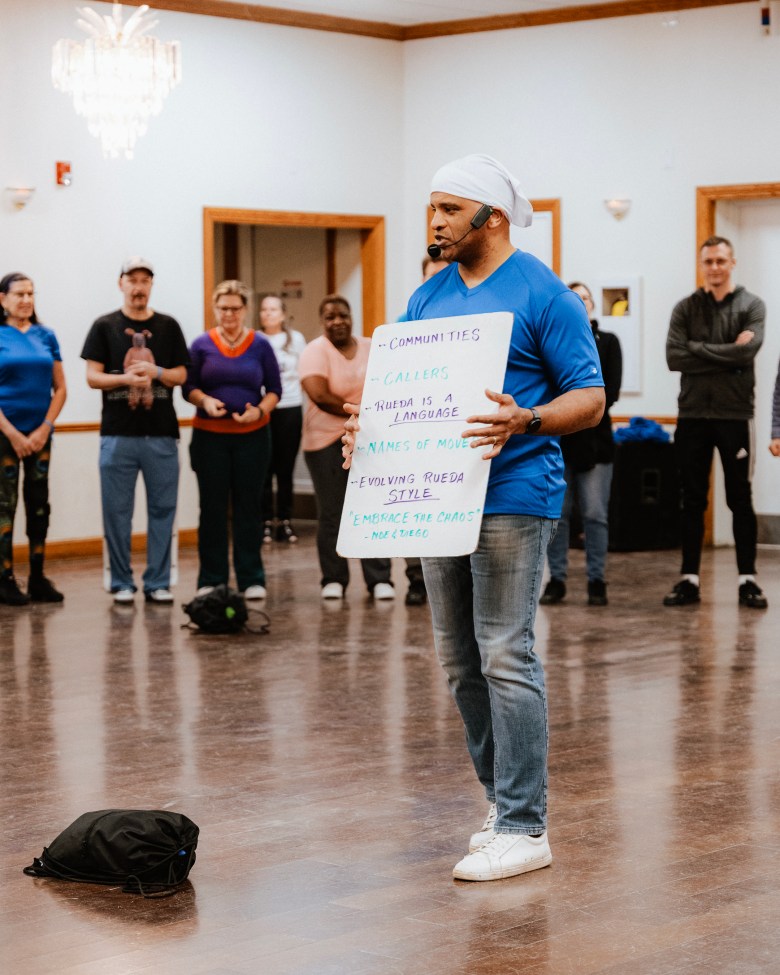





































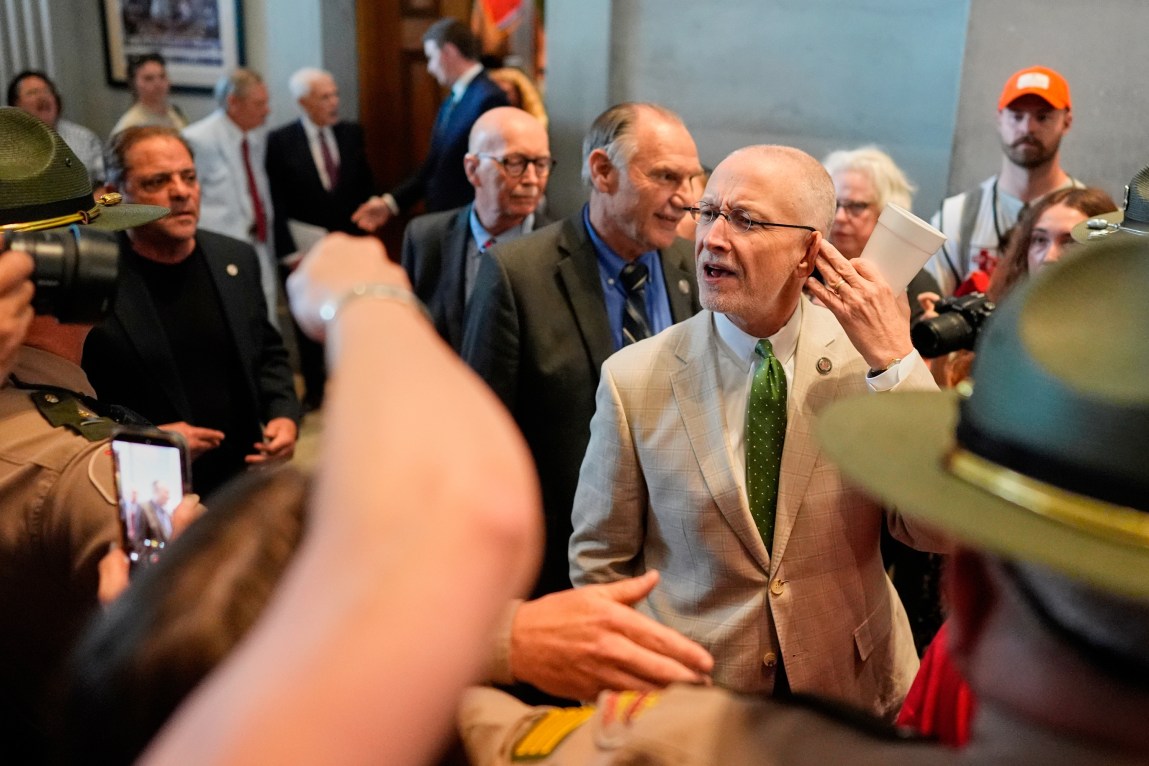



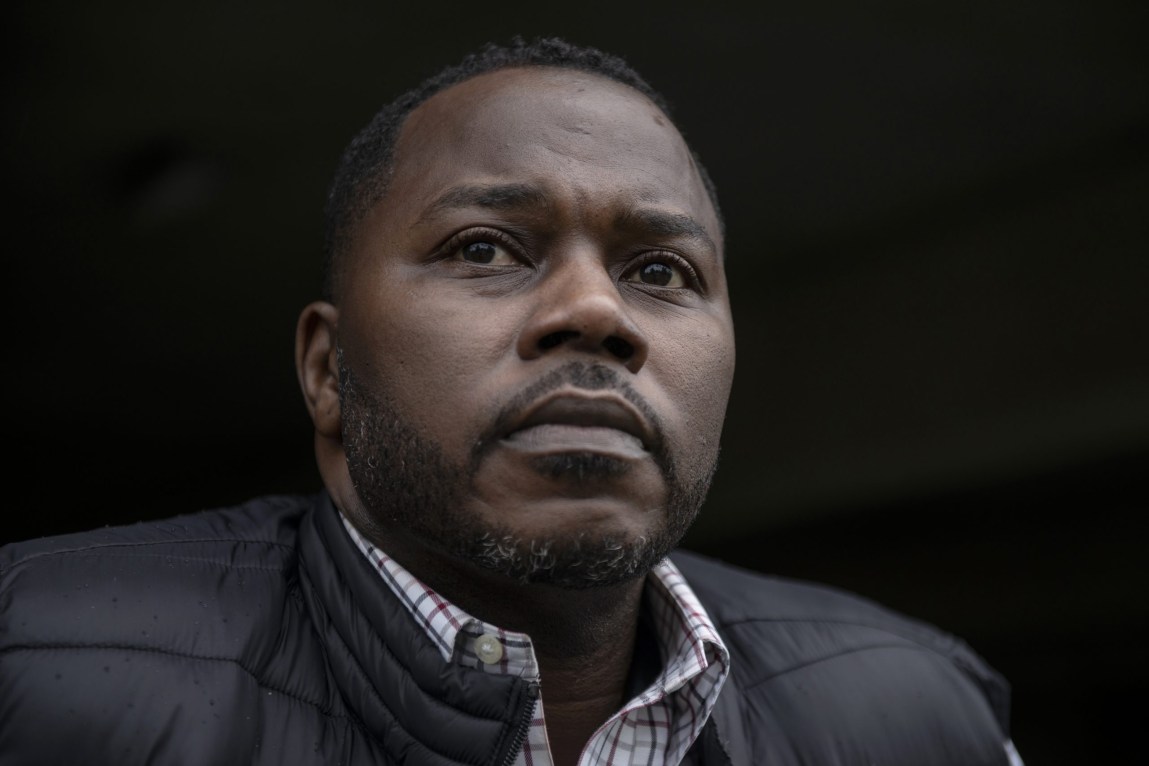

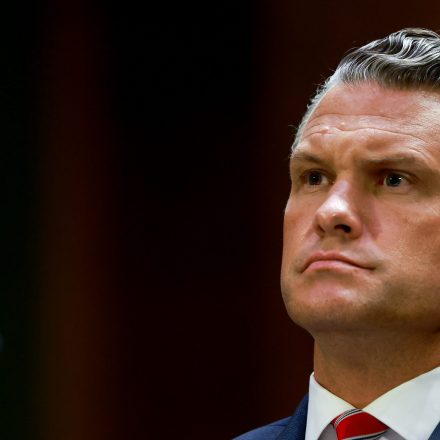


























































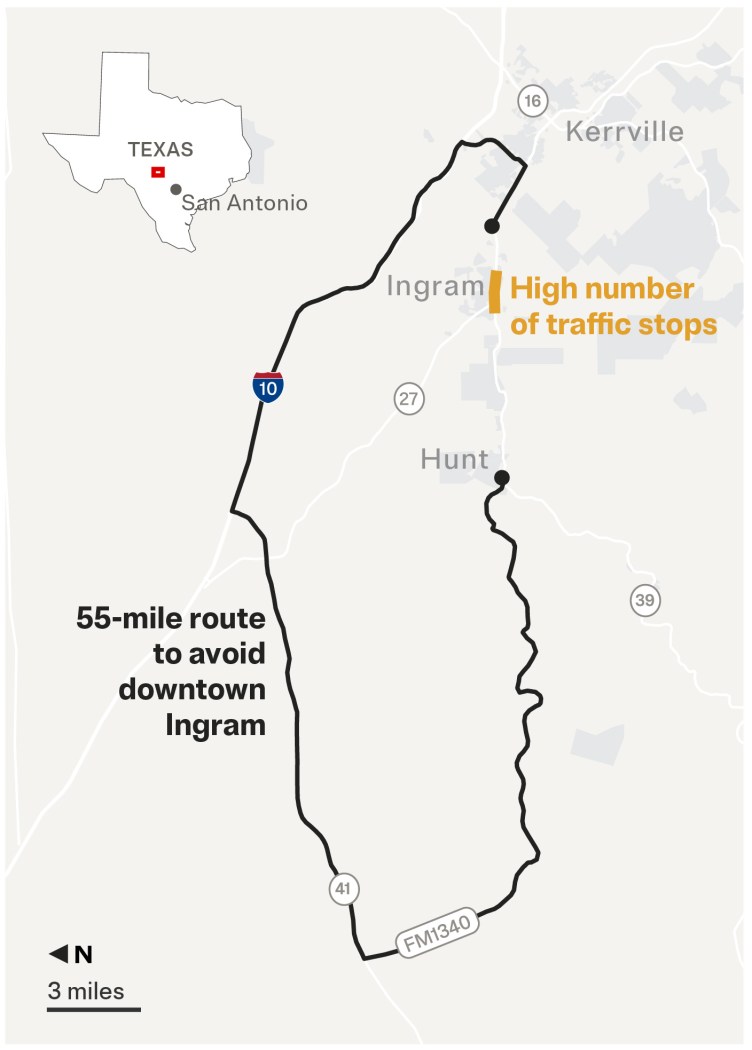
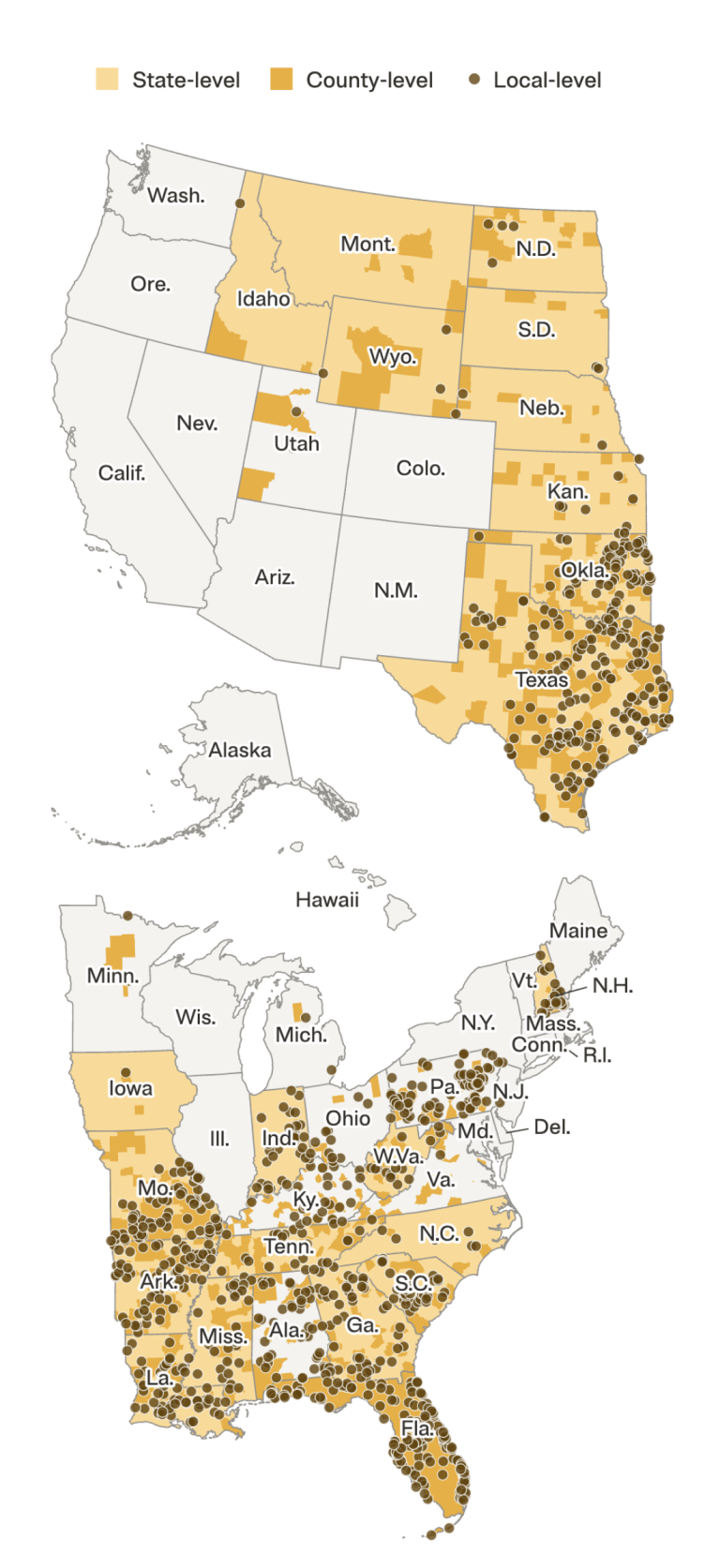



































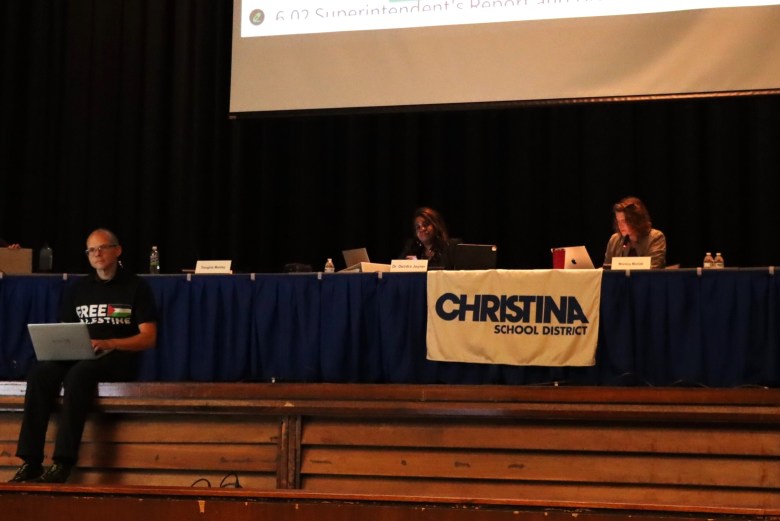
























![[link]](https://i.redd.it/yaq5r40foxxh1.jpeg)
![[link]](https://i.redd.it/198mie3hwnxh1.jpeg)
![[link]](https://i.redd.it/86opckhcpexh1.jpeg)